Free tools Windows power users keep installed
One-click scans. No signup required.
Home Alone is a holiday comfort movie that dares you to laugh at things that would absolutely land someone in the ICU, if not the morgue. For over 30 years, audiences have watched Marv and Harry endure skull fractures, third-degree burns, electrocution, and blunt-force trauma with the resilience of rubber toys. The joy of the film comes from that unspoken agreement: we know this is horrifying, and we’re choosing to laugh anyway.
Before we start tallying up the crimes Kevin McCallister committed against basic human anatomy, it’s important to understand the universe these movies operate in. Home Alone doesn’t obey real-world physics, medical science, or the laws of insurance adjusters. It obeys cartoon physics, the same elastic reality that lets Wile E. Coyote walk away from a canyon fall and keeps Tom alive after being flattened by a piano.
| # | Preview | Product | Price | |
|---|---|---|---|---|
| 1 |
![Home Alone [Blu-ray]](https://m.media-amazon.com/images/I/51i5d8NR-xL._SL160_.jpg)
|
Home Alone [Blu-ray] | $3.01 | Buy on Amazon |
| 2 |

|
Home Alone / Home Alone 2: Lost In New York Double Feature | $26.19 | Buy on Amazon |
| 3 |
![Home Alone (Family Fun Edition) [Blu-ray]](https://m.media-amazon.com/images/I/51NZLvm-N+L._SL160_.jpg)
|
Home Alone (Family Fun Edition) [Blu-ray] | $21.95 | Buy on Amazon |
| 4 |
|
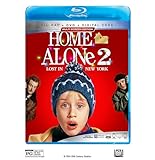
Home Alone 2 | $11.64 | Buy on Amazon |
Where Pain Exists Only for the Punchline
In this world, pain is temporary, consequences are cosmetic, and gravity waits politely for the joke to land. Injuries that would cause catastrophic brain damage instead result in funny screams and soot-covered faces. Marv and Harry aren’t burglars so much as live-action crash-test dummies, designed to absorb punishment that would permanently disable real human beings.
That’s the rule of the game this franchise plays, and it’s the only way Kevin’s traps remain mischievous instead of criminally lethal. With that understanding firmly in place, we can finally do what the movies never dared to: look at each prank, apply real-world logic, and acknowledge just how many times these two should not have made it to the next scene.
#1 Best Overall
- 8-Year-Old Kevin McAllister Is Accidentally Left Behind When His Family Takes Off For a Vacation In France Over the Holiday Season. Once He Realizes They've Left Him Home By Himself, Kevin Learns To Fend For Himself, And Eventually Has To Protect His House Against Bumbling Burglars Harry And Marv, Who Are Planning To Rob Every House In Kevin's Suburban Chicago Neighborhood. Kevin's Mother Kate Is
The Wet Bandits’ First Near‑Death Experience: Icy Steps, Micro Machines, and Cervical Spine Nightmares
Kevin McCallister doesn’t ease the Wet Bandits into his house of horrors. Their first real encounter with his ingenuity is an immediate escalation from petty burglary to something that, in any other movie, would trigger sirens, stretchers, and a very serious discussion about spinal mobility.
This is where Home Alone quietly tells the audience exactly what kind of movie it is. The traps aren’t warnings. They’re full-send physics experiments designed by an eight-year-old with a grudge and unlimited time.
The Icy Front Steps: A Fall That Ends Careers
Marv’s introduction to Kevin’s defensive strategy begins with a flight of icy stairs and ends with a backward fall that would make OSHA weep. He doesn’t slip and stumble; he rockets skyward, lands flat on his back, and smashes the back of his head on frozen concrete with full-body momentum.
In the real world, this is how people suffer catastrophic traumatic brain injuries. A fall from standing height onto a hard surface is already dangerous; adding speed, ice, and zero attempt to break the fall pushes this firmly into “life-altering” territory. Best-case scenario: severe concussion and spinal compression. Worst case: skull fracture, brain hemorrhage, or instant paralysis.
Do these 3 things before closing this tab:
1Clear out junk files and repair common Windows errors2Fix the driver behind crashes, sound loss and screen glitches3Repair Windows errors before they cause bigger problemsThe movie, of course, gives us a scream, a cartoonish bounce, and Marv popping back up like a broken action figure that still somehow works.
Micro Machines: Kevin Discovers Kinetic Torture
If the ice was a warning shot, the Micro Machines are Kevin refining his craft. Thousands of tiny plastic cars scatter across the hardwood floor, turning Marv’s attempt at pursuit into a slapstick simulation of black ice inside a house.
When Marv steps onto the pile, his feet shoot out from under him with no friction, no balance, and no chance to brace. He flails, slips, and crashes repeatedly, his body slamming into walls and furniture with uncontrolled force.
This is a nightmare scenario for orthopedic surgeons. Multiple uncontrolled falls dramatically increase the risk of broken wrists, shattered elbows, dislocated shoulders, and spinal injuries. Each impact compounds the trauma, and the randomness makes it worse. Real humans don’t bounce. They crumple.
Recommended Free Tools
Blunt-Force Trauma Disguised as Toy Time
The most disturbing part of the Micro Machines sequence isn’t the slipping; it’s the repeated impacts. Marv doesn’t just fall once. He goes down hard, gets back up, and then falls again, each time with diminishing ability to protect his head and neck.
Repeated head impacts in a short span can lead to second-impact syndrome, a condition so dangerous it’s often fatal. Even without that, multiple concussive blows can cause permanent cognitive impairment. Kevin accidentally invents a concussion protocol violation before the term exists.
The film treats it like ballet. Real life would treat it like a medical emergency.
Cervical Spine Nightmares and Cartoon Immunity
Throughout this sequence, Marv’s neck bends in ways that should immediately end his burglary career and possibly his ability to walk. Sudden backward falls are especially dangerous for the cervical spine, where a single fracture or disc herniation can sever the spinal cord.
What’s actually slowing this PC down?
Pick the symptom - the matching free tool is one click away.
The human neck is not designed for whiplash impacts against solid surfaces. One wrong angle, one bad landing, and Marv wouldn’t be screaming. He’d be motionless.
Instead, Home Alone shrugs, lets him groan, and sends him limping back into the fight like a man who merely stubbed his toe.
The Franchise Sets the Rules Early
This opening gauntlet is crucial because it establishes the stakes and the lie the movie asks us to accept. If Marv survives this, he can survive anything Kevin throws at him later, from blowtorches to bricks to industrial-level electrocution.
It’s also where the audience subconsciously agrees to the deal. We laugh because the movie promises us that no matter how bad it looks, no one will actually die. The laws of physics have been suspended for the holidays.
Quick wins for a faster PC:
Clear out junk files and repair common Windows errorsFree Scan →Fix the driver behind crashes, sound loss and screen glitchesFind Drivers →Repair Windows errors before they cause bigger problemsFix Now →By the time Harry joins the party, the line between slapstick and survivability is already gone. The Wet Bandits aren’t criminals anymore. They’re human crash-test dummies in a festive Looney Tunes universe, and Kevin McCallister has only just warmed up.
Blunt Force Trauma 101: Paint Cans, Irons, and the Physics of Terminal Velocity
If the Micro Machines sequence establishes that bones are optional in this universe, the paint can trap confirms that gravity itself has been bribed. This is the moment where Home Alone stops flirting with real‑world danger and cannonballs straight into mythic slapstick violence.
The Paint Can Drop: A Lethal Equation
A full paint can weighs roughly 10 pounds, and Kevin drops it from at least two stories up. That means it’s accelerating under gravity long enough to reach a speed that, when transferred directly to a human skull, would be catastrophic.
In real life, that kind of blunt force impact would almost certainly cause a depressed skull fracture, massive brain swelling, and severe intracranial bleeding. Marv wouldn’t stagger backward howling; he’d collapse instantly, likely unconscious, with a high probability of death before an ambulance ever arrived.
Instead, Home Alone lets the can bounce theatrically off his face like a cymbal crash. The sound effect does more damage than the physics.
Harry Takes an Iron, and Somehow Takes Another
Just in case anyone thought Marv’s near-decapitation was a fluke, the movie immediately repeats the experiment with Harry and a falling iron. Irons are smaller than paint cans but denser, meaning all that force is concentrated into a much smaller impact area.
A cast-iron appliance dropped from that height would be more than enough to shatter facial bones, cave in the orbital socket, and drive fragments into the brain. Best-case scenario, Harry loses an eye and suffers permanent neurological damage. Worst case, it’s lights out.
What we get instead is Joe Pesci screaming, shaking it off, and charging forward like a man who just got hit with a pillow filled with bricks.
Crashes, No Sound, or Screen Glitches?
Random freezes, missing sound and display glitches usually trace back to one bad driver. Find and replace yours safely.Free scan · under a minuteWindows Errors? Fix Them Before They Spread
Repair common Windows errors and clear accumulated junk for a smoother, more stable PC - no reinstall needed.Free scan · no reinstallRank #2
- Fox Home Entertainment Home Alone Collection
Terminal Velocity, Meet Christmas Comedy
Neither object technically reaches terminal velocity from that height, but it doesn’t matter. The speeds involved are already far beyond what the human body, especially the human head, can tolerate.
The skull is not designed to absorb falling-object trauma. There’s no rolling with the punch, no bracing, no survival reflex. Gravity does all the work, and gravity does not care that it’s December.
Home Alone does care, though. It swaps physics for rhythm, timing, and reaction shots, turning what should be a coroner’s report into a punchline.
Why This Is Where Reality Officially Taps Out
These aren’t cumulative injuries anymore. Each one, on its own, is potentially fatal. Taken together, they would leave both Wet Bandits permanently disabled at best and very much deceased at worst.
But this is the franchise drawing a line in the snow. From here on out, we’re no longer evaluating survivability; we’re watching endurance art. Marv and Harry aren’t human men reacting to trauma. They’re avatars for pain in a world where Christmas magic doubles as a damage-negation spell.
Once you accept that, the movie becomes easier to laugh with. Because if you don’t, you’re left watching two men absorb enough blunt force to flatten a reindeer and still miss dinner.
Burns, Electrocution, and Chemical Warfare: When Kevin Graduates to Actual War Crimes
By the time Kevin escalates from blunt force trauma to elemental damage, the Wet Bandits aren’t just trespassing criminals anymore. They’re test dummies in a suburban Geneva Convention violation. Fire, electricity, and industrial chemicals enter the mix, and suddenly this isn’t slapstick—it’s a survival horror montage with a John Williams score.
This is where the franchise quietly asks you to stop thinking in terms of injuries and start thinking in terms of cause of death.
The Blowtorch: Third-Degree Burns Played for a Rimshot
Harry’s first introduction to Kevin’s flamethrower door handle results in his scalp being set on fire, followed by frantic head-slapping that somehow extinguishes it. In real life, even brief contact with a blowtorch would cause third-degree burns, destroying skin, nerve endings, and underlying tissue almost instantly.
Scalp burns are especially dangerous
Head Injuries That Would End Careers, Lives, and Franchises: Concussions, Bricks, and Cognitive Obliteration
If the Wet Bandits had a union, this is the section where it would file a grievance. Head trauma is where slapstick stops flirting with danger and starts aggressively inviting it inside for cocoa. Kevin’s pranks don’t just bonk Marv and Harry; they repeatedly and enthusiastically attempt to erase their operating systems.
This is the point where cartoon logic becomes mandatory viewing equipment. Without it, Home Alone isn’t a family comedy—it’s a cautionary PSA about why helmets exist.
The BB Gun: Eye-Level Lethality Played Like a Prank
Kevin’s BB gun is treated like a mischievous toy, but he consistently fires it at faces. Harry and Marv take multiple high-velocity impacts to the forehead, nose, and eye area, which in reality could fracture orbital bones, cause traumatic brain injury, or result in permanent vision loss.
The Tool Desk
Outbyte Driver Updater FREEFix the driver behind crashes, sound loss and screen glitchesFind Drivers →Outbyte PC Repair FREEClear out junk files and repair common Windows errorsFree Scan →A BB pellet doesn’t need to penetrate the skull to ruin your life. Blunt force to the eye socket can transmit enough energy to the brain to cause concussions, hemorrhaging, or detached retinas. The Wet Bandits respond by yelping and running away, which is not the standard medical protocol.
The Iron to the Face: A Knockout Blow That Never Wakes Up
Marv taking a full-sized clothing iron directly to the face is one of the film’s most iconic sight gags. It’s also a near-perfect recreation of a lethal blunt-force assault. The iron falls from height, accelerates under gravity, and connects squarely with the skull.
Best-case scenario, that’s multiple facial fractures and a severe concussion. Worst-case, it’s brain swelling, loss of consciousness, and death without immediate trauma care. The movie gives us a scream and a fall down the stairs, because acknowledging reality here would end the franchise 40 minutes early.
Paint Cans: Physics-Accurate, Survival-Optional
The swinging paint cans are where Home Alone accidentally becomes a physics demonstration. Heavy objects, long arc, direct impact to the face, repeated twice. These are not glancing blows; they’re full-force collisions with enough momentum to shatter facial bones and snap necks.
Either hit could cause traumatic brain injury on its own. Taking two in rapid succession would almost certainly result in catastrophic brain damage, cervical spine injury, or death. The fact that Harry and Marv are conscious afterward is less a joke and more a supernatural event.
Home Alone 2’s Bricks: Looney Tunes Levels of Neurological Impossibility
Then comes the brick gauntlet. Marv, standing helplessly on the stairs, takes multiple bricks to the head thrown from a significant height. Each brick lands squarely, with time between impacts just long enough to reset the joke but not the skull.
In reality, even one brick could fracture the cranium or cause fatal intracranial bleeding. Several in succession would almost certainly result in death or irreversible brain damage. This isn’t slapstick anymore; it’s an endurance test no human nervous system can pass.
Concussion Stacking: When Recovery Time Is a Fantasy Genre
What truly seals the deal is accumulation. Harry and Marv don’t just suffer one head injury; they endure dozens with zero recovery time. Modern concussion protocols pull athletes from games after one suspicious hit. The Wet Bandits absorb enough head trauma to medically retire an entire football team.
By the time we reach the end of these sequences, we’re no longer watching criminals. We’re watching characters who should not remember their own names, let alone continue plotting theft. That they do is the clearest sign that Home Alone isn’t ignoring reality—it’s deliberately replacing it with a holiday-flavored cartoon universe where pain is temporary, memory is optional, and brain cells regenerate on a laugh track.
The Staircase of Doom: Falls That Would Have Snapped Spines and Shattered Internal Organs
Stairs are deceptively dangerous even on a normal day. Add ice, toys, paint, panic, and gravity-assisted humiliation, and you’ve basically engineered a fatality machine. Home Alone turns staircases into recurring punchlines, but in the real world, these sequences would be case studies in catastrophic trauma.
Marv vs. The Icy Front Steps: A Full-Body Car Crash Without the Seatbelt
Marv’s fall down the ice-slicked front steps in Home Alone looks quick, clean, and comically upright. In reality, slipping backward on frozen stairs almost guarantees uncontrolled descent, rotational force, and multiple impact points. The head, spine, ribs, and internal organs would all be in play before gravity finished its work.
Emergency medicine treats stair falls as high-risk trauma events for a reason. One bad landing could fracture vertebrae, rupture organs, or cause a fatal subdural hematoma. Marv popping back up afterward isn’t resilience; it’s a violation of basic orthopedic reality.
The Basement Stair Tumble: Spinal Compression in a Confined Space
Inside the house, the basement stairs offer even less mercy. Narrow, steep, and enclosed, they turn falls into repeated blunt-force impacts rather than a single drop. Each step becomes another opportunity for spinal compression, rib fractures, or internal bleeding.
A real human tumbling down those stairs wouldn’t bounce. They’d pinwheel, twist, and land awkwardly, with forces concentrating on the neck and lower back. Paralysis, herniated discs, or organ damage would be the expected outcome, not a quick groan and continued pursuit.
Home Alone 2’s Staircase Escalation: Gravity Plus Momentum Equals Trauma
The sequel doubles down by increasing speed, height, and cumulative damage. By the time Marv and Harry are repeatedly sent down staircases after already sustaining head injuries, burns, and blunt trauma, their bodies would be operating on borrowed time. Every fall compounds the damage, increasing the likelihood of spinal instability or internal hemorrhage.
Medical reality doesn’t reset between gags. The Wet Bandits’ ability to repeatedly stand up after these falls defies how soft tissue, bones, and blood vessels actually behave under stress. At this point, the stairs aren’t obstacles; they’re lethal weapons the film politely refuses to acknowledge.
What’s actually slowing this PC down?
Pick the symptom - the matching free tool is one click away.
Why the Stairs Don’t Kill Them: Cartoon Physics at Holiday Scale
Home Alone treats gravity like a suggestion rather than a law. Bodies fold when they should snap, pain registers as annoyance, and internal organs apparently float freely, immune to rupture. The staircases exist not as architectural features but as slapstick launch ramps.
That’s the secret sauce. In Kevin McCallister’s universe, stairs are loud, humiliating, and endlessly survivable. In ours, they’re one of the most common causes of fatal household injuries, especially when ice, speed, and panic enter the equation. The laughter works because reality has been left at the bottom step, clutching its spine and filing an incident report.
Home Alone 2 Escalation: When the Pranks Stop Being Defensible and Become Straight‑Up Lethal
By the time Home Alone 2: Lost in New York rolls around, the franchise quietly abandons any pretense of plausible survival. The pranks aren’t just bigger; they’re more deliberate, more repetitive, and far more focused on the head, spine, and nervous system. Kevin isn’t improvising anymore—he’s running a sustained assault course designed like a Looney Tunes Rube Goldberg machine with felony intent.
The cartoon logic remains intact, but the margin for real-world survival collapses fast. What once played like exaggerated pain now reads as cumulative trauma stacking toward inevitable catastrophe.
The Brick Barrage: Repeated Blunt-Force Trauma to the Skull
Marv getting hit in the face with a falling brick is funny once. Kevin doing it again… and again… and again turns slapstick into an orthopedic horror show. Each brick drop represents a high-velocity blunt-force impact aimed directly at the skull and face.
In reality, the first brick would likely cause a skull fracture or severe concussion. The second could introduce brain swelling or hemorrhage. By the third or fourth, you’re looking at traumatic brain injury, loss of consciousness, and a high probability of death if medical treatment isn’t immediate.
The film treats Marv’s head like a gong. Actual human skulls do not work that way, and neither does the brain sloshing inside them.
Electrocution in the Flooded Sink: Nervous System Shutdown
Marv’s electrocution gag, complete with visible skeleton, is one of Home Alone 2’s most memorable jokes—and medically its most indefensible. Standing in water while gripping live electrical wiring is a textbook recipe for cardiac arrest.
Free tools Windows power users keep installed
One-click scans. No signup required.
Electric current passing through the body disrupts the heart’s electrical rhythm, often causing ventricular fibrillation. Survival depends on voltage, duration, and immediate defibrillation. Marv gets none of that, yet somehow recovers after a few spasms and a scream.
Realistically, this scene ends with loss of consciousness within seconds and death shortly thereafter. The joke works only because the movie temporarily rewrites how electricity interacts with the human body.
Tool Impacts, Explosions, and Head-Level Trauma
Home Alone 2 also escalates the sheer density of head injuries. Harry alone suffers burns to the scalp, falling tool impacts, and explosive force from booby-trapped fixtures. Each incident might be survivable in isolation, but together they form a highlight reel of neurological disaster.
Burns to the head risk airway damage and infection. Falling tools introduce penetrating or crushing injuries. Explosive force near the face raises the likelihood of orbital fractures and brain trauma. By mid-sequence, both men would be cognitively impaired, disoriented, and physically incapable of coordinated movement.
PC Slower Than It Used to Be?
A free scan shows the junk files, broken settings and background clutter dragging Windows down - then fixes them in one click.Free scan · Windows 10 & 11Crashes, No Sound, or Screen Glitches?
Random freezes, missing sound and display glitches usually trace back to one bad driver. Find and replace yours safely.Free scan · under a minuteInstead, they quip, swear, and chase Kevin with remarkable clarity, as if concussions politely take turns.
Falls from Height: Gravity Finally Tries to End the Bit
The townhouse setting introduces verticality, and gravity becomes Kevin’s most reliable accomplice. Marv and Harry repeatedly fall from significant heights onto hard surfaces, often after already sustaining serious injuries.
In real-world physics, falling while injured compounds damage exponentially. Muscles can’t brace properly, reaction times slow, and protective reflexes fail. That’s how falls turn fatal, especially when combined with head or spinal trauma.
The movie ignores this cascade entirely. Bodies reset between gags, gravity forgets its own rules, and pain remains temporary—because if it didn’t, the chase would end with sirens instead of a punchline.
Why Home Alone 2 Feels Meaner—and Why That’s the Point
The sequel isn’t just bigger; it’s more confident in its unreality. Home Alone 2 leans fully into a Looney Tunes framework where bodies are indestructible, consequences are cosmetic, and physics exists purely for comic timing.
That tonal shift is why these pranks feel genuinely lethal when viewed through adult eyes. Kevin isn’t just defending himself anymore; he’s orchestrating mayhem with architectural precision. The laughter comes from knowing, deep down, that none of this could ever happen—and that the film has no interest in pretending otherwise.
In the real world, Marv and Harry wouldn’t be Wet Bandits by the third act. They’d be names on hospital charts, victims of injuries no amount of holiday cheer could undo.
Independent reader supportYour contribution helps us test, update, and keep practical guides available for everyone.Why They Never Die: Slapstick Lineage from Looney Tunes to Home Alone
The reason Marv and Harry survive injuries that would end most human lives isn’t ignorance of reality—it’s tradition. Home Alone doesn’t play by medical rules; it plays by cartoon law, where pain is elastic, bodies are resilient to the point of absurdity, and the joke only works if the character gets back up.
The Tool Desk
Outbyte PC Repair FREEClear out junk files and repair common Windows errorsFree Scan →Outbyte Driver Updater FREEFix the driver behind crashes, sound loss and screen glitchesFind Drivers →Rank #4
- The McAllister Family Go On a Holiday To Florida. Kevin McAllister Gets Separated From His Family, And Manages To Get Himself Onto a Plane To New York Instead. There, He Checks Into the Best Hotel With His Father's Credit Card, And Sets Out To Enjoy Himself. Unfortunately, the Burglars He Had Foiled Before Were In New York After Being Released From Jail, And Had Plans To Rob the Biggest Toyshop In
This is slapstick ancestry in its purest form, stretching back nearly a century. Kevin’s house isn’t a crime scene; it’s a Looney Tunes soundstage with better production design.
Cartoon Physics: The World Where Consequences Bounce
In classic slapstick, injury is temporary and cumulative damage doesn’t exist. A character can be flattened by a piano, inflated by dynamite, and crushed by a falling anvil, only to spring back into shape for the next gag.
Home Alone borrows that exact logic. Bricks to the head don’t cause subdural hematomas; they cause slapstick sound effects. Flames don’t scar skin; they singe hair into comedic silhouettes.
Reality never catches up because the universe won’t allow it to. If Marv’s skull behaved like an actual skull, the movie would end after the first ladder.
Recommended Free Tools
From Buster Keaton to Bugs Bunny to the Wet Bandits
Buster Keaton survived collapsing buildings because silent comedy demanded visual awe over bodily realism. The Three Stooges poked eyes, smashed heads, and survived concussions that would retire NFL players.
Warner Bros. perfected this with Bugs Bunny, where violence was abstract and reversible. Home Alone is simply that philosophy translated into live-action, replacing painted coyotes with Joe Pesci and Daniel Stern.
Marv and Harry aren’t burglars so much as human crash-test dummies, built to absorb punishment for our amusement.
Why Pain Exists but Injury Doesn’t
Notice that Marv and Harry always feel pain—but never suffer lasting damage. That distinction is key. Slapstick requires pain for humor, but forbids injury because injury halts momentum.
Do these 3 things before closing this tab:
1Scan for outdated or missing drivers - takes under a minute2Repair Windows errors before they cause bigger problems3Fix the driver behind crashes, sound loss and screen glitchesThey scream, swear, and writhe, yet their coordination resets seconds later. Broken bones would slow the chase. Brain damage would end the dialogue. Death would kill the joke outright.
So pain becomes theatrical, not anatomical. It’s a signal to the audience, not a consequence for the character.
Kevin Isn’t a Sociopath—He’s a Cartoon Protagonist
Viewed through real-world logic, Kevin’s traps are disturbingly excessive. Viewed through slapstick tradition, he’s a pint-sized Bugs Bunny defending his territory from two Elmer Fudds who refuse to learn.
The movie depends on our understanding of that contract. We laugh because we know, instinctively, that this world will not let these men die—no matter how hard gravity, fire, or blunt force tries.
Quick wins for a faster PC:
Clear out junk files and repair common Windows errorsFree Scan →Scan for outdated or missing drivers - takes under a minuteDriver Scan →Repair Windows errors before they cause bigger problemsFix Now →That’s why Home Alone still works. It doesn’t ask us to believe Marv and Harry could survive this. It asks us to remember a time when characters always did.
What We’re Really Laughing At: Violence, Nostalgia, and the Genius of Ignoring Reality
At a certain point, the question stops being “How are they alive?” and becomes “Why are we so comfortable watching them almost die again?” The answer isn’t cruelty—it’s familiarity. Home Alone invites us into a space where danger is exaggerated, consequences are optional, and survival is guaranteed by genre.
We’re laughing because we know the rules, even if we don’t consciously think about them. Iron to the face, crowbar to the skull, blowtorch to the scalp, four-story falls onto concrete—each trap escalates toward lethality, yet somehow lands safely in the realm of absurdity. The tension comes not from whether Marv and Harry will live, but from how creatively they’ll suffer next.
The Comfort of Consequence-Free Chaos
In real life, a paint can to the head means traumatic brain injury, internal bleeding, and a very quiet third act. In Home Alone, it means a Looney Tunes silhouette and a delayed scream. The movie trains us early to recalibrate our expectations, letting us enjoy the spectacle without moral recoil.
Every major prank flirts with fatality precisely because that edge makes it funnier. Kevin’s traps work not despite their danger, but because of it. We’re watching human bodies treated like rubber props, and the contrast between what should happen and what does happen is the joke.
Nostalgia as a Safety Net
Part of why these scenes still play is because many of us first saw them as kids. We learned how comedy works from movies like this, where bad guys get hurt, good guys outsmart them, and everyone walks away intact by the credits. Revisiting Home Alone as adults doesn’t break that spell—it reframes it.
Now we recognize how extreme the violence really is, and that awareness adds a new layer of humor. We’re not laughing harder because it’s more realistic. We’re laughing because it’s spectacularly not.
Why Ignoring Reality Is the Point
If Home Alone respected physics, anatomy, or emergency medicine, it would collapse under its own premise. Kevin would be traumatized. Marv and Harry would be hospitalized or dead. The house would be a crime scene, not a playground.
Instead, the film commits fully to a heightened reality where pain is temporary and ingenuity always wins. That commitment is its genius. By refusing realism, Home Alone preserves momentum, tone, and joy.
In the end, what we’re really laughing at isn’t violence—it’s the freedom of a world where consequences pause for comedy. Marv and Harry survive because they have to. Without them, without their indestructibility, the movie doesn’t work.
And maybe that’s why we keep watching. Not because we believe any of this could happen, but because once a year, it’s comforting to return to a universe where the worst injuries heal instantly, the villains always get back up, and the rules of reality politely step aside for the joke.
Quick Recap
Product prices and availability are accurate as of the date/time indicated and are subject to change. Any price and availability information displayed on Amazon at the time of purchase will apply.
The Tool Desk
Outbyte Driver Updater FREEScan for outdated or missing drivers - takes under a minuteDriver Scan →Outbyte PC Repair FREEClear out junk files and repair common Windows errorsFree Scan →
