What’s actually slowing this PC down?
Pick the symptom - the matching free tool is one click away.
When Die Hard arrived in 1988, it didn’t just deliver a hit action movie, it rewired the genre’s DNA. John McClane was a bruised, wisecracking everyman trapped in the wrong place at the worst possible time, a sharp contrast to the invincible action heroes of the era. The film’s blend of claustrophobic tension, character-driven humor, and practical stunt work became a template Hollywood chased for decades. “Die Hard on a…” quickly became shorthand for an entire wave of high-concept action storytelling.
As the series expanded, Die Hard evolved alongside blockbuster cinema itself. Each sequel reflects the priorities of its moment, from the tightly wound airport siege of Die Hard 2 to the globe-trotting spectacle of the later entries. The franchise’s shifting scale, tone, and technology make it a useful case study in how action filmmaking changed from the late ’80s through the 2010s. Watching the films in release order highlights that evolution, while a chronological approach keeps McClane’s personal arc front and center.
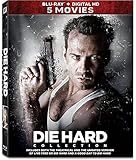
![Die Hard Collection (Die Hard / Die Hard 2: Die Harder / Die Hard with a Vengeance / Live Free or Die Hard) [Blu-ray]](https://m.media-amazon.com/images/I/414lODtXrTL._SL160_.jpg)
![Die Hard Movie Collection (Bilingual) [Blu-ray] 2017](https://m.media-amazon.com/images/I/61jxOUkLlkL._SL160_.jpg)
That dual identity is why Die Hard still matters to modern viewers and why the question of how to watch it isn’t just academic. Newcomers often want the cleanest narrative path, while longtime fans may prefer to revisit the series as audiences originally experienced it. Understanding where each film sits in the timeline, and what it represents in the franchise’s history, adds context that deepens the experience. With that legacy in mind, choosing the right viewing order becomes part of the fun rather than a point of confusion.
All Die Hard Movies by Release Date (Theatrical Order)
Watching Die Hard in theatrical release order is the most common and, for many fans, the most satisfying way to experience the franchise. This approach mirrors how audiences originally met John McClane and allows the series’ tonal and stylistic shifts to unfold naturally over time. It also highlights how each sequel responds to the action trends of its era rather than strictly building on long-term narrative continuity.
Do these 3 things before closing this tab:
1Scan for outdated or missing drivers - takes under a minute2Clear out junk files and repair common Windows errors3Fix the driver behind crashes, sound loss and screen glitches#1 Best Overall
Die Hard (1988)
Released in the summer of 1988, Die Hard introduced Bruce Willis’ John McClane as an unlikely action hero: barefoot, bloodied, and running on stubborn resolve rather than muscle-bound invincibility. Set almost entirely inside Los Angeles’ Nakatomi Plaza, the film’s tight geography and escalating tension gave it a pressure-cooker intensity that set it apart from its peers. Alan Rickman’s Hans Gruber remains one of the genre’s most influential villains, helping cement the movie’s lasting reputation.
Die Hard 2: Die Harder (1990)
Arriving just two years later, Die Hard 2 expanded the formula without abandoning its core appeal. This time, McClane is trapped in an airport during a massive snowstorm, dealing with terrorists who have seized control of the air traffic system. While bigger and louder than its predecessor, the sequel retains the franchise’s emphasis on problem-solving, endurance, and McClane’s talent for being underestimated.
Die Hard with a Vengeance (1995)
Often regarded as the strongest sequel, Die Hard with a Vengeance shifted the action out into the streets of New York City. The addition of Samuel L. Jackson as Zeus Carver gave the film a dynamic new energy, turning the story into a city-wide cat-and-mouse game orchestrated by a villain with personal ties to the original film. Its pace, humor, and inventive set pieces made it feel like a reinvention rather than a retread.
Live Free or Die Hard (2007)
After a twelve-year gap, Live Free or Die Hard reflected the post-9/11 action landscape and the growing influence of digital threats. The plot centers on a cyberterrorist attack designed to cripple U.S. infrastructure, pushing McClane into a world far removed from locked buildings and analog bombs. The film leans more heavily into spectacle and PG-13 accessibility, marking a clear tonal shift for the franchise.
A Good Day to Die Hard (2013)
The fifth and final theatrical entry takes John McClane overseas, pairing him with his estranged son Jack in a Russia-set story focused on espionage and large-scale destruction. A Good Day to Die Hard embraces the global action blockbuster style of the early 2010s, with an emphasis on momentum and scale over character-driven tension. Its reception was mixed, but it serves as a clear endpoint for the series’ theatrical run and a snapshot of how far the franchise had traveled from its confined origins.
The Die Hard Timeline Explained: Watching the Movies Chronologically
Watching the Die Hard films in chronological order is also the simplest approach, because the series unfolds in a mostly linear fashion with no prequels, reboots, or timeline jumps. Each movie follows John McClane as he ages in real time, carrying forward emotional baggage, professional weariness, and shifting family dynamics. For first-time viewers, this order provides the cleanest narrative throughline and the clearest sense of how the franchise evolves.
Die Hard (1988)
The timeline begins on Christmas Eve in Los Angeles, where NYPD detective John McClane visits his estranged wife at Nakatomi Plaza. The confined setting and ticking-clock tension establish the blueprint for everything that follows. McClane is introduced as a clever but vulnerable everyman, relying more on stubborn resilience than brute force.
Die Hard 2: Die Harder (1990)
Set roughly two years later, the second film once again places McClane in a holiday crisis, this time at Washington Dulles International Airport. He is more confident and experienced, but still dismissed by authority figures until it is nearly too late. Chronologically, this movie reinforces the idea that McClane is becoming a magnet for chaos, even as institutions fail around him.
Recommended Free Tools
Die Hard with a Vengeance (1995)
Five years on, the third entry moves the action to New York City and strips away the holiday setting entirely. McClane is divorced, burned out, and barely holding onto his badge, which gives the story a rougher emotional edge. Watching in timeline order makes the villain’s connection to the original film land harder, emphasizing how past sins continue to echo forward.
Live Free or Die Hard (2007)
By the time the fourth film arrives, more than a decade has passed both on-screen and off. McClane is now a relic of the analog age, forced to navigate a cyberterrorist plot that attacks modern infrastructure. Chronologically, this entry works as a generational clash, highlighting how the world has changed faster than McClane ever wanted it to.
A Good Day to Die Hard (2013)
The timeline concludes with McClane traveling to Russia to reconnect with his estranged son, Jack. This final chapter pushes the series into globe-trotting action territory, with an emphasis on legacy and fractured family ties. Seen as the endpoint of the chronology, it underscores how far the franchise moved from its single-building origins while keeping McClane at the center of escalating stakes.
Rank #2
![Die Hard: 5 Movie Collection (Blu-Ray) [A Die Hard/Die Hard II/Die Hard With A Vengeance/Live Free Or Die Hard/Good Day To Die Hard]](https://m.media-amazon.com/images/I/51wY82SeMKL._SL160_.jpg)
- Region A Blu-ray
- Dolby Digital
- Widescreen
For viewers who want to experience John McClane’s story as one continuous arc, watching chronologically is also watching by release date. It allows the character’s physical decline, emotional hardening, and changing relevance to unfold naturally, reflecting both the passage of time within the story and the shifting tastes of action cinema itself.
Key Differences Between Release Order and Chronological Order
At first glance, Die Hard appears to be one of the simplest franchises to watch in order. Every film is set after the previous one, meaning the chronological timeline and the theatrical release order are identical. However, the experience of watching them can still feel very different depending on what a viewer is looking to get out of the series.
Release Order Preserves the Franchise’s Real-World Evolution
Watching the Die Hard movies in release order emphasizes how action cinema itself changed from the late 1980s through the 2010s. The grounded, practical stunt work of the original gradually gives way to larger-scale set pieces, heavier CGI, and more globe-spanning threats. This approach highlights how the franchise responded to industry trends, studio expectations, and shifting audience appetites over time.
It also makes Bruce Willis’ performance feel like a direct reflection of his era. McClane ages alongside the genre, transitioning from vulnerable everyman to near-mythic action survivor. Viewed this way, Die Hard becomes a time capsule of Hollywood action filmmaking across three decades.
Chronological Order Focuses on John McClane as a Character Study
Although the order is the same, watching with a chronological mindset places more emphasis on McClane’s internal arc rather than the spectacle. His marriages, divorces, career setbacks, and strained relationship with his children take on greater weight when viewed as a continuous life story. Each escalation in scale feels less like escalation for its own sake and more like the accumulated consequences of years spent running toward danger.
The Tool Desk
Outbyte Driver Updater FREEFix the driver behind crashes, sound loss and screen glitchesFind Drivers →Outbyte PC Repair FREEClear out junk files and repair common Windows errorsFree Scan →This perspective also reframes the later films. Instead of judging them solely against the purity of the original, they can be read as portraits of a man increasingly out of sync with the world around him. The tonal shifts become part of the narrative rather than distractions from it.
Which Order Is Best Depends on the Viewer
For first-time viewers, release order is the most natural entry point and the safest recommendation. It delivers the films as audiences originally experienced them and avoids the whiplash that can come from jumping between vastly different filmmaking styles. It also preserves the surprise of how far the series eventually stretches its premise.
For returning fans or character-focused viewers, approaching the series as a chronological arc can be more rewarding. Even though the order does not change, the lens does, turning Die Hard from a collection of action sequels into a long-form story about endurance, relevance, and the cost of never backing down.
How the Franchise Evolved: Tone, Scale, and John McClane Over Time
The Everyman Era: Die Hard and Die Hard 2
The original Die Hard succeeds because it feels intimate, even claustrophobic. John McClane is introduced as a capable but clearly fallible New York cop, bleeding, barefoot, and improvising his way through a hostage crisis inside a single building. The tension comes from geography, limited resources, and the sense that one wrong move could end him.
Die Hard 2 expands the playground to an airport, but it largely preserves the same tone. McClane is still reacting rather than dominating, outmatched by the situation and reliant on grit instead of spectacle. At this stage, the franchise is rooted in vulnerability, with action built around problem-solving rather than sheer force.
Scaling Up: Die Hard with a Vengeance
With Die Hard with a Vengeance, the series pivots toward scale without abandoning character. The entire city of New York becomes the arena, and the set pieces grow more elaborate, but McClane is still framed as a man under pressure. His partnership with Zeus Carver re-centers the story on personality and tension rather than invincibility.
Rank #3
This film marks the franchise’s sweet spot for many fans. It balances blockbuster ambition with grounded stakes, showing how the series could grow without losing its human core. McClane feels seasoned rather than superhuman, worn down by experience but still relatable.
The Blockbuster Shift: Live Free or Die Hard
By the time Live Free or Die Hard arrives, the franchise has fully absorbed 2000s action sensibilities. The threats are digital, the set pieces are massive, and McClane survives moments that stretch plausibility. The film embraces a louder, slicker tone, reflecting the era’s appetite for spectacle-driven action.
McClane himself changes accordingly. He becomes less reactive and more unstoppable, leaning into one-liners and brute persistence. While the film retains flashes of the character’s stubborn humanity, it positions him closer to a legacy action hero than an everyman cop.
The Myth Overtakes the Man: A Good Day to Die Hard
A Good Day to Die Hard completes the transformation by pushing scale and tone to their extremes. The action is globe-spanning, the body count is higher, and McClane functions almost entirely as a force of nature. Emotional grounding, once central to the series, takes a back seat to constant forward momentum.
Seen within the franchise’s full timeline, this shift feels less abrupt than it often does in isolation. McClane has survived decades of escalation, and the films increasingly treat him as indestructible because that is what the series has trained audiences to expect. Whether that evolution enhances or diminishes the character depends on what viewers value most in Die Hard: relatability or relentless survival.
Which Viewing Order Is Best for You? First-Time Viewers vs. Returning Fans
Choosing how to watch the Die Hard films depends less on strict continuity and more on what kind of experience you want from the franchise. Unlike many modern action series, Die Hard doesn’t rely on tangled timelines or retroactive mythology. Its evolution is tonal and thematic, not chronological gymnastics.
Outdated Drivers Are Slowing You Down
One free scan finds every outdated or missing driver and matches the right update for your exact hardware.Free scan · exact hardware matchPC Slower Than It Used to Be?
A free scan shows the junk files, broken settings and background clutter dragging Windows down - then fixes them in one click.Free scan · Windows 10 & 11That makes the choice refreshingly straightforward, but still worth considering. The order you pick can shape how you perceive John McClane’s transformation from vulnerable cop to near-mythic survivor.
First-Time Viewers: Stick With Release Order
For newcomers, release order is the clear recommendation. Die Hard, Die Hard 2, Die Hard with a Vengeance, Live Free or Die Hard, and A Good Day to Die Hard track McClane’s journey exactly as audiences originally experienced it. Each film builds naturally on the last in terms of scale, attitude, and action language.
Watching this way preserves the franchise’s internal logic. McClane’s increasing resilience feels earned because you’ve seen every prior escalation, from crawling through vents barefoot to shrugging off jet-fighter chaos. The tonal shift toward spectacle may not always please, but it makes sense as a gradual evolution rather than a sudden leap.
Just as importantly, release order highlights how action cinema itself changed across three decades. The series becomes a time capsule of blockbuster priorities, moving from contained tension to digital-age excess.
Quick wins for a faster PC:
Repair Windows errors before they cause bigger problemsFix Now →Fix the driver behind crashes, sound loss and screen glitchesFind Drivers →Clear out junk files and repair common Windows errorsFree Scan →Returning Fans: Chronological Order Works, With Caveats
For returning fans, chronological order is essentially the same as release order, since the films are set when they were made. There are no prequels, retcons, or timeline resets to navigate. What changes is your perspective, not the sequence.
Rewatching straight through emphasizes the franchise’s long-term character arc. McClane’s erosion of vulnerability becomes more pronounced, and the shift from reactive survival to aggressive dominance feels almost intentional when viewed in one continuous run. Fans who enjoy analyzing franchise evolution often find this approach rewarding.
That said, returning viewers sometimes benefit from selective revisits. Pairing the original Die Hard with With a Vengeance, or contrasting Live Free or Die Hard directly with the 1988 film, can sharpen appreciation for what the series gained and lost over time.
The Comfort Watch: Picking Your Era
Not every Die Hard marathon needs to be comprehensive. Some fans gravitate toward the grounded trilogy of the first three films, where tension and character outweigh spectacle. Others prefer the latter entries for their unapologetic scale and momentum.
Because Die Hard’s continuity is light, the series allows for this flexibility. Whether you want a tightly wound thriller, a city-wide action puzzle, or a globe-trotting endurance test, the franchise accommodates different tastes without demanding total commitment.
Independent reader supportYour contribution helps us test, update, and keep practical guides available for everyone.Standalone or Saga? How Die Hard Functions as Both
One of Die Hard’s enduring strengths is that it never fully commits to being a tightly serialized saga or a purely episodic franchise. Each film is designed to stand on its own, with a clear setting, a self-contained crisis, and a resolution that doesn’t require homework. At the same time, watching them in order reveals a loose but deliberate character progression that rewards long-term viewers.
This dual identity is why the series remains approachable decades later. You can drop into almost any installment and understand the stakes within minutes, yet a full watch-through adds layers to John McClane’s arc that aren’t immediately obvious in isolation.
Built as Standalone Action Thrillers
Every Die Hard movie introduces its conflict with minimal reliance on prior events. The villains change, the locations reset, and the central problem is always immediate and personal. Even recurring elements, like McClane’s marriage or his relationship with authority, are reintroduced efficiently rather than assumed.
Free tools Windows power users keep installed
One-click scans. No signup required.
This structure reflects the franchise’s origins. The original film wasn’t designed as the first chapter of a long-running saga, and the sequels followed suit by prioritizing accessibility. That’s why release-date order and chronological order are functionally identical and equally welcoming for new viewers.
The Subtle Throughline of John McClane
While the plots are standalone, McClane himself carries the continuity. In Die Hard, he’s a vulnerable outsider surviving through improvisation and pain. By Die Hard with a Vengeance, he’s more confident and confrontational, yet still grounded enough to feel human.
As the series progresses, that humanity becomes more symbolic than literal. Live Free or Die Hard and A Good Day to Die Hard transform McClane into a near-mythic figure, less defined by fear or exhaustion and more by sheer persistence. Watching in order makes this evolution feel like a long-term response to escalating threats rather than an abrupt character rewrite.
Release Order vs. Chronological Order: Why It Barely Matters
Unlike franchises that juggle timelines or prequels, Die Hard unfolds in real time. The films are set in the years they were released, with no narrative reason to rearrange the order. Watching by release date is watching chronologically, which simplifies the decision for first-time viewers.
Windows Errors? Fix Them Before They Spread
Repair common Windows errors and clear accumulated junk for a smoother, more stable PC - no reinstall needed.Free scan · no reinstallOutdated Drivers Are Slowing You Down
One free scan finds every outdated or missing driver and matches the right update for your exact hardware.Free scan · exact hardware matchBest Value
What does change is emphasis. Viewed sequentially, the franchise becomes a study in how action cinema itself evolved, from practical stunts and contained suspense to digital effects and global stakes. That context can be just as important as the story continuity.
Choosing Your Path Through the Franchise
For newcomers, starting with the original Die Hard and continuing in release order offers the cleanest introduction. It establishes the tone, the character, and the franchise’s DNA before expanding outward. There’s no penalty for stopping early or skipping ahead if a particular era resonates more than another.
For longtime fans, the flexibility is part of the appeal. Die Hard can be revisited as a complete saga or enjoyed as a collection of high-concept action films anchored by the same indestructible cop. Few franchises manage to balance that freedom without collapsing under their own continuity, and that balance is a major reason Die Hard still works.
Frequently Asked Questions: Christmas Movie Debate, Spin-Offs, and Canon
Is Die Hard Really a Christmas Movie?
The short answer is yes, and the longer answer is why the debate never ends. Die Hard is set explicitly during a Christmas Eve office party, uses holiday imagery throughout, and even weaves Christmas music and themes of reconciliation into its story. Remove Christmas from the film, and the plot mechanics and emotional resolution change dramatically.
Recommended Free Tools
That said, it also works as a year-round action classic, which is why the argument persists. Die Hard is both a Christmas movie and a non-seasonal action staple, depending on how you choose to frame it. The fact that it supports both interpretations is part of its lasting appeal.
Do the Sequels Count as Christmas Movies Too?
Only the first two films fully embrace the holiday setting. Die Hard 2 also takes place on Christmas Eve, this time at a snowbound airport, leaning even harder into seasonal visuals and timing. After that, the franchise moves away from the holiday framing entirely.
Die Hard with a Vengeance shifts to summer in New York City, and the final two entries abandon seasonal identity in favor of global or cyber-based threats. For viewers chasing the Christmas connection, the original film remains the gold standard.
Are There Any Spin-Offs or Non-Canon Die Hard Movies?
Despite its popularity, Die Hard never spawned official spin-off films or TV series. There were long-discussed ideas, including a McClane origin story and a project titled McClane that would have alternated between young and older versions of the character, but none made it to production.
What’s actually slowing this PC down?
Pick the symptom - the matching free tool is one click away.
All five released films are considered canon, even if fans debate their quality or tone. There are no alternate timelines, reboots, or branching continuities to navigate, which keeps the franchise refreshingly straightforward.
Does Die Hard Connect to Any Other Action Franchises?
Die Hard has influenced countless action films, but it remains narratively self-contained. Movies like Speed, Under Siege, and Air Force One are often described as Die Hard on a bus, Die Hard on a battleship, or Die Hard on a plane, yet those similarities are structural rather than canonical.
Interestingly, the original Die Hard was adapted from the novel Nothing Lasts Forever, which itself was a sequel to a book previously adapted into a Frank Sinatra film. While that connection is a fun piece of trivia, it has no impact on the on-screen Die Hard canon.
What Is the Most Canon-Friendly Way to Watch the Series?
Watching in release order is both the chronological and canonical approach, making it the easiest option for most viewers. It preserves John McClane’s character progression and mirrors the changing priorities of Hollywood action filmmaking across nearly three decades.
For viewers only interested in the core experience, the first three films form a widely accepted trilogy that stands on its own. The later entries are best approached as extensions of the character rather than essential chapters, depending on how complete you want your Die Hard journey to be.
Quick Recap
Product prices and availability are accurate as of the date/time indicated and are subject to change. Any price and availability information displayed on Amazon at the time of purchase will apply.




