Recommended Free Tools
“Death to Spotify” is real, but it is not a single global organization or proof that Spotify is about to collapse. It is a growing banner for Oakland-based discussions, artist withdrawals, listener boycotts and a broader argument about who controls music discovery, money and attention. You can participate without abandoning every convenience: buy directly from artists, make discovery more human, reduce passive streaming or join campaigns for structural reform.
What “Death to Spotify” actually means
The phrase covers several overlapping activities rather than one formally centralized campaign. In Oakland, California, talks held in September 2025 sold out quickly, and organizers reportedly received inquiries from people in other countries who wanted to hold similar discussions. Their stated aim was to make people think harder about how they listen, not necessarily to shut Spotify down. The Guardian’s report described opposition to algorithmic listening, royalty problems and AI-generated music as central themes.
The banner can therefore refer to:
- Local forums and organizing events.
- Artists removing catalogs from Spotify.
- Listeners canceling subscriptions or reducing use.
- Criticism of algorithm-led music culture.
- Campaigns for better royalty transparency and bargaining power.
- A preference for direct purchases, radio, physical media and human recommendations.
That distinction matters. There is evidence of sold-out events, press attention and individual artist actions, but not evidence that most Spotify users are leaving.
Why Spotify became the target
Streaming economics
Artists often describe streaming income as low and opaque. Spotify says it does not pay performers or songwriters directly; it pays rights holders such as labels, distributors and publishers, which then pay artists according to contracts. Its system is a streamshare model: the royalty pool is divided according to each track’s share of total listening, rather than a universal fixed price per stream. Spotify says roughly two-thirds of music revenue goes into that pool. Spotify explains the model here.
Consequently, a quoted “per-stream rate” is usually an estimate, not money handed directly to an artist. A performer’s label deal, distributor fee, publishing split and territory can matter as much as the service on which a listener presses play.
#1 Best Overall
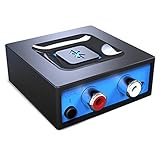
- Listen music wireless: Connect with computer speakers, home stereo systems or other speaker systems via the 3.5 mm or RCA cable, then pair with the Bluetooth audio devices such as smartphones or tablet for streaming music.
- Easy setup and automatic reconnect: There is a big bluetooth symbol button in bluetooth receiver middle. Pair your bluetooth device to this adapter with a single button press. Click once means Bluetooth Connect/Disconnect. Hold the botton 3 second mean ON/OFF. It can reconnect automatically with the previously paired device.
- Wireless range: Indoors(without obstacles) connect rang up 30-40 ft (10-12 m).
- Works with most device: Bluetooth enabled device including smartphones, tablets, computers, laptops upon and any powered PC speakers, home stereo systems and A/V receivers.
- NOTE: This adapter doesn't have built-in battery, power by AC to DC power adapter or USB cable. This product is a bluetooth receiver ONLY, not a bluetooth transmitter. Only to give Bluetooth capabilities to an existing stereo / powered speaker / PA. If you have any problems, please contact us at any time by Amazon Order, and we will speed up the process to resolve the issue.
Algorithmic discovery
Critics argue that recommendation systems and endless playlists encourage passive, mood-based listening and favor tracks that work as background audio. They ask whether algorithmic feeds narrow taste, weaken album listening and make artists dependent on opaque placement decisions.
This is a cultural and design argument, not a settled finding that algorithms uniformly damage music. Recommendation systems can expose listeners to unfamiliar artists; the dispute is over whose interests the system prioritizes and how much control listeners and musicians have.
Platform power and AI
Spotify combines distribution, audience data, playlists, promotion and discovery in one service. Organizers object to that concentration, as well as to AI-generated or low-value catalog material. AI-generated music, fake artist profiles, spam and AI-assisted production are related debates, but they are not identical allegations and should not be treated as one proven claim.
Daniel Ek’s Helsing investment
Spotify co-founder Daniel Ek invested in Helsing, a German defense-technology company. Artists including Massive Attack, King Gizzard & the Lizard Wizard, Deerhoof and Hotline TNT were reported to have removed music from Spotify in protest. Spotify and Helsing are separate companies; the controversy concerns an executive’s investment and the values listeners and artists associate with the platform, not an allegation that Spotify itself is a military contractor. The Guardian documents the withdrawals and context.
The royalty argument is more complicated than “Spotify pays pennies”
Spotify’s artist guide says tracks generally need at least 1,000 streams in the previous 12 months to participate in the recorded-music royalty pool under rules introduced in April 2024. That is an eligibility rule for the recorded-music pool, not proof that every low-stream track receives nothing in every rights category. Spotify’s guide sets out the rule.
Spotify’s own 2026 Loud & Clear material says an artist with one in one million of total Spotify streams generated approximately $11,000 in 2025. That is a Spotify model example, not a universal payout. Spotify also says independent artists and labels generated about half of its royalties in 2025, and that more than one-third of artists generating at least $10,000 in royalties had begun independently. These are company-reported figures, useful for understanding Spotify’s defense but not independent proof that the system is fair. See Loud & Clear’s FAQ and Spotify’s 2026 highlights.
Moving to another streaming service may change where subscription revenue is allocated, but it does not automatically create a living wage. A direct album purchase, ticket, membership or merchandise sale gives a listener a more identifiable relationship with a particular artist.
Is this a Spotify problem or a streaming problem?
Spotify is an especially visible target because of its scale and its combination of streaming, playlists, podcasts, advertising and recommendation systems. Many objections, however, apply to the broader pro-rata subscription model. Apple Music, YouTube Music, TIDAL and Qobuz still mediate access through a platform and generally rely on pooled licensing economics.
Changing services is not the same as changing the economics of recorded music. A boycott aimed only at Spotify may have limited leverage unless it is connected to artist organizing, collective bargaining, regulation or a broader change in how music is licensed.
Why visibility is not the same as a mass exodus
Books such as Liz Pelly’s Mood Machine, artist protests, the Helsing controversy, concerns about synthetic content and the growth of music-first services have moved long-running complaints into mainstream discussion. That means the issue is more visible—not that a majority of subscribers have canceled.
Rank #2

- ✅ Bluetooth 5.3 for Superior Sound -- Experience high-fidelity audio with the latest Bluetooth 5.3 technology. Enjoy stable, low-latency transmission and crystal-clear music streaming, podcasts, and hands-free calls.
- ✅ Easy Plug & Play Setup -- No charging needed! Simply plug the Bluetooth adapter into your car’s USB port and 3.5mm AUX jack. It powers on automatically and reconnects to your device instantly.
- ✅ Hands-Free Calling with Noise Cancellation -- Built-in microphone and noise reduction tech let you take clear, distraction-free calls directly through your car speakers. Stay safe and focused on the road.
- ✅ Wide Compatibility -- Works with any device featuring a 3.5mm AUX port: car stereos, home speakers, amplifiers, and wired headphones. Connect iPhones, Android phones, tablets, and more.
- ✅ Dual Device Pairing & Auto Reconnect -- Connect and switch between two Bluetooth devices at once. The adapter remembers your last paired device and reconnects automatically when you start your car.
Spotify remains convenient for commuting, family listening, social sharing, podcasts, audiobooks, offline playback and an enormous catalog. Artists have also historically removed music and later returned because reach matters. A serious response acknowledges those trade-offs instead of treating convenience as a moral failure.
What canceling Spotify actually involves
- Check your catalog. Identify niche, regional and older releases that may be missing elsewhere.
- Export or recreate playlists. Transfer services can miss tracks, impose limits, request account access or collect listening data.
- Review household effects. Spotify’s Duo and Family plans have residence requirements; cancellation can affect other members. Check current terms at the US Premium page.
- Save legitimate offline purchases. Purchased downloads and local files require organized storage and backups.
- Replace discovery. Use independent radio, newsletters, record shops, artist recommendations and community-curated playlists.
Spotify’s US page viewed in August 2026 listed Individual at $12.99 per month, Student at $6.99, Duo at $18.99 and Family at $21.99, with a promotional first month at $0 for eligible new Individual subscribers. Prices and benefits vary by market and can change; verify before acting.
Four practical levels of participation
1. Support specific artists directly
- Buy an album, download, physical release or merchandise from the artist or label.
- Purchase tickets and join memberships where available.
- Share an artist’s direct-sales page instead of only a streaming link.
- Ask the artist which purchase or platform helps them most.
Bandcamp is useful for direct album, download, merchandise and physical-media purchases, but it has no universal catalog and not every artist uses it.
2. Change how you listen
- Choose full albums rather than leaving passive playlists running.
- Replace some algorithmic sessions with independent radio or human-curated recommendations.
- Use Spotify for discovery, then buy from the artist elsewhere.
3. Use another service selectively
Do not switch on the assumption that a competitor solves artist compensation. Compare catalog coverage, device support, audio quality, privacy and the artist’s own preference.
| Option | Primary benefit | Main limitation | Best for |
|---|---|---|---|
| Bandcamp/direct purchase | Identifiable support for an artist or label | No unlimited universal catalog | Fans supporting specific artists |
| Qobuz | Music-first service, high-resolution listening and downloads | Smaller catalog or user base may mean missing releases; still a subscription | Audiophiles and download buyers |
| TIDAL | Conventional streaming replacement with music-focused positioning | Still a commercial intermediary | Listeners wanting a full streamer |
| Apple Music | Integration with Apple devices and services | Not direct-to-artist; remains platform-mediated | Apple households |
| Local files and physical media | Ownership and permanence | Cost, storage, backups and organization | Collectors and intentional listeners |
| Independent radio | Human curation and serendipitous discovery | Less control over exact selections | Listeners seeking alternatives to feeds |
A 2026 WIRED report described Qobuz as benefiting from anti-Spotify interest and reported user and revenue growth; those figures are secondary reporting, not audited market totals.
4. Join collective reform
Individual cancellations send a signal, but coordinated artist campaigns, unions, transparency demands and regulatory action are more likely to affect licensing and bargaining power. Support campaigns whose specific goals, organizers and evidence are clear.
The most useful way to think about the movement
You do not have to delete Spotify to participate. The meaningful shift is to stop treating one platform as the only route to music. Keep the convenience you need, while directing some money, attention and discovery toward artists, labels, radio, purchases and services that better match your values.
Frequently Asked Questions
Is “Death to Spotify” an official nonprofit or company?
Not on the evidence available here. The phrase functions as a banner for connected local events, artist actions, listener boycotts and reform demands rather than a verified single global organization.
Will switching to Qobuz, TIDAL or Apple Music automatically pay artists more?
No. Each service has different terms and catalogs, but moving between subscription platforms does not by itself end pooled streaming economics or guarantee a living wage.
The Tool Desk
Outbyte PC Repair FREERepair Windows errors before they cause bigger problemsFix Now →Outbyte Driver Updater FREEScan for outdated or missing drivers - takes under a minuteDriver Scan →Is canceling Spotify the only meaningful action?
No. Direct purchases, tickets, merchandise, human-curated discovery and partial reductions in passive streaming can support the movement without requiring an all-or-nothing boycott.
Quick Recap
Product prices and availability are accurate as of the date/time indicated and are subject to change. Any price and availability information displayed on Amazon at the time of purchase will apply.