Cloud video streaming moves live or stored video through a sequence of cloud services that ingest or receive it, encode and package it, deliver it over the internet, and let a player decode it. Use it when you need cloud-managed processing or delivery; choose a managed platform for a more integrated workflow, or assemble cloud components when you need greater architectural control and can operate them.
How cloud video streaming works
A cloud video stream is a pipeline, not a single operation. The exact components depend on whether the source is live or prerecorded and whether you use a managed service or build from separate services.
- Capture or upload. For live video, a camera or other source sends a feed to a cloud input. For video on demand (VOD), you upload or otherwise store a media file. Cloudflare documents live ingest over RTMPS or SRT using a unique input and stream key; AWS describes stored VOD assets for on-demand viewing. Cloudflare Stream documentation · AWS Video on Demand on AWS.
- Encode or transcode. Encoding compresses video for delivery. A service may also transcode the source into multiple resolutions and bitrates, giving viewers different versions to suit their devices and connections. AWS documents encoding for live and VOD workflows, while Cloudflare describes encoding live input to multiple resolutions.
- Package. The encoded output is organized into media segments and described by a manifest that a player can read. AWS lists HLS, DASH, Smooth Streaming, and CMAF among common packaging formats; packages can contain segmented audio, video, and captions.
- Store or originate, then deliver. VOD files can be served from an origin such as a server or object storage. Live output can pass through packaging and origin services. A content delivery network (CDN) distributes playback requests to viewers; AWS CloudFront is one documented example, while Cloudflare Stream delivers over its own network.
- Play. A web or app player reads the manifest, requests media segments, and decodes the video. Cloudflare says its live output can be played using its player or another player that supports HLS or DASH.
Some managed services combine several or all of these stages. A built architecture connects separate services, which makes the interfaces between them part of your design and operations.
Live streaming and VOD are different workloads
Use VOD when viewers choose when to watch
VOD serves a stored asset that a viewer can start on demand. The source media exists before playback begins, though a cloud workflow may still encode or package it after upload.
The Tool Desk
Outbyte PC Repair FREERepair Windows errors before they cause bigger problemsFix Now →Outbyte Driver Updater FREEFix the driver behind crashes, sound loss and screen glitchesFind Drivers →#1 Best Overall
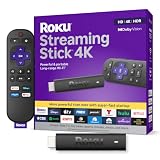
- Stunning 4K and Dolby Vision streaming made simple: With America’s number 1 TV streaming platform,* exploring popular apps—plus tons of free movies, shows, and live TV—is as easy as it is fun. *Based on hours streamed—Hypothesis Group
- Breathtaking picture quality: Stunningly sharp 4K picture brings out rich detail in your entertainment with four times the resolution of HD. Watch as colors pop off your screen and enjoy lifelike clarity with Dolby Vision and HDR10+.
- Seamless streaming for any room: With Roku Streaming Stick 4K, watch your favorite entertainment on any TV in the house, even in rooms farther from your router thanks to the long-range Wi-Fi receiver.
- Shows on the go: Take your TV to-go when traveling—without needing to log into someone else’s device.
- Compact without compromises: Our sleek design won’t block neighboring HDMI ports, so you can switch from streaming to gaming with ease. Plus, it’s designed to stay hidden behind your TV, keeping wires neatly out of sight
Use live streaming when a feed is being sent now
A live stream processes a source feed while an event is underway or a continuous channel is running. It requires an active broadcaster sending video to a cloud input. Uploading a recording for later playback is not the same workflow as broadcasting a live feed.
A continuous channel can also be made from prerecorded video, but the delivery arrangement matters. For example, StreamNeo is a YouTube-only cloud service for keeping a channel live from uploaded videos: upload a recording or create a playlist, add the YouTube stream key, and go live. It loops the uploaded material from the cloud; it does not broadcast a camera feed. Learn about StreamNeo.
Rank #2

- Ultra-speedy streaming: Roku Ultra is 30% faster than any other Roku player, delivering a lightning-fast interface and apps that launch in a snap.
- Cinematic streaming: This TV streaming device brings the movie theater to your living room with spectacular 4K, HDR10+, and Dolby Vision picture alongside immersive Dolby Atmos audio.
- The ultimate Roku remote: The rechargeable Roku Voice Remote Pro offers backlit buttons, hands-free voice controls, and a lost remote finder.
- No more fumbling in the dark: See what you’re pressing with backlit buttons.
- Say goodbye to batteries: Keep your remote powered for months on a single charge.
Managed service or assembled cloud architecture?
| Approach | What it gives you | What you take on | Best fit |
|---|---|---|---|
| Managed streaming service | An integrated workflow that may bundle ingest, encoding, packaging, and delivery. Cloudflare describes Stream as handling streaming end to end, from ingestion through delivery. | Less control over the underlying components and configuration than a composed architecture; exact options depend on the service. | Teams that value a simpler setup and want the provider to manage more of the pipeline. |
| Composed cloud architecture | Choice over components, formats, origins, security, redundancy, and player integration. AWS documents a workflow assembled from MediaLive, MediaPackage, and CloudFront. | Integration, configuration, monitoring, and ongoing operations across the selected services. | Teams with specific technical requirements and the people and processes to operate the system. |
These are trade-offs, not universal quality rankings. A managed service can reduce infrastructure configuration, while separate components can expose more choices. Neither approach removes the need to define playback, reliability, security, and cost requirements.
What to evaluate before choosing
- Workload: live, VOD, or both; event duration; whether viewers need to start at any time.
- Latency: how much delay viewers can tolerate from source to playback.
- Playback compatibility: target devices, player support, delivery formats, and protocols.
- Media requirements: ingest options, encoding ladder, captions, and audio needs.
- Audience and delivery: geographic reach, CDN and origin behavior, and expected audience spikes.
- Reliability and protection: redundancy, recording, content authorization, and DRM needs.
- Operations: how much control you need versus how much integration and maintenance your team can take on.
- Economics and limits: current ingest, encoding, storage, and delivery prices, plus workload-specific service limits. These vary by provider and configuration; compare current terms for your actual workload rather than assuming a break-even point.
Adaptive quality, CDN delivery, and latency
Adaptive bitrate gives players a choice of quality
Adaptive bitrate delivery provides multiple encoded renditions. A compatible player can select a rendition that better suits the viewer’s available connection, instead of relying on one fixed version for every viewer. HLS and DASH are segmented HTTP delivery formats used in the documented workflows.
Recommended Free Tools
Rank #3

- The Google TV Streamer (4K) delivers your favorite entertainment quickly, easily, and personalized to you[1,2]
- HDMI 2.1 cable required (sold separately)
- See movies and TV shows from all your services right from your home screen[2]; and find new things to watch with tailored recommendations for everyone in your home based on their interests and viewing habits
- Watch live TV and access over 800 free channels from Pluto TV, Tubi, and more[3]; if you find an interesting show or movie on your TV, mobile app, or Google search, you can easily add it to your watchlist, so it’s ready when you are[2]
- Up to 4K HDR with Dolby Vision delivers captivating, true-to-life detail[4]; and you can connect speakers that support Dolby Atmos for more immersive 3D sound
A CDN distributes playback requests
A CDN serves content through a distributed network rather than requiring every playback request to come directly from one origin. This can help a service deliver to viewers in different locations, but actual behavior depends on the provider’s delivery design and the workload.
Latency comes from the whole path
End-to-end delay is affected by encoding, packaging and segment duration, delivery, and player buffering—not just the cloud region. Cloudflare’s educational article says that “With many live streams, viewers still experience 20 to 30 seconds of latency.” The article’s publication date is not established, and that figure is a general vendor statement, not a benchmark or promise for every service. Cloudflare also describes chunking into smaller pieces as one approach to reducing wait time. Cloudflare’s live-streaming explainer.
Rank #4

- Advanced 4K streaming - Elevate your entertainment with the next generation of our best-selling 4K stick, with improved streaming performance optimized for 4K TVs.
- The newest Fire TV experience (2026) – Our biggest update to Fire TV has a new, modern design that gets you to your entertainment fast. Browse dedicated content categories, pin more of your favorite apps, and get personalized recommendations from Alexa+. Spend less time scrolling, and more time watching.
- Cloud gaming, no console required – Stream Call of Duty: Black Ops 7, Hogwarts Legacy, Outer Worlds 2, Ninja Gaiden 4, and hundreds of games on your Fire TV Stick 4K Select with Xbox Game Pass and Luna via cloud gaming. Xbox Game Pass subscription and compatible controller required. Each sold separately.
- Smarter picks with Alexa+ – Getting to what you love has never been easier. Press the voice remote button and talk naturally to find what to watch across your apps, manage your smart home, or dive into virtually any topic.
- Wi-Fi 6 support - Enjoy smooth 4K streaming, even when other devices are connected to your router.
A practical live-stream setup
A basic cloud live workflow needs a source, an input endpoint, and a broadcaster capable of sending the feed using a protocol accepted by the service. Cloudflare documents RTMPS and SRT ingest and recommends OBS for a simple setup. A webcam is one possible capture source, not a requirement; an existing camera or another video source may work if it can provide a feed to the broadcaster.
- Choose the workflow and provider. Confirm that the service supports your source, ingest protocol, delivery format, player, and latency needs. Check its current limits and charges for the workload.
- Create the live input. In the provider’s dashboard, create a live input and obtain its ingest address and stream key. Cloudflare documents a unique input and key for live sources.
- Configure the broadcaster. In OBS or compatible hardware/software, enter the ingest server address and stream key, select the source, and set the output settings required by the service. Keep the key private; anyone with access to it may be able to broadcast to that input.
- Start sending and verify playback. Start the broadcaster, check that the cloud service receives the feed, then test the resulting playback in the intended player and on representative devices. Confirm audio, captions if used, picture quality, and the delay acceptable for your event.
The exact dashboard labels and encoding settings depend on the chosen provider, source, and workflow; consult that service’s current setup documentation rather than assuming one configuration fits every stream.
Best Value

- Essential 4K streaming – Get everything you need to stream in brilliant 4K Ultra HD with High Dynamic Range 10+ (HDR10+).
- The newest Fire TV experience (2026) – Our biggest update to Fire TV has a new, modern design that gets you to your entertainment fast. Browse dedicated content categories, pin more of your favorite apps, and get personalized recommendations from Alexa+. Spend less time scrolling, and more time watching.
- Make your TV even smarter – Fire TV gives you instant access to a world of content, tailor-made recommendations, and Alexa, all backed by fast performance.
- All your favorite apps in one place – Experience endless entertainment with access to Prime Video, Netflix, YouTube, Disney+, Apple TV+, HBO Max, Hulu, Peacock, Paramount+, and thousands more. Easily discover what to watch from hundreds of thousands of movies and TV episodes (subscription fees may apply), including free, ad-supported content.
- Getting set up is easy – Plug in and connect to Wi-Fi for smooth streaming.
Or let it run in the cloud
For a continuous YouTube channel built from uploaded videos rather than a live camera feed, StreamNeo keeps the stream running from the cloud after you upload a recording or playlist, add your YouTube stream key, and go live. Nothing has to stay on at home; videos stream as uploaded, up to 4K 60fps, at one price per slot regardless of quality. If YouTube drops the stream, StreamNeo automatically recovers it. The first day is free with no card required. Monthly pricing is $9.99 per month.
Start your free first day with StreamNeo.
Common problems and what to check
- The cloud input shows no signal: confirm the broadcaster is running, the ingest address and stream key match the intended input, and the source is producing video. Check that the selected ingest protocol is supported.
- The stream reaches the service but will not play: check that packaging and delivery have completed, and that the player supports the output format or protocol. Test with the provider’s player if available, then compare with your own player.
- Playback buffers or quality drops: check the viewer connection and whether adaptive renditions are available and configured. Review the full delivery path, including the origin and CDN behavior, rather than assuming the encoder alone is responsible.
- Delay is higher than expected: inspect encoding, segment or chunk settings, delivery, and player buffering together. A cloud region setting by itself does not determine end-to-end latency.
- Some devices lack captions or audio: verify that the required tracks are included in the packaged output and supported by the player and device.
- A sudden audience increase causes trouble: verify the service’s current capacity and delivery limits for your plan and workload, and review origin/CDN behavior and redundancy options.
Sources and scope
Workflow details are based on official Cloudflare and AWS documentation accessed October 3, 2026. Cloudflare pages report updates in April and July 2026; publication dates for the referenced AWS pages were not established. No independent performance test or current cross-provider price comparison is presented here, so check provider documentation and pricing for the region, configuration, and workload you plan to run.
Quick Recap
Product prices and availability are accurate as of the date/time indicated and are subject to change. Any price and availability information displayed on Amazon at the time of purchase will apply.