Quick wins for a faster PC:
Scan for outdated or missing drivers - takes under a minuteDriver Scan →Clear out junk files and repair common Windows errorsFree Scan →The first images of Christian Bale as Frankenstein’s Monster don’t just reveal a new look; they recalibrate expectations for what The Bride is aiming to be. This is not the stitched-together spectacle of past adaptations, but something colder, sadder, and unsettlingly intimate. Bale’s Monster appears less like a creation unleashed and more like a being caught mid-reckoning, framed with a gravity that suggests the film’s horror will be rooted in identity rather than shock.
What stands out immediately is the restraint of the design. The scars are present but subdued, the body marked by assembly rather than exaggerated mutilation, and Bale’s posture carries a sense of weary self-awareness rather than brute menace. His eyes, hollowed yet alert, imply a Monster capable of reflection, hinting that The Bride is less interested in fear of the other than in the tragedy of being made without consent.
| # | Preview | Product | Price | |
|---|---|---|---|---|
| 1 |

|
The Bride! (DVD) | $14.96 | Buy on Amazon |
| 2 |
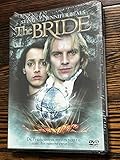
|
The Bride | $14.29 | Buy on Amazon |
| 3 |

|
The Princess Bride (20th Anniversary Edition) | $8.15 | Buy on Amazon |
| 4 |
![Bride Hard [DVD]](https://m.media-amazon.com/images/I/41y5tl6QM2L._SL160_.jpg)
|
Bride Hard [DVD] | $9.96 | Buy on Amazon |
| 5 |

|
Seven Brides for Seven Brothers (DVD) (Rpkg) | $7.19 | Buy on Amazon |
That choice places the film squarely within the modern prestige horror lineage, where monsters function as mirrors for moral and emotional collapse. Bale’s history of total physical and psychological immersion makes this incarnation feel less like a role and more like an excavation of Shelley’s themes through a contemporary lens. If these images are any indication, The Bride is positioning Frankenstein’s Monster not as an icon to be resurrected, but as a character to be understood anew.
Anatomy of a Monster: Breaking Down the Design, Makeup, and Physical Transformation
The most striking quality of Bale’s Monster is how deliberately it avoids iconography. There is no flat-top homage or theatrical grotesquerie, no visual shorthand borrowed from the Universal lineage. Instead, the design feels medical and mournful, as if the body has been repaired rather than assembled, carrying the quiet evidence of intervention without spectacle.
#1 Best Overall
A Design Built on Restraint
The visible scarring appears surgical rather than savage, mapped across Bale’s body with a sense of purpose instead of shock value. These marks don’t dominate the frame; they recede just enough to let the performance breathe. The effect suggests a creature shaped by hands that believed they were doing good, reinforcing the film’s apparent interest in intention over outcome.
The costuming furthers that idea, favoring muted textures and functional silhouettes that feel lived-in rather than symbolic. Nothing announces the Monster as mythic. Everything presents him as corporeal, fragile, and subject to the same entropy as the world around him.
Makeup That Serves the Performance
What elevates the makeup work is how little it competes with Bale’s face. The prosthetics subtly distort symmetry without freezing expression, allowing micro-emotions to flicker across his features. Hollowed eyes, tightened skin, and an almost ashen pallor create the sense of a man pulled back from death without fully returning.
This approach aligns with modern prestige horror’s emphasis on internalized dread. The Monster’s face becomes a landscape of interrupted humanity, where pain, confusion, and thought coexist. It’s a design that trusts the camera to linger rather than recoil.
The Tool Desk
Outbyte PC Repair FREEClear out junk files and repair common Windows errorsFree Scan →Outbyte Driver Updater FREEScan for outdated or missing drivers - takes under a minuteDriver Scan →The Physical Language of a Made Man
Bale’s physical transformation extends beyond musculature into movement. His posture, slightly collapsed at the shoulders, communicates an awareness of his own unnatural weight, as though he feels every added piece of himself. There’s a carefulness to his stance that reads as self-surveillance, a body learning how to exist under observation.
That choice reframes the Monster not as a threat but as a presence. Even in stillness, the body tells a story of adjustment and endurance, reinforcing the film’s apparent fixation on identity as something imposed rather than chosen.
A Monster in Service of Theme
Taken together, the design, makeup, and physicality position The Bride as a reinterpretation rooted in consequence rather than creation. This Monster is not defined by the moment he lives, but by the fact that he must continue living afterward. Bale’s transformation becomes a conduit for Shelley’s existential questions, filtered through a contemporary cinematic language that favors empathy over awe.
The images suggest a film confident enough to let its horror emerge slowly, from the tension between what the Monster is and what he understands himself to be. In that space, The Bride appears poised to turn one of cinema’s most familiar figures into something quietly, devastatingly new.
Bale’s Performance Through Stillness: What the Images Reveal About Character and Psychology
What’s most striking in the newly revealed images is not what Bale’s Monster is doing, but what he is withholding. His face is often caught between actions, eyes fixed just off-center, as though listening to thoughts he doesn’t yet have language for. It’s a performance calibrated to the margins of movement, where meaning accumulates in the pause rather than the gesture.
This restraint suggests a Monster defined less by impulse than by internal negotiation. Bale appears to play him as a being constantly measuring his own presence, aware that any motion might confirm the fears projected onto him. In that sense, the stillness becomes defensive, a psychological armor as deliberate as the stitched flesh.
A Gaze Shaped by Memory, Not Instinct
Across the images, Bale’s eyes carry an unsettling specificity. They don’t read as vacant or feral, but reflective, weighted with something like inherited memory. It’s the look of someone absorbing the world as evidence, filing away every reaction as data about who he is allowed to be.
Rank #2
That choice reframes the Monster’s consciousness as observational rather than reactive. He is not discovering violence or fear for the first time; he is studying them, trying to understand their rules. The stillness, then, becomes analytical, an expression of a mind assembling itself from fragments.
Stillness as Emotional Containment
Bale’s lack of overt expression feels purposeful, almost ritualistic. The Monster’s face rarely resolves into clear emotion, instead hovering in states of suspension where sorrow, curiosity, and resentment blur together. It gives the impression of a being who has learned that feeling too much, too visibly, invites punishment.
This emotional containment aligns with The Bride’s apparent thematic focus on consequence and endurance. The Monster is not raging against his condition; he is surviving it. Bale’s performance suggests a psychology shaped by restraint, where silence and immobility are strategies rather than symptoms.
A Modern Monster Defined by Interior Life
By leaning so heavily into stillness, Bale positions this incarnation firmly within modern prestige horror’s fascination with interiority. The terror is not what the Monster might do, but what he is forced to carry without release. Each image feels less like a moment of spectacle and more like a cross-section of thought.
In that way, The Bride appears to be using Frankenstein’s Monster as a vessel for contemporary anxieties about selfhood, surveillance, and emotional suppression. Bale’s performance, as revealed so far, doesn’t ask for fear or pity outright. It asks the viewer to sit with him, in the quiet, and recognize the cost of existing in a body that was never meant to last.
Recommended Free Tools
A Bride Reimagined: How These Images Signal a Radical Shift in the Frankenstein Mythos
If Bale’s Monster represents containment, then the newly revealed imagery suggests The Bride is where that containment begins to fracture. The images subtly reposition the familiar myth away from creation as a singular act and toward creation as an ongoing negotiation between bodies, power, and expectation. This is not a story driven by lightning strikes and laboratory spectacle, but by what happens after the miracle fails to resolve anything.
Rather than framing the Monster as an aberration orbiting a dominant creator, The Bride appears to redistribute narrative gravity. The compositions imply relational tension rather than hierarchy, with Bale’s Monster often positioned not as a threat or centerpiece, but as a figure reacting to proximity, presence, and judgment. It’s a visual grammar that suggests Frankenstein’s tragedy is no longer about being made, but about being placed.
Design as Ideology, Not Decoration
The Monster’s design in these images rejects the iconic excess that has long defined the character. There is no fetishized grotesquerie, no indulgence in stitched horror for its own sake. Instead, the construction feels deliberate, almost restrained, as though every visible scar or imperfection has been calibrated to communicate use rather than shock.
This aesthetic choice reframes monstrosity as function. The body is not a warning sign but an interface, something meant to operate within a world that resents its presence. By stripping away visual theatrics, The Bride positions the Monster less as a spectacle and more as an artifact, shaped by intention and burdened by consequence.
Shifting the Myth From Origin to Aftermath
Traditionally, Frankenstein adaptations fixate on the act of creation as the central sin. These images suggest The Bride is far more interested in the aftermath, in what lingers once the horror has settled into routine. The Monster’s posture, often closed and inward, reads as someone who has already learned the cost of visibility.
This emphasis on endurance over eruption marks a decisive tonal shift. Horror emerges not from chaos, but from permanence, from the knowledge that there is no return to innocence once a body has been assigned meaning by others. The Monster is not chasing humanity; he is navigating a system that has already decided what he represents.
Rank #3
- MGM The Princess Bride (2-Disc 20th Anniversary Edition)
A Prestige Horror Reorientation
Taken together, these images place The Bride firmly within modern horror’s turn toward thematic density and emotional specificity. This is not a retread of Gothic inevitability, but a reconfiguration of the myth as a study of control, companionship, and imposed identity. Bale’s Monster exists in dialogue with the world around him, rather than in opposition to it.
In doing so, The Bride signals its ambition to treat Frankenstein not as a cautionary tale about ambition, but as a meditation on what it means to be designed for someone else’s purpose. The horror lies in that misalignment, and in the quiet, relentless effort to survive it without becoming what the world expects.
Tone, Texture, and Gothic Prestige: Reading the Film’s Horror Language Through Visuals
If the Monster’s design reframes Frankenstein as an artifact of use, the film’s broader visual language completes the transformation. The newly revealed images suggest a horror vocabulary built on texture rather than terror, atmosphere rather than spectacle. Everything appears slightly worn, dimmed by age and intent, as if the world itself has been lived in too hard to accommodate innocence.
There is an almost tactile weight to the imagery. Stone walls sweat with damp history, fabrics hang heavy and utilitarian, and light seems rationed rather than expressive. This is a Gothic aesthetic stripped of romantic excess, favoring density and material presence over flourish.
Horror as Environment, Not Event
What emerges most clearly from the visuals is a sense that horror in The Bride is structural. The fear does not spike; it settles. Bale’s Monster is framed as part of the environment, often absorbed into shadowed interiors or rigid compositions that emphasize containment over chaos.
Rather than using aggressive angles or heightened contrasts, the imagery relies on spatial pressure. Doorways feel narrow, ceilings low, rooms functionally oppressive. The Monster does not dominate the frame so much as struggle to exist within it, reinforcing the idea that this world was never built to accommodate him.
Do these 3 things before closing this tab:
1Repair Windows errors before they cause bigger problems2Scan for outdated or missing drivers - takes under a minute3Clear out junk files and repair common Windows errorsGothic Without Ornament
The Bride’s take on Gothic prestige cinema feels deliberately restrained. Where classic Gothic horror indulges in visual excess, these images opt for subtraction. Architectural lines are blunt, locations practical, and even the Monster’s physicality avoids operatic exaggeration.
This restraint gives the film a curatorial seriousness, aligning it with recent prestige horror that treats genre as a vessel for philosophical inquiry. The Gothic here is not decorative; it is infrastructural, embedded in how bodies move through space and how power manifests through design.
Bale’s Physical Performance as Visual Tone
Christian Bale’s presence anchors this visual philosophy. His Monster is not photographed as an aberration, but as a body negotiating constant resistance. The tension in his posture, the careful economy of movement, and the sense of internalized control all communicate a character who understands he is always being read.
The horror language, then, is inseparable from performance. Bale’s physical restraint mirrors the film’s aesthetic discipline, creating a unified tone where image and embodiment reinforce one another. The result is a Monster who feels less like a figure of fear and more like a loaded symbol moving carefully through hostile terrain.
What’s actually slowing this PC down?
Pick the symptom - the matching free tool is one click away.
Positioning The Bride Within Modern Horror Prestige
Taken together, these visuals position The Bride firmly within the contemporary evolution of horror cinema. This is a film that appears more interested in psychological occupation than visceral assault, more attuned to implication than release. Its imagery signals confidence in stillness, patience, and interpretive space.
Rank #4
- Bride Hard [DVD]
By communicating tone through texture, composition, and bodily presence, The Bride asserts itself as a serious reinterpretation rather than a revisionist gimmick. The horror is quiet, deliberate, and unresolved, lingering in how the Monster is seen rather than what he does.
From Karloff to Bale: Placing This Monster in the Legacy of Frankenstein on Film
Every cinematic Frankenstein’s Monster arrives burdened with lineage. From Boris Karloff’s myth-making turn in 1931 to the increasingly psychological interpretations that followed, the character has functioned less as a single role than as a recurring philosophical argument about creation, power, and consequence. The first images of Christian Bale suggest The Bride understands that inheritance and is deliberately choosing where to stand within it.
Rather than attempting to outdo its predecessors through spectacle or grotesquerie, this Monster appears designed as a corrective gesture. The visual language signals awareness of what the character has traditionally represented, while resisting the urge to reiterate familiar iconography. In doing so, Bale’s Monster feels positioned not as a replacement for what came before, but as a reframing of the same essential question.
Free tools Windows power users keep installed
One-click scans. No signup required.
Karloff’s Shadow and the Birth of Cinematic Myth
Boris Karloff’s Monster remains the archetype because it fused horror with pathos in a way cinema had never quite seen. The heavy-lidded gaze, the lumbering physicality, and the visible seams of construction transformed the Monster into a tragic emblem of unnatural birth. Karloff’s performance made the creature iconic by making him legible, readable even in silence.
The Bride does not appear interested in replicating that visual shorthand. Where Karloff externalized suffering through exaggerated form, Bale internalizes it through control and tension. The Monster’s humanity here is not communicated through vulnerability alone, but through discipline, suggesting a being who has learned survival rather than innocence.
Between De Niro and Detachment
Later interpretations, most notably Robert De Niro’s physically committed performance in Mary Shelley’s Frankenstein, leaned into raw emotional extremity. That version emphasized pain, rage, and rejection as eruptive forces, presenting the Monster as a volatile presence shaped by constant emotional exposure. It was a creature defined by reaction.
Bale’s Monster, as suggested by these images, seems to operate from the opposite impulse. His physical restraint implies a character who anticipates judgment and moderates himself accordingly. This is not a Monster who explodes under scrutiny, but one who absorbs it, quietly recalibrating his behavior within hostile systems.
Crashes, No Sound, or Screen Glitches?
Random freezes, missing sound and display glitches usually trace back to one bad driver. Find and replace yours safely.Free scan · under a minutePC Slower Than It Used to Be?
A free scan shows the junk files, broken settings and background clutter dragging Windows down - then fixes them in one click.Free scan · Windows 10 & 11A Monster Shaped by Modern Horror Sensibilities
What ultimately distinguishes Bale’s take is how fully it aligns with contemporary horror’s interest in interiority and social reading. The Monster is framed less as a threat than as a subject under surveillance, a body that must constantly negotiate how it is perceived. That perspective reflects a shift in genre storytelling, where fear often emerges from structures rather than singular acts of violence.
By situating its Monster within this framework, The Bride places itself in conversation with the entire cinematic history of Frankenstein while advancing it forward. Bale’s performance appears designed not to redefine the Monster through excess, but through implication, allowing restraint itself to become the most unsettling inheritance of all.
Independent reader supportYour contribution helps us test, update, and keep practical guides available for everyone.Auteur Intentions: What the Visuals Suggest About Theme, Empathy, and Modern Horror
The first images of Bale’s Monster feel less like a reveal than an invitation to read between lines. Compositionally, the camera keeps him contained within frames that emphasize thresholds, corridors, and negative space. He is present, unmistakably so, but rarely centered in a way that offers dominance or spectacle.
That visual grammar suggests an authorial interest in marginality rather than monstrosity. The Monster is not staged as an eruption into the world, but as a figure navigating it cautiously, aware of the social and physical limits imposed upon him. This is horror that studies how bodies exist under pressure, not how they explode.
Recommended Free Tools
Best Value
- DVD
- Dubbed, Widescreen, NTSC
- English (Original Language), English (Unknown)
- 1
- 102
Control as Character, Not Concealment
Costume and posture in the images do not disguise the Monster’s artificiality, yet they avoid fetishizing it. The design choices appear deliberately subdued, privileging texture and wear over theatrical grotesquerie. Bale’s stillness reads as intentional, a performance calibrated around withholding rather than provocation.
That restraint reframes empathy as something earned through observation rather than sentiment. The Monster is not asking for pity, nor is the film instructing the audience how to feel. Instead, it positions viewers alongside him, forced to notice the micro-adjustments he makes to survive being seen.
A Feminine Gaze on a Male Monster
There is also a noticeable shift in how the Monster is looked at, one that aligns with a more contemporary, arguably more intimate, horror language. The camera does not leer or recoil. It studies, often at eye level, allowing Bale’s presence to exist without immediate judgment.
This approach suggests a deliberate reorientation of power. The Monster is no longer the sole object of fear but part of a larger emotional ecosystem, one shaped by expectation, control, and denial. Horror emerges not from his actions, but from the systems that require his restraint in the first place.
Free tools Windows power users keep installed
One-click scans. No signup required.
Modern Horror as Moral Architecture
In this context, The Bride appears less concerned with shocks than with structures. The images imply a world built to contain difference, where violence is implicit rather than explicit. Bale’s Monster becomes a moral instrument, revealing the cruelty embedded in normalcy through his careful navigation of it.
That is a distinctly modern horror proposition. Fear is generated through recognition, through the unsettling realization that the Monster’s discipline mirrors the quiet compromises demanded of anyone deemed other. The visuals do not just reintroduce Frankenstein’s creation; they reposition him as a lens through which contemporary anxieties are made visible.
Why The Bride Could Redefine Prestige Monster Cinema
From Iconography to Interior Life
What the first images of Christian Bale’s Monster make immediately clear is that The Bride is uninterested in recycling familiar Frankenstein iconography for nostalgia’s sake. The design strips away spectacle in favor of lived-in realism, emphasizing physical consequence over mythic exaggeration. Scars feel medical rather than theatrical, and Bale’s bearing suggests a body that has learned to move carefully, as if constantly aware of how much space it is allowed to occupy.
This shift points toward a broader recalibration of prestige monster cinema, one that prioritizes interior life over visual shorthand. The Monster’s horror does not come from how he looks, but from how deeply he understands the rules governing his existence. In that sense, The Bride aligns itself more with psychological drama than creature feature, using the Monster as a vessel for examining constraint, compliance, and self-surveillance.
Performance as World-Building
Bale’s approach, as inferred from the stills, appears less about transformation through extremity and more about accumulation. Every slight stoop, every guarded expression, reads as a learned behavior rather than a performance flourish. This suggests a film that builds its world not through exposition, but through how its central figure has adapted to it.
That choice elevates the Monster from narrative device to atmospheric anchor. His presence communicates the film’s rules, its dangers, and its moral boundaries without dialogue. In doing so, The Bride treats performance itself as a form of world-building, where Bale’s physical control becomes the audience’s primary guide to understanding this reimagined universe.
A Reframing of the Monster Myth
Traditionally, Frankenstein stories revolve around creation and consequence, often positioning the Monster as an embodiment of unchecked ambition. The Bride appears to complicate that lineage by focusing less on the act of creation and more on the aftermath of survival. The Monster is no longer defined by the moment he was made, but by the long duration of being forced to exist within systems that fear him.
This reframing situates The Bride firmly within contemporary horror’s most ambitious impulses. Like recent prestige entries that use genre as social and philosophical inquiry, the film seems poised to interrogate power, authorship, and autonomy through character rather than allegory. The Monster becomes not a warning, but a witness.
The Tool Desk
Outbyte PC Repair FREERepair Windows errors before they cause bigger problemsFix Now →Outbyte Driver Updater FREEScan for outdated or missing drivers - takes under a minuteDriver Scan →Prestige Horror Without Detachment
Perhaps most striking is how the images suggest a balance that prestige monster cinema has often struggled to achieve. The Bride appears intellectually rigorous without feeling emotionally remote, stylized without slipping into abstraction. Its restraint does not read as aloofness, but as confidence in the material’s inherent gravity.
If the finished film sustains what these first looks promise, The Bride could mark a meaningful evolution in how classic monsters are approached. Not as relics to be updated or spectacles to be elevated, but as enduring figures capable of reflecting modern anxieties with precision and empathy. In Christian Bale’s Monster, the genre may have found a new standard-bearer, one defined not by terror alone, but by the unsettling clarity with which he reveals the world around him.
Quick Recap
Product prices and availability are accurate as of the date/time indicated and are subject to change. Any price and availability information displayed on Amazon at the time of purchase will apply.




