Boys’ Love, usually shortened to BL, is a broad genre of male-male romance and homoerotic storytelling that grew out of Japanese girls’ manga. Today it includes manga, anime, novels, games and television dramas, with works that differ widely in tone, explicitness and approach to LGBTQ+ experience. There is no single BL style or universal starting point: choosing a work by its medium, mood and content is more useful than assuming the label tells you everything.
What does Boys’ Love mean?
BL refers broadly to stories centered on romantic or homoerotic relationships between male characters. The term covers a range of cultural products rather than a single format or fixed set of conventions. A gentle school romance, an erotic comic, a novel and a television drama may all be described as BL while differing substantially in audience, tone and subject matter.
| # | Preview | Product | Price | |
|---|---|---|---|---|
| 1 |
|
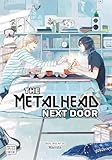
The Metalhead Next Door | $9.74 | Buy on Amazon |
| 2 |

|
Punch Drunk Love Vol. 1 | $14.95 | Buy on Amazon |
| 3 |

|
Boys Love Manga and Beyond: History, Culture, and Community in Japan | $35.00 | Buy on Amazon |
| 4 |

|
FANGS, Volume 1 | $11.24 | Buy on Amazon |
BL should not automatically be treated as a documentary account of real LGBTQ+ lives. Some works engage with gender, sexuality and social experience; others prioritize fantasy, romance or erotic storytelling. The label alone does not establish a work’s point of view or how it represents queer people, so consider each title on its own terms.
How did BL develop?
UBC Press describes BL as a genre that developed in Japan in the early 1970s, initially through work by female manga artists. By the late 1970s, women fans were also creating and self-publishing homoerotic parodies featuring established male characters and public figures, alongside the growth of commercial titles. BL expanded beyond manga into anime, games and other media. See the publisher’s account in Boys Love Manga and Beyond.
#1 Best Overall
Manga scholar Fujimoto Yukari traces BL in its broad sense to 1970s shōnen-ai in girls’ manga and discusses the role of fan works and commercial publishing in its development. Her account also describes BL’s expansion across Asian markets and into television drama; those regional developments should not be assumed to follow one identical path. Her discussion appeared in Nippon.com on September 24, 2020, in “The Evolution of ‘Boys’ Love’ Culture: Can BL Spark Social Change?”
How to choose a first BL work
Start with the kind of story and format you want, then check the description and content notices for the specific title. These are practical comparison points, not a formal taxonomy of the genre.
Rank #2
- Medium: Decide whether you want manga, a novel, anime, a game or a television drama. A format you already enjoy can make the first step easier.
- Tone: Look for the work’s own description of its mood, such as light, serious, comic or dramatic. BL does not imply one standard tone.
- Romance or erotic emphasis: Check whether the focus is on a developing relationship, sexual content, or both. The label alone does not tell you how explicit a title is.
- Market and context: A work’s country and publishing or broadcast context can help you understand its conventions, but do not assume all regional BL is the same.
- Content notices: Check for notices relevant to your preferences before reading or watching; titles under the same genre label can treat different subjects and situations.
In a 2022 honto survey, 1,190 members who purchased BL were asked to recommend one book to someone reading BL for the first time. The leading answer in that sample was Dōkyūsei (Classmates), by Asumiko Nakamura. It is a useful named starting point, not a universal ranking: the result reflects that survey’s respondents and question. The survey was reported by hontoPR via PR Times on May 31, 2022: the survey announcement.
What reader and sales figures do—and do not—show
Retailer figures offer a limited view of purchasing activity, not a census of BL readership. honto reported that its combined print-and-digital BL manga sales volume in 2020 was 131% of its 2019 volume; its digital-only BL manga sales volume was 154% of its 2019 volume. These are honto-specific sales-volume comparisons, not estimates for the whole market or counts of readers.
Quick wins for a faster PC:
Scan for outdated or missing drivers - takes under a minuteDriver Scan →Repair Windows errors before they cause bigger problemsFix Now →Fix the driver behind crashes, sound loss and screen glitchesFind Drivers →On its survey page, honto describes a survey of approximately 1,800 members who had purchased BL products. More than 80% of respondents said they read BL when seeking refreshment or stress relief. That finding describes this retailer’s surveyed customers, not all readers. The sales and survey information is presented by honto.
Independent reader supportYour contribution helps us test, update, and keep practical guides available for everyone.Where to find historical context
For a scholarly introduction rather than a story recommendation, Boys Love Manga and Beyond: History, Culture, and Community in Japan, edited by Mark McLelland, Kazumi Nagaike, Katsuhiko Suganuma and James Welker, is an academic anthology about the genre’s history and communities. UBC Press lists paperback ISBN 9781496807762 and hardcover ISBN 9781628461190; stock, formats and prices may change. See the publisher page or the Oxford Academic catalog record and abstract.
Quick Recap
Rank #4
Product prices and availability are accurate as of the date/time indicated and are subject to change. Any price and availability information displayed on Amazon at the time of purchase will apply.