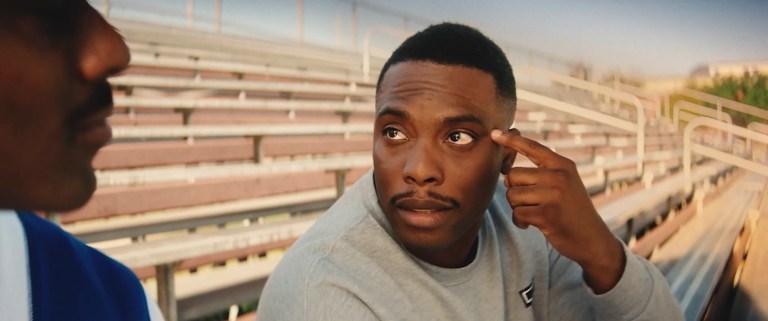
Early reactions to Black Bag have landed with an unusual level of certainty: Steven Soderbergh may have just made the sharpest, most confident film of his career. Critics coming out of the first press and industry screenings aren’t hedging with qualifiers or nostalgic comparisons. The prevailing sentiment is that Black Bag feels like a culmination, a film where Soderbergh’s restless experimentation finally locks into something brutally precise.
What’s driving that response is how completely in control the movie feels. Reviewers are praising the film’s surgical pacing, its icy sense of tension, and the way Soderbergh weaponizes restraint instead of spectacle. Rather than leaning on genre bombast, Black Bag reportedly plays like a high-level chess match, with performances calibrated to the smallest behavioral shifts and a visual style that communicates paranoia through absence as much as action.
![Black Bag - Doppeltes Spiel (4K Ultra HD) [Blu-ray]](https://m.media-amazon.com/images/I/51u6Ef7lN+L._SL160_.jpg)
That confidence matters in the context of Soderbergh’s famously eclectic filmography. From the mainstream polish of the Ocean’s trilogy to the formal daring of films like Unsane, Kimi, and The Girlfriend Experience, he’s often been admired more for curiosity than consistency. Black Bag, according to early reactions, is the rare project that fuses those instincts into something definitive, a spy thriller that feels not just timely, but authored in a way only Soderbergh could manage.
Inside the Hype: What Early Viewers Are Praising Most — Tension, Precision, and Restraint
A Spy Thriller Built on Sustained Tension
The most consistent refrain from early viewers is how relentlessly tense Black Bag feels without ever raising its voice. Soderbergh reportedly stretches scenes to the edge of discomfort, allowing silence, eye contact, and withheld information to do the heavy lifting. Rather than punctuating moments with musical cues or editorial fireworks, the film lets unease accumulate naturally, creating a pressure-cooker atmosphere that rarely releases.
Outdated Drivers Are Slowing You Down
One free scan finds every outdated or missing driver and matches the right update for your exact hardware.Free scan · exact hardware matchWindows Errors? Fix Them Before They Spread
Repair common Windows errors and clear accumulated junk for a smoother, more stable PC - no reinstall needed.Free scan · no reinstall#1 Best Overall

- Runtime: 94 minutes
Several reactions point to the film’s confidence in letting scenes breathe. Conversations play out in full, often becoming psychological standoffs where the slightest change in posture or cadence feels consequential. That approach recalls the cold anxiety of The Conversation or Tinker Tailor Soldier Spy, but filtered through Soderbergh’s distinctly modern sense of rhythm.
Precision Over Spectacle
Another element earning near-universal praise is the film’s meticulous construction. Viewers are describing Black Bag as engineered rather than assembled, with each scene serving a specific narrative or thematic function. Nothing feels ornamental, and nothing overstays its welcome, reinforcing the idea that this is Soderbergh working at maximum efficiency.
That precision extends to the filmmaking itself. Early reactions highlight the director’s exacting control over framing and movement, often using clean compositions and deliberate camera placement to suggest surveillance and vulnerability. It’s a reminder of how effective Soderbergh can be when he pares his visual language down to essentials, trusting geometry and timing instead of stylistic flourish.
The Power of Restraint in Performance and Story
Perhaps the most striking aspect of the praise is how much credit is being given to what Black Bag chooses not to do. Performances are reportedly understated to the point of severity, with actors resisting the urge to telegraph motivations or emotional arcs. That restraint forces viewers to stay engaged, constantly reassessing allegiances and intentions based on fragments rather than declarations.
What’s actually slowing this PC down?
Pick the symptom - the matching free tool is one click away.
This discipline is where many critics are locating the film’s “best of his career” claims. Soderbergh has always oscillated between accessibility and experimentation, but Black Bag appears to strike a rare balance, channeling his minimalist instincts into a narrative that rewards attention without demanding indulgence. For early viewers, that self-control isn’t a limitation; it’s the film’s greatest weapon.
A Spy Thriller Without the Fat: How ‘Black Bag’ Reinvents Genre Expectations
If early reactions are to be believed, Black Bag represents a conscious stripping away of everything audiences have been trained to expect from modern spy thrillers. There are no bloated runtimes, no obligatory globe-trotting montages, and no action beats inserted to reassure viewers they’re watching something “exciting.” Instead, Soderbergh reportedly builds tension through process, procedure, and silence, trusting the genre’s inherent paranoia to do the heavy lifting.
That confidence is a major reason critics are responding so strongly. In an era where espionage films often chase spectacle to justify their budgets, Black Bag feels almost defiantly lean. The thrills emerge not from explosions or chases, but from information being withheld, misinterpreted, or weaponized.
Process as Suspense
One recurring theme in reactions is how much suspense Black Bag wrings from bureaucratic mechanics. Meetings, briefings, and seemingly mundane exchanges become pressure points, with viewers hanging on every line because the stakes are embedded in subtext rather than spectacle. It’s espionage as labor, closer in spirit to le Carré than Bond.
Recommended Free Tools
This approach reframes intelligence work as something inherently exhausting and morally corrosive. By emphasizing process over payoff, Soderbergh aligns the audience with the characters’ constant vigilance, making paranoia feel earned rather than manufactured.
Cutting Against Franchise Muscle Memory
What makes Black Bag feel especially bracing is how directly it resists the genre’s current franchise logic. There’s no sense that scenes exist to set up future installments or expanded mythology. Early viewers note that the film feels complete unto itself, uninterested in sequel bait or narrative sprawl.
Rank #2
![Black Bag [4K UHD + Blu-ray + Digital]](https://m.media-amazon.com/images/I/515M+hln+lL._SL160_.jpg)
- Special Features: The Company of Talent; Designing BLACK BAG
That self-contained quality has prompted comparisons to Soderbergh’s most disciplined work, films like Out of Sight or The Limey, where storytelling economy becomes a virtue. In Black Bag, that economy isn’t just aesthetic; it’s ideological, rejecting the assumption that spy stories need excess to feel consequential.
A Natural Evolution of Soderbergh’s Minimalist Streak
Positioned within Soderbergh’s broader filmography, Black Bag doesn’t come out of nowhere. It appears to synthesize his long-standing fascination with systems, whether criminal, corporate, or governmental, with the pared-down rigor he’s increasingly embraced in recent years. The difference here is how perfectly that sensibility dovetails with the spy genre.
Quick wins for a faster PC:
Repair Windows errors before they cause bigger problemsFix Now →Fix the driver behind crashes, sound loss and screen glitchesFind Drivers →Clear out junk files and repair common Windows errorsFree Scan →For many critics, that alignment is why the film is being labeled a career high. Black Bag doesn’t reinvent Soderbergh so much as distill him, channeling decades of stylistic experimentation into a thriller that feels sharp, purposeful, and uncommonly confident in its refusal to overexplain itself.
Performances Under the Microscope: Cast Standouts and Subtle Power Plays
If Black Bag is being hailed as one of Soderbergh’s most controlled thrillers, much of that control comes from performances calibrated to the film’s exacting tone. Early reactions consistently emphasize how little anyone overplays a moment. Power here is conveyed through restraint, with actors trusting silence, posture, and timing to do the heavy lifting.
Rather than leaning on showy monologues or explosive confrontations, the cast operates in a register that mirrors the film’s procedural intensity. The result is an ensemble that feels dangerous precisely because no one appears to be trying to dominate the frame.
Cate Blanchett and Michael Fassbender: Precision Over Fireworks
Cate Blanchett’s performance has emerged as a focal point in early reactions, with critics praising her ability to project authority while withholding emotional transparency. Her character’s intelligence feels weaponized, expressed through micro-adjustments in tone and gaze rather than overt theatrics. It’s a performance that recalls her work in Tár, where control itself becomes the point.
Michael Fassbender complements her with a colder, more interior presence. Viewers note how he leans into stillness, letting unease accumulate around him rather than pushing it outward. Together, their scenes reportedly crackle not with volume, but with tension built from what remains unsaid.
An Ensemble Built for Suspicion
Beyond the leads, the supporting cast has drawn praise for functioning less as individual showcases and more as a shifting web of potential threats. Regé-Jean Page, Marisa Abela, and Naomie Harris are singled out for performances that feel deliberately opaque, inviting the audience to constantly reassess loyalties. Each interaction seems designed to suggest multiple readings at once.
Pierce Brosnan’s presence, in particular, carries an ironic charge. Stripped of the glamour associated with his Bond era, he reportedly leans into institutional weariness, embodying the erosion of ideals that the film keeps circling. It’s a reminder of how casting alone can add thematic texture.
Soderbergh’s Direction as Performance Architecture
What’s striking is how clearly Soderbergh’s directorial philosophy shapes the acting. Reactions suggest he positions performers within scenes like pieces on a chessboard, emphasizing spatial relationships and eyelines over emotional release. Actors are rarely framed to invite sympathy; instead, they’re observed, scrutinized, and occasionally boxed in by the camera.
This approach reinforces the film’s broader preoccupation with surveillance and mistrust. Performances don’t just serve the story; they embody its anxieties. In Black Bag, acting becomes another system to decode, and that intellectual engagement is a major reason viewers are calling the film not just thrilling, but deeply absorbing.
Craft at the Peak: Soderbergh’s Direction, Editing, and Visual Strategy
If the performances feel calibrated rather than emotive, it’s because Soderbergh’s craft is doing the calibrating. Early reactions consistently point to Black Bag as a distillation of his instincts as a filmmaker who values precision over flourish. This is Soderbergh working at full confidence, stripping the spy genre down to systems, processes, and quiet power plays.
A Director in Full Control of Space and Rhythm
Soderbergh’s direction reportedly favors restraint over momentum, allowing scenes to breathe while quietly tightening the vise. He stages conversations less as exchanges and more as confrontations with geometry, using distance, framing, and blocking to define power. Characters often occupy separate visual planes, reinforcing the sense that even allies are never truly aligned.
This spatial awareness recalls his work on The Informant! and Contagion, where control of information mattered more than spectacle. In Black Bag, that philosophy reaches a new level of refinement. The tension doesn’t escalate through action beats, but through the accumulating awareness that every position in the frame is provisional.
Editing as Misdirection
As with many of his films, Soderbergh handles the editing himself, and reactions suggest it’s central to the film’s effectiveness. Cuts are described as deliberate but slightly destabilizing, often arriving just before emotional resolution. Scenes end on implication rather than payoff, forcing the audience to mentally complete the exchange.
This approach aligns with the film’s thematic obsession with intelligence work as an incomplete puzzle. Information is always partial, and the edit mirrors that uncertainty. Viewers familiar with the sharp, procedural rhythms of Traffic or the elliptical structure of Out of Sight will recognize the lineage, but Black Bag reportedly feels leaner, more ascetic.
A Visual Strategy Built on Surveillance, Not Spectacle
Visually, Black Bag appears to reject the glossy internationalism of traditional spy cinema. Reactions describe a muted palette, controlled lighting, and compositions that feel observational rather than expressive. The camera often behaves like a silent witness, hovering at a remove, reinforcing the sense that no one is ever unobserved.
This strategy places the film closer to Soderbergh’s recent experiments like Kimi, where digital-age paranoia shaped every visual choice. But where that film leaned into immediacy, Black Bag is said to feel almost classical in its restraint. The result is a visual language that doesn’t call attention to itself, yet constantly reinforces the film’s central anxieties about trust, exposure, and institutional decay.
Do these 3 things before closing this tab:
1Repair Windows errors before they cause bigger problems2Fix the driver behind crashes, sound loss and screen glitches3Clear out junk files and repair common Windows errorsFor many viewers, this synthesis of direction, editing, and visual discipline is why Black Bag is being singled out as potentially Soderbergh’s best work. It doesn’t reinvent his style so much as perfect it, drawing on decades of experimentation to deliver a thriller that feels exacting, intelligent, and unmistakably authored.
Career Context: Where ‘Black Bag’ Sits Among Soderbergh’s Defining Films
Steven Soderbergh’s career has always resisted clean categorization. He’s a filmmaker who oscillates between studio hits and experimental side paths, often using one to bankroll the other. Early reactions to Black Bag suggest it may represent a rare convergence point, a film that fuses his commercial precision with his most exacting formal instincts.
Rank #4

- Durable Water Resistant: Made of durable Eco-Friendly fabric
- Detachable padded shooulder strap. Inner straps to secure your device in place
- Multiple soft layers for protection and extra padded strap for comfort
- Zip up pockets of varying size for all your devices accessories
- 12 month warranty
Rather than feeling like a late-career reinvention, Black Bag is being described as a culmination. It appears to absorb lessons from across his filmography and distill them into a thriller that feels confident, controlled, and unusually complete.
Between the Procedural and the Psychological
Critics have long pointed to Traffic as Soderbergh’s definitive procedural, a film that balances systems-level thinking with human consequence. Black Bag reportedly operates on a similar wavelength, but with a narrower aperture. Where Traffic sprawled across borders and bureaucracies, this film compresses its focus, using intimacy and constraint to generate tension.
Free tools Windows power users keep installed
One-click scans. No signup required.
At the same time, reactions note echoes of The Limey and Side Effects, particularly in the way information is withheld and perspective is destabilized. Black Bag seems less interested in narrative surprise than in psychological erosion, watching trust fray in real time. That emphasis places it firmly within Soderbergh’s most adult, morally ambiguous work.
The Evolution of His Thriller Mode
Soderbergh has revisited the thriller repeatedly, from the genre-savvy pleasures of Out of Sight to the clinical chill of Contagion. More recently, films like Unsane and Kimi embraced speed and immediacy, responding directly to contemporary anxieties around surveillance and digital exposure. Black Bag is said to slow that energy down, trading urgency for precision.
This restraint is why some are calling it his most confident thriller. It doesn’t chase relevance or novelty, instead trusting structure, performance, and negative space to do the work. In that sense, it feels closer to his Ocean’s trilogy in craft discipline, even if the tone is far more severe.
A Late-Period Statement, Not a Victory Lap
There’s a temptation to frame Black Bag as a late-career peak, but reactions suggest something subtler. The film reportedly lacks the showmanship of his biggest hits and the provocation of his most radical experiments. What it offers instead is control, an assurance that every creative decision is deliberate and necessary.
The Tool Desk
Outbyte PC Repair FREEClear out junk files and repair common Windows errorsFree Scan →Outbyte Driver Updater FREEFix the driver behind crashes, sound loss and screen glitchesFind Drivers →That quality aligns it with other quietly definitive works in his catalog, films that reveal their authority over time rather than through immediate spectacle. If Black Bag ultimately earns its place among Soderbergh’s defining films, it won’t be because it’s louder or flashier. It will be because it feels like a filmmaker who knows exactly what kind of movie he’s making, and why.
Independent reader supportYour contribution helps us test, update, and keep practical guides available for everyone.Why This Moment Matters: Soderbergh’s Late-Career Renaissance Explained
Steven Soderbergh has been declared “back” more times than almost any modern auteur, but Black Bag feels different. Early reactions aren’t praising a clever genre pivot or a fun experiment; they’re responding to a sense of culmination. The language being used suggests not surprise, but recognition, as if this is a filmmaker finally synthesizing decades of risk-taking into something sharply distilled.
What makes the moment resonate is that Black Bag arrives after a stretch of relentless productivity that often prioritized curiosity over consensus. Soderbergh has spent years moving between prestige projects, micro-budget experiments, streaming-first releases, and self-imposed technical constraints. The result is a director who hasn’t calcified, but refined his instincts through constant motion.
A Film Made by a Director With Nothing Left to Prove
Part of why reactions are so strong is that Black Bag reportedly carries no sense of striving. It doesn’t feel designed to reclaim relevance, chase awards, or reinvent the genre. Instead, viewers are responding to the calm authority of a filmmaker who understands exactly how much information to give, when to withhold it, and how silence can be more destabilizing than spectacle.
Best Value
- Durable Water Resistant: Made of durable Eco-Friendly fabric
- Detachable padded shooulder strap. Inner straps to secure your device in place
- Multiple soft layers for protection and extra padded strap for comfort
- Zip up pockets of varying size for all your devices accessories
- 12 month warranty
This confidence is a throughline in the praise. Critics and early viewers describe a film that trusts its audience, allowing tension to accumulate through behavior and implication rather than plot mechanics. That restraint reads as maturity, the kind that only comes from having explored every corner of the form already.
The Payoff of Years Spent Experimenting
Soderbergh’s late-career output has often been labeled restless, but in retrospect it looks like preparation. Films like Unsane and High Flying Bird tested speed, minimalism, and alternative production methods, while Kimi and Let Them All Talk honed his interest in confined spaces and conversational power dynamics. Black Bag appears to fold those lessons into a more classical framework.
The praise calling it his best work seems rooted in this synthesis. Viewers aren’t reacting to novelty, but to precision: performances calibrated to the millimeter, blocking that communicates subtext, and a narrative that weaponizes patience. It’s the rare case where formal discipline feels emotionally charged rather than clinical.
Why “Best Since” Has Turned Into “Very Best”
Soderbergh’s career invites comparison, and reactions to Black Bag are unusually decisive in where they place it. Instead of the familiar “best since Traffic” or “strongest in years,” the conversation is jumping straight to top-tier status. That shift matters, because it suggests the film isn’t just excelling within a phase, but standing shoulder to shoulder with his most enduring work.
Quick wins for a faster PC:
Scan for outdated or missing drivers - takes under a minuteDriver Scan →Clear out junk files and repair common Windows errorsFree Scan →Fix the driver behind crashes, sound loss and screen glitchesFind Drivers →What elevates Black Bag in these responses is its sense of inevitability. Every choice reportedly feels aligned with the film’s moral and psychological aims, creating an experience that lingers rather than dazzles. For a director known for reinvention, this moment matters because it frames consistency itself as the achievement, and mastery as something quietly, decisively earned.
The Verdict So Far: Is ‘Black Bag’ Truly His Magnum Opus — And Can It Hold Up?
At this early stage, the consensus is strikingly confident. The reactions calling Black Bag Steven Soderbergh’s finest work aren’t framed as heat-of-the-moment festival hyperbole, but as considered assessments from viewers attuned to his entire arc. The language keeps circling back to control, assurance, and an almost unnerving calm in how the film applies pressure.
What’s notable is how little of the praise hinges on novelty. No one is claiming Soderbergh has reinvented the spy thriller so much as perfected his own version of it. That distinction matters, because it positions Black Bag not as a flashy outlier, but as the culmination of a long, deliberate refinement.
Why the Film Feels Built to Last
A recurring theme in reactions is durability. Black Bag reportedly resists easy summary, favoring character-driven ambiguity and ethical tension over twist-based gratification. That kind of construction tends to reward repeat viewings, especially as subtext and motivation become clearer with distance.
There’s also a sense that the film’s restraint is future-proof. By avoiding topical urgency or stylistic gimmicks, Soderbergh seems to have made a thriller that isn’t chasing relevance, but assuming it. If the early read is correct, Black Bag may age the way his most respected films have: quietly, steadily, and with growing authority.
The Weight of Expectations—and Why They May Be Justified
Calling any film a career best is risky with a director this prolific, but the confidence behind Black Bag’s reception suggests something more than recency bias. Viewers aren’t ranking it high because it’s louder or bigger, but because it feels resolved, as if Soderbergh has finally aligned all his instincts into a single, focused statement.
That alignment is what makes the “magnum opus” conversation feel plausible rather than premature. If the film holds up beyond its first wave of reactions, Black Bag could mark the moment when experimentation, efficiency, and emotional precision fully converge. Not as a grand finale, but as proof that mastery doesn’t need to announce itself—it just needs to work.
Quick Recap
Product prices and availability are accurate as of the date/time indicated and are subject to change. Any price and availability information displayed on Amazon at the time of purchase will apply.
The Tool Desk
Outbyte Driver Updater FREEFix the driver behind crashes, sound loss and screen glitchesFind Drivers →Outbyte PC Repair FREEClear out junk files and repair common Windows errorsFree Scan →