Dorothy has always been the unanswered question hovering over Wicked, a presence felt more than seen. The stage musical famously reframes The Wizard of Oz from the witches’ point of view, turning Dorothy into a narrative catalyst rather than a traditional heroine. With Wicked: For Good finally bringing her on-screen in a meaningful way, the role carries an unusual amount of symbolic weight, both for longtime fans and for a film adaptation tasked with honoring decades of Oz mythology.
That’s what makes the casting of Bethany Weaver such a charged moment. Weaver, a rising performer with a theater-forward sensibility and a screen-ready naturalism, steps into a role that is less about nostalgia and more about perspective. This Dorothy is not meant to replace Judy Garland’s icon, nor to compete with Broadway legacy, but to exist within Wicked’s morally complex world, where innocence, certainty, and heroism are quietly interrogated. Weaver’s casting signals that the filmmakers understand Dorothy isn’t just a cameo or an Easter egg; she’s a narrative pivot.


Within the Wicked universe, Dorothy represents the moment when myth and misunderstanding collide. By entrusting that role to an actor who doesn’t arrive with decades of cultural baggage, Wicked: For Good creates space for reinterpretation rather than imitation. Weaver’s presence suggests a Dorothy shaped by the story’s themes rather than by precedent, reinforcing why this adaptation isn’t simply translating the stage musical to film, but expanding the Oz canon in a way that feels intentional, contemporary, and emotionally grounded.
Who Is Bethany Weaver? Tracing Her Career From Stage Pedigree to Breakout Screen Presence
Bethany Weaver’s rise hasn’t followed the fast-track fame of viral discovery or franchise-first casting. Instead, her path to Wicked: For Good reflects a classic performer’s trajectory, built on craft, discipline, and a steady accumulation of trust within theater and film circles. For audiences just discovering her through this high-profile role, Weaver arrives with a résumé that quietly explains why she was ready for Dorothy when the moment came.
#1 Best Overall

- Wicked: The Soundtrack features performances by the stars of Universal Pictures' cinematic event with music and lyrics by legendary composer/lyricist Stephen Schwartz
A Foundation Rooted in Musical Theater Discipline
Weaver comes from a stage-first background, shaped by years of musical theater training that emphasized storytelling as much as vocal precision. She built early momentum through regional theater productions and workshop environments, where interpretive choices mattered more than spectacle. That foundation shows in her work, particularly in how she approaches character psychology rather than leaning on theatrical shorthand.
Directors who’ve worked with Weaver often point to her ability to listen onstage, a skill that translates into performances that feel reactive and alive. It’s a quality especially valued in Wicked’s world, where moral ambiguity and emotional subtext drive the narrative. Her Dorothy isn’t designed to announce herself; she’s meant to be discovered in motion.
Bridging Stage Sensibility With Screen Naturalism
What separates Weaver from many stage-trained performers is her adaptability on camera. In earlier screen roles, she demonstrated a restrained, internalized acting style that resists overstatement, allowing silence and hesitation to do as much work as dialogue. That balance between theatrical grounding and cinematic subtlety is precisely what Wicked: For Good requires from a character traditionally viewed through mythic distance.
Rather than reshaping herself to fit film expectations, Weaver has brought her stage instincts into screen work in a way that feels scaled, not diminished. The result is a presence that reads as emotionally accessible without becoming ordinary. For a character like Dorothy, whose innocence is often flattened into archetype, that distinction matters.
Crashes, No Sound, or Screen Glitches?
Random freezes, missing sound and display glitches usually trace back to one bad driver. Find and replace yours safely.Free scan · under a minuteWindows Errors? Fix Them Before They Spread
Repair common Windows errors and clear accumulated junk for a smoother, more stable PC - no reinstall needed.Free scan · no reinstallWhy Dorothy Represents a Career Turning Point
Being cast as Dorothy in Wicked: For Good positions Weaver at a rare intersection of legacy and reinvention. Dorothy is one of the most recognizable figures in American film history, yet in Wicked’s universe, she exists as a question rather than an answer. Weaver’s casting signals confidence in her ability to carry symbolic weight without relying on iconography.
This role doesn’t ask her to replicate what audiences already know; it asks her to redefine what Dorothy means inside a story built on reframing assumptions. For Weaver, it’s both a breakout moment and a creative test, one that leverages her stage pedigree while placing her squarely in the future-facing conversation of major musical film adaptations.
Reintroducing Dorothy Gale Through the Wicked Lens: A Character with Mythic Baggage
Dorothy Gale arrives in Wicked: For Good carrying a century’s worth of cultural memory. She is not just a character but a shorthand for American innocence, moral certainty, and the comfort of narrative closure. Wicked has always been interested in what happens when that shorthand is interrogated rather than accepted, and Dorothy’s presence reactivates the story’s central question: who gets remembered as the hero, and who absorbs the cost of that remembrance.
In this retelling, Dorothy is less a force of destiny than a catalyst whose choices ripple outward. The Wicked lens reframes her journey as something observed obliquely, filtered through the lives altered in her wake. That shift allows the film to explore Oz not as a fairy tale playground, but as a living political and emotional ecosystem responding to an outsider’s arrival.
Quick wins for a faster PC:
Fix the driver behind crashes, sound loss and screen glitchesFind Drivers →Clear out junk files and repair common Windows errorsFree Scan →Scan for outdated or missing drivers - takes under a minuteDriver Scan →Dorothy as Symbol, Not Savior
Traditionally, Dorothy functions as a moral north star, guided by instinct and rewarded for it. Wicked complicates that reading by positioning her as well-meaning yet unknowingly disruptive, a child moving through systems she doesn’t fully understand. This interpretation doesn’t villainize Dorothy; it humanizes her by acknowledging the unintended consequences of innocence.
Bethany Weaver’s casting is crucial to that recalibration. Her ability to project empathy without absolutism allows Dorothy to exist as a person rather than an emblem. The performance is less about wide-eyed wonder and more about attentive presence, someone absorbing Oz even as Oz reshapes itself around her.
The Weight of Judy Garland’s Shadow
Any new Dorothy must contend with the long shadow of The Wizard of Oz, particularly Judy Garland’s immortal performance. Wicked: For Good sidesteps imitation by treating that legacy as context rather than blueprint. Dorothy here is younger in spirit, more observational, and less narratively centered, which paradoxically gives her greater emotional credibility.
Rank #2
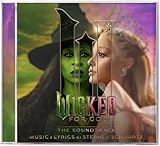
- Wicked: For Good - The Soundtrack features performances by the stars of the electrifying conclusion to Universal Pictures' global cinematic Wicked sensation, Wicked: For Good
Weaver’s screen naturalism helps defuse the pressure of comparison. She doesn’t chase iconography, allowing the character to breathe in moments of uncertainty and restraint. In doing so, the film acknowledges the myth while refusing to be constrained by it.
Do these 3 things before closing this tab:
1Scan for outdated or missing drivers - takes under a minute2Repair Windows errors before they cause bigger problems3Fix the driver behind crashes, sound loss and screen glitchesWhy This Dorothy Matters Now
In an era defined by reexamination of familiar stories, Dorothy’s reintroduction speaks to a broader cultural impulse. Wicked has always asked audiences to reconsider who history crowns as virtuous, and Dorothy’s role sharpens that inquiry by placing a beloved figure under a more discerning lens. Her presence reminds viewers that myths endure not because they are flawless, but because they are adaptable.
For Weaver, embodying that adaptability is the assignment. Her Dorothy doesn’t resolve Oz’s conflicts; she illuminates them. That distinction makes her casting feel not just thoughtful, but essential to Wicked: For Good’s ambition as a film that honors legacy while daring to complicate it.
Why Bethany Weaver as Dorothy Is a Strategic Choice for the Wicked Films
Casting Dorothy in Wicked: For Good is less about stunt casting and more about narrative calibration. The role demands an actor who can exist in the margins of a story without collapsing its moral architecture. Bethany Weaver’s selection reflects a deliberate effort to protect Wicked’s perspective, ensuring Dorothy feels present but never overpowering.
This is a Dorothy designed to be experienced, not proclaimed. Weaver’s restrained screen presence allows the film to maintain its allegiance to Elphaba and Glinda while still honoring Dorothy’s mythic weight. It’s a balancing act that requires humility as much as talent, and that balance is where Weaver proves strategically invaluable.
Free tools Windows power users keep installed
One-click scans. No signup required.
An Actor Who Doesn’t Upstage the Story
One of the smartest aspects of Weaver’s casting is her lack of overexposure. Without a towering celebrity persona to contend with, Dorothy can arrive in Oz as the character intends: unfamiliar, unassuming, and quietly impactful. The audience meets Dorothy where the story needs her, not where a public image dictates.
This choice also preserves the ensemble integrity of the Wicked films. Rather than pulling focus, Weaver integrates into the world, allowing Elphaba’s tragedy and Glinda’s transformation to remain central. Dorothy becomes a catalyst, not a competitor, which aligns precisely with Wicked’s narrative priorities.
A Performance Built on Listening, Not Leading
Dorothy’s power in Wicked: For Good lies in her responsiveness. She moves through Oz absorbing contradictions, acting with good intentions but limited understanding, and Weaver’s performance reportedly leans into that receptivity. Her acting style emphasizes reaction over declaration, making Dorothy feel like a participant in history rather than its author.
That approach reframes key moments traditionally associated with Dorothy. Actions that once read as heroic now carry ambiguity, not through cynicism but through emotional realism. Weaver’s ability to communicate internal conflict without overt dramatization supports Wicked’s ongoing interrogation of moral simplicity.
Bridging Broadway Sensibility and Cinematic Scale
Weaver’s background in musical theater informs her physical and emotional precision, an asset in a film that must translate stage mythology into cinematic language. Even when Dorothy isn’t singing, the role benefits from a performer who understands rhythm, silence, and spatial storytelling. Those skills help Dorothy feel grounded within Oz’s heightened reality.
At the same time, her screen-forward naturalism keeps the performance from feeling theatrical in the pejorative sense. The Wicked films require intimacy amid spectacle, and Weaver’s understated approach aligns with director Jon M. Chu’s emphasis on emotional clarity over operatic excess. Dorothy becomes believable within the frame, not just symbolic within the canon.
Repositioning Dorothy Within the Oz Mythos
Strategically, Weaver’s casting also signals a recalibration of Dorothy’s place in Oz mythology. This is not the triumphant return of a legend, but a contextual reappearance of a figure whose impact is profound precisely because it’s inadvertent. Weaver embodies that thesis by allowing Dorothy to feel small against the enormity of Oz’s political and emotional machinery.
In doing so, the film reinforces Wicked’s central argument: that history often misattributes agency. Dorothy’s journey intersects with Elphaba’s fate without defining it, and Weaver’s performance sustains that distinction. Her casting isn’t about reinventing Dorothy, but about finally situating her correctly within the story Wicked has been telling all along.
Recommended Free Tools
Dorothy vs. Elphaba vs. Glinda: How This Casting Reframes Oz’s Central Power Dynamic
At the heart of Wicked has always been a quiet question of power: who holds it, who is blamed for it, and who survives its consequences. Casting Bethany Weaver as Dorothy in Wicked: For Good doesn’t disrupt that question so much as sharpen it. Her presence clarifies how Dorothy functions less as a rival to Elphaba or Glinda and more as a catalyst whose innocence exposes the systems surrounding her.
Rather than positioning Dorothy as the moral center by default, the film reframes her as a variable within a much larger equation. Weaver’s restrained performance underscores how little control Dorothy actually has, even as history later credits her with decisive change. That recalibration matters because it restores narrative gravity to Elphaba and Glinda without diminishing Dorothy’s humanity.
Elphaba: Power Without Permission
Elphaba’s power has always been inherent, politicized, and punished. In contrast, Weaver’s Dorothy arrives in Oz without ambition, authority, or ideological intent, which only makes the imbalance more striking. Where Elphaba must justify every action, Dorothy is granted narrative leniency simply by being perceived as harmless.
Weaver leans into that disparity, playing Dorothy as observant rather than assertive. Her quiet reactions often contrast with Elphaba’s active resistance, reinforcing how power in Oz is less about capability and more about perception. The casting makes Elphaba’s marginalization feel even more systemic by placing her opposite someone who never seeks power yet is handed symbolic significance.
What’s actually slowing this PC down?
Pick the symptom - the matching free tool is one click away.
Glinda: Power as Performance
If Elphaba represents power denied, Glinda represents power curated. The dynamic between Glinda and Dorothy has often leaned toward benevolent mentorship, but Weaver’s Dorothy subtly destabilizes that hierarchy. By not playing Dorothy as starstruck or deferential, Weaver allows Glinda’s authority to read more clearly as performative rather than innate.
This shift reframes Glinda’s influence as something that requires audience participation, both within Oz and from the viewer. Dorothy becomes a mirror rather than a disciple, reflecting how easily charm and spectacle can be mistaken for moral leadership. In that context, Glinda’s choices feel less inevitable and more strategically constructed.
Dorothy as the Unintentional Disruptor
What ultimately distinguishes Weaver’s Dorothy is her function as an accidental disruptor rather than a destined hero. She moves through Oz without understanding its rules, which allows the film to interrogate those rules instead of reaffirming them. Her interactions with Elphaba and Glinda expose how narratives are shaped not by truth, but by who survives to tell the story.
By casting an actor whose instincts favor interiority over declaration, Wicked: For Good restores Dorothy to her original narrative purpose while redefining her impact. Weaver doesn’t compete with Elphaba’s tragedy or Glinda’s transformation; she complicates them. In doing so, the film rebalances Oz’s central power dynamic, reminding audiences that history often crowns the least intentional figures while overlooking the ones who paid the highest cost.
From Judy Garland to the Wicked Era: Placing Weaver’s Dorothy in Oz Performance History
Any new Dorothy exists in conversation with Judy Garland, whose 1939 performance set an emotional template that has proven nearly impossible to escape. Garland’s Dorothy was earnest, vocally expressive, and openly yearning, a child protagonist whose inner life was externalized through song and wide-eyed wonder. For decades, film and stage interpretations have either echoed that vulnerability or deliberately pushed against it.
Rank #4
After Garland: Dorothy on Stage and Screen
Post-Garland Dorothys, particularly in stage adaptations like The Wiz and various revivals of The Wizard of Oz, have often leaned into confidence and theatricality. These portrayals emphasized agency, positioning Dorothy as a problem-solver who actively reshapes her surroundings. Even when vulnerability remained, it was typically framed as a stepping stone toward empowerment.
Wicked complicated that lineage by sidelining Dorothy as a narrative driver and reframing her as a catalytic presence. Onstage, Dorothy rarely speaks, existing more as a symbol than a character. That absence became part of the show’s mythology, inviting audiences to project their own understanding of who Dorothy is and what she represents.
Weaver’s Dorothy: Interior, Observant, Historically Aware
Bethany Weaver’s casting acknowledges that history rather than ignoring it. Her Dorothy does not attempt to overwrite Garland’s legacy or modernize it through force of personality. Instead, Weaver plays Dorothy as emotionally literate but socially cautious, someone absorbing Oz rather than immediately asserting herself within it.
This approach subtly recalls Garland’s emotional transparency while stripping away the performative innocence that defined earlier interpretations. Weaver’s Dorothy understands more than she says, and that restraint allows the film to interrogate how mythologizing works in real time. Dorothy becomes less a hero in motion and more a figure onto whom meaning is projected.
Why This Dorothy Matters in the Wicked Era
Within the Wicked universe, Weaver’s Dorothy functions as a bridge between classical Oz mythology and contemporary reinterpretation. She embodies the familiar iconography without reinforcing its assumptions, allowing the film to question why Dorothy is remembered as central while others are relegated to footnotes. Her presence reframes Oz’s history as something selectively recorded rather than objectively true.
For Weaver, whose background has favored character-driven performances over star-making spectacle, the role marks a significant moment. She steps into one of cinema’s most mythologized parts by doing less, not more. In a story about how narratives are constructed and preserved, that choice feels not only deliberate, but necessary.
Independent reader supportYour contribution helps us test, update, and keep practical guides available for everyone.What We Know (and What’s Being Kept Secret) About Dorothy’s Role in ‘Wicked: For Good’
Despite Dorothy’s cultural ubiquity, Universal and the film’s creative team have been unusually guarded about how Bethany Weaver’s version fits into Wicked: For Good. That secrecy feels intentional rather than evasive, especially for a character whose power has always come from what audiences think they know. What has been confirmed suggests a role that is precise, limited, and structurally meaningful rather than expansive or revisionist.
The Tool Desk
Outbyte PC Repair FREERepair Windows errors before they cause bigger problemsFix Now →Outbyte Driver Updater FREEScan for outdated or missing drivers - takes under a minuteDriver Scan →Dorothy is not being repositioned as a co-lead, nor is she suddenly granted narrative authority over Elphaba or Glinda’s arcs. Instead, she exists at key inflection points, moments where perspective matters more than action. In that sense, the film appears committed to preserving Dorothy as a destabilizing presence rather than a protagonist who redirects the story.
Confirmed Elements: Placement, Perspective, and Restraint
Sources close to the production have indicated that Dorothy appears primarily through Elphaba’s and Glinda’s vantage points, maintaining the story’s allegiance to their emotional realities. Weaver’s scenes are reportedly observational, often quiet, and intentionally sparing with dialogue. The goal is less to explain Dorothy and more to show how others respond to her arrival in Oz.
Visually, the film leans into iconography without indulging nostalgia. Costume details echo familiar silhouettes, but nothing about Dorothy’s presentation signals a remake of The Wizard of Oz. Weaver’s performance is calibrated to feel historically adjacent rather than referential, reinforcing the idea that this Dorothy belongs to Wicked’s world first.
What the Film Is Deliberately Withholding
What remains under lock and key is Dorothy’s degree of agency in the story’s final movements. The filmmakers have declined to clarify whether her actions directly influence the political or magical consequences that define Wicked: For Good’s conclusion. That ambiguity is telling, especially given Wicked’s long-standing interest in who gets credit for change and who is written into legend afterward.
Recommended Free Tools
Best Value
There is also no confirmation that Dorothy’s internal motivations will be fully articulated onscreen. Early indications suggest that the film resists psychologizing her too deeply, allowing her to remain partially unknowable. That restraint mirrors the stage musical’s approach while using cinema’s intimacy to complicate it.
Why Secrecy Is Part of the Point
Keeping Dorothy at a narrative distance isn’t a marketing tactic so much as a thematic one. Wicked has always been about the gaps between truth, perception, and recorded history. By refusing to fully define Dorothy’s role ahead of time, the film invites audiences to confront their own assumptions about her importance.
Bethany Weaver’s casting thrives within that ambiguity. Her performance is designed to be read rather than explained, placing meaning in the audience’s hands. In a story preoccupied with how legends are formed, what remains unsaid about Dorothy may ultimately matter more than anything she does.
Why This Casting Signals the Emotional and Thematic Endgame of the Wicked Film Saga
Dorothy has always been Wicked’s quiet fulcrum, the character around whom meaning shifts without ever fully settling. Casting Bethany Weaver signals that the films are leaning into that paradox rather than resolving it. Her Dorothy is not a triumphal arrival but a reckoning, the moment when the story’s competing truths finally brush against the version of Oz history audiences think they already know.
In that sense, Weaver isn’t playing a protagonist so much as a catalyst. Her presence marks the point where Elphaba and Glinda’s private sacrifices intersect with public myth. The emotional endgame of Wicked has never been about who wins, but about who gets remembered, and Dorothy is the mechanism that locks that memory into place.
Dorothy as the Moral Mirror, Not the Hero
By casting an actor whose screen persona emphasizes restraint and interiority, the film reframes Dorothy as a moral mirror rather than a narrative driver. Weaver’s performance reportedly absorbs the emotional weight of the choices made before she arrives, reflecting them back without commentary. This approach aligns with Wicked’s core thesis: that history often mistakes proximity for agency.
Dorothy’s kindness, confusion, and limited understanding of Oz’s politics become part of the tragedy. She is earnest without being enlightened, well-intentioned without being fully informed. That dynamic underscores how easily systemic injustice can hide behind seemingly innocent outcomes.
Closing the Circle Between Myth and Memory
The Wicked films are ultimately a story about how legends calcify. By the time Dorothy steps into Oz, the damage has already been done, and the world is ready for a simpler narrative. Weaver’s casting emphasizes that inevitability, positioning Dorothy as the final brushstroke that completes the mural rather than the artist who painted it.
What’s actually slowing this PC down?
Pick the symptom - the matching free tool is one click away.
This is where the saga finds its thematic closure. The audience understands more than Dorothy ever will, and that dramatic irony is the point. Wicked ends not with revelation, but with acceptance of how stories are told, simplified, and passed on.
Why Bethany Weaver Is the Right Note to End On
Bethany Weaver’s Dorothy matters because she resists spectacle. In a franchise built on big vocals, bold aesthetics, and heightened emotion, her performance reportedly narrows the lens. The quieter Dorothy becomes, the louder Wicked’s message about legacy, power, and misremembered truth resonates.
As Wicked: For Good brings the saga to a close, Weaver’s casting signals confidence in the material’s emotional maturity. The films don’t need to reinvent Dorothy or dethrone her myth. They simply need to show how easily a legend can eclipse the lives that made it possible, and why that loss still hurts long after the curtain falls.
Quick Recap
Product prices and availability are accurate as of the date/time indicated and are subject to change. Any price and availability information displayed on Amazon at the time of purchase will apply.
The Tool Desk
Outbyte PC Repair FREEClear out junk files and repair common Windows errorsFree Scan →Outbyte Driver Updater FREEFix the driver behind crashes, sound loss and screen glitchesFind Drivers →



