Korean zombie cinema didn’t just reinvent the undead; it reprogrammed how the genre moves, thinks, and hurts. When these films broke out internationally, they arrived with a ferocity that felt both modern and deeply rooted in national anxieties, merging propulsive action with sharp-eyed social observation. What makes them endure isn’t novelty alone, but how consistently they balance visceral thrills with something unsettlingly human.
Unlike many Western zombie movies that luxuriate in apocalypse as spectacle, Korean entries treat outbreak as an accelerant for character and class conflict. The undead aren’t metaphors in the abstract; they are pressures that expose selfishness, solidarity, institutional failure, and moral compromise in real time. This is a genre where speed is terrifying, systems collapse instantly, and emotional decisions matter as much as survival tactics.
| # | Preview | Product | Price | |
|---|---|---|---|---|
| 1 |

|
Gangnam Zombie | $9.90 | Buy on Amazon |
| 2 |

|
Zombie (2-Disc Ultimate Edition) | $90.79 | Buy on Amazon |
| 3 |

|
Zombie (Zombi 2) | $19.99 | Buy on Amazon |
| 4 |

|
The Odd Family Zombie On Sale (Korean Audio, English Subtitles, All Region) | $39.99 | Buy on Amazon |
| 5 |
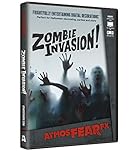
|
AtmosFX Zombie Invasion! Halloween Digital Decorations DVD | $19.99 | Buy on Amazon |
As this ranking moves through the essential titles, what becomes clear is how Korean filmmakers have used zombies as a flexible cinematic weapon. Some films go big and breathless, others intimate and tragic, but nearly all share a commitment to momentum, meaning, and emotional impact that lingers long after the last bite.
Relentless Speed as Horror Language
Korean zombie movies famously move fast, often terrifyingly so. The sprinting infected of Train to Busan and its successors transform chaos into an unmanageable force, eliminating the comfort of planning or safe distance. Speed becomes a storytelling tool, forcing characters into split-second moral choices that define who they are.
#1 Best Overall
Social Critique Built Into the Apocalypse
Class divides, government incompetence, corporate greed, and collective panic are not subtext; they are narrative engines. Films like Train to Busan and Rampant use outbreak scenarios to critique how societies prioritize profit, hierarchy, or self-preservation over communal responsibility. The zombies may be monstrous, but human behavior is often the sharper indictment.
Emotion as the Final Blow
What truly separates Korean zombie cinema is its willingness to hurt the audience. These films invest deeply in relationships, whether between parents and children, lovers, or reluctant allies, then place them under impossible strain. Survival is never guaranteed, and sacrifice is rarely clean, giving the genre an emotional gravity that elevates it beyond shocks and gore.
How We Ranked Them: Criteria for the Definitive Korean Zombie Movie List
Ranking Korean zombie movies isn’t about counting body bags or measuring decibel levels. This list was built to reflect how the genre actually functions in Korea: as a collision point between visceral horror, social commentary, and emotionally driven storytelling. Each film was evaluated not just as a zombie movie, but as a piece of cinema with something specific to say.
Storytelling and Character Investment
At the core of every great Korean zombie film is a narrative that prioritizes people over spectacle. We ranked films higher when they created clear emotional stakes, well-defined relationships, and characters whose decisions meaningfully shaped the outcome. If the deaths hurt and the choices linger, the film earned its place.
Use of Zombies as Narrative Pressure
Not all undead are created equal. The strongest entries treat zombies less as monsters and more as an accelerating force that exposes fear, selfishness, and moral fracture. Films that used the outbreak to drive tension, ethical dilemmas, and escalating conflict rose above those that relied purely on chaos.
Social Commentary and Thematic Weight
Korean zombie cinema is inseparable from critique, whether aimed at class disparity, government failure, corporate negligence, or collective panic. Rankings favored films that embedded these themes organically into the story rather than delivering them as blunt allegory. When the apocalypse reveals uncomfortable truths about society, the film leaves a deeper mark.
Action, Pacing, and Cinematic Craft
Relentless momentum is a defining trait of the genre, but speed alone isn’t enough. We looked closely at how action was staged, how tension was sustained, and whether set pieces served the story instead of overwhelming it. Precision editing, spatial clarity, and inventive staging mattered just as much as intensity.
Innovation and Lasting Impact
Finally, we considered how each film expanded or redefined what a Korean zombie movie could be. Whether through historical settings, tonal experimentation, or emotional audacity, the highest-ranked titles left a clear imprint on the genre. These are the films that audiences return to, recommend, and measure new entries against.
Rank #1–#3: Genre-Defining Masterpieces That Set the Global Standard
These top three films don’t just represent the peak of Korean zombie cinema; they actively reshaped how the genre is perceived worldwide. Each entry pairs visceral thrills with human drama and social critique, proving that zombie movies can be emotionally devastating, politically charged, and formally inventive all at once.
#1 Train to Busan (2016)
Yeon Sang-ho’s Train to Busan remains the gold standard, not only for Korean zombie films but for modern zombie cinema as a whole. Its high-concept setting turns a speeding train into a pressure cooker, forcing characters from different social strata into constant moral confrontation. Every action sequence is legible, escalating, and rooted in character choices rather than spectacle for its own sake.
What truly elevates the film is its emotional clarity. The relationship between a flawed father and his young daughter gives the chaos a human anchor, while the film’s sharp critique of selfishness and corporate indifference cuts deep without ever slowing the pace. Few zombie movies are this thrilling, this accessible, and this devastating all at once, which is why Train to Busan remains the entry point and the benchmark.
Rank #2
- Factory sealed DVD
#2 Kingdom: Ashin of the North (2021)
While Kingdom is best known as a series, Ashin of the North stands on its own as a feature-length tragedy that redefines what a zombie origin story can be. Set against the backdrop of Joseon-era political oppression, the film reframes the outbreak not as an accident, but as the inevitable consequence of cruelty, colonization, and systemic abuse. Zombies here are not just a threat; they are history coming back to consume the present.
Free tools Windows power users keep installed
One-click scans. No signup required.
Director Kim Sung-hoon leans heavily into mood and inevitability, trading constant action for a slow, bruising sense of dread. Jun Ji-hyun’s performance grounds the film in grief and fury, turning Ashin into one of the genre’s most compelling antiheroes. It’s a haunting expansion of the zombie mythos, proving that the undead can carry mythic weight without losing their terror.
#3 Rampant (2018)
Rampant earns its place through ambition, blending historical action epic with full-blown zombie mayhem. Set in the late Joseon Dynasty, the film uses its undead outbreak to explore power struggles, corruption, and the fragility of authority, all while delivering large-scale combat that feels refreshingly tactile. Swords, torches, and palace corridors give the action a physicality rarely seen in modern zombie films.
Though more operatic than intimate, Rampant excels in using genre spectacle to reflect societal decay. Its zombies move with frightening speed, but the real horror lies in how human greed accelerates the collapse. As a fusion of period drama and horror, it demonstrates the flexibility of Korean zombie cinema and its willingness to take creative risks on a grand scale.
Rank #4–#6: Bold Reinventions and Cult Favorites That Expanded the Zombie Playbook
After the historical epics and prestige entries at the top of the list, the next tier is where Korean zombie cinema gets playful, experimental, and occasionally strange. These films may not have the same global profile as the heavy hitters above, but each one pushes the genre forward in a distinct way. Together, they show how elastic the zombie framework can be when filtered through different tones, formats, and social anxieties.
Quick wins for a faster PC:
Fix the driver behind crashes, sound loss and screen glitchesFind Drivers →Clear out junk files and repair common Windows errorsFree Scan →#4 #Alive (2020)
#Alive updates the zombie apocalypse for the smartphone generation, trapping its horror inside a high-rise apartment and filtering survival through isolation, social media, and digital dependency. Rather than sweeping societal collapse, the film zeroes in on loneliness, anxiety, and the fragile lifelines we create through technology when the world goes silent. It’s a stripped-down approach that feels intensely modern without relying on novelty gimmicks.
What elevates #Alive is its focus on routine and mental endurance as much as physical survival. Director Cho Il-hyung lets long stretches of quiet tension build, making the undead feel like an ever-present pressure rather than a constant spectacle. In doing so, the film proves that contemporary zombie stories don’t need massive scale to feel urgent, only a clear emotional point of view.
#5 Seoul Station (2016)
As an animated prequel to Train to Busan, Seoul Station trades kinetic action for bleak social commentary, using its format to explore homelessness, exploitation, and institutional neglect. The outbreak begins on the margins of society, and the film makes it painfully clear that the real horror is how easily those people are ignored until it’s too late. Animation allows the violence to be harsher, uglier, and more unflinching than live action might permit.
Director Yeon Sang-ho leans into nihilism, crafting a story where authority consistently fails and compassion is transactional. The zombies themselves are terrifying, but they’re also a byproduct of systemic abandonment rather than chaos alone. Seoul Station is one of the genre’s most politically aggressive entries, and its bitterness lingers long after the credits roll.
The Tool Desk
Outbyte Driver Updater FREEFix the driver behind crashes, sound loss and screen glitchesFind Drivers →Outbyte PC Repair FREEClear out junk files and repair common Windows errorsFree Scan →#6 The Odd Family: Zombie for Sale (2019)
The Odd Family takes a sharp left turn into comedy, reimagining the zombie as both a threat and an absurd opportunity. Set in a rural village, the film uses its undead outbreak to satirize capitalism, family dysfunction, and the human instinct to monetize anything, even the apocalypse. The humor is broad, but it’s anchored by genuine warmth and surprising emotional beats.
What makes the film a cult favorite is how confidently it balances slapstick with genre awareness. The zombies are dangerous, yes, but they’re also vehicles for commentary on greed and exploitation, softened by a distinctly Korean sense of communal chaos. It’s proof that the zombie genre doesn’t have to be grim to be meaningful, and that reinvention can come through laughter as much as fear.
Rank #3
Rank #7–#9: Underrated, Experimental, and Controversial Entries Worth Watching
Not every Korean zombie film lands as a universal hit, and that’s precisely what makes this tier interesting. These entries take bigger swings, challenge expectations, or divide audiences, yet each adds something valuable to the genre’s evolution. For viewers looking to go beyond the obvious classics, these films reveal how flexible and restless Korean zombie storytelling can be.
#7 Rampant (2018)
Rampant is a lavish historical zombie epic that fuses Joseon-era political intrigue with full-blooded undead mayhem. Often overshadowed by Kingdom, the film leans harder into spectacle, using nightmarish siege sequences and muscular action choreography to sell its outbreak. Hyun Bin’s reluctant prince gives the film a classic hero’s arc, grounding the chaos in royal responsibility and personal reckoning.
PC Slower Than It Used to Be?
A free scan shows the junk files, broken settings and background clutter dragging Windows down - then fixes them in one click.Free scan · Windows 10 & 11Crashes, No Sound, or Screen Glitches?
Random freezes, missing sound and display glitches usually trace back to one bad driver. Find and replace yours safely.Free scan · under a minuteWhat makes Rampant worth revisiting is its unapologetically pulpy tone. Rather than slow-burn dread, it opts for swords, torches, and mass panic, presenting zombies as a destabilizing force in an already corrupt power structure. It may lack the nuance of its television counterpart, but as a standalone genre hybrid, it’s wildly entertaining and visually distinctive.
#8 #Alive (2020)
#Alive reframes the zombie apocalypse through isolation, turning the genre inward at a moment when lockdown anxiety felt painfully familiar. Set almost entirely inside a high-rise apartment, the film focuses on survival as a mental and emotional battle rather than a purely physical one. Yoo Ah-in’s performance captures the desperation of a generation raised online, suddenly cut off from both society and purpose.
The film’s strength lies in its immediacy and minimalism. Drones, smartphones, and social media become survival tools, subtly updating zombie rules for a digital age. While some viewers found its character beats uneven, #Alive succeeds as a snapshot of modern urban fear, making the apocalypse feel claustrophobic, lonely, and uncomfortably plausible.
#9 Peninsula (2020)
Train to Busan Presents: Peninsula remains the most divisive entry in Korea’s zombie canon. Abandoning intimate character drama for bombastic action, the sequel transforms the outbreak into a post-apocalyptic wasteland ruled by human brutality. Car chases, gunfights, and militarized chaos dominate, pushing the zombies into the background as environmental threats rather than emotional catalysts.
Recommended Free Tools
While it lacks the raw heart of its predecessor, Peninsula is fascinating as an experiment in genre escalation. Director Yeon Sang-ho explores how survival corrodes morality over time, portraying a society that has fully adapted to cruelty. It may not satisfy fans seeking another emotional gut punch, but as a bold, flawed expansion of the Train to Busan universe, it’s a compelling study in how franchises evolve, for better or worse.
Recurring Themes in Korean Zombie Films: Class Divide, Authority Failure, and Collective Survival
What elevates Korean zombie cinema above simple survival horror is how consistently it uses the undead as social instruments. These films aren’t just about running from monsters; they’re about navigating systems that were already broken long before the first bite. Across eras, budgets, and tones, Korean zombie stories return to the same anxieties, grounding spectacle in pointed cultural critique.
Class Divide as the True Infection
Few national cinemas use zombies to dissect class tension as sharply as Korea’s. From the packed train cars of Train to Busan to the rigid social hierarchies of Kingdom, survival often correlates directly with wealth, status, or proximity to power. The undead don’t discriminate, but human systems do, exposing how privilege insulates some while sacrificing others.
This theme gives Korean zombie films their emotional bite. Characters aren’t just fleeing danger; they’re confronting the moral cost of self-preservation in a society structured around inequality. The horror comes as much from human selfishness as from the monsters themselves.
The Collapse of Authority and Institutional Failure
Government, military, and leadership figures in Korean zombie films are rarely saviors. More often, they’re absent, incompetent, or actively complicit in the catastrophe, whether through denial, corruption, or rigid adherence to protocol. Films like Peninsula and Rampant depict authority not as protection, but as a force that accelerates collapse.
Rank #4
- Audio Option: Korean
- Subtitle Option: English
- Genre: Horror/ Comedy
- Release Date: 01-30-2020
- Runtime: 112, Discs : 1
This skepticism toward power reflects broader cultural distrust, turning zombies into symptoms rather than causes of disaster. The outbreak isn’t the end of order; it’s proof that order was already hollow. When institutions fail, survival becomes a personal and communal responsibility rather than a national one.
Collective Survival Over Individual Heroism
Unlike many Western zombie narratives that celebrate lone survivors or hardened antiheroes, Korean zombie films emphasize cooperation. Survival is rarely achieved alone, and characters who prioritize individual escape over group safety are often punished narratively. Even reluctant alliances become essential, reinforcing the idea that empathy is a survival skill.
This focus on collective endurance gives the genre its emotional resonance. Sacrifice, shared struggle, and communal bonds turn bleak scenarios into stories of human resilience. In Korean zombie cinema, the true victory isn’t killing the infected, but preserving humanity in a world that incentivizes its loss.
Do these 3 things before closing this tab:
1Repair Windows errors before they cause bigger problems2Fix the driver behind crashes, sound loss and screen glitches3Clear out junk files and repair common Windows errorsHow These Films Compare to Western Zombie Cinema
Korean zombie films don’t just remix familiar undead tropes; they reframe what the genre is for. Where Western zombie cinema often leans into apocalypse as spectacle or survivalist fantasy, Korean entries treat outbreaks as stress tests for social systems. The result is horror that feels less like an end-of-the-world thrill ride and more like a moral reckoning unfolding in real time.
Speed, Physicality, and Controlled Chaos
One of the most immediate differences is physicality. Korean zombie films favor fast, aggressive infected that overwhelm through numbers and momentum, turning confined spaces into pressure cookers. Train to Busan’s kinetic train-car battles or #Alive’s urban siege sequences use speed to generate panic rather than power fantasy.
Western zombie films, especially post-Romero, often rely on slow-burn dread or tactical survival. Korean cinema replaces that patience with escalation, forcing characters into split-second ethical decisions instead of prolonged strategic standoffs. Action becomes a vehicle for emotional collapse, not dominance.
Emotion as the Primary Engine of Horror
While Western zombie movies frequently prioritize atmosphere or mythology, Korean zombie films place emotional arcs front and center. Parental guilt, class resentment, romantic sacrifice, and generational responsibility are not subplots but narrative engines. The undead serve as catalysts that strip away social masks rather than as monsters to be outgunned.
What’s actually slowing this PC down?
Pick the symptom - the matching free tool is one click away.
This emotional immediacy is why films like Train to Busan or Kingdom resonate even with viewers fatigued by the genre. The horror isn’t just what’s happening, but who it’s happening to and what they’re forced to admit about themselves under pressure. Tears and terror are deliberately intertwined.
Social Commentary Over Genre Mythology
Western zombie cinema often builds expansive lore, focusing on infection origins, cure speculation, or survival rules. Korean zombie films are less interested in explanation than implication. The outbreak’s cause matters less than how quickly existing inequalities determine who lives and who doesn’t.
Movies like Peninsula and Rampant use their historical or post-apocalyptic settings to critique militarization, authoritarianism, and the commodification of human life. Zombies are not an alien invasion; they’re a mirror reflecting societal decay. This grounded approach keeps the genre politically sharp without feeling didactic.
A Different Kind of Heroism
Perhaps the clearest contrast lies in how heroism is defined. Western zombie protagonists often survive by becoming harder, more ruthless, or more isolated. In Korean zombie films, those traits usually lead to downfall. The characters who endure are the ones who adapt emotionally, learning cooperation, humility, and sacrifice.
Best Value
- Includes eight chilling effects on one DVD with multiple display modes; WANDERING HORDE, UNEXPECTED GUEST, BROKEN BARRICADES and ZOMBIE FEAST
- PLASTER DISASTER: Ravenous zombies punch and claw their way through a plaster wall
- ZOMBIE SHADOWS: Shadowy clusters of zombies loom behind frosted glass
- Includes four chilling effects on one DVD; Each effect can feature any of the three characters: the seductive debutante, the stern-featured gentleman or the creepy little girl
This is why the most celebrated Korean zombie movies feel both devastating and strangely hopeful. Even when the world collapses, the films argue that decency still matters. In a genre built on the inevitability of death, Korean zombie cinema dares to suggest that how you survive is more important than whether you do.
Where to Watch: Streaming Availability and Best Viewing Order for Newcomers
One of the reasons Korean zombie cinema has become globally dominant is accessibility. Many of the genre’s defining films are readily available on major streaming platforms, making it easy for newcomers to explore without hunting down imports or physical media. Availability can shift by region, but as of this writing, most of the essentials are only a few clicks away.
Streaming Availability at a Glance
Train to Busan remains the most accessible entry point and is typically available on Netflix or Amazon Prime Video in many territories. Its standalone animated prequel, Seoul Station, often streams on Prime Video or genre-friendly platforms like Shudder, depending on region. Together, they form a compact double feature that showcases both the blockbuster and indie extremes of Korean zombie storytelling.
Netflix is the genre’s strongest home overall. Kingdom, while a series rather than a film, is essential viewing for understanding how Korean zombie narratives expand into political horror, and it pairs naturally with the historical-action film Rampant, which also tends to rotate through Netflix’s catalog. #Alive, a contemporary survival thriller with heavy social media themes, is another Netflix staple and a strong modern counterpoint to Train to Busan.
Do these 3 things before closing this tab:
1Scan for outdated or missing drivers - takes under a minute2Repair Windows errors before they cause bigger problems3Fix the driver behind crashes, sound loss and screen glitchesPeninsula, the loose sequel to Train to Busan, is more commonly found on Amazon Prime Video and digital rental platforms. While more divisive in tone and execution, its availability makes it an easy follow-up for viewers curious about how the franchise evolved into a larger-scale, post-apocalyptic spectacle.
The Best Viewing Order for First-Time Viewers
For newcomers, the ideal starting point is Train to Busan. It delivers the genre’s emotional core, kinetic action, and moral framework in its purest form, setting expectations for what Korean zombie films do differently. Watching Seoul Station next deepens that experience, offering a harsher, more cynical view of societal collapse that reframes the live-action film’s optimism.
From there, Kingdom provides the most rewarding expansion of themes. Its episodic format allows for richer character development and political allegory, showing how zombie horror operates within rigid class systems and institutional power. Rampant works well immediately after, echoing similar historical anxieties but with a faster, more traditional action-horror rhythm.
Finish with #Alive for a modern, intimate take on isolation, digital dependency, and urban survival, then approach Peninsula last. Viewed in this order, Peninsula feels less like a disappointing sequel and more like an experimental genre offshoot, best appreciated once you’ve absorbed the emotional and thematic foundations laid by the earlier films.
Quick wins for a faster PC:
Clear out junk files and repair common Windows errorsFree Scan →Scan for outdated or missing drivers - takes under a minuteDriver Scan →Final Verdict: The Essential Korean Zombie Movies Every Horror Fan Must See
Korean zombie cinema stands apart because it never treats the undead as the true villains. Instead, these films weaponize fear, class division, institutional failure, and human selfishness, using outbreaks as pressure tests for society itself. The result is a body of work that feels emotionally heavier, politically sharper, and often more tragic than its Western counterparts.
The Undisputed Cornerstone
Train to Busan remains the genre’s defining achievement and the single most essential watch. Its blend of relentless momentum, character-driven tragedy, and social commentary represents Korean zombie storytelling at its most accessible and devastating. For any horror fan, this is not just a recommendation but a requirement.
The Darker Counterpoint
Seoul Station earns its place as the genre’s most uncompromising companion piece. Where Train to Busan finds humanity in sacrifice, Seoul Station strips it away, exposing the systemic cruelty that allows catastrophe to spread unchecked. Together, the two films form the emotional and philosophical backbone of Korean zombie cinema.
The Genre’s Boldest Evolution
Kingdom proves how adaptable the zombie mythos can be when filtered through Korean history and political allegory. Its fusion of period drama, court intrigue, and horror expands the genre’s scope while reinforcing its core themes of power, class, and survival. Rampant follows as a more straightforward but still effective historical-action counterpart, favoring spectacle without abandoning thematic intent.
The Tool Desk
Outbyte Driver Updater FREEScan for outdated or missing drivers - takes under a minuteDriver Scan →Outbyte PC Repair FREEClear out junk files and repair common Windows errorsFree Scan →Modern Isolation and Franchise Experimentation
#Alive captures the anxieties of contemporary urban life, turning smartphones and social media into both lifelines and liabilities. Peninsula, while divisive, earns value as a case study in how Korean zombie cinema experiments with scale and tone, shifting toward action-driven spectacle rather than intimate horror.
Taken together, these films showcase why Korean zombie movies resonate so strongly with global audiences. They are fast, frightening, and often brutal, but always grounded in human consequence. For horror fans seeking zombie stories with intelligence, emotion, and cultural specificity, this lineup represents the essential canon and a compelling gateway into the broader world of Korean genre cinema.
Quick Recap
Product prices and availability are accurate as of the date/time indicated and are subject to change. Any price and availability information displayed on Amazon at the time of purchase will apply.




