Quick wins for a faster PC:
Clear out junk files and repair common Windows errorsFree Scan →Scan for outdated or missing drivers - takes under a minuteDriver Scan →For most people who want one ELAC subwoofer for both music and movies, choose the Debut 3.0 DS123. Its sealed 12-inch design, 200-watt RMS amplifier, multiple connection options and manufacturer-rated 28 Hz extension make it a balanced step up from a compact 10-inch model without the DS153’s larger cabinet. Choose the S10.2 to spend less, the DS103 for a compact stereo setup, or the DS153 when room and output needs justify a much larger subwoofer.
ELAC’s current subwoofer lineup centers on Debut 3.0 and Varro. The SUB3010 and SUB3030 are legacy models: ELAC marks both as no longer produced, even though its U.S. store listed the SUB3030 during the latest dated price check below. Specifications and listed prices are manufacturer information, not independent comparative measurements. See ELAC’s subwoofer catalog.
Quick picks: which ELAC subwoofer fits your system?
| Need | Pick | Why it fits |
|---|---|---|
| One sub for music and movies | Debut 3.0 DS123 | Sealed 12-inch design, 200 W RMS and LFE, stereo and high-level inputs. |
| Lowest-cost straightforward option | Debut 2.0 S10.2 | Compact 10-inch model with 100 W RMS and an LFE input. |
| Compact, music-oriented stereo system | Debut 3.0 DS103 | Sealed 10-inch cabinet with stereo and high-level connections. |
| Large room or more theater headroom | Debut 3.0 DS153 | 15-inch driver and 300 W RMS; plan for a substantial cabinet. |
| Premium-line alternative | Varro PS350 | Mid-tier position in ELAC’s current Varro range; compare detailed specifications and availability before buying. |
| Legacy model on clearance or used | SUB3030 | Strong published specifications, but discontinued; buy only after checking condition, support and return terms. |
Prices and stock can change. ELAC’s catalog listed the S10.2 at $329, DS103 at $479, DS123 at $599, DS153 at $949, Varro PS250 at $699, PS350 at $849 and PS500 at $1,049 when checked on August 18, 2026. Those are listed prices, not a guarantee of current stock or a promise that every model is available in every region. Check the current ELAC catalog.
How to choose an ELAC subwoofer
Start with the whole room, not just its floor area
Room dimensions are only a starting point. Ceiling height, open doorways, listening distance, seating positions and preferred volume all change how much bass a subwoofer must produce. In an open-plan space, consider the connected area rather than only the portion where the sofa sits. A practical starting point is the S10.2 or DS103 for a small room, the DS123 for a medium room, and the DS153 or a larger Varro option for a large room. This is guidance, not a guarantee that a model will fill a particular space.
Do these 3 things before closing this tab:
1Scan for outdated or missing drivers - takes under a minute2Repair Windows errors before they cause bigger problems3Fix the driver behind crashes, sound loss and screen glitches#1 Best Overall
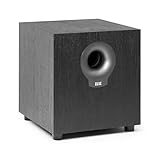
- POWERFUL SUBWOOFER - S10.2 is the perfect complement to the Debut 2.0 loudspeakers, adding powerful bass that you can feel and hear. Built to deliver huge performance, the compact design allows placement in almost any part of your room.
- BASS THAT BRINGS SOUND TO LIFE - With 200 Watts built in, there’s plenty of power to deliver rock-solid low frequencies that make your favorite audio come alive with the weight and presence of a live performance.
- ON DEMAND POWER - A 10-inch long-throw custom bass driver and 200-Watt Peak BASH amplifier provide the quality and quantity of sound that is fundamental to accurately reproducing today’s demanding movie soundtracks and music.
- BRACED MDF CABINETS - The MDF cabinets are larger and internally braced for greater stiffness & strength, reducing cabinet vibrations. Plus, the compact design allows placement in almost any part of your room.
- REDESIGNED FROM THE GROUND UP - The original Debut Series changed the game & now it’s changed again with the Debut 2.0 Series. Redesigned from the ground up, they sound more remarkable than the speakers that sparked a revolution in high-end sound.
Bass can also vary sharply from seat to seat because of room modes. A larger driver does not solve every placement problem; two suitably placed subs may produce more consistent bass across several seats than one, but require additional setup and calibration.
Match the sub to listening priorities
- Mostly music: Consider the DS103 or DS123 if their sealed enclosures and stereo or high-level inputs suit your setup.
- Mostly movies: Give more weight to headroom and output needs; the DS153 is the largest Debut 3.0 option in this lineup.
- Both: The DS123 is the most balanced starting recommendation based on its published size, power and extension figures.
Sealed construction can be attractive for placement and integration, but it does not prove that a subwoofer will sound “tight” or “musical.” Crossover, phase, location, room acoustics and calibration matter too. Ported and passive-radiator designs can be efficient around their tuning region; neither design type is automatically better for movies or music.
Check the connection before choosing
- LFE: The usual connection from an AV receiver’s subwoofer output. The S10.2 lists an LFE RCA input; the Debut 3.0 models list LFE input.
- Stereo RCA: Useful for some two-channel preamps and integrated amplifiers. The DS103, DS123 and DS153 list stereo inputs.
- High-level input: Can serve some stereo amplifiers without a dedicated subwoofer output. The Debut 3.0 models list high-level inputs; use this connection only as the subwoofer and amplifier manuals permit.
- High-level output: The Debut 3.0 models also list this connection for certain stereo integrations.
Do not improvise a speaker-level connection. Never connect to an amplifier’s speaker outputs unless the subwoofer explicitly supports high-level input and the manufacturer’s wiring instructions allow it.
Do not compare watts or response figures as if they settle the ranking
RMS and peak amplifier ratings are not measurements of maximum acoustic output. Driver excursion, enclosure design, limiting, distortion and the room all affect real-world performance. Frequency-response figures are also not necessarily measured under identical conditions: ELAC gives the Debut 3.0 models -3 dB and -6 dB points, while some older pages provide a range. Treat these as manufacturer specifications, not a laboratory-standard comparison or a guarantee of in-room bass.
Rank #2

- Deep, Accurate Bass – 10" high-excursion polypropylene cone with textured surface delivers tight, distortion-free low frequencies down to 31Hz for music and home theater.
- Powerful Class D Amplifier – 100W RMS / 200W peak output ensures clean, high-impact bass with cool and efficient operation, even at high volumes.
- Sealed Cabinet Design – Provides fast, controlled bass response with low distortion, blending naturally with your main speakers for a balanced soundstage.
- Flexible Connectivity – LFE, stereo, and high-level inputs plus high-level outputs allow seamless integration with AV receivers, stereo amps, and other systems.
- Customizable Sound – Adjustable crossover (50–150Hz), volume, phase control, and auto on/off let you fine-tune performance for your room and preferences.
Debut 3.0: the current all-rounder and larger-room choices
The DS103, DS123 and DS153 share sealed cabinets, Class D amplification, a 50–150 Hz crossover range, and LFE, stereo and high-level inputs. All three list high-level output and less than 0.1% THD. The figures below are ELAC’s published specifications; they do not establish independent maximum output or a sound-quality ranking.
| Model | Driver and enclosure | ELAC-rated response | Amplifier | Dimensions and weight | Catalog price observed |
|---|---|---|---|---|---|
| DS103 | 10-inch polypropylene; sealed | 31 Hz at -3 dB; 29 Hz at -6 dB | 100 W RMS; 200 W peak | 12.2 × 12.9 × 12.2 in; 22.7 lb | $479 |
| DS123 | 12-inch polypropylene; sealed | 28 Hz at -3 dB; 26 Hz at -6 dB | 200 W RMS; 400 W peak | 14.17 × 14.8 × 14.17 in; 30.2 lb | $599 |
| DS153 | 15-inch polypropylene; sealed | 31 Hz at -3 dB; 29 Hz at -6 dB | 300 W RMS; 600 W peak | 18.4 × 19.1 × 18.4 in; 55.34 lb | $949 |
Catalog prices were observed August 18, 2026; check ELAC for current price and availability. DS103 specifications, DS123 specifications, DS153 specifications.
DS123: best overall for mixed listening
The DS123 is the most useful default for a buyer who wants one current ELAC subwoofer to handle music and home theater. On paper, its 12-inch driver, 200 W RMS rating and 28 Hz at -3 dB rating step up from the DS103, while its cabinet is far smaller than the DS153’s. That balance makes it a sensible middle choice; the recommendation is an inference from published specifications, not a hands-on listening verdict.
Choose it for a medium room, a mixed-use system, or a stereo rig that can use its high-level input. Move up to the DS153 if the room and listening level call for more headroom, rather than assuming the DS123’s extension figure predicts maximum volume.
Windows Errors? Fix Them Before They Spread
Repair common Windows errors and clear accumulated junk for a smoother, more stable PC - no reinstall needed.Free scan · no reinstallCrashes, No Sound, or Screen Glitches?
Random freezes, missing sound and display glitches usually trace back to one bad driver. Find and replace yours safely.Free scan · under a minuteRank #3

- POWERFUL SUBWOOFER - S10.2 is the perfect complement to the Debut 2.0 loudspeakers, adding powerful bass that you can feel and hear. Built to deliver huge performance, the compact design allows placement in almost any part of your room.
- BASS THAT BRINGS SOUND TO LIFE - With 200 Watts built in, there’s plenty of power to deliver rock-solid low frequencies that make your favorite audio come alive with the weight and presence of a live performance.
- ON DEMAND POWER - A 10-inch long-throw custom bass driver and 200-Watt Peak BASH amplifier provide the quality and quantity of sound that is fundamental to accurately reproducing today’s demanding movie soundtracks and music.
- BRACED MDF CABINETS - The MDF cabinets are larger and internally braced for greater stiffness & strength, reducing cabinet vibrations. Plus, the compact design allows placement in almost any part of your room.
- REDESIGNED FROM THE GROUND UP - The original Debut Series changed the game & now it’s changed again with the Debut 2.0 Series. Redesigned from the ground up, they sound more remarkable than the speakers that sparked a revolution in high-end sound.
DS103: compact sealed option for stereo and smaller rooms
The DS103 has a 10-inch driver, 100 W RMS amplifier and a compact 12.2 × 12.9 × 12.2-inch cabinet. Its high-level and stereo inputs make it more versatile for two-channel systems than an LFE-only sub. It is a practical candidate where placement matters and moderate bass extension is the goal; it is not the obvious choice for large-room, high-volume movie playback.
DS153: prioritize scale and headroom
With a 15-inch driver and 300 W RMS rating, the DS153 is the Debut 3.0 model to consider when a large room or higher playback levels make output capacity the priority. Its roughly 18-inch cabinet on each side and 55.34-pound weight demand space. Its published 31 Hz at -3 dB rating is not lower than the DS123’s, so the case for the DS153 is its larger driver and higher power rating—not a claim that it reaches deeper.
Budget pick: Debut 2.0 S10.2
The S10.2 is the conventional, lower-cost choice for a small room, apartment, bedroom or modest stereo system. It has a 10-inch high-excursion doped-paper driver in a bass-reflex enclosure with a dual flared port, a BASH-tracking amplifier rated at 100 W RMS and 200 W peak, and a specified 35–150 Hz response. Its cabinet measures 13.5 inches per side and weighs 28.7 pounds. The product page lists an LFE RCA input, auto power on/off and a continuously adjustable 50–150 Hz crossover.
ELAC’s catalog price was $329, reduced from $399, on August 18, 2026; confirm current price and stock. Its limited connection options and lower published extension make it a weaker fit for high-output theater or large rooms. See the S10.2 specifications.
What’s actually slowing this PC down?
Pick the symptom - the matching free tool is one click away.
Rank #4
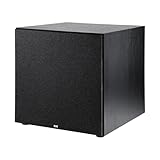
- NEXT-GEN SUBWOOFER - Designed to match the Debut 3.0 Series speakers, our subwoofers deliver balanced, room-filling bass with superior musicality and precision. Choose from 10”, 12”, or 15” models to fit your space and listening preferences.
- SEALED CABINET DESIGN - Experience tight, accurate bass with no unwanted resonance. The sealed enclosure ensures low distortion & fast transient response, for natural, articulate low-end frequencies that blend seamlessly with your main speakers.
- CUSTOM DRIVERS - Engineered for high excursion, our drivers produce powerful, crystal-clear sound at high volumes. The lightweight yet rigid polypropylene cone, featuring a textured surface, enhances structural integrity & ensures superior clarity.
- AUTO ON/OFF - Designed with convenience, the auto signal detection feature powers the subwoofer on when it detects an audio signal & switches it off when idle, ensuring energy-efficient operation without manual intervention.
- CLASS D AMPLIFICATION - Feel the power and precision of our Class D amplifiers, which deliver clean, high-output performance while remaining cool and efficient. Get instant, punchy bass without power-hungry inefficiencies.
Varro: premium alternatives with a specification caveat
ELAC’s catalog lists three Varro models: PS250 at $699, PS350 at $849 and PS500 at $1,049. The PS350 is the middle-priced option and a commercially relevant alternative near the DS153’s listed price, while the PS250 is the lower-cost entry to the premium range. The catalog information available here does not provide a complete, consistent specification set to establish which Varro model delivers the deepest extension, greatest output or best integration.
Choose a Varro only after checking the full technical details, current availability and return terms for your region. A premium-series label does not by itself prove an advantage over a Debut model in your room. Prices are catalog listings observed August 18, 2026. See ELAC’s current catalog.
Independent reader supportYour contribution helps us test, update, and keep practical guides available for everyone.Legacy ELAC models: buy on value and support, not nostalgia
SUB3030: potentially compelling at a real discount
The SUB3030 pairs a 12-inch driver with a 12-inch passive radiator. ELAC lists a 25–150 Hz response, 500 W RMS and 1,000 W peak, app-controlled EQ/DSP, a 50–150 Hz crossover and RCA left/right/LFE inputs. The cabinet measures 17 × 18.19 × 17 inches and weighs 50.16 pounds. ELAC’s product page marks it as no longer produced, although its U.S. store listed it for $899.98 during the dated check. At that price it is difficult to justify over newer options without a specific reason; a substantial clearance discount could change the calculation.
For a used, open-box or clearance unit, confirm its condition, warranty, return policy, replacement-part availability, seller authorization and whether the app still works with your phone and operating system. Do not assume app availability or support will continue. ELAC’s SUB3030 product information; U.S. store listing.
Recommended Free Tools
Best Value
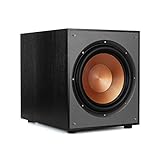
- 12" high excursion spun-copper Imp woofer
- 29 hertz – 120 hertz plus /- 3 dB
- 400 watt
- Max acoustic output 116dB
- Bass-reflex via rear firing port. Amplifier power (control/peak): 200 watts/400 watts
SUB3010: compact legacy model with app-controlled DSP
The SUB3010 has a 10-inch driver and 10-inch passive radiator, a listed 28–150 Hz response, 200 W RMS and 400 W peak, app control for iOS and Android, a 50–150 Hz crossover, and RCA left/right/LFE inputs. It measures 14.33 × 13.5 × 13.5 inches and weighs 32.1 pounds. ELAC marks it no longer produced; its U.S. store listing showed $649.98 and sold-out status during the dated check. Its smaller footprint and app EQ may interest a buyer who finds a well-priced unit, but verify app compatibility, warranty and condition first. ELAC’s SUB3010 product information; U.S. store listing.
SUB2030 and older models
ELAC’s U.S. store has a B-stock SUB2030 listing, but the available listing is not enough to establish its current condition, availability or suitability as a better buy than the current range. Treat older Debut SUB models as individual used or clearance opportunities rather than current lineup recommendations. See the B-stock SUB2030 listing.
Set up the subwoofer for cleaner integration
For an AV receiver using LFE
- Connect the receiver’s subwoofer or LFE output to the subwoofer’s LFE input using the connection specified by both manuals.
- Use the receiver’s bass-management crossover as the primary crossover control. Start near 80 Hz if appropriate for your speakers and room; the right setting depends on the main speakers and the receiver.
- If the subwoofer provides a bypass, LFE or maximum low-pass setting, use it when the receiver is handling bass management. Avoid setting two crossover controls arbitrarily.
- Set the subwoofer level conservatively, run the receiver’s room calibration, and then listen for whether bass blends with the main speakers rather than calling attention to itself.
- Adjust phase after placement and crossover are established, then rerun calibration if you move the subwoofer.
For a stereo amplifier
If your amplifier has a suitable pre-out or subwoofer output, follow its manual and the subwoofer’s input guidance. If you need speaker-level wiring, use the Debut 3.0 high-level input only if the amplifier and ELAC instructions explicitly allow the connection. The S10.2 page lists an LFE RCA input, so do not assume it accepts speaker-level connections.
Placement and troubleshooting
- Bass is weak in one seat: Try another subwoofer position; a room null may be cancelling bass at that seat.
- Bass is boomy: Reduce subwoofer gain modestly, review crossover settings and try a different placement before assuming you need a larger model.
- Bass changes greatly between seats: Consider whether a second subwoofer and careful calibration could improve coverage.
- You move the subwoofer: Run room correction again because placement changes alter the room’s response.
Follow the instructions for your specific receiver and subwoofer. ELAC provides a product documentation index.
Choose by buyer type
- Apartment or bedroom listener: Start with the S10.2 for a lower-cost LFE-based system or the DS103 if stereo/high-level connectivity and a sealed cabinet are useful.
- Music-first listener: Compare the DS103 and DS123 based on room, connection needs and desired bass level; sealed construction alone does not guarantee a preferred sound.
- Mixed-use household: The DS123 is the most balanced specification-based recommendation.
- Large-room movie enthusiast: Consider the DS153, a Varro option after verifying specifications, or multiple subs where coverage across seats matters.
- ELAC Debut speaker owner: ELAC is a natural compatibility option, but the right choice depends on room, output, integration and budget; an ELAC sub is not mandatory.
- Used-market shopper: Consider SUB3030 or SUB3010 only if condition, support and total price make sense; verify app compatibility, warranty and returns before purchase.
Available manufacturer pages establish specifications and product positioning, not independent comparative performance. They do not establish maximum SPL, standardized distortion or compression results, in-room extension, or current legacy-app reliability. Compare independent measurements where available before paying for a performance claim.
Quick Recap
Product prices and availability are accurate as of the date/time indicated and are subject to change. Any price and availability information displayed on Amazon at the time of purchase will apply.