Crashes, No Sound, or Screen Glitches?
Random freezes, missing sound and display glitches usually trace back to one bad driver. Find and replace yours safely.Free scan · under a minuteWindows Errors? Fix Them Before They Spread
Repair common Windows errors and clear accumulated junk for a smoother, more stable PC - no reinstall needed.Free scan · no reinstallThis guide compares amateur-radio HF/6-meter RF linear amplifiers—not audio amplifiers or other types of RF equipment. The best choice depends on your power target, operating mode, antenna system, electrical service and transceiver integration. For a premium solid-state station, consider the FlexRadio Power Genius XL; for a compact 500 W station, the Elecraft KPA500; and for high-duty-cycle operation around 700 W, the ACOM 700S. The Elecraft KPA1500, ACOM 1500 and SPE Expert 1.5K-FA address different routes to 1,000–1,500 W.
These recommendations are based on manufacturer specifications and published review material, not a new, standardized head-to-head test. Manufacturer claims about output, efficiency, protection and duty cycle are identified as such; they are not interchangeable with independent measurements.

Quick recommendations
| Use case | Amplifier | Why consider it | Main trade-off |
|---|---|---|---|
| Premium solid-state station and automation | FlexRadio Power Genius XL | Manufacturer specifies 1,500 W HF output, 100% duty-cycle ICAS operation in all modes, thermal management and fast SWR protection. | Current price, availability and the details of non-Flex integration should be confirmed with the manufacturer or an authorized dealer. FlexRadio specifications |
| Elecraft-integrated 1,500 W station | Elecraft KPA1500 | 1,500 W output, internal ATU, automatic band selection and remote capability. | Requires 240 V AC and typically 50–60 W drive for full output. Elecraft specifications |
| Compact 500 W station | Elecraft KPA500 | Instant-on solid-state operation, automatic RF band switching and coverage through 6 meters. | No internal tuner; full output typically requires 30–40 W drive. Elecraft specifications |
| Compact amplifier for high-duty-cycle operation | ACOM 700S | Rated for 700 W PEP or continuous carrier, covers 1.8–54 MHz and accepts 100–240 V AC. | Full output is specified only up to about 1.5:1 SWR; power is reduced at higher mismatch. ACOM brochure |
| Tube-based high-power station | ACOM 1500 | Rated for 1,500 W PEP or 1,200 W continuous carrier, with automatic tuning assistance and stated matching capability up to 3:1 or higher. | Requires tube warm-up and tuning assistance; long continuous-carrier transmissions may need extra cooling. ACOM brochure |
| Multi-brand automatic station | SPE Expert 1.5K-FA | Documentation describes support for multiple transceiver brands and selectable output levels of approximately 500, 1,000 and 1,500 W. | Confirm current stock and service support; a reseller listing is not proof of availability. SPE manual |
What an amplifier can—and cannot—do
A linear amplifier raises a transceiver’s RF output while preserving the modulation characteristics of signals such as SSB, CW and digital modes. It must do this without excessive intermodulation distortion, unwanted emissions or splatter. Excessive drive can degrade the transmitted signal and damage the amplifier, so match the exciter’s output to the amplifier’s specified drive range.
More transmitter power does not improve reception or repair a poor antenna system. Antenna efficiency, feed-line loss, propagation and local noise can matter more than amplifier output. A larger amplifier cannot make an inefficient antenna efficient, eliminate interference or guarantee that a distant station will hear you.
Free tools Windows power users keep installed
One-click scans. No signup required.
#1 Best Overall
How much difference does the power make?
Going from a 100 W transceiver to 500 W adds about 7 dB of transmit power; going from 100 W to 1,500 W adds about 11.8 dB. Those are meaningful increases, but they do not translate into a threefold improvement in perceived signal strength. The move from 100 W to 500–700 W is often the simpler balance of added margin and station demands. A 1,000–1,500 W amplifier can be valuable for contesting or difficult paths, but brings greater electrical, thermal, antenna and regulatory demands.
Compare the amplifiers by the limits that matter
PEP and continuous-carrier ratings answer different questions. PEP is especially relevant to SSB voice; sustained RTTY, FT8 and other high-duty-cycle operation calls for a continuous-carrier or explicit duty-cycle rating. A PEP figure alone does not establish continuous output. Ambient temperature, ventilation, supply voltage, transmission duration and antenna mismatch can also limit usable power.
| Model | Coverage and stated output | Typical drive for rated output | Matching, tuner and power | What to verify |
|---|---|---|---|---|
| Elecraft KPA500 | 1.8–29.7 MHz and 50–54 MHz; 500 W. Separate continuous-carrier rating: not stated in the cited product specifications. | Approximately 30–40 W. | No built-in tuner; external KAT500 is an option. Built-in linear power supply. Weight and maximum output-load SWR: not stated in the cited product specifications. | Whether 500 W is enough for your contesting and digital-mode schedule. Elecraft product page |
| ACOM 700S | 1.8–54 MHz; 700 W ±0.5 dB, PEP or continuous carrier. | Typically about 27 W. | 100–240 V AC; about 11.6 kg (25.6 lb). Manufacturer specifies up to 3:1 antenna SWR with proportional power reduction and full output up to about 1.5:1. | Whether your antenna stays within the full-output SWR range, especially during sustained transmissions. ACOM user manual |
| Elecraft KPA1500 | 1.8–29.7 MHz and 50–54 MHz; 1,500 W PEP/CW/SSB/data. | Typically 50–60 W. | 240 V AC; internal ATU. RF deck and power supply together weigh about 37 lb. The manufacturer specifies approximately 50% efficiency. | Electrical installation and antenna match. Elecraft advises using the ATU when SWR rises above approximately 1.5:1 for better RF power transfer. Elecraft product page |
| ACOM 1500 | 1.8–54 MHz; 1,500 W PEP or 1,200 W continuous carrier. | Approximately 60–85 W. | Tube amplifier with automatic tuning assistance; stated matching capability up to 3:1 or higher. At 120 V or lower, the manual says output may need to fall to about 1,000 W to keep mains current below 20 A. | Ventilation and duty cycle: long continuous-carrier transmissions may require an auxiliary fan. ACOM user manual |
| FlexRadio Power Genius XL | HF; manufacturer specifies 1,500 W and 100% duty-cycle ICAS operation in all modes. The product page also describes output up to 2,000 W under specified conditions. | Not stated in the cited product material. | Real-time thermal management, efficiency algorithms and SWR protection are manufacturer-described features. Power supply, weight and antenna SWR limit: not stated in the cited product material. | What conditions apply to the 2,000 W figure, its legality where you operate, and compatibility with your radio. FlexRadio product page |
| SPE Expert 1.5K-FA | HF and 6 meters; selectable maximum, medium and low output levels of approximately 1,500, 1,000 and 500 W in the manual. | Not stated in the cited manual excerpt. | Manual describes matching up to 3:1 on HF and 2.5:1 on 6 meters, plus compatibility with several transceiver brands. | Clarify current availability, price, drive requirements and service channel with the manufacturer or dealer. SPE manual |
“Not stated” means the cited specification material does not establish that value; it does not imply the amplifier lacks the feature. The ARRL QST review archive offers historical laboratory context, including measurements of output, IMD, harmonic suppression and switching behavior, but older review data do not establish a model’s current price or availability. ARRL review material
Rank #2

- High-Performance Linear Amplification: Experience clean, stable, and powerful RF output—up to 100W on HF and 80W on 6m. The solid-state linear design ensures low distortion, high efficiency, and exceptional signal purity, delivering crystal-clear performance across SSB, AM, FM, CW, and digital modes, even during extended transmissions
- Flexible Band Switching: Easily select from 7 bands using manual buttons with clear indicator lights for instant feedback, or enable auto mode for seamless automatic band tracking—ideal for operators frequently moving between SSB, CW, and digital modes
- Smart Cooling & Intelligent Protection: Advanced cooling and intelligent control automatically detect and protect against high SWR, overcurrent, overheating, low efficiency, and overpower—ensuring stable performance, longer lifespan, and safe operation even during long sessions
- BT Wireless Band Control: Wirelessly connect your GPA100 to the IC-705 via built-in BT—no additional cable required. Enjoy automatic band switching for a fully cable-free setup, while unsupported bands are seamlessly bypassed for uninterrupted operation
- Broad Transceiver Compatibility: Works perfectly with Xiegu G90, G1m, G106, X108G, X5105, X6100, X6200, IC-705, and other low-power transceivers (QRP). Easily expand your QRP setup into a 100W station with automatic band-synchronization and ALC (if supported by the radio) for safe, efficient amplification
Which amplifier fits each station?
Elecraft KPA500: compact 500 W solid-state operation
The KPA500 is a sensible choice when 500 W is enough and instant operation, compactness and automatic band switching matter more than maximum output. It covers 160 through 6 meters and is specified for roughly 30–40 W drive. Elecraft lists automatic band selection, fast PIN-diode transmit/receive switching, active overdrive/SWR protection and remote-operation capability. It does not have an internal tuner, so plan for an external tuner if your antenna system needs one. Elecraft amplifier comparison
Recommended Free Tools
It is a less natural choice if you are already planning a legal-limit station, need internal antenna tuning or regularly intend to run sustained digital transmissions at maximum output. Check the current listings for the assembled model and kit separately: assembled KPA500 and KPA500 kit.
ACOM 700S: a middle ground for continuous-carrier work
The ACOM 700S is notable for specifying 700 W both PEP and continuous carrier, making its rating more directly relevant to sustained digital operation than a PEP-only figure. ACOM also publishes IMD better than 31 dB below rated PEP output and harmonic and parasitic suppression better than 60 dB; treat these as manufacturer specifications, not a comparison test against the other amplifiers. The unit covers 1.8–54 MHz, operates on 100–240 V AC and weighs about 25.6 lb.
Rank #3
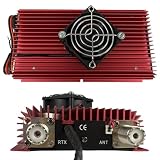
- High-Power Performance for CB & Ham Radio Supports multiple modulation modes including AM, FM, SSB, and CW, delivering up to 100W (FM), 120W (AM), and 150W (SSB) output power, extending your communication range for reliable long-distance operation.
- Broad Compatibility & Input Flexibility Works with HF transceivers requiring 3-5W (AM/FM) or 2-10W (SSB) input power, compatible with most CB radios and walkie talkies operating in the HF band for versatile use.
- Reliable Thermal Management System Built with a high-efficiency cooling fan and large red aluminum heat sink, ensuring stable operation even during extended use by preventing overheating and protecting internal components.
- Safety & Protection Features Equipped with electronic polarity reversal protection and dual 15A fuses, safeguarding your amplifier from incorrect power connections and electrical surges for worry-free operation.
- Compact & User-Friendly Design Features simple controls (power switch, mode selector, high/low power adjustment) and standard PL-259 connectors (RTX/ANT), making installation and setup quick and straightforward for both new and experienced users.
Its antenna-mismatch limits are important: up to 3:1 is specified with proportional power reduction, while full output is specified only to about 1.5:1. If your antenna regularly presents a higher SWR, expect reduced power or address the antenna and matching system rather than assuming the amplifier will deliver its full rating.
Elecraft KPA1500: integrated 1,500 W solid-state power
The KPA1500 covers 1.8–29.7 MHz and 50–54 MHz, produces up to 1,500 W and typically needs 50–60 W drive. It combines an internal ATU, automatic band selection, overdrive/SWR protection and remote capability. That makes it a strong fit for an Elecraft-centered station or an operator who wants integrated tuning and automation, provided the station can supply 240 V AC.
The RF deck and power supply together weigh about 37 lb, and the manufacturer specifies approximately 50% efficiency. An internal ATU is not a cure for an inefficient antenna or severe feed-line loss; follow Elecraft’s guidance on engaging it above roughly 1.5:1 SWR and check that the antenna system can safely handle the intended power.
Rank #4

- High-Power Performance for CB & Ham Radio Supports multiple modulation modes including AM, FM, SSB, and CW, delivering up to 100W (FM), 120W (AM), and 150W (SSB) output power, extending your communication range for reliable long-distance operation.
- Broad Compatibility & Input Flexibility Works with HF transceivers requiring 3-5W (AM/FM) or 2-10W (SSB) input power, compatible with most CB radios and walkie talkies operating in the HF band for versatile use.
- Reliable Thermal Management System Built with a high-efficiency cooling fan and large red aluminum heat sink, ensuring stable operation even during extended use by preventing overheating and protecting internal components.
- Safety & Protection Features Equipped with electronic polarity reversal protection and dual 15A fuses, safeguarding your amplifier from incorrect power connections and electrical surges for worry-free operation.
- Compact & User-Friendly Design Features simple controls (power switch, mode selector, high/low power adjustment) and standard PL-259 connectors (RTX/ANT), making installation and setup quick and straightforward for both new and experienced users.
ACOM 1500: tube-based full-power alternative
The ACOM 1500 is rated at 1,500 W PEP and 1,200 W continuous carrier, with coverage from 1.8–54 MHz. It uses a 4CX1000A/8168 tube and requires approximately 60–85 W drive for rated output. ACOM specifies IMD better than 35 dB below rated output and includes automatic tuning assistance. Its stated matching capability can suit operators whose antenna loads are less forgiving than those preferred by some solid-state amplifiers.
Do not read its 1,500 W PEP figure as 1,500 W continuous output. At 120 V or below, the manufacturer says output may need to be reduced to around 1,000 W to keep current below 20 A. Long continuous-carrier transmissions may require an auxiliary fan. Warm-up, tuning, heat and eventual tube replacement make it a poor fit for someone seeking silent, instant-on, maintenance-free operation.
FlexRadio Power Genius XL: premium integration and thermal management
FlexRadio describes the Power Genius XL as a 1,500 W HF amplifier with 100% duty-cycle ICAS operation in all modes, real-time thermal management, intelligent cooling control and ultrafast SWR protection. These are manufacturer claims; available material here does not provide comparable independent measurements establishing that it is the cleanest, fastest or most reliable choice in this group. Its product page also describes output up to 2,000 W under specified conditions. Do not assume that figure is legal or usable in every jurisdiction or operating condition.
What’s actually slowing this PC down?
Pick the symptom - the matching free tool is one click away.
Best Value
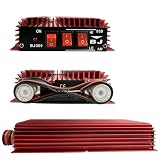
- High-Performance Output - Delivers up to 100W FM, 120W AM, and 150W SSB output power, supporting input power from 3-5W (AM/FM) and 2-10W (SSB) for reliable signal amp.
- Multi-Mode Compatibility - Works with AM, FM, SSB, and CW modes, ideal for radio, ham radio, and HF transceiver applications across HF frequency range.
- Dual Power Control - Features HI/LO power selection switches to adjust output strength based on operating needs, paired with an ON/OFF switch and LED indicator for easy use.
- Enhanced Protection - Built-in electronic switch and polarity inversion protection to safeguard the amp from incorrect power connections, ensuring stable and safe operation.
- Durable & Practical Design - Compact aluminum alloy heat sink construction for efficient heat dissipation, with standard antenna (ANT) and transceiver (RTX) ports for quick installation.
It is most compelling for operators who value FlexRadio integration, contest automation or remote operation. Before buying, confirm current price and stock, compatibility with your particular non-Flex transceiver if relevant, firmware support, warranty and service arrangements.
SPE Expert 1.5K-FA: investigate for multi-brand stations
The manual lists compatibility with Icom, Yaesu, Kenwood, Ten-Tec, FlexRadio and Elecraft equipment, selectable output levels of approximately 500, 1,000 and 1,500 W, and matching up to 3:1 on HF and 2.5:1 on 6 meters. Its automatic antenna selection and multi-brand controls make it worth investigating for a station with more than one radio or antenna.
A reseller result has shown a $6,499 listing marked out of stock; that is not an official manufacturer price or evidence of present availability. Confirm stock, delivery, regional approval, warranty and service with a current authorized seller before treating it as a purchase option. Reseller listing
Independent reader supportYour contribution helps us test, update, and keep practical guides available for everyone.Solid-state or tube?
| Consideration | Solid-state | Tube |
|---|---|---|
| Operation | Usually instant-on and no tune-up procedure; often convenient for band changes and remote control. | Requires warm-up and tuning or tune-assist procedures. |
| Load tolerance | Some models need low antenna SWR for full output and may be more sensitive to overdrive, hot switching and incorrect sequencing. | Often more tolerant of impedance mismatch, though the allowable load still depends on the model and operating conditions. |
| Service and ownership | No tube replacement, but RF modules can be expensive or difficult to source. | Tube replacement is an eventual ownership consideration; designs may be serviceable, but parts and local repair access matter. |
| Heat and noise | High-duty-cycle operation can still impose substantial thermal demands. | Heat, fan noise and ventilation are important, particularly for long digital transmissions. |
Neither technology is universally more reliable. Reliability depends on the design, cooling, operating discipline, service support and availability of parts.
The Tool Desk
Outbyte Driver Updater FREEFix the driver behind crashes, sound loss and screen glitchesFind Drivers →Outbyte PC Repair FREEClear out junk files and repair common Windows errorsFree Scan →Quick Recap
Check these points before buying
- Legal power and exposure: Confirm the power limit for your jurisdiction, license privileges, band and mode, and complete the applicable RF-exposure evaluation. A manufacturer’s maximum output is not permission to transmit at that level.
- Mode and duty cycle: Compare continuous-carrier ratings and stated duty-cycle conditions with your use of FT8, RTTY, FM or long transmissions. Reduce power if cooling, supply voltage or antenna limits demand it.
- Antenna system: Check the power ratings of the antenna, balun or unun, feed line, connectors and tuner. Consider feed-line heating, tuner loss and common-mode current. An ATU transforms impedance; it does not improve antenna efficiency or make an under-rated antenna safe.
- Mismatch details: Distinguish the radio’s input SWR, the amplifier’s output-load range, the ATU’s matching range, the SWR for full output and the point at which power folds back. These are different limits.
- Drive and keying: Verify minimum and maximum drive for your transceiver, PTT/keying voltage and current, band-data or CAT needs, ALC guidance, RF sensing behavior and RF-tail timing. Multi-radio stations may also need interlocks, switching or a sequencer to prevent simultaneous transmission.
- Electrical service: Confirm voltage and circuit requirements before purchase. The KPA1500 specifies 240 V AC; the ACOM 1500 may need reduced output at 120 V or lower to stay below the manual’s stated 20 A current limit.
- Physical installation: Allow for the amplifier’s weight, ventilation, fan noise, heat and shack space. Check whether long digital transmissions call for auxiliary cooling.
- Ownership support: Ask whether replacement transistors or tubes are available, whether factory repair is required, and who provides service in your country. Confirm warranty, firmware support, delivery time and current stock rather than inferring availability from a product page.
How to choose
- Choose the power tier first. If 500 W meets your needs, the KPA500 keeps the station compact. If you want a continuous-carrier rating around 700 W, compare the ACOM 700S. Reserve 1,000–1,500 W for a station whose antenna, electrical service and operating schedule can use it.
- Match the amplifier to your mode. For sustained digital operation, prioritize an explicit continuous-carrier or duty-cycle specification, adequate cooling and an antenna system rated for sustained power. Do not use a PEP rating as a substitute.
- Resolve antenna and power constraints. Check mismatch limits, tuner capability, supply voltage and circuit requirements. These constraints can matter more in practice than a headline wattage.
- Choose the control approach. Decide whether you want simple RF band sensing, transceiver-specific integration, remote operation, or multi-radio and antenna automation. Confirm the exact cables and interfaces your station needs.
- Confirm the purchase path. Verify current pricing, stock, regional certification, warranty and service with the manufacturer or an authorized dealer. Older price listings and out-of-stock reseller pages are not reliable purchase quotes.
Product prices and availability are accurate as of the date/time indicated and are subject to change. Any price and availability information displayed on Amazon at the time of purchase will apply.