Mirza and Sahiban have returned in Punjabi poetry, theatre, music and films for generations—but the familiar tragedy does not have one definitive version. In Mirzya (2016), director Rakeysh Omprakash Mehra brought the folklore into contemporary Rajasthan and paired it with a parallel present-day story. The film’s central question—why Sahiban broke Mirza’s arrows—also opens a larger one: why has she so often been blamed for his death?
A Punjabi story carried across forms
Mirza–Sahiban belongs to the Punjabi folklore and qissa tradition. Its transmission is associated with oral storytelling, and the tale has appeared in forms including the var, the qissa, theatre and cinema. A thesis by Sarah Rahman Niazi describes the story as associated with the poet Pilu; a 2021 article by Sumneet Kaur and Chitwan discusses a qissa traditionally attributed to Peeloo and placed in the early seventeenth century. That is a traditional attribution, not a confirmed date for the tale’s first written record or proof of a single original text. The thesis and the 2021 article describe a tradition with multiple versions, not one fixed account.
![Veer [2 DVD Set] (New Hindi Film / Bollywood Movie / Indian Film DVD)](https://m.media-amazon.com/images/I/415oiH082qL._SL160_.jpg)

A lineage, not a complete filmography
Niazi’s thesis lists screen adaptations dated 1929, 1933, 1939, 1957, 2012 and 2016. The list shows that filmmakers have returned to the story across decades; it should not be read as exhaustive, or as evidence that every film tells the same plot or ends in the same way. The folklore is often discussed alongside other Punjabi love legends, including Heer–Ranjha, Sassi Punnu and Sohni Mahiwal, whose stories also circulate through literary, dramatic, cinematic and musical forms.
Why is Sahiban blamed for Mirza’s death?
In a version of the legend recalled by Mehra, Sahiban’s brothers pursue the lovers. After a long ride, Mirza wakes at the sound of the horse, reaches for his bow and arrows, and discovers they are broken. Mehra said the question of why Sahiban broke them was what drew him to the story. This is his recollection and the creative starting point for Mirzya, not a detail that can be assumed to appear identically in every telling.
Free tools Windows power users keep installed
One-click scans. No signup required.
#1 Best Overall
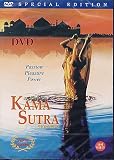
- - Format: DVD
- - Language : English
- - Subtitles : Korean, Subtitle Off
- - Region : Region 0/All (1/2/3/4/5/6)
- - Running : Time 112 Min
Because the broken arrows leave Mirza unable to defend himself, popular retellings have often cast Sahiban as faithless or held her responsible for his death. Kaur and Chitwan challenge that one-sided verdict in their reading of a version attributed to Peeloo. They frame Sahiban’s choice through competing attachments: passionate love for Mirza and love for her brothers. Their interpretation also considers Mirza’s flaws and fate. It is an argument about how to read her actions, not a settled explanation shared by every version or reader.
What *Mirzya* changed
Mehra described the film as a contemporary retelling rather than a period romance. In a 2016 interview with India Today, he said: “It’s NOT a period romance. About 80 per cent of Mirzya is set in contemporary Rajasthan, and it is based on the folklore of Mirza-Sahiban, the eternal love story.” The “about 80 per cent” figure is Mehra’s description of the setting, not an independently measured production statistic.
The film uses a parallel timeline to introduce the old story and ask whether its romantic intensity can exist in the present. Mehra said he began discussing the broken-arrows mystery with screenwriter Gulzar. Recalling Gulzar’s response, he quoted: “Tum woh Sahiban se jaake puchho” (“Go and ask Sahiban that.”) Rather than simply restaging a period legend, the parallel structure makes the unresolved choice at its heart the bridge between the old tale and contemporary Rajasthan.
Independent reader supportYour contribution helps us test, update, and keep practical guides available for everyone.What can—and cannot—be said about the versions
The documented adaptations establish a long afterlife for the story, but they do not provide a basis for reconstructing every film’s plot or comparing all their endings. The clearest supported contrast is between the inherited folklore and Mirzya’s stated contemporary setting and parallel narrative. The available accounts also do not establish a definitive historical basis for Mirza and Sahiban, a singular original text, or the precise first date of written circulation.
Quick Recap
Best Value
Rank #4
Product prices and availability are accurate as of the date/time indicated and are subject to change. Any price and availability information displayed on Amazon at the time of purchase will apply.