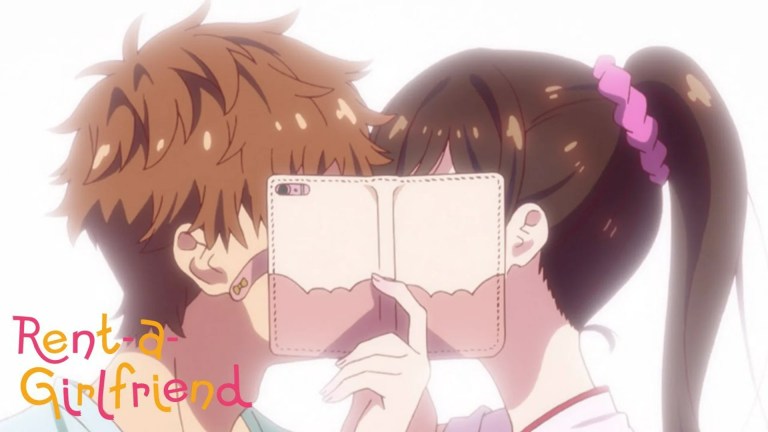
“-Dere” labels are informal anime and manga fandom shorthand for how a character expresses affection—or makes it hard to see. The four most useful labels are tsundere, yandere, kuudere, and dandere. They describe recognizable character patterns, not diagnoses or an official, complete classification.
What does “-dere” mean?
The labels describe the relationship between a character’s outward behavior and their affection. A character might hide fondness behind prickliness, keep emotions tightly controlled, or become more talkative when they feel safe. The suffix is a flexible piece of fandom vocabulary, not a rulebook: characters can show more than one pattern or change over the course of a story.


The Japanese word deredere has a history beyond anime. A Kotobank entry for the Nihon Kokugo Daijiten records an 1889 example in the rakugo story Sumida no Najimi, attributed to the third San’yūtei En’yū. The dictionary sense includes a slack or fawning manner, particularly around someone one is attracted to. That attests to the older root expression; it does not establish when fandom began using “-dere” as an archetype label. Kotobank’s deredere entry.
What are the main dere types?
These terms are easiest to tell apart by asking what makes affection difficult to read and how it eventually shows.
#1 Best Overall
| Type | Typical presentation | How it differs |
|---|---|---|
| Tsundere | Prickly, cold, or unsociable behavior sometimes gives way to sweetness or affection. | Affection is masked by irritation, denial, or bluster. |
| Yandere | Loving behavior becomes obsessive, possessive, or dangerous. | The defining turn is affection becoming a threat, not simply being hard to express. |
| Kuudere | Cool, composed, emotionally restrained behavior; care may be shown indirectly. | The character is controlled or difficult to read, rather than prickly in the tsundere manner. |
| Dandere | Quiet or shy behavior can become warmer as the character feels comfortable. | Shyness or inhibition, rather than emotional coldness, makes affection less visible. |
| Deredere | Openly affectionate or doting behavior. | Affection is visible instead of hidden behind a contrasting manner. |
What is the difference between tsundere and yandere?
A tsundere’s contrast is between a prickly exterior and affection that occasionally comes through. A yandere’s contrast is more serious: loving behavior becomes obsessive or possessive and may turn dangerous. The distinction is not simply “cold versus loving”; it is whether affection is masked by bluster or escalates into a threat. Yandere behavior should not be presented as a healthy romance ideal.
Shogakukan’s Digital Daijisen, through Kotobank, defines tsundere in terms of a usually prickly, unsociable woman who becomes sweet when alone with a particular man or sometimes acts sweetly, and notes its frequent use for anime character settings. Contemporary fandom and English-language use can be broader than that dictionary wording. Digital Daijisen’s tsundere entry via Kotobank.
Rank #2
![[LEZHIN] Point Character Drawing [paperback] (Korean Edition)](https://m.media-amazon.com/images/I/51dIdFtGMDL._SL160_.jpg)
- A set of 2 volumes of Point Character Drawing Books
How did “tsundere” become an anime term?
The root expression deredere predates anime fandom, but the precise history of the archetype label is less certain. A secondary explainer reports that an online post in 2002 described a character from the visual novel Kimi ga Nozomu Eien as “tsundere,” and that a shortened form of “tsuntsunderedere” then spread through Japanese fan forums. This is a reported origin story, not a confirmed first use: the original post has not been established in the available evidence. Anime News Network’s account.
Are there other dere types—and how many are there?
Fans encounter additional labels such as himedere (princess-like), kamidere (godlike or self-important), sadodere, bakadere, mayadere, and hinedere. Their meanings and recognition vary. Lists may combine useful shorthand with jokes, rare coinages, or one-off blends, so there is no reliable official total or agreed secondary taxonomy.
What’s actually slowing this PC down?
Pick the symptom - the matching free tool is one click away.
Rank #3
Use the additional terms as clues to how a fan is interpreting a character, not as a definitive classification. A character may fit more than one label, and the story may complicate or change the pattern. The label is most useful when it opens up interpretation rather than replacing it.
Independent reader supportYour contribution helps us test, update, and keep practical guides available for everyone.Are dere types official personality categories?
No. They are interpretive shortcuts used by fans and in discussions of anime and manga characters, not clinical diagnoses or a closed official system. The familiar core is useful because it distinguishes several ways affection can be hidden, restrained, openly shown, or made threatening; the boundaries remain flexible.
Quick Recap
Product prices and availability are accurate as of the date/time indicated and are subject to change. Any price and availability information displayed on Amazon at the time of purchase will apply.