The Tool Desk
Outbyte Driver Updater FREEScan for outdated or missing drivers - takes under a minuteDriver Scan →Outbyte PC Repair FREEClear out junk files and repair common Windows errorsFree Scan →Some links on this page are affiliate links: if you buy through them we may earn a commission, at no extra cost to you.
Kindle Vella made a short story feel easy to start: choose an episode, read a few minutes, and decide whether to come back for the next one. But in the first hands-on review after its 2021 launch, the phone proved to be both Vella’s natural home and its biggest distraction. Amazon later closed the service on February 26, 2025, saying it “didn’t catch on as we’d hoped.”
What Kindle Vella was
Amazon launched Kindle Vella in the United States on July 13, 2021, as a platform for fiction published in installments. Rather than buying a complete eBook, readers could browse stories and follow them episode by episode. Amazon called it a “mobile-first, interactive reading experience”: an experiment in bringing the recurring rhythm of serialized storytelling into its Kindle publishing and reading ecosystem. Amazon’s launch announcement described episodes of 600 to 5,000 words.
That word “Kindle” could suggest compatibility with a dedicated Kindle e-reader. At launch, however, Vella was available through the web and Kindle apps, not Amazon’s e-ink Kindle devices. A launch-period review found it in the Kindle iOS app and a mobile browser; Amazon later expanded access to Android and Fire devices. The distinction matters: Vella was a Kindle app and web experience, not a new section on every Kindle reader. (GeekWire’s launch review; Amazon’s 2024 Prime Student announcement)
Quick wins for a faster PC:
Clear out junk files and repair common Windows errorsFree Scan →Fix the driver behind crashes, sound loss and screen glitchesFind Drivers →How reading an episode worked
- Browse the Vella catalog. Readers selected a story from the platform’s fiction listings.
- Sample the opening. At launch, the first three episodes of each story were free, giving readers a chance to try the premise and pacing before paying.
- Unlock later installments. Readers bought virtual tokens and spent them on episodes. Amazon controlled token pricing and how many tokens an episode required under the historical terms.
- React and return. Readers could give a story a “Fave,” which helped with discovery, and authors could attach notes to episodes. The design invited readers to return as new installments appeared.
The free-entry terms changed over time. For example, Amazon’s March 2024 Prime Student promotion described the first ten episodes of every story as free and offered token-free reading to eligible members through August 29, 2024. That was a time-limited promotion, not the launch arrangement or a permanent Vella price. (Amazon’s promotion details)
#1 Best Overall
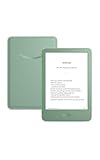
- The lightest and most compact Kindle - Now with a brighter front light at max setting, higher contrast ratio, and faster page turns for an enhanced reading experience.
- Effortless reading in any light - Read comfortably with a 6“ glare-free display, adjustable front light—now 25% brighter at max setting—and dark mode.
- Escape into your books - Tune out messages, emails, and social media with a distraction-free reading experience.
- Read for a while - Get up to 6 weeks of battery life on a single charge.
- Take your library with you – 16 GB storage holds thousands of books.
What an evening with Vella revealed
GeekWire’s reviewer tried the service shortly after launch, spending an evening with it rather than conducting a long-term or representative study. The immediate appeal was sampling: short installments made it easy to try a story without committing to a whole book. Some stories also showed how an episode ending could create a reason to continue. A cliffhanger works naturally when the next installment is the unit of reading.
The setting cut the other way. On a phone or in a browser, a story shares space with messages, notifications, social feeds, and other interruptions. The reviewer found the experience less immersive than reading a conventional book or using a dedicated e-reader. The format could make reading convenient in spare moments, but it could not make those moments quiet.
The same review described an uneven launch catalog. Romance, mystery, science fiction, and action were more prominent in the reviewer’s browsing than narrative nonfiction, and some entries appeared to have basic grammatical or editorial problems. The reviewer also found stories in the “Top Faved” section that were compelling. Those are observations from one evening, not a systematic audit of the catalog, and they do not establish how Vella’s selection or quality changed over time. (GeekWire’s account)
Outdated Drivers Are Slowing You Down
One free scan finds every outdated or missing driver and matches the right update for your exact hardware.Free scan · exact hardware matchWindows Errors? Fix Them Before They Spread
Repair common Windows errors and clear accumulated junk for a smoother, more stable PC - no reinstall needed.Free scan · no reinstallRank #2

- The lightest and most compact Kindle - Now with a brighter front light at max setting, higher contrast ratio, and faster page turns for an enhanced reading experience.
- Effortless reading in any light - Read comfortably with a 6“ glare-free display, adjustable front light—now 25% brighter at max setting—and dark mode.
- Escape into your books - Tune out messages, emails, and social media with a distraction-free reading experience.
- Read for a while - Get up to 6 weeks of battery life on a single charge.
- Take your library with you - 16 GB storage holds thousands of books.
Why Amazon thought serial reading could work
Vella addressed two plausible needs. Readers might want fiction that fits into shorter sessions; authors might want to publish in installments rather than wait until a complete book was finished. A continuing story could give readers a recurring reason to return, while notes and reactions could add a modest social layer. Amazon could bring its publishing infrastructure and KDP author base to the effort rather than starting a catalog from scratch.
Amazon product executive Virginia Milner later described the concept as an attempt to combine brief reading experiences with the draw of long-form stories. That is the format’s central proposition: not simply shorter books, but a novel-like arc delivered in smaller, recurring pieces. (Forbes’s interview with Milner)
“Interactive” meant feedback, not branching fiction
Vella’s interactivity was social and promotional, not structural. Readers could give Faves, and the service supported author notes and, where available, reader comments or polls. These features could make the relationship around a story feel more participatory and help surface titles. They did not turn Vella into a game or branching-fiction engine in which a reader’s choices changed the plot.
Rank #3
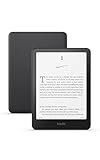
- Our fastest Kindle Paperwhite ever – The next-generation 7“ Paperwhite display has a higher contrast ratio and 25% faster page turns.
- Ready for travel – The ultra-thin design has a larger glare-free screen so pages stay sharp no matter where you are.
- Escape into your books – Your Kindle doesn’t have social media, notifications, or other distracting apps.
- Battery life for your longest novel – A single charge via USB-C lasts up to 12 weeks.
- Read in any light – Adjust the display from white to amber to read in bright sunlight or in the dark.
Tokens made payment granular—and less transparent
Tokens let readers sample before paying and gave authors a way to monetize individual installments. Small episode-level purchases could feel less like a commitment than a full-book purchase. But virtual currency also inserted a conversion step between the reader and the price: a reader had to understand the token bundle and the token cost of each episode to estimate what finishing a story would cost.
That creates a harder comparison with an eBook sold at one visible price. A reader may also be wary of paying installment by installment for a serial that stops updating, or may end up with tokens left over. These are usability risks inherent in the model, not evidence that all Vella readers disliked it. The historical terms said Amazon set token pricing and episode token requirements, and that token purchases were generally non-refundable except where required by law. Those terms describe the closed service, not a current offer. (Historical Vella terms)
What Vella offered authors
For writers, Vella promised a different publishing cadence: release a story in installments, add notes, and receive reader response as it unfolded. Faves and platform rankings could contribute to discovery, while the KDP connection gave Amazon access to an established pool of self-publishing authors. Serial publication might also let an author test a premise or format before turning the work into a book.
Rank #4

- Our fastest Kindle Paperwhite ever – The next-generation 7“ Paperwhite display has a higher contrast ratio and 25% faster page turns.
- Upgrade your reading experience – The Signature Edition features an auto-adjusting front light, wireless charging, and 32 GB storage.
- Ready for travel – The ultra-thin design has a larger glare-free screen so pages stay sharp no matter where you are.
- Escape into your books – Your Kindle doesn’t have social media, notifications, or other distracting apps.
- Adapts to your surroundings – The auto-adjusting front light lets you read in the brightest sunlight or late into the night.
At launch, Amazon’s Vella structure paid authors 50% of reader spending on episodes, according to the launch-era review and terms. This was a specific historical Vella arrangement, not a current KDP royalty rate or an option available after the service closed. Authors also faced familiar platform trade-offs: sustaining a release schedule and strong episode endings, editing quickly, depending on Amazon’s discovery systems, and building an audience on a service they did not control. (GeekWire’s launch review; Vella terms)
Vella and an ordinary Kindle eBook
| Dimension | Kindle eBook | Kindle Vella at launch |
|---|---|---|
| Format | A complete book | A story released in episodes |
| Payment | Usually one visible book price | Tokens used to unlock episodes one at a time |
| Reading environment | Kindle devices and apps | Mobile-first app and web experience; not dedicated Kindle e-readers at launch |
| Pacing | The reader chooses how quickly to move through the book | The author’s release cadence shapes when new installments arrive |
| Discovery | Kindle Store categories, search, and recommendations | Vella-specific discovery and Faves |
| Social layer | Limited in the reading format | Author notes and reader reactions |
| Reader risk | The complete book is available at purchase | A serial could be unfinished or uneven as it develops |
Vella was not simply a replacement for Kindle books. It was an attempt to add a serialized format to Amazon’s existing publishing and reading business, with a different rhythm, payment mechanism, and kind of reader engagement.
Why the format was difficult to sustain
- Each story had to earn the next visit. A slow-building novel can take time to establish itself; a serial needs an opening that persuades readers to continue and installments that reward returning.
- Updates create a promise. When a story is sold in parts, a lapse or an unfinished ending can feel more consequential than pausing a complete book already in hand.
- Mobile convenience competes with immersion. The same device that makes a short episode available anywhere also carries the interruptions the reviewer encountered.
- Discovery is difficult to make fair. Faves and rankings can help readers find stories, but popularity signals do not necessarily reveal quality or make less-visible authors discoverable.
- Scale complicates editing. A large self-publishing catalog can offer range and rapid supply, while leaving readers to navigate uneven editing and presentation.
- A platform’s identity sets expectations. “Kindle” suggested e-reader access to some readers, but launch Vella was a phone, app, and browser product.
How Vella wound down
Amazon announced a wind-down in late 2024 and ended Kindle Vella on February 26, 2025. The company said the service “didn’t catch on as we’d hoped.” It has not published detailed user, revenue, retention, or catalog-performance figures in the cited closure notice, so the announcement establishes Amazon’s assessment but does not quantify why readers did not adopt it.
Best Value

- Our fastest Kindle Paperwhite ever – The next-generation 7“ Paperwhite display has a higher contrast ratio and 25% faster page turns.
- Ready for travel – The ultra-thin design has a larger glare-free screen so pages stay sharp no matter where you are.
- Escape into your books – Your Kindle doesn’t have social media, notifications, or other distracting apps.
- Battery life for your longest novel – A single charge via USB-C lasts up to 12 weeks.
- Read in any light – Adjust the display from white to amber to read in bright sunlight or in the dark.
Amazon said customers who had purchased episodes before closure could continue reading them in the free Kindle apps for Fire tablets, iOS, and Android. It encouraged authors to republish Vella stories as eBooks, and the Vella reporting dashboard was discontinued. Continued access to previously purchased episodes is not a guarantee of indefinite availability, nor does it mean Vella remains a marketplace for new purchases. (Amazon’s Vella wind-down FAQ)
What the experiment leaves behind
Vella recognized a real format possibility: a long story can be delivered in short sessions, and publishing in installments can give authors a faster feedback loop. Its launch experience also exposed the work required to make that proposition compelling. Readers had to find a story, trust its update rhythm, understand token costs, and keep returning in a distracted mobile environment.
The closure shows that Amazon did not find a sufficiently durable audience for this particular combination of serialized fiction, mobile reading, discovery features, and token payments. It does not prove that serialized fiction itself failed. Vella is best remembered as a publishing experiment whose idea was plausible, but whose format and commerce model did not become a lasting Kindle category.
What’s actually slowing this PC down?
Pick the symptom - the matching free tool is one click away.
Quick Recap
Product prices and availability are accurate as of the date/time indicated and are subject to change. Any price and availability information displayed on Amazon at the time of purchase will apply.

