The deadline in this story has passed. Amazon removed the Download & Transfer via USB feature on February 26, 2025. That feature allowed customers to download purchased Kindle books from Amazon’s website to a computer, sometimes for transfer to a registered Kindle.
A separate cutoff took effect on May 20, 2026: Kindle e-readers and Fire tablets released in 2012 or earlier lost access to Kindle Store activity and Send to Kindle delivery. Neither change banned Kindle books generally, and neither removed access to supported Kindle devices, Kindle apps, or Kindle for Web.
What Amazon actually removed
The February 26, 2025 change removed Amazon’s official web-based export path for ordinary purchased Kindle books. The feature was called Download & Transfer via USB and appeared in the customer’s Amazon library under Manage Your Content and Devices.
It was useful for readers who wanted a local copy on a computer, owners of older Kindles without reliable wireless support, and anyone who wanted more control over their personal ebook library. However, it was never a universal bulk-download tool. Books generally had to be selected individually, and availability could depend on the title, licensing terms, and registered device.
#1 Best Overall
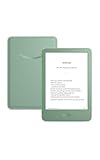
- Light and compact - With adjustable brightness, high contrast ratio, and fast page turns.
- Effortless reading in any light - Read comfortably with a 6“ glare-free display, adjustable front light—now 25% brighter at max setting—and dark mode.
- Escape into your books - Tune out messages, emails, and social media with a distraction-free reading experience.
- Read for a while - Get up to 6 weeks of battery life on a single charge.
- Take your library with you – 16 GB storage holds thousands of books.
Most importantly, Amazon did not remove all Kindle reading or all USB file transfers. Supported Kindles can still receive books wirelessly, and readers can continue using Kindle apps for Windows, macOS, iOS, and Android, as well as Kindle for Web. USB also remains useful for compatible personal documents and other files that the reader already lawfully possesses.
How the old download method worked
The following is the historical workflow that readers could use before February 26, 2025. It is included to explain the original story—not as a method that still works for ordinary DRM-protected Kindle purchases.
- Sign in to Amazon using the account that purchased the book.
- Open Manage Your Content and Devices.
- Find the purchased Kindle book in the content list.
- Open More actions.
- Select Download & transfer via USB.
- Choose a registered, compatible Kindle or Fire device when Amazon prompted you.
- Save the resulting file to the computer.
- If needed, connect the selected device with a USB data cable and copy the downloaded file to the device’s documents area.
The device selection mattered. A Kindle reading app by itself did not satisfy the feature’s device requirement. The feature was also different from simply plugging a Kindle into a computer: the Amazon website first authorized and generated the book file for a particular registered device.
That web command is no longer available for the normal DRM-protected Kindle purchase. A USB cable alone cannot recreate it.
What’s actually slowing this PC down?
Pick the symptom - the matching free tool is one click away.
Why readers cared about the feature
- Local preservation: A computer copy gave readers an additional locally stored file rather than relying solely on Amazon’s servers and account delivery.
- Older hardware: The method was particularly valuable for older or non-Wi-Fi Kindles.
- Library management: Readers could organize files and metadata on a computer.
- Device flexibility: A locally accessible file could, where its licensing allowed, be managed outside Amazon’s delivery system.
Those benefits explain the concern around the deadline, but “Amazon banned Kindle books” is too broad. The removed feature was one official export route, not the Kindle library itself.
What still works in 2026
Reading your purchased books
For ordinary Kindle purchases, the supported route remains Amazon’s own ecosystem. Sign in to the purchasing Amazon account on a supported Kindle, Kindle app, or Kindle for Web, then download or open the book through the library. Purchased titles remain associated with the account and can generally be redelivered to supported devices.
Rank #2

- Light and compact - With adjustable brightness, high contrast ratio, and fast page turns.
- Effortless reading in any light - Read comfortably with a 6“ glare-free display, adjustable front light—now 25% brighter at max setting—and dark mode.
- Escape into your books - Tune out messages, emails, and social media with a distraction-free reading experience.
- Read for a while - Get up to 6 weeks of battery life on a single charge.
- Take your library with you - 16 GB storage holds thousands of books.
This is access and synchronization, not a computer-backup feature. A book appearing in your Kindle library does not mean Amazon provides a freely portable EPUB or PDF file.
Downloading eligible DRM-free books
Amazon’s current KDP documentation describes a limited exception that took effect on January 20, 2026. For a book whose publisher has chosen not to apply DRM, a verified purchaser may see options to download EPUB and PDF files through Manage Your Content and Devices.
This is not a replacement for the old Download & Transfer via USB feature:
- It applies only to eligible DRM-free titles.
- The purchaser must be verified.
- DRM-protected books do not receive the EPUB/PDF entitlement.
- Kindle Unlimited and other borrowed titles cannot be exported through this option, even if a particular title is DRM-free.
If no EPUB or PDF download option appears, do not assume that the account is malfunctioning. The book may be DRM-protected, borrowed, or otherwise ineligible.
Transferring personal documents
Amazon still supports USB transfer for compatible files that you already lawfully possess. Depending on the device and software, readers can also use Send to Kindle. Amazon lists formats including EPUB, PDF, DOC, DOCX, TXT, RTF, HTML, and common image formats, with a stated 200 MB per-file limit on its cited help guidance.
There is a device-specific difference on Mac computers: for Kindles released in 2024 and Kindle Scribe, Amazon provides a USB File Manager inside the Send to Kindle application. Earlier Kindle models generally do not require that separate Mac application for ordinary USB file transfer.
Recommended Free Tools
Rank #3
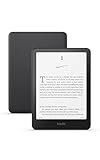
- Our fastest Kindle Paperwhite ever – The next-generation 7“ Paperwhite display has a higher contrast ratio and 25% faster page turns.
- Ready for travel – The ultra-thin design has a larger glare-free screen so pages stay sharp no matter where you are.
- Escape into your books – Your Kindle doesn’t have social media, notifications, or other distracting apps.
- Battery life for your longest novel – A single charge via USB-C lasts up to 12 weeks.
- Read in any light – Adjust the display from white to amber to read in bright sunlight or in the dark.
For a transfer problem, first check that the cable supports data rather than charging only, try another USB port, unlock the Kindle, and follow Amazon’s connection guidance. Do not install a generic driver-updater or PC-cleaning product merely because a Kindle is not detected; the problem is more often the cable, port, application, device generation, or file compatibility.
What you need for USB transfer
A Kindle USB cable can be useful when transferring compatible personal documents or other ordinary files to and from a Kindle. Connector type varies by generation: many older models use micro-USB, while newer Kindles use USB-C. A cable can enable file transfer, but it does not restore Amazon’s discontinued web export command and does not make DRM-protected Kindle purchases portable.
The separate May 20, 2026 cutoff for older Kindles
Amazon’s second change is narrower but more serious for owners of legacy hardware. On May 20, 2026, Amazon ended support for Kindle e-readers and Fire tablets released in 2012 or earlier for Kindle Store activity and Send to Kindle delivery.
Affected e-readers identified in Amazon’s guidance include:
Quick wins for a faster PC:
Clear out junk files and repair common Windows errorsFree Scan →Scan for outdated or missing drivers - takes under a minuteDriver Scan →- Kindle generations 1 and 2
- Kindle DX and Kindle DX Graphite
- Kindle Keyboard
- Kindle 4
- Kindle Touch
- Kindle 5
- First-generation Kindle Paperwhite
The exact cutoff is based on the device’s release generation, not simply its age today. If you are unsure which model you own, check the device information in its settings and compare it with Amazon’s legacy-device list.
What affected devices can still do
Amazon says that books and other content already downloaded can remain readable as long as the device stays logged in and is not deregistered or factory-reset. Users of affected hardware should therefore avoid these actions if they want to preserve access to the content already stored on the device.
Those devices can no longer use Amazon’s Kindle services to:
Rank #4

- Our fastest Kindle Paperwhite ever – The next-generation 7“ Paperwhite display has a higher contrast ratio and 25% faster page turns.
- Ready for travel – The ultra-thin design has a larger glare-free screen so pages stay sharp no matter where you are.
- Escape into your books – Your Kindle doesn’t have social media, notifications, or other distracting apps.
- Battery life for your longest novel – A single charge via USB-C lasts up to 12 weeks.
- Read in any light – Adjust the display from white to amber to read in bright sunlight or in the dark.
- Purchase new Kindle Store books
- Borrow or download new Kindle Store titles
- Receive files through Send to Kindle
- Rely on registration or redelivery after deregistration or a reset
Personal documents can still be transferred by USB, subject to the device’s file and format limitations. This cutoff did not “brick” every old Kindle, but it did remove important Amazon-service functions.
The Tool Desk
Outbyte PC Repair FREERepair Windows errors before they cause bigger problemsFix Now →Outbyte Driver Updater FREEFix the driver behind crashes, sound loss and screen glitchesFind Drivers →What to do based on your goal
If you only want to keep reading your library
- Use a supported Kindle, Kindle app, or Kindle for Web.
- Sign in with the Amazon account that owns the books.
- Download or open titles from the library.
If your old device is affected by the 2026 cutoff, a new Kindle e-reader can restore access to current Kindle Store and Send to Kindle services. It does not, however, recreate computer backups of ordinary DRM-protected purchases.
If you want an independent local library
Start with titles for which Amazon or the publisher clearly provides an ordinary downloadable format, especially eligible DRM-free EPUB or PDF files. Download those files while the entitlement is available, store more than one backup, and keep the purchase and licensing information with the files.
For future purchases, prefer retailers and publishers that clearly document the downloadable format and DRM status. Paying for an ebook does not by itself guarantee a permanently transferable file.
If you manage personal files or DRM-free books
Calibre is a free, open-source ebook manager that can organize metadata, maintain a local library, and transfer compatible files to an ereader by cable or, in some setups, wirelessly. It is a useful tool for ordinary files you can lawfully access.
Free tools Windows power users keep installed
One-click scans. No signup required.
Calibre is not an official replacement for Amazon’s removed Download & Transfer feature. It cannot be promised to export every Kindle purchase, and it should not be presented as a way to bypass DRM.
If you are considering another ereader
A Kobo ereader or another non-Amazon device may offer a reading ecosystem with broader format support, depending on the model and store. But changing hardware does not automatically make DRM-protected Kindle purchases readable on that device. You would need a lawful, compatible file supplied by the publisher or retailer; do not assume that a Kindle purchase can simply be copied to Kobo.
Best Value

- Our fastest Kindle Paperwhite ever – The next-generation 7“ Paperwhite display has a higher contrast ratio and 25% faster page turns.
- Upgrade your reading experience – The Signature Edition features an auto-adjusting front light, wireless charging, and 32 GB storage.
- Ready for travel – The ultra-thin design has a larger glare-free screen so pages stay sharp no matter where you are.
- Escape into your books – Your Kindle doesn’t have social media, notifications, or other distracting apps.
- Adapts to your surroundings – The auto-adjusting front light lets you read in the brightest sunlight or late into the night.
DRM: the line readers should not cross
DRM, or digital rights management, controls how some Kindle books may be opened, copied, and transferred. Amazon distinguishes DRM-applied books from DRM-free books: DRM-applied titles are restricted to supported Kindle apps and devices, while eligible DRM-free titles may be offered as EPUB or PDF downloads.
There is a meaningful difference between:
- Lawful USB transfer: copying a compatible personal document or an ordinary ebook file you already have permission to use.
- DRM-free library management: organizing, backing up, or transferring an EPUB or PDF supplied without DRM, subject to its license.
- DRM circumvention: bypassing access controls to extract or convert a protected Kindle purchase.
This article does not provide DRM-removal instructions. The legality of circumvention varies by jurisdiction and by the circumstances, and Amazon warns that it cannot verify or guarantee the security, functionality, or reliability of third-party transfer software.
Do these 3 things before closing this tab:
1Repair Windows errors before they cause bigger problems2Fix the driver behind crashes, sound loss and screen glitches3Clear out junk files and repair common Windows errorsCan a USB cable still download Kindle books?
Not in the old sense. A USB cable can transfer compatible files between a computer and a Kindle, but it cannot independently download an Amazon purchase to the computer. Before February 26, 2025, Amazon’s website generated the authorized book file through Download & Transfer via USB. That official web export path is gone for ordinary DRM-protected titles.
Can Kindle Unlimited books be backed up as EPUB or PDF?
No. Amazon’s DRM-free EPUB/PDF entitlement does not apply to Kindle Unlimited or other borrowed titles. Subscription and lending access is not the same as ownership of a downloadable, transferable file.
What readers who missed the deadline can—and cannot—do
| Goal | Available path in 2026 | Important limitation |
|---|---|---|
| Read purchased Kindle books | Supported Kindle, Kindle app, or Kindle for Web | Access remains inside Amazon’s supported ecosystem for DRM-protected titles. |
| Download a purchased book as EPUB/PDF | Use the option in Manage Your Content and Devices when the title is eligible | Only eligible DRM-free purchases qualify; borrowed titles do not. |
| Transfer a personal document | USB or Send to Kindle where supported | Older devices affected by the 2026 cutoff cannot use Send to Kindle. |
| Manage a local library | Calibre or another library manager | It does not recover Amazon’s removed export route or defeat DRM. |
| Move protected Kindle purchases to another ereader | No general official export route | New hardware does not remove the book’s DRM restrictions. |
Frequently Asked Questions
Did Amazon ban Kindle books?
No. Amazon removed Download & Transfer via USB on February 26, 2025, then ended Kindle-service support for devices released in 2012 or earlier on May 20, 2026. Supported Kindles, Kindle apps, and Kindle for Web still provide access to Kindle libraries.
Can I still use Download & Transfer via USB?
No. The web-based feature was removed on February 26, 2025. A USB cable still transfers compatible personal files, but it does not restore the discontinued purchase-download workflow.
Can I download every Kindle purchase as an EPUB or PDF?
No. As of 2026, Amazon provides EPUB/PDF downloads only for eligible DRM-free books for verified purchasers. DRM-protected books and Kindle Unlimited or other borrowed titles are excluded.
What happens if I deregister an old Kindle released in 2012 or earlier?
Amazon says affected devices can continue reading content already downloaded while they remain logged in and are not deregistered or factory-reset. After deregistration or a reset, redelivery and other Amazon-service functions may no longer be available.
The Bottom Line
Bottom line: The easiest official Kindle backup route disappeared on February 26, 2025, and readers who missed that date cannot recreate it for ordinary DRM-protected purchases. You can still read your library on supported Kindle hardware, Kindle apps, and Kindle for Web; download eligible DRM-free books as EPUB or PDF; and use USB for compatible personal documents. Owners of Kindles released in 2012 or earlier also need to account for the separate May 20, 2026 service cutoff.
Quick Recap
Product prices and availability are accurate as of the date/time indicated and are subject to change. Any price and availability information displayed on Amazon at the time of purchase will apply.