Quick wins for a faster PC:
Fix the driver behind crashes, sound loss and screen glitchesFind Drivers →Clear out junk files and repair common Windows errorsFree Scan →Scan for outdated or missing drivers - takes under a minuteDriver Scan →Ethan Hawke’s relationship with horror has never been casual. He drifts into the genre at pivotal moments, often when horror itself is evolving, and leaves behind performances that linger long after the jump scares fade. From cosmic dread to suburban terror, Hawke approaches horror not as spectacle but as character work, grounding the unreal in human anxiety, regret, and moral fracture.
What makes his horror filmography especially compelling is how selective it is. Hawke has never chased genre trends, yet his appearances often coincide with modern horror’s smartest turns toward psychological depth and thematic ambition. With Black Phone 2 on the horizon, his growing horror legacy invites a closer look at how these films stack up and why his presence carries such weight within the genre.
This ranking examines all seven of Ethan Hawke’s horror films through a lens that values performance, cultural impact, and genre contribution. The goal is not just to determine which films are “scariest,” but to understand how Hawke’s work shapes the experience, elevates the material, and, in some cases, redefines what horror can achieve when anchored by serious acting.
How These Films Are Being Ranked
Performance is the primary factor, with particular attention paid to how fully Hawke inhabits fear, menace, or psychological collapse. Horror thrives on credibility, and Hawke’s best genre work commits completely, whether he’s portraying a man unraveling under cosmic pressure or embodying a villain whose humanity makes him more terrifying.
#1 Best Overall

- HD streaming made simple: With America’s number 1 TV streaming platform,* exploring popular apps—plus tons of free movies, shows, and live TV—is as easy as it is fun. *Based on hours streamed—Hypothesis Group
- Compact without compromises: The sleek design of Roku Streaming Stick won’t block neighboring HDMI ports, and it even powers from your TV alone, plugging into the back and staying out of sight. No wall outlet, no extra cords, no clutter.
- No more juggling remotes: Power up your TV, adjust the volume, and control your Roku device with one remote. Use your voice to quickly search, play entertainment, and more.
- Shows on the go: Take your TV to-go when traveling—without needing to log into someone else’s device.
- TV, simplified: With setup that only takes minutes, a simple-to-navigate Home Screen, and an uncluttered remote control that does all you need—Roku makes it easier to watch the TV you love.
Cultural and genre impact also weigh heavily. Some of these films helped define modern horror trends, while others gained cult status through longevity rather than box office success. Rewatchability, influence on later films, and how often a performance is cited within horror discourse all factor into where each entry lands.
Ethan Hawke’s Horror Work in Career Context
Hawke’s horror roles stand out precisely because they sit alongside a career built on literary adaptations, prestige dramas, and intimate character studies. He brings the same seriousness to horror that he does to Shakespeare, Linklater’s philosophical experiments, or true-crime narratives, refusing to treat the genre as lesser material.
That commitment is why anticipation for Black Phone 2 is unusually high for a horror sequel. Hawke’s return signals that the character and the world still have something worth exploring, not just escalating. In a genre often driven by repetition, his continued involvement suggests intention, and that alone makes this chapter of his career worth ranking with care.
Rank #7 – “Regression” (2015): Prestige Horror Misfire or Underrated Psychological Curio?
Alejandro Amenábar’s Regression sits at the bottom of Ethan Hawke’s horror rankings not because it lacks ambition, but because that ambition never quite coheres into a satisfying genre experience. Set against the backdrop of the 1990s Satanic Panic, the film aims for a slow-burn psychological descent, blending true-crime procedural with occult paranoia. On paper, it feels tailor-made for Hawke’s introspective intensity. On screen, it often struggles to decide what kind of horror it wants to be.
What’s actually slowing this PC down?
Pick the symptom - the matching free tool is one click away.
A Performance Searching for Solid Ground
Hawke plays Detective Bruce Kenner, a man whose rational worldview erodes as he confronts allegations of ritual abuse and mass delusion. As always, Hawke commits fully, grounding the role in fatigue, doubt, and creeping moral unease. His performance is thoughtful and serious, but the film gives him limited room to evolve beyond a familiar arc of professional skepticism giving way to dread.
The problem isn’t Hawke’s credibility; it’s that the script repeatedly undercuts his psychological journey with exposition-heavy twists and tonal indecision. Rather than letting paranoia simmer, Regression rushes to explain itself, diluting the very ambiguity that could have elevated Hawke’s internalized fear into something haunting.
Prestige Trappings, Genre Hesitation
Amenábar directs with polish and restraint, favoring muted color palettes and solemn pacing over visceral scares. This gives Regression the feel of prestige horror adjacent, more interested in respectability than provocation. While that approach aligns with Hawke’s dramatic sensibilities, it leaves horror fans wanting sharper tension and clearer thematic payoff.
Where Hawke’s better genre films weaponize his intelligence and emotional transparency, Regression keeps him at arm’s length from the film’s most unsettling implications. The result is a movie that gestures toward disturbing ideas without fully embracing their horror potential.
Why It Lands Last, Not Forgotten
Regression earns its #7 ranking because it neither reshaped the genre nor added a defining chapter to Hawke’s horror legacy. It’s a curiosity rather than a cornerstone, notable for its intent more than its impact. Still, it’s far from a disposable effort, offering a glimpse of how Hawke’s gravitas can lend weight to even flawed material.
In hindsight, Regression feels like a transitional stop on Hawke’s path toward more potent horror roles, where psychological collapse would later be rendered with sharper focus and greater cultural resonance. As an early indicator of his willingness to explore fear through intellect rather than spectacle, it remains interesting, even if it never quite comes alive.
Rank #6 – “The Purge” (2013): The Franchise Starter That Turned Hawke into a Horror Everyman
Coming off more introspective, prestige-leaning thrillers, The Purge marked a pivot point for Ethan Hawke’s horror trajectory. This wasn’t elevated dread or psychological unraveling; it was blunt, high-concept survival horror wrapped in a thin veneer of social satire. For the first time in the genre, Hawke wasn’t an observer or investigator of fear, but a suburban father scrambling to protect his family when the rules collapse.
The film’s now-iconic premise is simple to the point of provocation: one night a year, all crime is legal. Director James DeMonaco stages the action almost entirely inside a fortified home, turning Hawke’s James Sandin into a man whose carefully curated sense of safety is exposed as both privilege and illusion. That domestic confinement allows Hawke to ground the film’s outrageous concept in recognizable anxiety.
Do these 3 things before closing this tab:
1Fix the driver behind crashes, sound loss and screen glitches2Repair Windows errors before they cause bigger problems3Scan for outdated or missing drivers - takes under a minuteRank #2

- Ultra-speedy streaming: Roku Ultra is 30% faster than any other Roku player, delivering a lightning-fast interface and apps that launch in a snap.
- Cinematic streaming: This TV streaming device brings the movie theater to your living room with spectacular 4K, HDR10+, and Dolby Vision picture alongside immersive Dolby Atmos audio.
- The ultimate Roku remote: The rechargeable Roku Voice Remote Pro offers backlit buttons, hands-free voice controls, and a lost remote finder.
- No more fumbling in the dark: See what you’re pressing with backlit buttons.
- Say goodbye to batteries: Keep your remote powered for months on a single charge.
The Birth of Hawke as a Genre Surrogate
What makes Hawke effective in The Purge isn’t range so much as relatability. He plays James as competent but complacent, a man who believes he’s prepared for chaos until it arrives at his door wearing a polite smile. Hawke’s natural intelligence and emotional transparency sell the slow erosion of confidence, turning abstract societal collapse into a personal reckoning.
This performance established a template that later horror films would refine: Hawke as the thinking man caught in a nightmare that punishes moral neutrality. His horror here is reactive rather than introspective, but that immediacy helped audiences project themselves into the scenario. The Purge needed an actor who could feel like a stand-in for the viewer, and Hawke delivered exactly that.
Franchise Impact vs. Performance Depth
Culturally, The Purge looms larger than its craftsmanship. It launched a durable franchise and became a shorthand for anxieties about class, violence, and state-sanctioned cruelty. Hawke’s presence lent the original film credibility, anchoring its exploitation trappings with a recognizable dramatic actor at the center.
Yet his character arc is relatively straightforward, constrained by the film’s mechanics and modest budget. There’s limited space for the layered psychological work that defines Hawke’s strongest horror roles, and the film’s social commentary is more provocative in concept than execution. As a result, The Purge earns respect for what it started rather than how deeply it explores its lead.
Crashes, No Sound, or Screen Glitches?
Random freezes, missing sound and display glitches usually trace back to one bad driver. Find and replace yours safely.Free scan · under a minuteWindows Errors? Fix Them Before They Spread
Repair common Windows errors and clear accumulated junk for a smoother, more stable PC - no reinstall needed.Free scan · no reinstallWhy It Ranks #6
The Purge sits at #6 because it’s foundational but not definitive. It expanded Hawke’s genre footprint and proved he could carry a mainstream horror hit without irony or detachment. Still, it lacks the thematic density, emotional complexity, and lasting character imprint that would come to define his best horror performances.
In retrospect, The Purge feels like an entry point rather than a culmination. It introduced Hawke as a credible horror anchor, setting the stage for roles that would later push him into darker, more psychologically bruising territory where his talents could fully ignite.
Rank #5 – “The Black Phone” (2021): Reinventing Hawke as a Modern Horror Icon
After years of circling the genre as an intelligent everyman or ethical observer, The Black Phone marks the moment Ethan Hawke fully embraces the monster. Scott Derrickson’s stripped-down, child’s-eye horror gives Hawke his most overtly terrifying role to date, transforming him into The Grabber, a predator defined less by backstory than by ritual, cruelty, and theatrical menace. It’s a deliberate rupture from Hawke’s earlier horror persona, and a necessary one.
What makes the performance so striking is its restraint. Hawke appears sparingly, yet his presence saturates the film, lingering in every locked door and whispered threat. The Grabber’s masks, shifting between exaggerated faces, become extensions of Hawke’s voice and physicality, allowing him to convey emotion through posture and cadence rather than psychology-heavy dialogue.
Recommended Free Tools
A Villain Built on Performance, Not Explanation
The Black Phone resists the modern horror urge to over-explain its antagonist, and Hawke benefits immensely from that restraint. We’re never asked to sympathize with The Grabber or understand his origins; instead, Hawke plays him as an embodiment of adult cruelty seen through a child’s perspective. His calm, almost playful delivery makes the violence feel more disturbing, as if evil here is banal rather than explosive.
This approach aligns perfectly with Hawke’s career-long fascination with moral ambiguity, even when playing outright villains. The Grabber isn’t chaotic; he’s procedural, patient, and eerily composed. Hawke understands that the scariest monsters don’t rage, they wait.
Cultural Impact and the Birth of a New Horror Persona
The Black Phone was a breakout hit not because it reinvented horror, but because it refined it. Its mix of supernatural suggestion, grounded cruelty, and emotional catharsis connected strongly with audiences, especially younger viewers encountering Hawke as a horror figure for the first time. For many, this wasn’t the thoughtful dad from Before Sunrise or the haunted writer from Sinister, but a full-fledged boogeyman.
The role repositioned Hawke within the genre. No longer just a prestige actor slumming in horror-adjacent projects, he emerged as a modern horror icon capable of headlining franchise-worthy nightmares. That shift is precisely why anticipation for Black Phone 2 carries such weight; audiences now expect Hawke not merely to appear, but to dominate.
Free tools Windows power users keep installed
One-click scans. No signup required.
Rank #3

- 4K streaming made simple:With America’s number 1 TV streaming platform,* exploring popular apps—plus tons of free movies, shows, and live TV—is as easy as it is fun. *Based on hours streamed—Hypothesis Group
- 4K picture quality: With Roku Streaming Stick Plus, watch your favorites with brilliant 4K picture and vivid HDR color.
- Compact without compromises: Our sleek design won’t block neighboring HDMI ports, and it even powers from your TV alone, plugging into the back and staying out of sight. No wall outlet, no extra cords, no clutter.
- No more juggling remotes: Power up your TV, adjust the volume, and control your Roku device with one remote. Use your voice to quickly search, play entertainment, and more.
- Shows on the go: Take your TV to-go when traveling—without needing to log into someone else’s device.
Why It Ranks #5
The Black Phone lands at #5 because it’s transformative rather than definitive. Hawke’s performance is iconic and culturally resonant, but intentionally limited by the film’s minimalism and supporting narrative focus. He’s the film’s shadow, not its emotional core, and that design keeps the role from reaching the psychological depth of his very best horror work.
Still, its importance can’t be overstated. The Black Phone reintroduced Ethan Hawke to the genre as something far more dangerous than a moral proxy or intellectual survivor. It proved he could be horror’s villain of the moment, and in doing so, it opened the door for his darkest and most anticipated chapter yet.
Rank #4 – “Sinister: Chapter Two” (2015): A Divisive Sequel and the Limits of Mythology
Following the grim power of Sinister and the later reinvention of Hawke as a horror villain in The Black Phone, Sinister: Chapter Two occupies a strange but necessary place in his genre legacy. Not because Ethan Hawke appears on screen—he doesn’t—but because the film exists entirely in the shadow of his performance. It’s the rare sequel defined as much by an absence as by what it adds.
A Horror Sequel Without Its Anchor
Ethan Hawke’s true-crime novelist Ellison Oswalt was the emotional and psychological engine of the original Sinister, grounding its supernatural horrors in intellectual obsession and parental guilt. Chapter Two removes that human center, shifting focus to a new family and a younger perspective. The result is a film that expands the mythology while losing the adult dread that Hawke so carefully cultivated.
Without Hawke’s weary skepticism and gradual unraveling, the franchise’s signature terror becomes more literal and more mechanical. The snuff films still disturb, and Bagul remains an effective icon, but the creeping sense of intellectual doom is largely gone. What was once about curiosity as a fatal flaw becomes a more conventional survival narrative.
Mythology Expanded, Fear Diluted
Chapter Two leans heavily into lore, explaining Bagul, the ghost children, and the rules of the curse with far more clarity than the first film ever allowed. That transparency is a double-edged sword. While it satisfies viewers hungry for answers, it undercuts the unknowable menace that made Hawke’s original descent so unnerving.
In the first Sinister, Hawke played a man destroyed by his need to understand. Here, understanding is freely given, and the horror suffers for it. The film feels like a case study in how mythology, when overexplained, can flatten fear instead of deepening it.
Why It Still Ranks This High
Despite its flaws, Sinister: Chapter Two earns its #4 placement because of how clearly it demonstrates Ethan Hawke’s importance to modern horror. Few sequels highlight an actor’s absence so starkly, and fewer still make the original performance seem even stronger in retrospect. Hawke’s work in Sinister doesn’t just elevate that film; it defines the ceiling the franchise never quite reaches again.
The sequel also reinforces a key theme in Hawke’s horror career: his best genre work thrives on moral ambiguity, intellectual obsession, and slow psychological decay. Strip those elements away, and even a compelling monster like Bagul feels diminished. In that sense, Chapter Two functions as both a cautionary sequel and an inadvertent tribute to how essential Hawke was to the franchise’s identity.
Rank #3 – “The Black Phone 2” (2025): Early Expectations, Career Stakes, and Franchise Pressure
Ethan Hawke’s return as The Grabber immediately places The Black Phone 2 in rare horror territory: a sequel where the antagonist’s presence, rather than the mythology itself, is the primary draw. The original film succeeded because Hawke transformed a potentially pulpy villain into something disturbingly human and unpredictably sadistic. Ranking this sequel so high before release reflects not blind optimism, but the sheer weight of expectation surrounding his involvement.
This is not simply a follow-up; it is a stress test for whether The Black Phone can evolve into a franchise without diluting what made it resonate. For Hawke, it represents another chance to prove that prestige-minded performances can coexist with crowd-pleasing horror sequels.
The Grabber’s Return: Risky, Necessary, and Inevitable
The Black Phone ended with a sense of grim finality, making The Grabber’s return a narrative gamble. Horror history is littered with villains resurrected to diminishing returns, and the risk of overexposure looms large. Yet Hawke’s version of the character was never just a slasher archetype; it was a study in control, cruelty, and fractured psychology.
Rank #4
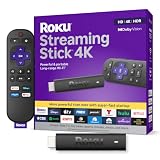
- Stunning 4K and Dolby Vision streaming made simple: With America’s number 1 TV streaming platform,* exploring popular apps—plus tons of free movies, shows, and live TV—is as easy as it is fun. *Based on hours streamed—Hypothesis Group
- Breathtaking picture quality: Stunningly sharp 4K picture brings out rich detail in your entertainment with four times the resolution of HD. Watch as colors pop off your screen and enjoy lifelike clarity with Dolby Vision and HDR10+.
- Seamless streaming for any room: With Roku Streaming Stick 4K, watch your favorite entertainment on any TV in the house, even in rooms farther from your router thanks to the long-range Wi-Fi receiver.
- Shows on the go: Take your TV to-go when traveling—without needing to log into someone else’s device.
- Compact without compromises: Our sleek design won’t block neighboring HDMI ports, so you can switch from streaming to gaming with ease. Plus, it’s designed to stay hidden behind your TV, keeping wires neatly out of sight
If the sequel leans into that psychological dimension rather than simply escalating body count or spectacle, Hawke could once again anchor the film in discomfort rather than shock. His ability to suggest menace through stillness, voice modulation, and unsettling physicality is what separates The Grabber from genre knockoffs.
Career Stakes for Hawke’s Horror Legacy
At this stage in his career, Hawke no longer needs horror for relevance, which paradoxically makes his continued engagement with the genre more meaningful. His best horror performances share a common thread: intellectual engagement with fear rather than reactionary panic. The Black Phone 2 offers an opportunity to deepen that legacy instead of merely repeating it.
A misstep here would not undo Hawke’s genre credibility, but it could flatten one of his most iconic modern roles. A successful sequel, however, would reinforce his rare ability to elevate franchise horror without condescension or detachment.
Why It Ranks This High Before Release
Placing The Black Phone 2 at #3 acknowledges both its unrealized potential and the immense pressure surrounding it. Very few upcoming horror films arrive carrying this level of expectation for performance, tone, and thematic follow-through. Hawke’s involvement alone signals an intent to avoid lazy escalation.
The Tool Desk
Outbyte Driver Updater FREEScan for outdated or missing drivers - takes under a minuteDriver Scan →Outbyte PC Repair FREERepair Windows errors before they cause bigger problemsFix Now →If the film balances expansion with restraint, it could solidify The Grabber as one of the defining horror villains of the 2020s. Even before release, the sequel represents a pivotal moment in Ethan Hawke’s horror career: the point where influence must be sustained, not just established.
Independent reader supportYour contribution helps us test, update, and keep practical guides available for everyone.Rank #2 – “Sinister” (2012): One of the Scariest Performances of the 21st Century
Before The Grabber, before the expectations of sequels and franchises, Ethan Hawke delivered what remains his most harrowing horror performance in Sinister. Scott Derrickson’s 2012 film didn’t just rely on jump scares or mythology; it weaponized Hawke’s capacity for slow psychological erosion. The result was a portrait of a man collapsing under the weight of his own obsession, and it remains deeply unsettling more than a decade later.
What makes Sinister endure is how completely Hawke commits to vulnerability rather than bravado. As true-crime writer Ellison Oswalt, he is not a hero uncovering evil but an opportunist who gradually realizes he has endangered his family. Hawke plays Ellison as abrasive, selfish, and exhausted, which paradoxically makes his fear feel more real than genre-standard panic.
Fear Rooted in Obsession, Not Bravery
Unlike many horror protagonists, Ellison does not stumble into danger; he invites it in pursuit of relevance. Hawke leans into that moral discomfort, letting the audience resent Ellison even as they fear for him. His performance suggests a man who understands too late that ambition can be a form of self-destruction.
This dynamic is critical to why Sinister works as adult horror. Hawke never frames Ellison as noble or innocent, and the film’s dread comes from watching consequences unfold rather than waiting for a monster to attack. It is horror driven by complicity.
A Masterclass in Slow-Burn Dread
Sinister’s infamous home-movie sequences are terrifying on their own, but Hawke’s reactions are what anchor them. His silent viewing scenes, marked by shallow breathing, rigid posture, and dawning comprehension, are some of the most effective acting choices in modern horror. He doesn’t scream; he processes, and that restraint makes the violence feel closer and more personal.
Few actors could carry so much tension while sitting still in a dark room. Hawke understands that fear often registers internally before it explodes outward, and Sinister allows him to explore that space with unnerving precision.
Why Sinister Still Defines Hawke’s Horror Credibility
While The Black Phone introduced Hawke to a broader horror audience, Sinister is the film that earned him lasting genre respect. It consistently appears on lists of the scariest horror films of the 21st century, not because of its mythology alone, but because its central performance grounds that mythology in human failure. Hawke doesn’t just survive the film; he deteriorates within it.
Best Value

- The Google TV Streamer (4K) delivers your favorite entertainment quickly, easily, and personalized to you[1,2]
- HDMI 2.1 cable required (sold separately)
- See movies and TV shows from all your services right from your home screen[2]; and find new things to watch with tailored recommendations for everyone in your home based on their interests and viewing habits
- Watch live TV and access over 800 free channels from Pluto TV, Tubi, and more[3]; if you find an interesting show or movie on your TV, mobile app, or Google search, you can easily add it to your watchlist, so it’s ready when you are[2]
- Up to 4K HDR with Dolby Vision delivers captivating, true-to-life detail[4]; and you can connect speakers that support Dolby Atmos for more immersive 3D sound
Ranked just below the very top of his horror filmography, Sinister represents the purest distillation of what Hawke brings to the genre. It is intellectually cruel, emotionally exhausting, and deeply adult, a reminder that true horror often begins with the choices we make long before the darkness arrives.
Rank #1 – “Daybreakers” (2009): Genre World-Building and Hawke’s Most Underrated Horror Lead
If Sinister represents Ethan Hawke at his most psychologically raw, Daybreakers stands as his most complete and undervalued horror achievement. The 2009 vampire thriller, directed by the Spierig Brothers, combines high-concept world-building with a grounded emotional core, and Hawke is the essential bridge between the two. As hematologist Edward Dalton, Hawke anchors a bold genre premise with weary intelligence and moral conviction.
Set in a near-future where vampires dominate society and humans are nearly extinct, Daybreakers is less interested in jump scares than systemic collapse. Hawke’s performance gives the film its conscience, presenting a vampire who still clings to human ethics in a world that has industrialized predation. It is sci-fi horror with existential weight, and Hawke treats it accordingly.
World-Building That Trusts the Audience
Daybreakers excels because it refuses to over-explain its ideas. The film drops viewers into a fully functioning vampire economy, complete with blood shortages, corporate exploitation, and class stratification, and Hawke navigates this world with quiet credibility. His Edward Dalton feels like someone who has lived inside this system for years, not a genre archetype discovering it for the first time.
What’s actually slowing this PC down?
Pick the symptom - the matching free tool is one click away.
Hawke’s restrained performance allows the setting to breathe. He reacts to moral absurdities with fatigue rather than shock, reinforcing the idea that this nightmare has become routine. That normalization of horror is precisely what makes the film unsettling.
Hawke as a Moral Anchor, Not a Traditional Hero
Unlike many horror leads, Edward Dalton is not defined by physical dominance or reckless bravery. Hawke plays him as introverted, thoughtful, and ethically stubborn, a scientist haunted by the implications of his own survival. His resistance is intellectual first, emotional second, and only occasionally violent.
This choice elevates Daybreakers beyond pulp. Hawke’s empathy for humanity, even after becoming something else, mirrors the film’s larger concern with identity erosion. The horror comes not from vampires existing, but from what happens when compassion becomes obsolete.
Why Daybreakers Deserves the Top Spot
What ultimately places Daybreakers at number one is its synthesis of ambition, execution, and performance. Hawke is not hiding behind makeup, masks, or theatrical menace; he carries the film through conviction and internal conflict. It is a leading role that trusts subtlety in a genre that often rewards excess.
In hindsight, Daybreakers also reframes Hawke’s horror career. It shows his instinct for genre stories that use fear as a lens for social decay, a throughline that connects this film to Sinister and The Black Phone. Where those films explore personal and intimate terror, Daybreakers scales that anxiety up to a civilization-wide crisis.
A Final Take on Hawke’s Horror Legacy
Ranking Ethan Hawke’s seven horror films reveals an actor drawn not to shock value, but to consequence. Whether he is portraying a morally compromised father, a masked abductor, or a reluctant vampire, Hawke consistently chooses horror as a space for ethical collapse and emotional reckoning. That instinct is what sets his genre work apart.
As anticipation builds for Black Phone 2, the expectation is not simply that Hawke will be frightening again, but that he will add another dimension to his evolving horror identity. If Daybreakers proves anything, it is that Hawke’s greatest strength in the genre lies in making the monstrous feel uncomfortably human.
Quick Recap
Product prices and availability are accurate as of the date/time indicated and are subject to change. Any price and availability information displayed on Amazon at the time of purchase will apply.




