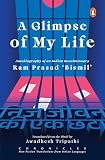
A Glimpse of My Life is the autobiography of Ram Prasad ‘Bismil’ (1897–1927), a Hindi-writing revolutionary, now available in an English translation by Awadhesh Tripathi. According to Penguin Random House India, Bismil wrote the original while imprisoned on death row, and the book moves between a young man’s family and inner life and his part in the revolutionary movement, including the Kakori case. For documentary viewers, it is a rare first-person account of that world, written by someone who lived through it and was executed for it.
What the book covers
The publisher’s summary describes a memoir that recalls Bismil’s childhood, his parents’ hardships, his mother and his guru, the Kakori train robbery, his time in prison, and the comrades who fought alongside him. It also sets out his views on gender, caste, class, communalism, justice, nation-building, and the opportunities and dangers of revolutionary activity. Ashoka Centre for Translation places the English edition in its Chronicles non-fiction translation series, describing it as a view into the inner world of a young revolutionary and the turbulent making of a national movement.
| # | Preview | Product | Price | |
|---|---|---|---|---|
| 1 |
|
A Glimpse of My Life: Autobiography of the Indian Revolutionary Ram Prasad ‘Bismil’ | $14.00 | Buy on Amazon |
Childhood and family
The early chapters, as the publisher presents them, are the most personal. They concern a household under economic strain and the role of his mother, who appears as a central moral figure. These sections give the later political material its emotional base: the reader sees the family pressures that shaped the author before he entered organised activism.
Guru, comrades and the Kakori case
The book’s central public episode is the Kakori train robbery, which the publisher lists among its subjects. Alongside it, Bismil writes about the comrades around him. Ranu Uniyal’s review, published in The Book Review in October 2025, highlights his friendship with Ashfaqullah Khan as a key thread. Readers who know the Kakori case mainly through court records or later histories will find here how the network looked from inside it.
PC Slower Than It Used to Be?
A free scan shows the junk files, broken settings and background clutter dragging Windows down - then fixes them in one click.Free scan · Windows 10 & 11Crashes, No Sound, or Screen Glitches?
Random freezes, missing sound and display glitches usually trace back to one bad driver. Find and replace yours safely.Free scan · under a minutePrison and the act of writing
Penguin describes the text as written secretly while Bismil was on death row. That circumstance shapes the book’s register: it reads as a reckoning written under sentence rather than a retrospective memoir written at leisure. The reviewer also notes that the account was published in 1928 under the title Kakori Ke Shaheed by editor Ganesh Shankar Vidyarthi, and that the British government banned the autobiography. Those publication details are the reviewer’s reported history and should be checked against a bibliographic source before being repeated as settled fact.
Social and political views
Beyond the events, the publisher highlights Bismil’s positions on caste, gender, communalism and class. Uniyal’s review reads these as a call for communal harmony and the removal of caste barriers, along with concern for rural poverty, farmers and labour. These are the reviewer’s interpretations rather than the publisher’s claims, and readers should weigh them as one reading among possible others.
Edition details
The English text is a translation, and the sources differ on several bibliographic points. The table below separates what the sources agree on from what they do not.
| Detail | What the sources state | Source |
|---|---|---|
| English title | A Glimpse of My Life | Penguin Random House India |
| Original Hindi title | Nij Jiwan Ki Chhata on the publisher’s book page; Nij Jiwan Ki Ek Chhata in the April–June 2025 catalogue; a variant spelling in the library record | Penguin Random House India; H.T. Parekh Library, Krea University |
| Translator | Awadhesh Tripathi | Penguin Random House India |
| Format and imprint | English paperback, Vintage Books | Penguin Random House India |
| Publication month | April 2025 | Penguin Random House India catalogue |
| ISBN | 9780143467021 | Penguin Random House India |
| Price (India) | ₹399 on the publisher’s product page; ₹450 in the 2025 catalogue. Prices change, so confirm before buying. | Penguin Random House India |
| Page count | 216 (product page); 592 (catalogue); xiv, 200 pages (library record); 200 (October 2025 review). Not settled; check the physical copy. | Each source as listed |
The ISBN and the paperback format are the most reliable identifiers. Penguin lists Amazon among its buying options, along with other booksellers. Use the title, translator and ISBN together when searching, because the transliterated Hindi title varies between listings.
Do these 3 things before closing this tab:
1Repair Windows errors before they cause bigger problems2Scan for outdated or missing drivers - takes under a minute3Clear out junk files and repair common Windows errorsThe quoted line and where it comes from
Uniyal’s review quotes a sentence it presents as Bismil’s writing from the English edition: “I write these lines on 16 December 1927.” The review places it on page 186. That date falls a few days before Bismil was hanged in Gorakhpur on 19 December 1927, which is why the line carries weight. Because the quotation reaches readers through the review, treat the wording and page number as the reviewer’s transcription until you have checked the book itself.
Reading it alongside documentaries
For viewers who watch documentaries on the Kakori case or on the 1920s independence movement, the book offers a first-person counterpoint to narration by later historians. Its strength is its interiority: it shows how a young man justified his choices to himself, and how he weighed comradeship, sacrifice and social reform. It is less useful as a neutral account of events, since it is written by a participant with a clear political purpose. Reading it with a historical account of the same events makes the gaps and emphases visible.
Two practical notes help. First, the translation is the only edition the sources identify in English, so quotations you find online may come from different translations or from reviews. Second, the publisher’s description and the reviewer’s reading are separate sources. When you cite the book, attribute the themes you took from the publisher to Penguin Random House India and those from the review to Uniyal.
The English paperback was first published in April 2025, which means it is a recent translation of a text whose Hindi history goes back to 1928 by the reviewer’s account. That gap is part of its interest for readers who want to see how a revolutionary text has been carried into a new language and a new readership.
Quick Recap
Product prices and availability are accurate as of the date/time indicated and are subject to change. Any price and availability information displayed on Amazon at the time of purchase will apply.




