Digital innovation is transforming every link in entertainment’s chain: ideas are developed with AI, scenes are rendered in real time, teams work in the cloud, algorithms shape discovery, creators build direct communities, audiences enter spatial experiences, and game technology turns stories into interactive worlds. The important shift is not one spectacular gadget but a connected infrastructure that changes how media is made, delivered, found and experienced.
Adoption is uneven. Cloud workflows, recommendation systems, virtual production and AI-assisted post-production are already operating at scale. Consumer virtual reality and fully persistent virtual worlds remain more experimental because of hardware costs, comfort, discoverability and uncertain economics.
The seven innovations at a glance
| Innovation | What it changes | Current maturity |
|---|---|---|
| Generative AI | Ideation, production, post-production and localization | Scaling |
| Virtual production and real-time 3D | Filming, visualization and live graphics | Established/scaling |
| Cloud-native production | Collaboration, rendering, encoding and delivery | Established/scaling |
| Personalization and discovery | Search, recommendations and audience marketing | Established |
| Creator-led and interactive media | Publishing, fandom and participation | Established/scaling |
| Immersive entertainment | Spatial, venue-based and participatory experiences | Emerging |
| Game engines and persistent worlds | Real-time interaction, social play and franchise extension | Established/scaling |
1. Generative AI moves through the entire production pipeline
Maturity: Scaling. Generative AI is best understood as a set of workflow capabilities, not a single replacement for a production team. McKinsey identifies applications across development, pre-production, physical production, post-production, sound, editing, subtitling and dubbing (McKinsey’s film and television analysis).
Where it is already useful
- Story ideation, script analysis, storyboards, mood boards and animatics.
- Background replacement, object removal, relighting, upscaling and visual-effects assistance.
- Transcription, captioning, tagging, semantic search and media-library organization.
- Voice synthesis, dubbing, translation and accessibility versions.
- Alternate trailers, thumbnails, advertisements and other promotional variants.
- Music sketches, sound-design exploration and dialogue assistance.
These uses differ greatly. AI assistance may automate a repetitive step; an AI-generated asset may supply a shot or image; a synthetic performance may imitate a voice or likeness; a fully synthetic production attempts to create nearly everything from models. Treating all four as “AI content” hides the real creative, legal and labor questions.
#1 Best Overall
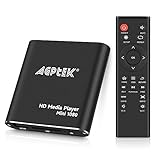
- 【Mini Portable Media player】-- Fits into the palm of your hand, It is a perfect travel partner for those short on space and sockets. Also compact and easy multifunction HD media player for office work and home entertainment;Aluminum alloy material, not easy to damage during carrying
- 【1080P MP4 Player】-- Full HD 1080p@60Hz supports most video decoding formats: RM, RMVB, AVI, DIVX, MKV, MOV, HD MOV, MP4, M4V, PMP, AVC, FLV, VOB, MPG, DAT, MPEG, TS, TP, M2TS, WMV, (H.264,H.263,WMV9/VC-1,MPEG1/2/4),Not support VPR files. Note: Please use our 4K player to play some videos taken with smart phones, ASIN: B07WPY8VKL
- 【HDMI or AV Output】-- Supports 1080p HDMI output, allowing you to transmit crisp, clear video and audio in a pure digital format to an HDTV; it also supports composite AV output for use with analog TVs. An analog AV cable is included. While using HDMI video output, you can also connect external speakers via the AV output. However, video cannot be output via both AV and HDMI at the same time.
- 【USB 2.0/3.0 Compability】-- Drive external USB 2.0/3.0 storage devices such as USB flash(up to 512G)/SD card(up to 128G) and hard drive(partition should be MBR, up to 8TB), you can also delete or copy files in the USB drive(FAT or FA32) directly, Also plays subtitle files as well as loop videos
- 【Support Multiple Formats of Files and Playback Modes&Multi-functional Remote Control】-- Supports most video, audio, and image formats on the market, supports random playback of video and image modes, and supports loop playback. Supports repeat, zoom, fast forward, fast rewind, rotation, breakpoint playback method, start from scratch playback method and time selection playback method. It is also equipped with a convenient remote control for easy navigation of menu screens (ASIN: B0C9PZPFL8)
Why producers are adopting it
AI lowers the cost of trying visual ideas before a shoot, speeds versioning and makes multilingual releases more practical. Independent creators can access capabilities that once required large post-production departments. Large libraries become easier to search and reuse, potentially shortening the route from concept to release.
What still requires human responsibility
Generated shots can break continuity, invent details or fail to preserve a performer’s intent. Training-data provenance, copyright, ownership, consent for a voice or likeness, credit and compensation remain unsettled in many jurisdictions and contracts. The World Economic Forum describes translation, dubbing, text-to-voice, text-to-video and creator-economy expansion as opportunities, while stressing transparency, intellectual-property governance and human oversight (World Economic Forum report).
The defensible operating model is human-led: directors, performers, editors and rights specialists set the intent, review outputs, clear materials and remain accountable. Faster output is not automatically better storytelling, and an oversupply of synthetic material makes provenance, trust and discovery more valuable.
2. Virtual production brings real-time 3D onto the set
Maturity: Established/scaling. Virtual production combines LED stages, game engines, real-time rendering, camera tracking, digital environments and conventional visual effects. It is not simply filming in front of a giant screen.
Recommended Free Tools
How the workflow works
Artists build and light a digital location; a tracked camera updates the rendered perspective; the LED wall supplies interactive background light and a visible environment; cinematographers, production designers and visual-effects teams adjust the scene while shooting. The same assets can support previs, technical visualization, reshoots and later versions. Digital doubles and virtual characters extend the approach to live events, sports, news and concerts.
Rank #2

- MAKE YOUR TV SMARTER - Enhance any TV with the ability to play videos, music, and photo slideshows from a USB drive or MicroSD Card! It’s so simple and intuitive - anyone can use it. The Micca 4K is amazingly compact and affordable, get one for each TV in the house!
- PLAYS 4K ULTRA-HD VIDEOS - Works with TVs old and new! Smoothly plays videos up to 4096x2304@30fps over UHD 4K/60Hz HDMI output. Sharp and clear video and audio in pure digital format, compatible with 4K and 1080p TVs, projectors, and monitor displays. Composite AV output for use with analog TVs or for sending sound to a stereo system.
- DUAL USB AND MICRO SD READER - Play media files from USB flash drives and USB hard drives up to 8TB, or microSD cards up to 1TB. Supports FAT/FAT32, exFAT and NTFS file systems. Compatible with wireless air mouse remotes for non-line-of-sight control so that the player can be hidden away!
- SIMPLE DIGITAL SIGNAGE - Automatic video playback with endless repeat and looping, and the ability to resume from the last stopping point. Configurable 90/180/270 degree video output rotation. Great for digital signage applications such as restaurant menu boards, lobby welcome videos, art and museum installations.
- MEDIA FORMAT SUPPORT - Videos: MKV, MP4/M4V, AVI, MOV, MPG, VOB, M2TS, TS files encoded with H.265/HEVC, H.264/AVC, MPEG1/2/4, VC1, up to 4096x2304, 30fps, 200mbps. Subtitles: SRT, PGS, IDX+SUB. Music: MP3, WAV, FLAC. Photos: JPG, GIF, BMP, PNG
Benefits and limits
- Benefits: immediate visualization, fewer location moves, controlled lighting, consistent backgrounds, earlier problem detection and reusable environments.
- Limits: LED stages and specialist crews require substantial capital; moiré, reflections, brightness and camera-frustum limits can constrain shots; asset creation, color management and post-production remain demanding.
A virtual stage can move costs from travel and physical construction into stage rental, hardware, asset creation and pre-production. It is not automatically cheaper than a location. Google Cloud describes virtual studios as a way to virtualize rendering and post-production while supporting distributed collaboration (Google Cloud media and entertainment services).
3. Cloud-native production turns media into a distributed service
Maturity: Established/scaling. “The cloud” is a collection of services rather than one product: storage, editing, review, rendering, live encoding, playout, distribution, analytics and archiving.
What changes for a production team
- Editors, producers, artists and clients review shared media across locations and time zones.
- Remote rendering and burst compute add capacity for peaks instead of requiring permanent local hardware.
- Camera-to-cloud workflows can make rushes available during production.
- Automated transcoding and version management prepare files for multiple platforms and territories.
- Geographic redundancy and cloud archives support disaster recovery.
- Cloud playout and live production can scale for major events.
The cost and engineering trade-off
Cloud services reduce some capital expenditure but introduce recurring storage, compute and egress bills. Large files can be expensive to move; network outages and latency still require local capture, monitoring and backup. Security permissions, identity management, vendor lock-in, legacy-system migration and cost governance become operational responsibilities.
A live channel illustrates the variable model. AWS Elemental MediaLive offers pay-as-you-go, reserved and discounted pricing; charges depend on channel runtime, inputs and outputs, codec, bitrate, resolution, frame rate and add-on features (AWS MediaLive pricing; AWS pricing documentation). A small creator may need only cloud review and storage, while a broadcaster may require an end-to-end architecture.
4. Personalization and discovery decide what gets noticed
Maturity: Established. Recommendation engines, metadata systems and audience intelligence determine which films, episodes, songs, games and advertisements appear on a person’s screen.
Rank #3

- MAKE YOUR TV SMARTER - Enhance any TV with the ability to play videos, music, and photo slideshows from a USB drive or MicroSD Card! It’s so simple and intuitive - anyone can use it. The Micca G3 is amazingly compact and affordable, get one for each TV in the house!
- PLAYS 2K QUAD-HD VIDEOS - Works with TVs old and new! Smoothly plays videos up to 2560x1440@60fps, upscaled to UHD 4K/60Hz HDMI output. Sharp and clear video and audio in pure digital format, compatible with 4K and 1080p TVs, projectors, and monitor displays. Composite AV output for use with analog TVs or for sending sound to a stereo system.
- DUAL USB AND MICRO SD READER - Play media files from USB flash drives and USB hard drives up to 8TB, or microSD cards up to 1TB. Supports FAT/FAT32, exFAT and NTFS file systems. Compatible with wireless air mouse remotes for non-line-of-sight control so that the player can be hidden away!
- SIMPLE DIGITAL SIGNAGE - Automatic video playback with endless repeat and looping, and the ability to resume from the last stopping point. Configurable 90/180/270 degree video output rotation. Great for digital signage applications such as restaurant menu boards, lobby welcome videos, art and museum installations.
- MEDIA FORMAT SUPPORT - Videos: MKV, MP4/M4V, AVI, MOV, MPG, VOB, M2TS, TS files encoded with H.265/HEVC, H.264/AVC, MPEG1/2/4, VC1, up to 2560x1440, 60fps, 100mbps. Subtitles: SRT, PGS, IDX+SUB. Music: MP3, WAV, FLAC. Photos: JPG, GIF, BMP, PNG
Beyond a recommended list
- Personalized home screens, search results, artwork, trailers and promotional messages.
- Natural-language search and automatic tagging of scenes, people, subjects and moods.
- Context-aware suggestions based on time, device, location or viewing history.
- Audience segmentation, churn prediction, targeted offers and dynamic advertising.
- Signals that inform commissioning, scheduling and archive monetization.
Personalization can expose niche work in an enormous catalogue and improve retention, but recommendation quality depends on accurate metadata, rights availability, editorial controls, user settings and the platform’s objective. Optimizing watch time, subscriptions, advertising value or satisfaction produces different results.
Risks of an individualized media diet
Popularity bias and weak metadata can make recommendations repetitive. Intrusive targeting raises privacy and consent concerns, especially for children and sensitive subjects. Excessive personalization can reduce serendipity and shared cultural moments. Deloitte’s 2026 outlook argues that as AI increases the supply of content, differentiation, metadata, audience intelligence, trust and discovery become strategic priorities (Deloitte 2026 media and entertainment outlook).
Free tools Windows power users keep installed
One-click scans. No signup required.
5. Creators and social platforms turn audiences into participants
Maturity: Established/scaling. Short-form video, livestreams, memberships, social commerce, watch parties, polls, fan communities and user-generated games have made platforms competitors to traditional television, film, music and games. Deloitte reports that some consumers regard video on social platforms and streaming services alike as “watching TV” (Deloitte outlook).
Why the creator model is powerful
- Publishing barriers are low and audience feedback is immediate.
- Creators can build direct relationships through memberships, live interaction and commerce.
- Short formats test characters, hosts, jokes and story ideas quickly.
- Niche communities and diverse voices can find audiences without a traditional gatekeeper.
- Successful concepts can expand into shows, games, products or other intellectual property.
Why attention is not the same as security
Creators remain dependent on recommendation algorithms, platform policies and revenue shares. Income is uneven, burnout and harassment are common, and copyright claims can remove work. Incentives for speed or controversy may undermine durable franchises. Deloitte recommends combining creator-led content with audience data, micro-segments, A/B testing and measurement when developing larger franchises.
Social media is therefore both a distribution channel and an innovation laboratory: it can validate demand, but a viral post does not guarantee sustainable rights, revenue or audience retention.
Rank #4

- 【SIMPLE, POWERFUL, COMPACT】- Easily play videos, photos, and music files from USB drives, hard drives, and SD cards. Simple and intuitive to use with no complicated settings. Takes up very little space - it’s smaller than a deck of playing cards!
- 【FULL-HD VIDEO PLAYBACK】- Stunning HDMI video quality up to 1080p/60Hz with support for the latest video formats such as H.265/HEVC. Feeds digital surround sound to home theater receivers for a cinema-like movie experience. Includes analog AV output for connecting to an older TV or for sending audio to a stereo system.
- 【READS USB DRIVES AND SD CARDS】- Reads USB flash drives and hard drives up to 8TB and SD cards up to 1TB. Supports FAT32, exFAT, and NTFS file systems. Automatic playback, continuous looping and repeat, and the ability to resume video playback from the last stop point.
- 【TRIGGER SENSOR INPUT】- Ability to loop one video continuously and play a different video when triggered by an optional push-button or motion sensor. Build an interactive digital signage display, art gallery or museum on-demand video player, or a Halloween special effect in just a few steps. Push-button and motion sensors sold separately.
- 【MEDIA FORMAT SUPPORT】 - Video: MP4, MKV, AVI, TS/TP, MOV, VOB, and M2TS files using H.265/HEVC, H.264/AVC, VC1, or MPEG2/4 codecs, up to 1920x1080p@60fps, 10-bit color, and 100mbps. Photos: JPG, JPEG, BMP, GIF (non-animated), PNG. Music: MP3, WMA, OGG, FLAC, APE, AAC
6. Immersive entertainment expands beyond the flat screen
Maturity: Emerging. Immersive entertainment includes device-based VR, AR and mixed reality; spatial-computing interfaces; immersive theatre and exhibitions; location-based venues; enhanced concerts and sports; and interfaces using spatial audio, haptics or environmental effects.
Do these 3 things before closing this tab:
1Scan for outdated or missing drivers - takes under a minute2Repair Windows errors before they cause bigger problems3Fix the driver behind crashes, sound loss and screen glitchesFour forms of immersion
- Device-based: headsets, augmented-reality glasses and mixed-reality spaces.
- Venue-based: exhibitions, themed environments, museums and immersive theatre.
- Event-based: concerts, sports extensions, watch parties and digital twins of venues.
- Interface-based: spatial audio, interactive displays and contextual overlays.
These experiences can create presence, premium ticketing, sponsorship inventory and new ways to extend intellectual property into physical destinations. They also face hardware cost, comfort, motion sickness, accessibility, safety, privacy and limited audience scale. A successful venue does not prove that most households want a headset.
EY sees live and digitally enhanced experiences becoming strategically important (EY’s 2026 media and entertainment trends). PwC describes immersive adoption as more cautious than early hype suggested, shaped by practical utility, spending and competition for attention (PwC Global Entertainment & Media Outlook). The “metaverse” label is less useful than asking what audience, venue and repeatable business model an experience serves.
Independent reader supportYour contribution helps us test, update, and keep practical guides available for everyone.7. Game engines and persistent worlds make entertainment interactive
Maturity: Established/scaling. Game engines now supply real-time rendering, simulation, reusable assets and networked interaction for films, television, music, sports and branded experiences—not only games.
What the game model adds
- Interactive stories and persistent online worlds.
- User-generated games, virtual spaces and social identities.
- Live-service updates, cross-platform progression and community events.
- Virtual goods, subscriptions, advertising and franchise partnerships.
- Playable extensions of film and television properties.
Games can sustain longer, more participatory relationships than passive viewing, but they require expensive development and live operations. Player churn, moderation, safety, certification, technical debt and ethical monetization are continuing costs. Cloud gaming is not the same as downloading a game: quality depends on bandwidth, latency, server location, device support and infrastructure economics.
PC Slower Than It Used to Be?
A free scan shows the junk files, broken settings and background clutter dragging Windows down - then fixes them in one click.Free scan · Windows 10 & 11Outdated Drivers Are Slowing You Down
One free scan finds every outdated or missing driver and matches the right update for your exact hardware.Free scan · exact hardware matchBest Value
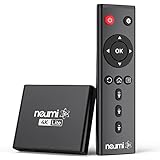
- 【SIMPLE, POWERFUL, COMPACT】- Easily play videos, photos, and music files from USB drives, hard drives, and SD cards. Simple and intuitive to use with no complicated settings. Takes up very little space - it’s smaller than a deck of playing cards!
- 【4K/UHD VIDEO PLAYBACK】- Stunning HDMI video quality up to 2160p/60Hz with support for the latest video formats such as H.265/HEVC. Feeds digital surround sound to home theater receivers for a cinema-like movie experience. Includes analog AV output for connecting to an older TV or for sending audio to a stereo system.
- 【READS USB DRIVES AND SD CARDS】- Reads USB flash drives and hard drives up to 8TB and SD cards up to 1TB. Supports FAT32, exFAT, and NTFS file systems. Automatic playback, continuous looping and repeat, and the ability to resume video playback from the last stop point.
- 【TRIGGER SENSOR INPUT】- Ability to loop one video continuously and play a different video when triggered by an optional push-button or motion sensor. Build an interactive digital signage display, art gallery or museum on-demand video player, or a Halloween special effect in just a few steps. Push-button and motion sensors sold separately.
- 【MEDIA FORMAT SUPPORT】 - Video: MP4, MKV, AVI, TS/TP, MOV, VOB, and M2TS files using H.265/HEVC, H.264/AVC, VC1, or MPEG2/4 codecs, up to 4096x2304p@30fps, 10-bit color, and 200mbps. Photos: JPG, JPEG, BMP, GIF (non-animated), PNG. Music: MP3, WMA, OGG, FLAC, APE, AAC
Deloitte’s 2025 outlook notes that gaming revenue models increasingly combine game sales, subscriptions, in-game purchases, virtual goods, advertising and brand partnerships (Deloitte 2025 outlook). Persistent worlds are therefore not passive products; they are services that need ongoing content, moderation and investment.
Commercial tools that illustrate the shift
Products serve different jobs, so no single subscription is a universal answer.
| Tool or service | Useful for | Published pricing or qualification |
|---|---|---|
| Runway | AI video experimentation, concept work and short-form production | Pricing observed August 2026: Free $0 with 125 one-time credits; Standard $15 monthly or $12/month annually; Pro $35 monthly or $28 annually; Max $95 monthly or $76 annually; Enterprise custom. Credit-based generation can raise heavy-use costs. |
| Adobe Firefly and video ecosystem | Teams using Premiere, After Effects, Creative Cloud and Frame.io | Integrated professional and enterprise workflows; complete stacks may require several subscriptions or contact-sales arrangements. |
| Frame.io | Review, approvals and distributed post-production | Pricing observed August 2026: Free $0 for up to two members and 2 GB; Pro $15 per member/month plus tax; annual billing advertises a 13% discount. Team and Enterprise plans are available. |
| AWS Elemental MediaLive | Scalable live encoding for broadcasters and events | Pay-as-you-go, reserved and discounted options; total cost varies with runtime, inputs, outputs, codecs, bitrates, resolutions, frame rates and related services. |
| Google Cloud media services | Custom AI, archives, data platforms and virtual-production infrastructure | Requires architecture, integration, security controls and ongoing cloud-cost management. |
Adobe reported that media companies are pursuing AI for productivity, personalization and profitability while fragmented data, creative concerns and complex ecosystems remain obstacles (Adobe 2025 media and entertainment report). Select a tool by the bottleneck: Runway for experimentation, Adobe for an integrated creative stack, Frame.io for approvals, MediaLive for live infrastructure and Google Cloud for custom enterprise systems. Check each product’s current commercial-use terms, input-retention policy, rights coverage and usage limits before committing.
How to separate durable change from hype
- Locate the value-chain change. Identify whether the technology affects creation, production, distribution, discovery, experience or monetization.
- Look for operating deployment. A repeatable workflow with review, rights clearance, version control and delivery matters more than a demonstration.
- Measure the economics. Ask who pays, which costs move, what labor changes and whether new revenue exceeds operating expense.
- Test audience utility. A technically impressive feature must improve discovery, participation, accessibility, quality or willingness to pay.
- Audit governance. Check consent, provenance, privacy, security, moderation, accessibility and accountability.
- Plan for infrastructure. Metadata, identity, storage, content delivery, rights management and cybersecurity often determine whether a front-end innovation works.
The broad direction is clear: production is becoming more automated and collaborative, distribution more personalized and fragmented, and entertainment more interactive and spatial. The scarce advantages are increasingly human—distinctive ideas, judgment, trust, rights stewardship and the ability to make audiences care.
Quick Recap
Product prices and availability are accurate as of the date/time indicated and are subject to change. Any price and availability information displayed on Amazon at the time of purchase will apply.