What’s actually slowing this PC down?
Pick the symptom - the matching free tool is one click away.
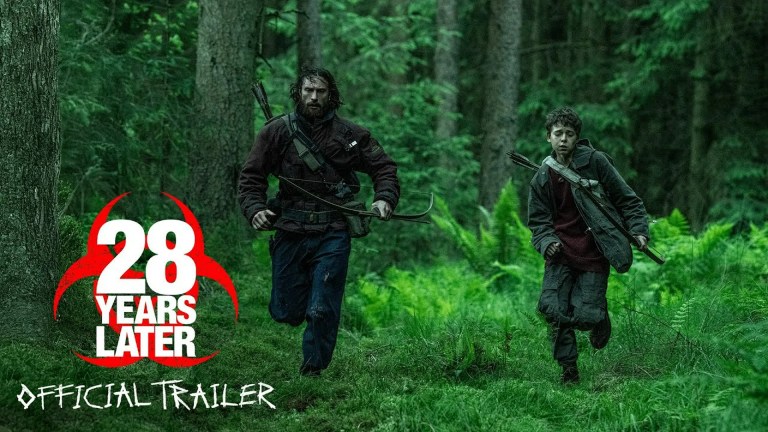
28 Years Later is worth watching if you want horror that takes formal and tonal risks, not just a familiar run from one infected encounter to the next. Danny Boyle and writer Alex Garland send young Spike into a quarantined mainland with a family goal that gives the film an emotional anchor. The result is vivid and unsettling, though its abrupt shifts and blunt choices may not work for everyone.
What is 28 Years Later about?
Released in 2025, 28 Years Later is a new story in the world of 28 Days Later. Nearly three decades after the Rage Virus escaped a biological weapons laboratory, survivors live on a small island connected to the mainland by a heavily defended causeway. Spike, played by Alfie Williams, ventures inland with his father, Jamie (Aaron Taylor-Johnson), and encounters a changed landscape of infected people and other survivors. His journey is tied to his wish to help his ill mother, Isla (Jodie Comer), and to a meeting with Dr. Kelson (Ralph Fiennes). Sony’s official film page describes the island community and the journey to the mainland; TIME’s interview with Boyle identifies the central characters.
| # | Preview | Product | Price | |
|---|---|---|---|---|
| 1 |

|
28 Years Later - Blu-ray + Digital | $18.89 | Buy on Amazon |
| 2 |

|
28 Years Later: The Bone Temple - Blu-ray + Digital | $20.00 | Buy on Amazon |
| 3 |

|
28 Years Later - 4K + Blu-ray + Digital | $22.00 | Buy on Amazon |
| 4 |

|
28 Years Later - 4K + Blu-ray + Digital | $38.49 | Buy on Amazon |
| 5 |
![28 Weeks Later [Blu-Ray]](https://m.media-amazon.com/images/I/51ph8zkJRmL._SL160_.jpg)
|
28 Weeks Later [Blu-Ray] | $25.99 | Buy on Amazon |
That setup makes the film more than a survival exercise. Spike’s coming-of-age story supplies a family-scale purpose while the world around him invites larger questions about isolation, institutional failure, and the choices people make under pressure—the themes Boyle discussed with TIME.
Is 28 Years Later a zombie movie?
It is a horror film about the Rage Virus, but Boyle says the creators prefer “infected” to “zombies.” In a June 16, 2025, interview with Megan McCluskey for TIME, he explained: “We had this thing about, ‘No, they’re not zombies. They’re infected,’” adding that they are not undead: “They could die and they will die, but so will you if they catch you.” The distinction matters: the threat is living human beings changed by infection, not the dead returning to life. Read Boyle’s explanation at TIME.
PC Slower Than It Used to Be?
A free scan shows the junk files, broken settings and background clutter dragging Windows down - then fixes them in one click.Free scan · Windows 10 & 11Crashes, No Sound, or Screen Glitches?
Random freezes, missing sound and display glitches usually trace back to one bad driver. Find and replace yours safely.Free scan · under a minute#1 Best Overall
- Decades after the rage virus outbreak, survivors live in isolation. When one leaves his ruthlessly quarantined island sanctuary, he uncovers haunting secrets and mutations in both the infected and the remaining humans. From director Danny Boyle and writer Alex Garland comes a bold return to the world of 28 Days Later.
What makes this sequel different?
A more intimate point of view
The island and causeway establish a society that has adapted to quarantine. But rather than treating that arrangement only as a setting for action, the film narrows its emotional focus to Spike’s passage into a dangerous world and his concern for his family. That shift gives the story a coming-of-age dimension alongside the horror.
A conspicuous, disorienting visual style
The Atlantic’s Shirley Li reports that the film was shot mostly on iPhones. She describes tilted angles, close-ups, jarring cuts, freeze-frames, and blood splashing across the lens. These choices can make the images feel immediate and unstable, as if the viewer has little distance from the chaos; they are a tool for shaping perception, not a guarantee that every scene will land. The BFI catalogue credits Anthony Dod Mantle as cinematographer. The Atlantic’s review details the look, while the BFI catalogue lists the production credits.
Rank #2
- Dr. Kelson finds himself in a shocking new relationship - with consequences that could change the world as they know it - and Spike's encounter with Jimmy Crystal becomes a nightmare he can't escape. In the world of The Bone Temple, the infected are no longer the greatest threat to survival - the inhumanity of the survivors can be stranger and more terrifying.
A deliberately unstable mix of tones
The film moves among survival horror, family drama, grotesque spectacle, and stranger, sometimes darkly comic encounters. The Atlantic critic Shirley Li calls the reinvention “audacious and bound to be divisive.” In her view, Spike’s emotional goal helps hold the shifts together, but some imagery is over-explicit, Isla’s writing is a weakness, and certain tonal turns do not land cleanly. That tension is central to the experience: the movie’s ambition is part of its appeal, and part of why it can feel unwieldy.
Is it worth watching?
Yes, for viewers open to a horror film that is as interested in point of view and emotional dislocation as in suspense. Boyle’s visual experimentation gives this entry a distinct texture, while Spike’s family-centered journey keeps the story grounded amid the grotesque. If you prefer tightly consistent tone or straightforward zombie action, the film’s shifts may frustrate you. It is best approached as a risky reinvention of the series’ world rather than a simple repeat of 28 Days Later.
Free tools Windows power users keep installed
One-click scans. No signup required.
Rank #3
- Decades after the rage virus outbreak, survivors live in isolation. When one leaves his ruthlessly quarantined island sanctuary, he uncovers haunting secrets and mutations in both the infected and the remaining humans. From director Danny Boyle and writer Alex Garland comes a bold return to the world of 28 Days Later.
Do you need to watch 28 Days Later first?
28 Years Later takes place in the world created by 28 Days Later, but Sony describes it as a new story. The available information does not establish a mandatory viewing order. Watching the earlier film can provide franchise context; the new film’s setup centers on a later island community and Spike’s journey.
Is it scary?
It is a horror film, with infected threats, disturbing imagery, and an intentionally disorienting visual approach. The Atlantic specifically notes over-explicit imagery, so viewers sensitive to graphic material may want to account for that. The film’s effect is not limited to jump scares: its tonal shifts and close, unsettled camera perspective also create unease.
Rank #4
- Decades after the rage virus outbreak, survivors live in isolation. When one leaves his ruthlessly quarantined island sanctuary, he uncovers haunting secrets and mutations in both the infected and the remaining humans. From director Danny Boyle and writer Alex Garland comes a bold return to the world of 28 Days Later.
How does it fit into the series?
Boyle told TIME that the creators imagined three films “that are complete and satisfying in their own right, but are linked,” with a character arc running through them. Sony identifies 28 Years Later: The Bone Temple, directed by Nia DaCosta, as a continuation. See Sony’s official page for The Bone Temple. The trilogy plan gives this film a place in a larger story, but its own focus remains Spike’s journey through a society shaped by long-term quarantine.
Where can you watch 28 Years Later?
Sony lists the film on Blu-ray and digital and provides retailer links, including Amazon. Availability and exact editions can vary, so check Sony’s official title page for current purchase and viewing options.
Quick Recap
Best Value
- Blu-Ray
Product prices and availability are accurate as of the date/time indicated and are subject to change. Any price and availability information displayed on Amazon at the time of purchase will apply.