Do these 3 things before closing this tab:
1Fix the driver behind crashes, sound loss and screen glitches2Clear out junk files and repair common Windows errors3Scan for outdated or missing drivers - takes under a minuteLong before digital shadows and algorithmic jump scares, horror learned to terrify in the dark. Black-and-white cinema stripped fear down to its barest elements: light, shadow, silence, and the unsettling power of suggestion. When color disappears, the imagination fills in the gaps, transforming a simple corridor, a pale face, or a flickering candle into something far more menacing than explicit gore ever could.
These films understand that horror is not about what is shown, but what is withheld. German Expressionism warped reality through jagged sets and unnatural angles, while Hollywood’s early sound era weaponized stillness and negative space. From the haunted eyes of silent-era phantoms to the oppressive domestic dread of postwar psychological thrillers, black-and-white horror creates unease by denying visual comfort, forcing viewers to lean in and participate in the terror.
| # | Preview | Product | Price | |
|---|---|---|---|---|
| 1 |

|
Classic Monsters Spotlight Collection | $29.99 | Buy on Amazon |
| 2 |

|
Horror Movie Classics 10 Movie Pack | $11.69 | Buy on Amazon |
| 3 |

|
17 Horror Classics | $13.79 | Buy on Amazon |
| 4 |

|
Nightmare Alley (1947) DVD Tyrone Power/Joan Blondell | $18.99 | Buy on Amazon |
| 5 |
|
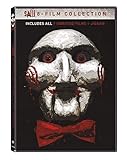
Saw: 8-Film Collection - DVD | $31.52 | Buy on Amazon |
That restraint is precisely why these movies remain essential viewing today. Modern filmmakers continue to borrow their techniques—high-contrast lighting, moral ambiguity, slow-burning tension—because they tap into something primal and timeless. This list explores the scariest black-and-white horror films ever made, not as museum pieces, but as living nightmares that still crawl under the skin and refuse to let go.
How We Ranked the Scariest Black-and-White Horror Films: Atmosphere, Influence, and Enduring Dread
Ranking fear is inherently subjective, but black-and-white horror operates by a different set of rules than modern shock cinema. These films weren’t judged by body counts or jump scares, but by how effectively they summon unease and sustain it long after the final frame fades to black. Our approach focused on how deeply each film understands the mechanics of dread, and how powerfully it still communicates them to contemporary audiences.
#1 Best Overall
- Factory sealed DVD
Rather than treating these works as historical artifacts, we evaluated them as living horror experiences. If a film still makes silence feel threatening, still turns shadows into active participants, and still unsettles viewers accustomed to modern horror grammar, it earned serious consideration.
Atmosphere Over Explicit Terror
Atmosphere was the primary factor in our rankings. Black-and-white horror thrives on mood: the slow creep of menace, the oppressive weight of darkness, and the unsettling geometry of light and shadow. Films that used cinematography, sound design, and pacing to create an inescapable sense of unease ranked higher than those relying on overt shocks.
We paid close attention to how directors manipulated space and stillness. A corridor that feels endless, a room that seems to watch its occupants, or a face emerging gradually from darkness can be more frightening than any monster reveal. The best entries make viewers feel trapped inside the frame, complicit in the terror unfolding onscreen.
Psychological Impact and Emotional Residue
True horror lingers, and psychological aftershocks mattered as much as immediate fear. Many of the scariest black-and-white films burrow into anxieties about identity, madness, repression, and moral decay, themes that remain disturbingly relevant. Films that provoke discomfort through implication rather than explanation were given greater weight.
We also considered how these stories engage the viewer’s imagination. When a film trusts the audience to fill in the blanks, the resulting fear often feels more personal and harder to shake. That kind of participatory dread is a defining strength of the era.
Innovation and Lasting Influence
Influence was another key metric, particularly for films that reshaped the language of horror. German Expressionist nightmares, early Universal monster films, and postwar psychological chillers all introduced visual and narrative techniques that modern horror continues to borrow. Camera angles, distorted sets, moral ambiguity, and the use of silence all trace back to these foundational works.
A film’s ability to echo through decades of genre filmmaking mattered. If its DNA can be felt in contemporary directors, from arthouse auteurs to mainstream horror stylists, that influence elevated its placement on the list.
Enduring Dread Across Generations
Finally, we asked the simplest but most important question: does it still scare people? Some films lose their edge once cultural context fades, but the strongest black-and-white horrors remain unnerving regardless of era. Their fears are elemental, rooted in the unknown, the uncanny, and the fragile boundaries of the human mind.
Quick wins for a faster PC:
Repair Windows errors before they cause bigger problemsFix Now →Scan for outdated or missing drivers - takes under a minuteDriver Scan →These rankings reflect films that have survived changing tastes, technologies, and viewing habits. Whether experienced alone in the dark or studied as part of horror’s evolving legacy, each entry earns its place by proving that fear, when crafted with precision and restraint, never truly goes out of style.
Ranks 20–16: Early Nightmares and Silent-Era Shadows That Still Linger
The lower end of the list is where horror cinema first learned how to haunt. These films emerged when the grammar of fear was still being written, relying on stark imagery, uncanny performances, and the primal power of suggestion. Even now, their shadows stretch long across the genre.
20. Häxan (1922)
Part documentary, part fever dream, Häxan remains one of the most unsettling films ever committed to celluloid. Benjamin Christensen’s exploration of witchcraft, superstition, and religious hysteria blends scholarly inquiry with grotesque imagery that still feels transgressive. Its true horror lies in how calmly it connects medieval demonology to modern psychological cruelty.
The film’s mock-documentary approach was decades ahead of its time. Häxan doesn’t just depict fear; it dissects how societies manufacture it, making its imagery linger long after the final intertitle fades.
Outdated Drivers Are Slowing You Down
One free scan finds every outdated or missing driver and matches the right update for your exact hardware.Free scan · exact hardware matchPC Slower Than It Used to Be?
A free scan shows the junk files, broken settings and background clutter dragging Windows down - then fixes them in one click.Free scan · Windows 10 & 1119. The Phantom of the Opera (1925)
Lon Chaney’s Phantom is not merely a monster but a tragic embodiment of obsession and isolation. His skeletal grin, revealed in a now-legendary unmasking, remains one of silent cinema’s most shocking moments. Even stripped of sound, the film’s operatic scale and emotional intensity are overwhelming.
What makes it frightening is the way romance curdles into menace. The Phantom’s love is suffocating, possessive, and terrifyingly human, grounding the spectacle in emotional unease rather than pure fantasy.
18. Vampyr (1932)
Carl Theodor Dreyer’s Vampyr feels less like a narrative and more like a waking nightmare. Its washed-out visuals, drifting camera, and ghostly silence create a sense of unreality that seeps into the viewer’s subconscious. This is horror experienced as mood rather than plot.
Rank #2
The film’s power lies in disorientation. Vampyr refuses clarity, instead trapping the audience in a liminal space between life and death, where logic dissolves and dread quietly accumulates.
17. The Cabinet of Dr. Caligari (1920)
German Expressionism found its most iconic nightmare in Caligari. Jagged sets, painted shadows, and exaggerated performances turn the entire film into a psychological landscape. Reality itself feels warped, unstable, and hostile.
Its lasting horror comes from implication rather than violence. The film suggests that madness and authority are intertwined, a theme that would echo through decades of psychological and political horror.
16. Nosferatu (1922)
F.W. Murnau’s unauthorized adaptation of Dracula remains one of cinema’s purest embodiments of dread. Max Schreck’s Count Orlok is less charismatic vampire than walking plague, a creature defined by sharp angles and unnatural stillness. His silhouette creeping up a staircase remains an indelible image of cinematic fear.
Nosferatu endures because it understands the horror of inevitability. Death is not loud or dramatic here; it arrives slowly, carried on shadows, rats, and the quiet certainty that some evils cannot be reasoned with.
Ranks 15–11: Universal Monsters, Gothic Madness, and the Birth of Iconic Fear
As European silent horror explored shadows and psychology, Hollywood was beginning to codify fear into icons. Universal Pictures transformed Gothic literature and existential dread into enduring monsters, using chiaroscuro lighting, theatrical performances, and moral unease to define what cinematic horror could be. These films didn’t just scare audiences; they taught viewers how to fear.
15. Dracula (1931)
Tod Browning’s Dracula introduced sound-era audiences to a new kind of cinematic terror: quiet, aristocratic, and unnervingly intimate. Bela Lugosi’s performance is hypnotic, built on stillness, accent, and a predatory calm that turns every pause into a threat. The horror comes less from action than from presence.
What lingers is the sense of invasion. Dracula doesn’t rampage; he insinuates himself into domestic spaces, bedrooms, and minds, embodying fears of corruption and loss of control that feel deeply personal even today.
14. The Invisible Man (1933)
James Whale’s The Invisible Man is a horror film driven by madness rather than monstrosity. Claude Rains’ disembodied performance, conveyed through voice and movement, turns scientific ambition into gleeful sociopathy. The film is as unsettling as it is darkly comic.
What’s actually slowing this PC down?
Pick the symptom - the matching free tool is one click away.
Its terror lies in the idea of unchecked power. Stripped of identity and consequence, the Invisible Man becomes a study in how quickly humanity erodes, a theme that resonates far beyond its fantastical premise.
13. Frankenstein (1931)
Few films have images as culturally ingrained as Frankenstein, yet its horror remains potent when revisited. Boris Karloff’s Monster is not a villain but a tragic creation, animated into a world that immediately rejects him. James Whale frames the creature with empathy, making his violence feel inevitable rather than malicious.
The fear emerges from moral responsibility. Frankenstein suggests that true horror lies not in creation, but in abandonment, a theme that continues to echo through modern science fiction and body horror.
12. Bride of Frankenstein (1935)
More baroque, more emotional, and more unsettling than its predecessor, Bride of Frankenstein deepens the series’ existential dread. The Monster’s longing for companionship gives the film a melancholy weight, turning horror into tragedy. Elsa Lanchester’s Bride, electrifying and alien, remains one of cinema’s most striking figures.
Free tools Windows power users keep installed
One-click scans. No signup required.
The film’s brilliance lies in contradiction. It is playful and grotesque, tender and cruel, suggesting that self-awareness may be the most painful curse of all.
11. The Wolf Man (1941)
The Wolf Man brought horror inward, transforming monstrosity into a metaphor for inherited guilt and uncontrollable violence. Lon Chaney Jr.’s performance emphasizes vulnerability over menace, making each transformation feel like a personal failure rather than a spectacle. The fog-drenched forests and mournful score create an atmosphere of inescapable fate.
Rank #3
- Factory sealed DVD
This is horror rooted in identity. The Wolf Man endures because it understands that the most frightening monsters are the ones we carry within ourselves, waiting for the wrong moment to emerge.
Ranks 10–6: Psychological Descent, Expressionist Terror, and the Art of Unease
As the list moves higher, the horror becomes less literal and more insidious. These films understand that fear doesn’t always need monsters or jump scares; it can live in shadows, suggestion, and the slow erosion of certainty. Black-and-white cinematography becomes a weapon here, shaping paranoia, dread, and emotional collapse with surgical precision.
The Tool Desk
Outbyte PC Repair FREERepair Windows errors before they cause bigger problemsFix Now →Outbyte Driver Updater FREEFix the driver behind crashes, sound loss and screen glitchesFind Drivers →10. Cat People (1942)
Cat People terrified audiences not by showing horror, but by withholding it. Jacques Tourneur’s direction turns suggestion into its sharpest tool, letting shadows, sound, and negative space do the work of violence. The infamous swimming pool sequence remains a masterclass in how implication can be more disturbing than revelation.
At its core, the film is about repression and fear of the self. The idea that desire itself might trigger monstrosity gives Cat People a psychological edge that still feels startlingly modern, influencing everything from Hitchcock to contemporary elevated horror.
9. The Innocents (1961)
Few ghost stories are as unnerving as The Innocents, a film that thrives on ambiguity. Deborah Kerr’s governess becomes increasingly unstable as the line between supernatural evil and psychological breakdown dissolves. Director Jack Clayton uses deep-focus compositions and oppressive silence to trap the viewer inside her unraveling mind.
The terror lies in uncertainty. Are the children possessed, or is the true horror the destructive force of obsession and repression? The Innocents refuses to answer, and that refusal is precisely what makes it linger.
8. Eyes Without a Face (1960)
Georges Franju’s Eyes Without a Face blends poetic beauty with surgical cruelty, creating a horror film that feels almost dreamlike in its menace. The stark imagery of the faceless daughter drifting through her father’s laboratory is both haunting and tragic. Its clinical calm makes its moments of violence deeply unsettling.
This is body horror before the term existed. The film explores identity, obsession, and parental control with an elegance that only sharpens its cruelty, influencing filmmakers from Jesús Franco to Pedro Almodóvar.
7. Vampyr (1932)
More nightmare than narrative, Carl Theodor Dreyer’s Vampyr feels like watching a half-remembered dream decay in real time. Its ghostly superimpositions, drifting camera, and unnatural lighting create an atmosphere of cosmic unease rather than traditional fear. Logic dissolves, replaced by sensation and dread.
Vampyr’s power lies in its instability. The film doesn’t frighten through shocks, but through a persistent feeling that reality itself is unreliable, making it one of the most purely unsettling experiences in horror cinema.
Recommended Free Tools
6. The Night of the Hunter (1955)
The Night of the Hunter transforms a fairy tale into a waking nightmare. Charles Laughton’s only directorial effort fuses German Expressionism with American Gothic, using stark lighting and exaggerated sets to reflect moral rot. Robert Mitchum’s preacher, with his whispered threats and sing-song hymns, is one of cinema’s most chilling villains.
What makes the film terrifying is its sense of inevitability. Evil moves calmly, confidently, hiding behind authority and charm, while innocence struggles to survive in a world rigged against it. Its influence can be felt across decades of psychological and folk horror.
Ranks 5–2: Masterworks of Suspense, Moral Panic, and Existential Horror
As the list narrows, fear becomes less about monsters in the shadows and more about what those shadows reveal. These films weaponize suggestion, societal anxiety, and psychological collapse, proving that black-and-white horror reaches its most potent form when it turns inward.
5. The Haunting (1963)
Robert Wise’s The Haunting is a masterclass in invisible terror. Hill House is never shown attacking its inhabitants, yet it feels monstrously alive through warped sound design, oppressive compositions, and creeping camera movements that suggest unseen malevolence. The walls breathe, doors pulse, and darkness becomes an active threat.
Free tools Windows power users keep installed
One-click scans. No signup required.
What makes the film endure is its refusal to clarify whether the horror is supernatural or psychological. Eleanor’s unraveling could be the work of ghosts, or the tragic consequence of loneliness and repression finally given space to fester. That ambiguity turns every creak and whisper into an intimate assault.
Rank #4
- Format: DVD
- Language: English
- Subtitle: English, Korean, None (All removable)
- Region Code: Region 0 (1/2/3/4/5/6)
- Screen: NTSC / Full Screen Black & White
4. Repulsion (1965)
Roman Polanski’s Repulsion traps the audience inside a mind that is slowly, horrifyingly breaking. Shot with clinical precision, the film uses distorted sound, cracking walls, and invasive close-ups to externalize Carol’s terror of human contact. The apartment becomes a prison of her own psyche.
Its horror is deeply uncomfortable because it refuses catharsis. Repulsion offers no safety net, no explanatory framework, only the relentless progression of isolation into violence. Few films have captured mental collapse with such suffocating intimacy, and fewer still remain this disturbing decades later.
3. Night of the Living Dead (1968)
George A. Romero’s Night of the Living Dead detonated horror’s relationship with society. Its grainy black-and-white photography gives the film a documentary immediacy, making the undead feel less like fantasy creatures and more like a reflection of cultural decay. The terror comes as much from human cruelty and mistrust as from the ghouls outside.
Crashes, No Sound, or Screen Glitches?
Random freezes, missing sound and display glitches usually trace back to one bad driver. Find and replace yours safely.Free scan · under a minuteWindows Errors? Fix Them Before They Spread
Repair common Windows errors and clear accumulated junk for a smoother, more stable PC - no reinstall needed.Free scan · no reinstallThe film’s ending remains one of the most devastating in genre history. In stripping horror of heroism or moral order, Romero exposes a world where survival offers no meaning and violence is cyclical. It is apocalyptic not because the dead rise, but because humanity fails itself.
2. Psycho (1960)
Alfred Hitchcock’s Psycho didn’t just scare audiences; it rewired how fear works on screen. Its stark black-and-white visuals lend an almost forensic sharpness to moments of violence, most famously in the shower sequence, where editing and sound do the work of the blade. Every frame feels controlled, deliberate, and quietly sadistic.
Beyond its shocks, Psycho’s true horror lies in its moral disorientation. The film destabilizes identity, sympathy, and narrative expectation, forcing viewers to confront the fragility of normalcy itself. Norman Bates isn’t a monster from folklore, but a painfully human embodiment of repression, guilt, and fractured selfhood, which makes him far more terrifying.
Rank #1: The Black-and-White Horror Film That Still Defines Pure Terror
After Psycho dismantled the illusion of safety in modern life, the genre’s deepest roots still prove the most unnerving. Long before jump scares or psychological twists became codified, one silent film established a template for fear that remains almost impossibly potent. More than a century later, it still feels cursed, uncanny, and dangerously alive.
1. Nosferatu (1922)
F.W. Murnau’s Nosferatu is not merely the scariest black-and-white horror film ever made; it is one of the purest expressions of cinematic terror. Stripped of dialogue, exposition, and comfort, the film relies on shape, shadow, and movement to burrow into the viewer’s subconscious. Its horror feels elemental, as if it predates storytelling itself.
Max Schreck’s Count Orlok is horror reduced to its most primal form. His elongated limbs, rat-like features, and unnatural stillness feel less like a performance and more like a manifestation of disease or death itself. When Orlok rises stiffly from his coffin or glides through doorways without blinking, the effect is deeply unsettling in a way no modern makeup or CGI has surpassed.
Murnau’s use of negative space and stark lighting transforms everyday environments into haunted terrain. Shadows stretch and contort with a life of their own, most famously when Orlok’s silhouette creeps up a staircase, fingers clawing at the wall like a living omen. The film teaches the audience to fear absence as much as presence, to dread what might enter the frame at any moment.
What makes Nosferatu enduringly terrifying is its atmosphere of inevitability. There is no sense that evil can be reasoned with or psychologically explained; it simply arrives, spreads, and consumes. The film’s connection between vampirism, plague, and decay gives it a macabre realism that still resonates, especially in its imagery of deserted streets and silent dread.
Even now, Nosferatu feels less like a movie than a forbidden artifact. It doesn’t scare through shock or spectacle, but through a slow, suffocating certainty that something ancient and inhuman is watching. In defining what cinematic fear could look and feel like, Nosferatu didn’t just create horror; it set a shadow the genre has been chasing ever since.
Independent reader supportYour contribution helps us test, update, and keep practical guides available for everyone.Honorable Mentions and Near-Misses: Essential Nightmares That Just Missed the Cut
Even with twenty slots, some masterpieces inevitably linger just outside the threshold. These films may not have made the final ranking, but each represents a vital strain of black-and-white horror, expanding the genre’s language through atmosphere, psychology, or sheer visual daring. For many viewers, any one of these could easily be someone else’s number one.
The Cabinet of Dr. Caligari (1920)
Robert Wiene’s Expressionist landmark remains one of the most visually radical horror films ever made. Its painted sets, warped architecture, and nightmare geometry externalize madness itself, turning the world into a reflection of fractured minds. While its influence is immeasurable, its theatrical abstraction places it just outside the raw, primal terror that defines the very top tier.
Vampyr (1932)
Carl Theodor Dreyer’s Vampyr is less a narrative than a drifting hallucination. The film’s washed-out imagery, floating camera, and disembodied sounds create a feeling of being trapped between sleep and death. It is deeply unsettling, but its opaque structure and deliberately distant tone make it more hypnotic than viscerally frightening.
Best Value
- Let the games begin! Own the genre-defining Saw horror series in all its grisly glory. Five-disc set includes: Saw (2004), Saw II (2005), Saw III (2006), Saw IV (2007), Saw V (2008), Saw VI (2009), Saw: The Final Chapter (2010) and Saw 3D: The Final Chapter (2010).
- Genre: Horror
The Old Dark House (1932)
James Whale’s storm-bound gothic chamber piece blends dread with macabre humor in a way that feels startlingly modern. Karloff’s mute butler Morgan looms like a barely restrained animal, and the decaying mansion crackles with menace. Its tonal shifts are fascinating, though they slightly blunt the sustained terror needed for a higher placement.
The Black Cat (1934)
Arguably Universal’s most perverse pre-Code horror, The Black Cat trades gothic castles for Bauhaus modernism and psychological sadism. Boris Karloff and Bela Lugosi play twisted opposites locked in a battle of trauma, war scars, and occult obsession. Its themes are disturbing, but its brief runtime leaves some of its darkness only partially explored.
I Walked with a Zombie (1943)
Produced by Val Lewton and directed by Jacques Tourneur, this film replaces jump scares with creeping dread. Its sugarcane fields, voodoo rhythms, and shadowy compositions feel thick with spiritual unease. The horror here is quiet and poetic, lingering in implication rather than outright terror.
The Seventh Victim (1943)
Another Lewton production, this noir-inflected nightmare dives into cult psychology and urban paranoia. The sense of being watched, followed, and quietly erased gives the film a uniquely modern anxiety. Its terror is cerebral and suffocating, though intentionally restrained in ways that may unsettle more than outright scare.
The Tool Desk
Outbyte Driver Updater FREEScan for outdated or missing drivers - takes under a minuteDriver Scan →Outbyte PC Repair FREEClear out junk files and repair common Windows errorsFree Scan →The Leopard Man (1943)
Tourneur’s exploration of fear as suggestion rather than spectacle features some of the most famous offscreen deaths in classic cinema. The sound design and use of shadow make everyday spaces feel lethal. It narrowly misses the cut due to its procedural structure, which occasionally diffuses its primal impact.
The Body Snatcher (1945)
Robert Wise’s grim period horror showcases Karloff at his most quietly monstrous. The film’s grave-robbing subject matter and moral rot feel oppressive and cruel. Its horror lies in human exploitation rather than the supernatural, making it chilling but less nightmarish than some of its peers.
Dead of Night (1945)
This British anthology remains legendary for its ventriloquist segment, which alone could qualify it for horror immortality. The framing device of recurring nightmares and fatal inevitability adds a layer of existential dread. As a collection rather than a singular vision, it just misses the cohesion needed for the top twenty.
The Uninvited (1944)
A ghost story built on atmosphere and melancholy, The Uninvited treats the supernatural with unusual emotional seriousness. Its foggy cliffs and mournful spirits feel genuinely haunted. The film’s gentler tone prioritizes sorrow over terror, placing it just shy of the scariest entries.
Quick wins for a faster PC:
Clear out junk files and repair common Windows errorsFree Scan →Scan for outdated or missing drivers - takes under a minuteDriver Scan →The White Reindeer (1952)
This Finnish folk horror gem blends myth, sexuality, and isolation into something quietly unsettling. Snow-covered landscapes become oppressive, and transformation feels both tragic and predatory. Its obscurity and subtle pacing keep it from wider recognition, but its mood is unforgettable.
Eyes Without a Face (1960)
Though it straddles the line between black-and-white horror and modern extremity, Georges Franju’s film remains profoundly disturbing. Its clinical calm, surgical imagery, and haunting mask create a lingering sense of violation. It narrowly misses inclusion due only to how close it edges toward a different horror era entirely.
These near-misses aren’t footnotes or curiosities; they are essential chapters in horror’s evolution. Together, they demonstrate how black-and-white cinema could conjure fear through suggestion, silence, and shadow, influencing everything from arthouse nightmares to contemporary slow-burn terror. For viewers willing to step beyond the obvious classics, these films offer some of the genre’s most quietly devastating experiences.
The Legacy of Black-and-White Horror: How These Films Shaped Modern Fear and Why They Still Matter Today
Black-and-white horror did more than frighten early audiences; it established the visual and psychological language of fear that cinema still speaks today. Long before digital effects or graphic excess, these films understood that terror is most potent when it is suggested rather than shown. Shadows became monsters, silence became threat, and the unseen carried more weight than anything explicitly revealed.
Do these 3 things before closing this tab:
1Repair Windows errors before they cause bigger problems2Scan for outdated or missing drivers - takes under a minute3Clear out junk files and repair common Windows errorsFear Born From Shadow and Silence
German Expressionism, Universal monster cycles, and post-war psychological thrillers taught filmmakers how to weaponize contrast, framing, and negative space. The stark interplay of light and darkness in films like Nosferatu or The Cabinet of Dr. Caligari externalized inner dread, turning anxiety into architecture. Modern horror’s obsession with atmosphere, from slow-burn indie chillers to prestige studio releases, traces directly back to these visual strategies.
The Psychological Turn That Changed Horror Forever
Many of these films shifted horror away from external threats and toward fractured minds, moral decay, and existential terror. Movies such as Cat People and The Innocents demonstrated that fear could live in ambiguity, repression, and doubt. Contemporary psychological horror, with its unreliable narrators and emotional unease, owes an enormous debt to this era’s restraint and intelligence.
Why Black-and-White Still Feels Dangerous
Stripped of color, these films feel removed from comfort and familiarity, placing viewers in a heightened, almost dreamlike state. The lack of visual warmth forces attention onto texture, movement, and performance, making every glance and pause feel loaded. In an age of sensory overload, black-and-white horror can feel more confrontational than modern spectacles, demanding patience and rewarding it with unease that lingers.
Echoes in Modern Horror Cinema
From the oppressive compositions of The Lighthouse to the minimalist dread of Hereditary and The Witch, modern filmmakers continue to borrow from black-and-white horror’s playbook. Even when shot in color, today’s most respected horror films emphasize mood, suggestion, and psychological erosion over shock tactics. The DNA of early horror is not preserved in museums; it is actively alive on screen.
Ultimately, these films endure because they understand something timeless about fear. Horror is not about what we see, but what we imagine lurking just beyond the frame. Black-and-white horror mastered that truth early, and decades later, its shadows still stretch long enough to reach us.
Quick Recap
Product prices and availability are accurate as of the date/time indicated and are subject to change. Any price and availability information displayed on Amazon at the time of purchase will apply.




