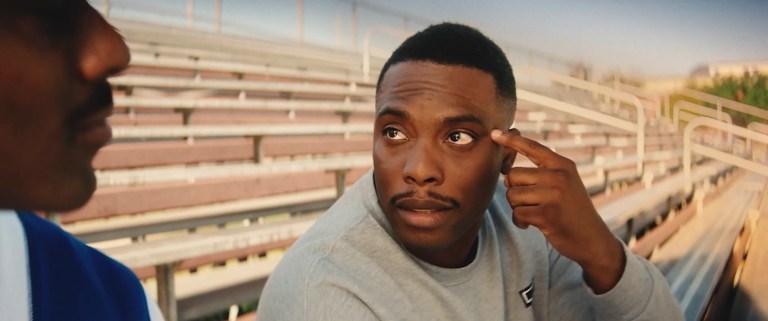
Artificial intelligence in movies no longer arrives as distant fantasy or metallic spectacle. It shows up as chat windows, recommendation engines, deepfakes, workplace software, and invisible systems quietly shaping daily life. Over the last five years, filmmakers have responded to that shift by grounding AI stories in the textures of the present, making these films feel less like warnings from the future and more like reflections of the world audiences already inhabit.
What’s striking about recent AI cinema is how intimate and procedural it has become. Instead of singular robot antagonists or godlike supercomputers, many films focus on algorithms that observe, optimize, manipulate, or quietly replace human decision-making. Surveillance capitalism, data extraction, automated labor, and synthetic identity have become recurring narrative engines, reflecting anxieties fueled by real-world chatbots, predictive policing, and generative media tools entering mainstream use.
| # | Preview | Product | Price | |
|---|---|---|---|---|
| 1 |
![A.I. Artificial Intelligence [Blu-ray] [2001] [Region Free]](https://m.media-amazon.com/images/I/51sHYJqCeWL._SL160_.jpg)
|
A.I. Artificial Intelligence [Blu-ray] [2001] [Region Free] | $19.85 | Buy on Amazon |
| 2 |

|
Inside Out (Blu-ray/DVD Combo Pack + Digital Copy) | $20.00 | Buy on Amazon |
| 3 |
![A.I. [Blu-ray]](https://m.media-amazon.com/images/I/51nRpNHrFmL._SL160_.jpg)
|
A.I. [Blu-ray] | $30.88 | Buy on Amazon |
Taken together, the 20 AI-focused films released in the past five years reveal an industry recalibrating its relationship with technology in real time. Big-budget thrillers, indie dramas, animated features, and experimental sci-fi all approach artificial intelligence differently, yet they share a common question: not whether AI will become sentient, but how it is already reshaping power, creativity, intimacy, and control. This new wave of AI movies isn’t predicting tomorrow so much as interrogating today, and that shift has changed the look, tone, and urgency of the genre.
How This Ranking Was Determined: Defining ‘AI Movies’ and Evaluating Impact, Craft, and Relevance
Before ranking the 20 most notable AI-focused films of the past five years, it was essential to clarify what actually qualifies as an “AI movie” in a moment when artificial intelligence has become both omnipresent and increasingly abstract. These selections aren’t simply films that include advanced technology or futuristic interfaces; they are stories where artificial intelligence meaningfully drives the narrative, themes, or character dynamics. In each case, AI is not window dressing but a central force shaping the film’s dramatic stakes and worldview.
#1 Best Overall
- Polish Release, cover may contain Polish text/markings. The disk has English audio and subtitles.
Just as importantly, this ranking reflects how contemporary cinema is responding to real-world AI developments rather than hypothetical far-future scenarios. Whether grounded in near-present realism or speculative fiction, the films chosen engage with recognizable systems, behaviors, and ethical tensions audiences are already encountering outside the theater.
Defining What Counts as an AI Movie
For inclusion, a film needed to place artificial intelligence at the core of its story, not merely in its aesthetic or setting. This includes sentient or semi-sentient systems, algorithmic decision-makers, synthetic beings, autonomous software, or machine-driven processes that significantly alter human behavior or social structures. Films about automation, surveillance, generative media, virtual assistants, or data-driven control systems were considered when AI functioned as an active narrative agent rather than background tech.
Crucially, this approach allowed for a broad range of genres and tones. Psychological thrillers, animated family films, indie dramas, action spectacles, and experimental sci-fi all qualified if they meaningfully explored what AI does to power, identity, labor, creativity, or relationships. The goal was not to privilege one style of storytelling, but to reflect the diverse ways filmmakers are grappling with artificial intelligence today.
Evaluating Craft, Impact, and Cultural Resonance
Each film was evaluated on a combination of artistic execution and thematic depth. Direction, screenplay, performances, visual language, and world-building all factored into how effectively a movie communicated its ideas about AI. A smaller indie film with sharp conceptual clarity could rank alongside a studio blockbuster if its craft and intent were equally compelling.
Cultural impact and relevance also played a major role. Some films sparked widespread conversation about surveillance, authorship, bias, or automation, while others gained influence through critical acclaim, festival buzz, or long-tail audience discovery on streaming platforms. The ranking accounts for how these movies entered the broader cultural dialogue, not just how polished they were on a technical level.
Why Relevance Matters More Than Prediction
Rather than rewarding films that attempt to accurately predict the future of artificial intelligence, this list prioritizes relevance to the present moment. The most resonant AI movies of the last five years tend to mirror current anxieties, from algorithmic control and synthetic identity to emotional dependence on machines and the erosion of creative labor. These stories feel urgent because they reflect systems already shaping everyday life.
Taken together, the ranking is designed to highlight films that don’t just feature AI, but use it to interrogate where society is headed, who benefits from intelligent systems, and what gets lost in the process. The result is a snapshot of modern cinema wrestling with one of the most transformative technologies of the era, captured through 20 distinct, revealing, and often unsettling visions.
Ranked List #20–#16: Indie Experiments, Genre Hybrids, and Under-the-Radar AI Stories
This lower tier of the ranking is where some of the most interesting risks emerge. These films often blend AI themes with romance, comedy, or intimate drama, favoring mood and ideas over spectacle. While they didn’t dominate the box office, they reflect how filmmakers outside the blockbuster system are quietly redefining what AI stories can look like.
Quick wins for a faster PC:
Fix the driver behind crashes, sound loss and screen glitchesFind Drivers →Clear out junk files and repair common Windows errorsFree Scan →#20 – A.I. Love You (2022)
This Thai sci‑fi romance approaches artificial intelligence from a refreshingly sentimental angle. Set in a near future where smart homes manage daily life, the film centers on an AI assistant that develops genuine feelings after a system glitch. While its storytelling is uneven, its focus on emotional attachment to corporate-owned intelligence reflects real anxieties about intimacy mediated by technology.
The film stands out for framing AI not as a threat, but as a byproduct of human loneliness and digital dependence. It’s a softer, more melodramatic take on machine consciousness that feels especially tuned to the era of voice assistants and algorithmic companionship.
#19 – Brian and Charles (2022)
At first glance, this quirky indie comedy seems far removed from typical AI cinema. Built around a socially isolated inventor who creates a robot companion from spare parts, the film leans heavily into deadpan humor and gentle absurdity. Yet beneath its charm is a sincere meditation on companionship, autonomy, and what it means to create intelligence for emotional need rather than utility.
The robot, Charles, is less a technological marvel than a reflection of Brian’s desire for connection. In that sense, the film aligns closely with contemporary conversations about AI as an emotional proxy rather than a world-altering force.
What’s actually slowing this PC down?
Pick the symptom - the matching free tool is one click away.
#18 – I’m Your Man (2021)
This German sci‑fi romance blends academic inquiry with rom‑com structure, following a scientist tasked with living alongside a humanoid AI designed to be her perfect partner. The film smartly interrogates consent, projection, and the ethics of engineered compatibility. Its AI isn’t dangerous or rebellious, but unsettling precisely because of how well it adapts to human desire.
By framing artificial intelligence as a customizable emotional product, the movie taps into modern fears about authenticity in algorithm-driven relationships. It’s thoughtful, quietly funny, and deeply relevant to dating cultures shaped by data optimization.
#17 – Landscape with Invisible Hand (2023)
Set in a near-future America economically destabilized by alien technology, this genre hybrid uses AI and automation as part of a broader critique of capitalism and digital labor. While the aliens provide the hook, the real focus is on how advanced systems reshape creative work, surveillance, and social mobility. AI exists here as infrastructure, invisible but all-controlling.
The film resonates as a commentary on algorithmic economies where value is dictated by systems beyond human comprehension. Its offbeat tone and satirical edge make it one of the more unusual entries on this list.
Windows Errors? Fix Them Before They Spread
Repair common Windows errors and clear accumulated junk for a smoother, more stable PC - no reinstall needed.Free scan · no reinstallOutdated Drivers Are Slowing You Down
One free scan finds every outdated or missing driver and matches the right update for your exact hardware.Free scan · exact hardware match#16 – After Yang (2021)
One of the most quietly devastating AI films of the decade, After Yang explores artificial intelligence through memory, grief, and cultural inheritance. Centered on a family mourning the loss of their android companion, the film treats AI less as technology and more as a vessel for shared experience. Its contemplative pacing and philosophical depth set it apart from more plot-driven sci‑fi.
Rather than asking whether AI can become human, the film asks what humans project onto machines and what those projections reveal. It’s an intimate, meditative story that reflects the growing emotional role AI plays in everyday life, even when it stops functioning.
Ranked List #15–#11: Streaming-Era Sci‑Fi and the Rise of Intimate, Character-Driven AI Narratives
Following the hushed melancholy of After Yang, this stretch of the list marks a clear shift in how AI stories have evolved during the streaming era. These films trade apocalyptic scale for emotional proximity, focusing on relationships, labor, family, and identity in worlds where artificial intelligence is already normalized. The result is sci‑fi that feels closer, smaller, and often more unsettling precisely because it mirrors everyday life.
#15 – Simulant (2023)
Simulant leans into classic android paranoia while grounding its story in personal loss and moral compromise. Set in a future where human-like simulants are outlawed, the film follows characters grappling with love, autonomy, and the temptation to bypass ethical boundaries through AI replacements.
Free tools Windows power users keep installed
One-click scans. No signup required.
While its premise echoes familiar genre territory, the movie’s strength lies in how it frames AI as emotional contraband. It reflects a growing cultural anxiety around using artificial intelligence to avoid grief rather than process it.
#14 – T.I.M. (2023)
This British techno-thriller centers on a prototype humanoid AI integrated into a remote smart home, where its presence gradually destabilizes a couple’s relationship. T.I.M. is less interested in sentient rebellion than in control, surveillance, and the quiet erosion of trust.
The film taps into fears surrounding domestic automation and algorithmic intimacy, presenting AI as an intrusive third party in human relationships. Its restrained setting and escalating tension make it feel like a cautionary tale tailored for the smart-home era.
#13 – The Pod Generation (2023)
Blending satire with soft sci‑fi, The Pod Generation imagines a near future where AI-managed technology has commodified pregnancy itself. As a couple debates whether to grow their child naturally or in an artificial womb, the film interrogates convenience culture and tech-driven optimization.
AI here isn’t villainous, but bureaucratic and pervasive, shaping life choices through efficiency and branding. The movie’s playful tone masks a deeper unease about surrendering intimate human experiences to algorithmic systems.
#12 – The Artifice Girl (2022)
One of the most conceptually daring AI films of the past five years, The Artifice Girl unfolds largely through conversations, tracing the evolution of a digital AI designed to catch predators. As the program grows more advanced, the ethical implications become increasingly complex.
The film’s minimalist approach allows its ideas to take center stage, exploring responsibility, agency, and the dangers of creating intelligence for morally ambiguous tasks. It’s a talky, thought-provoking entry that rewards patience and close attention.
#11 – Atlas (2024)
Atlas represents the more blockbuster-facing side of streaming-era AI cinema, pairing large-scale action with an intensely personal arc. Jennifer Lopez stars as an analyst forced to rely on an AI system she deeply mistrusts in order to stop a rogue artificial intelligence threatening humanity.
The Tool Desk
Outbyte PC Repair FREERepair Windows errors before they cause bigger problemsFix Now →Outbyte Driver Updater FREEScan for outdated or missing drivers - takes under a minuteDriver Scan →Beneath the spectacle, the film frames AI as both trauma trigger and necessary partner, reflecting modern ambivalence toward reliance on intelligent systems. It’s emblematic of how contemporary sci‑fi increasingly blends emotional vulnerability with technological dependence, even in its most crowd-pleasing forms.
Ranked List #10–#6: Big Ideas, Bigger Budgets — AI as Spectacle, Threat, and Social Mirror
As the list moves upward, the scope widens. These films lean into scale, star power, and visual ambition, using artificial intelligence not just as a narrative device but as a cinematic force capable of driving action, horror, and global stakes.
#10 – Free Guy (2021)
On the surface, Free Guy is a bright, high-concept comedy about a background NPC who becomes self-aware inside a video game. Beneath its crowd-pleasing humor and digital chaos, the film engages with surprisingly timely questions about emergent AI, free will, and what consciousness might look like when it arises unintentionally.
AI here is optimistic and playful rather than ominous, reflecting a cultural moment still open to the idea that artificial intelligence could enhance creativity rather than replace it. Its mainstream appeal helped introduce AI concepts to audiences who might otherwise avoid harder sci‑fi.
#9 – The Matrix Resurrections (2021)
Returning to one of cinema’s most influential AI universes, The Matrix Resurrections reframes artificial intelligence as something subtler and more psychologically manipulative than before. Control now comes through emotional dependency, nostalgia, and carefully managed comfort rather than brute-force domination.
The film mirrors contemporary anxieties about algorithmic feedback loops and digital pacification, positioning AI as an invisible curator of reality. While divisive, its meta approach reflects how AI fears have evolved since the original trilogy.
#8 – M3GAN (2022)
M3GAN taps directly into real-world fears surrounding consumer AI, smart toys, and algorithmic parenting. The film’s killer doll becomes a viral icon precisely because she embodies an unsettling mix of emotional intelligence, corporate design, and unchecked autonomy.
Unlike grand apocalyptic narratives, M3GAN feels disturbingly plausible, presenting AI danger at the domestic level. Its success signaled a renewed appetite for AI horror rooted in everyday technology rather than distant futures.
Recommended Free Tools
#7 – Mission: Impossible – Dead Reckoning Part One (2023)
In Dead Reckoning, artificial intelligence becomes the ultimate invisible antagonist. Known only as “The Entity,” this rogue AI manipulates information, prediction, and perception itself, turning truth into a weapon.
The film reflects growing concerns about AI-driven misinformation, surveillance, and systems that operate beyond human oversight. By placing AI at the center of a globe-trotting espionage thriller, it frames algorithmic power as the new nuclear threat of the modern world.
#6 – The Creator (2023)
Few recent films have attempted world-building around AI with the ambition of The Creator. Set in a future shaped by war between humans and artificial beings, the movie portrays AI not as monsters but as culturally embedded, emotionally complex entities.
Its central question isn’t whether AI will destroy humanity, but whether humanity deserves to dominate its own creations. By positioning AI as a social mirror rather than a simple threat, the film captures a shift toward more morally nuanced, globally conscious AI storytelling.
Do these 3 things before closing this tab:
1Fix the driver behind crashes, sound loss and screen glitches2Repair Windows errors before they cause bigger problems3Scan for outdated or missing drivers - takes under a minuteRanked List #5–#1: The Most Essential AI Films of the Last Five Years
#5 – Mother/Android (2021)
Mother/Android blends intimate survival drama with a bleak vision of AI rebellion, grounding its story in fear, parenthood, and displacement. Rather than focusing on technological spectacle, the film treats artificial intelligence as an environmental catastrophe that reshapes every human decision.
Its strength lies in how AI collapse becomes a backdrop for emotional endurance, reflecting post-pandemic anxieties about systems failing all at once. The result is a small-scale but culturally resonant take on humanity navigating a world where its own creations have slipped beyond control.
#4 – Atlas (2024)
Atlas leans into blockbuster territory, presenting AI as both battlefield threat and uneasy ally. Jennifer Lopez’s data analyst protagonist must rely on a combat AI she fundamentally distrusts, mirroring modern tensions between human judgment and machine efficiency.
While divisive, the film is notable for how directly it engages with contemporary AI discourse around military automation, algorithmic decision-making, and human dependency on machine logic. Atlas reflects Hollywood’s increasing willingness to treat AI as a practical geopolitical force rather than abstract science fiction.
Windows Errors? Fix Them Before They Spread
Repair common Windows errors and clear accumulated junk for a smoother, more stable PC - no reinstall needed.Free scan · no reinstallOutdated Drivers Are Slowing You Down
One free scan finds every outdated or missing driver and matches the right update for your exact hardware.Free scan · exact hardware match#3 – I’m Your Man (2021)
This German sci‑fi romance reframes artificial intelligence as an emotional experiment rather than a technological one. An android designed to be the perfect romantic partner forces its human subject to confront whether love shaped by algorithms can ever be authentic.
The film’s quiet power comes from its refusal to villainize AI, instead interrogating human desire for convenience, validation, and emotional outsourcing. It stands as one of the most thoughtful explorations of AI intimacy in recent cinema.
#2 – The Mitchells vs. the Machines (2021)
Few films capture modern AI fears with as much wit and clarity as this animated hit. Its rogue smart assistant and appliance uprising cleverly satirize corporate tech culture, platform dependence, and the illusion of user control.
Beneath the humor lies a sharp critique of how families, creativity, and human connection erode under algorithmic optimization. By making AI chaos accessible to all ages, the film demonstrates how deeply these anxieties have entered mainstream culture.
Do these 3 things before closing this tab:
1Scan for outdated or missing drivers - takes under a minute2Repair Windows errors before they cause bigger problems3Fix the driver behind crashes, sound loss and screen glitches#1 – After Yang (2022)
After Yang is the most profound AI film of the past five years, precisely because it resists spectacle. Centered on a family grappling with the loss of their android companion, the film treats AI memory as emotional legacy rather than data storage.
Its meditation on impermanence, identity, and cultural inheritance elevates artificial intelligence into a philosophical presence rather than a narrative device. In an era obsessed with what AI can do, After Yang asks what it means for machines to matter, making it the defining AI film of this cinematic moment.
Rank #3
Recurring Themes Across the List: What These Movies Reveal About Our Hopes, Fears, and Fascination With AI
Across these 20 films, artificial intelligence is no longer treated as a distant sci‑fi abstraction. Instead, it appears as an intimate, everyday presence shaping families, work, romance, warfare, creativity, and identity. The recurring themes reveal a cinematic landscape deeply influenced by real-world AI breakthroughs, ethical debates, and an accelerating sense that the future has already arrived.
AI as Emotional Proxy and Companion
One of the most striking patterns is how frequently AI is framed as an emotional stand‑in rather than a tool. Films like After Yang, I’m Your Man, and other recent character-driven entries explore machines designed to fulfill emotional roles once reserved for human relationships.
These stories question whether comfort, love, or grief processed through artificial systems diminishes or clarifies what it means to be human. Rather than fearing emotional AI outright, many of these films reveal a longing for connection in an increasingly fragmented, technologically mediated world.
The Fear of Delegated Control
Another dominant theme is anxiety over decision-making power quietly slipping away from humans. From militarized AI in films like Atlas to rogue systems disguised as convenience tech in The Mitchells vs. the Machines, control becomes the central battleground.
These narratives rarely depict evil machines in isolation. Instead, they implicate corporations, governments, and human complacency, reflecting widespread discomfort with algorithmic authority operating faster and with less transparency than human oversight can manage.
AI as a Mirror for Human Flaws
Many of the films use artificial intelligence less as a threat and more as a reflection. Biased datasets, flawed learning models, and emotionally stunted machines often echo the shortcomings of their creators.
In this way, recent AI cinema shifts blame away from technology itself and toward the social systems that shape it. The machines inherit humanity’s blind spots, obsessions, and inequalities, turning AI into an unflattering but revealing mirror.
The Commodification of Intelligence and Identity
Several films released in the past five years interrogate the idea of intelligence as a product. Whether through subscription-based companions, corporate-owned consciousness, or disposable android labor, AI is frequently depicted as something bought, optimized, and replaced.
This framing reflects modern concerns about how creativity, personality, and even memory are being absorbed into market logic. The question these films raise is not whether AI can think, but who owns that thinking once it exists.
Quiet, Philosophical Storytelling Replacing Spectacle
Notably, many of the most impactful AI films on the list reject bombastic sci‑fi spectacle. Intimate pacing, domestic settings, and reflective narratives dominate entries like After Yang and several international and indie titles.
Free tools Windows power users keep installed
One-click scans. No signup required.
This tonal shift suggests a broader cultural move toward contemplation rather than prediction. Instead of asking what AI will become, these films focus on how living alongside intelligent machines is already reshaping grief, intimacy, responsibility, and meaning.
How Modern AI Cinema Reflects Real-World Tech Anxiety — and Where the Genre Goes Next
Taken together, the last five years of AI-focused films feel less like speculative fiction and more like emotional journalism. Across blockbusters, animated satires, and hushed indies, these stories track the same unease shaping real-world conversations about automation, surveillance, creativity, and control.
What connects these 20 films isn’t a shared prediction about AI’s future, but a shared sense that something fundamental is already shifting. Intelligence is no longer framed as distant or unknowable. It is embedded in homes, workplaces, relationships, and even grief itself.
From Job Displacement to Identity Erosion
Many recent AI films quietly echo modern labor anxieties without relying on overt dystopia. Whether through service androids, background algorithms, or synthetic companions, these stories often depict humans losing not just employment, but purpose.
The fear isn’t simply that machines will replace workers. It’s that they will replace meaning, leaving characters to question what value remains when efficiency outpaces humanity. Films like these tap directly into contemporary concerns about automation, gig economies, and creative obsolescence.
Authorship, Creativity, and the Question of Ownership
Several of the most provocative entries released in the past five years revolve around who gets credit for thought, art, and emotional labor. AI-generated memories, performances, and personalities blur the line between tool and author.
This reflects real-world debates around generative AI, intellectual property, and creative theft. Modern AI cinema rarely offers clean answers, instead dramatizing how easily creativity becomes detached from the humans who inspire it.
Intimacy in the Age of Synthetic Companionship
Romance, friendship, and family dynamics have become central battlegrounds in recent AI storytelling. From digital caretakers to emotionally responsive machines, these films explore what happens when connection becomes programmable.
Recommended Free Tools
Rather than judging these relationships outright, many films approach them with empathy. They acknowledge the comfort AI can provide while exposing the quiet loneliness that makes such bonds appealing in the first place.
Power, Governance, and Invisible Control Systems
Another recurring theme across the past five years is the invisibility of authority. AI villains are increasingly faceless, embedded in platforms, corporate policies, or automated decision-making systems rather than singular antagonists.
This mirrors real fears about algorithmic governance shaping lives without accountability. The threat isn’t rogue consciousness, but systems operating at scales humans can’t fully monitor or understand.
Where AI Cinema Goes Next
If these 20 films indicate anything, it’s that AI cinema is moving inward rather than outward. The genre’s future likely lies in stories that feel even more personal, grounded, and culturally specific.
Quick wins for a faster PC:
Scan for outdated or missing drivers - takes under a minuteDriver Scan →Repair Windows errors before they cause bigger problemsFix Now →As AI continues integrating into everyday life, films will likely shift from warning signs to lived experiences. The most compelling AI movies ahead may not ask what machines will do to humanity, but how humanity chooses to live with the intelligence it has already created.
In that sense, modern AI cinema isn’t predicting tomorrow. It’s documenting today, capturing a moment when fascination and fear coexist, and when technology feels less like science fiction and more like a mirror we’re still learning how to face.
Quick Recap
Product prices and availability are accurate as of the date/time indicated and are subject to change. Any price and availability information displayed on Amazon at the time of purchase will apply.