Twelve years after it detonated into the cultural conversation, The Wolf of Wall Street still feels like a jolt to the nervous system. Martin Scorsese’s three-hour R-rated excess opera hasn’t mellowed with age; if anything, its brazen depiction of greed, power, and moral rot feels even more unnerving in a post-crypto, post-meme-stock era. Now that the film has landed on a free, ad-supported streaming platform, its return feels less like nostalgia and more like a timely reappraisal.
For many viewers, this was the moment Margot Robbie announced herself as a generational screen presence. As Naomi Lapaglia, Robbie weaponized confidence, sexuality, and razor-sharp intelligence, cutting through a testosterone-soaked ensemble and holding her own against Leonardo DiCaprio at full throttle. It’s a performance that remains startling in its fearlessness, not just for what it shows, but for how precisely it controls the gaze of the audience.
| # | Preview | Product | Price | |
|---|---|---|---|---|
| 1 |
![The Wolf of Wall Street [Blu-ray] [2013] [Region Free]](https://m.media-amazon.com/images/I/51J05mn-B7L._SL160_.jpg)
|
The Wolf of Wall Street [Blu-ray] [2013] [Region Free] | $17.64 | Buy on Amazon |
| 2 |
|
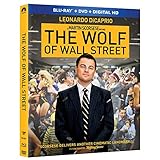
The Wolf of Wall Street (Blu-ray + DVD + Digital HD) | $6.37 | Buy on Amazon |
| 3 |
![The Wolf Of Wall Street [Blu-ray]](https://m.media-amazon.com/images/I/51JUy2mkbVL._SL160_.jpg)
|
The Wolf Of Wall Street [Blu-ray] | $22.49 | Buy on Amazon |
| 4 |
![The Wolf of Wall Street UHD [Blu-ray] [Region Free] [4K UHD]](https://m.media-amazon.com/images/I/51Va8nYgptL._SL160_.jpg)
|
The Wolf of Wall Street UHD [Blu-ray] [Region Free] [4K UHD] | $31.31 | Buy on Amazon |
| 5 |

|
The Wolf Of Wall Street | $24.19 | Buy on Amazon |
What still makes The Wolf of Wall Street hit so hard is its refusal to moralize in comfortable ways. Scorsese doesn’t soften the chaos or apologize for the indulgence; he lets the spectacle speak, trusting viewers to grapple with their own complicity in finding it entertaining. Seeing it again, now freely available to anyone curious enough to press play, only reinforces why this film remains one of the most audacious R-rated studio releases of the 21st century.
From Scene-Stealer to Superstar: Margot Robbie’s Fearless Breakout Performance
When The Wolf of Wall Street exploded onto screens in 2013, Margot Robbie was a relative unknown sharing the frame with some of the most dominant personalities in modern cinema. By the time the credits rolled, she had unmistakably shifted the film’s gravitational center. Naomi Lapaglia wasn’t just a supporting character; she was a force that recalibrated every scene she entered.
Quick wins for a faster PC:
Repair Windows errors before they cause bigger problemsFix Now →Scan for outdated or missing drivers - takes under a minuteDriver Scan →#1 Best Overall
- The Wolf of Wall Street [2013] [Region Free] Leonardo DiCaprio,In Great Condition
Robbie’s achievement wasn’t simply holding her own against Leonardo DiCaprio, Jonah Hill, and a full-throttle Scorsese production. It was commanding attention in a film designed to overwhelm, using precision rather than volume to carve out space in a narrative defined by excess. Watching it now, newly accessible on a free streaming platform, the performance feels even more audacious.
A Star-Making Entrance That Redefined the Power Dynamic
Robbie’s introduction remains one of the most iconic character entrances of the 2010s, not because of shock value alone, but because of control. Naomi’s sexuality is never passive; it’s strategic, weaponized, and fully self-aware. Robbie understands exactly how the camera sees her and flips that awareness into dominance.
In a film obsessed with male ego, Naomi becomes the clearest threat to Jordan Belfort’s sense of control. Robbie plays her not as an accessory to excess, but as its sharpest mirror, exposing how fragile that power really is. It’s a performance built on confidence without apology.
Fearlessness Without Exploitation
The nudity, the confrontations, the razor-edged dialogue all walk a dangerous line, yet Robbie never lets Naomi slip into objectification. Every provocative moment is anchored by intention, turning what could have been reductive into something confrontational. She forces the audience to sit with their own reactions, a daring move in a film already testing viewer complicity.
That balance is especially striking on rewatch. With the benefit of hindsight and a decade of cultural recalibration, Robbie’s work reads less as controversy and more as craft. Few debut performances have been this bold while remaining this controlled.
The Performance That Changed Everything
It’s impossible to trace Robbie’s trajectory without returning to The Wolf of Wall Street as the ignition point. This role didn’t just open doors; it redefined the types of roles she could claim, from blockbuster franchises to daring indie projects and, eventually, producing her own material. Naomi Lapaglia announced a star who wasn’t interested in being underestimated.
Now that the film is available to stream for free, a new wave of viewers can witness that turning point firsthand. What once felt like a shocking arrival now plays as the unmistakable birth of a superstar, captured in real time, with all the confidence and fearlessness that would come to define Margot Robbie’s career.
Sex, Excess, and Satire: Why the Film’s Provocation Was the Point
Martin Scorsese has always understood that excess is best exposed by leaning into it, not away from it, and The Wolf of Wall Street might be his most confrontational expression of that idea. The film’s avalanche of sex, drugs, and money isn’t there to glorify Jordan Belfort’s world so much as to trap the audience inside it. By the time the hangover sets in, the joke is already on us.
The Tool Desk
Outbyte Driver Updater FREEScan for outdated or missing drivers - takes under a minuteDriver Scan →Outbyte PC Repair FREERepair Windows errors before they cause bigger problemsFix Now →Satire That Dares You to Laugh
The Wolf of Wall Street functions as a dark comedy first and a morality tale second, a choice that made it deeply uncomfortable for some viewers upon release. The laughter is intentional, but it’s also accusatory. Scorsese dares the audience to enjoy Belfort’s rise while quietly tallying the cost, a strategy that turns indulgence into indictment.
That tension has only sharpened with time. In an era more attuned to power imbalances, financial exploitation, and performative masculinity, the film’s humor now lands as even more acidic. What once felt outrageous now reads as unnervingly precise.
The R-Rating as a Creative Weapon
The film’s infamous R rating isn’t a byproduct of shock value; it’s the engine of its honesty. Sanitizing Belfort’s world would have undermined the entire critique, softening the ugliness that makes his empire possible. The explicitness forces viewers to confront how rot hides behind luxury.
Rank #2
- The Wolf Of Wall Street - Blu-ray + DVD + Digital Brand New
This is where Margot Robbie’s Naomi becomes essential to the satire. Her sexual confidence exists within the system Belfort built, yet she manipulates it more fluently than he ever does. The film’s provocation isn’t just about excess; it’s about who wields power when everyone is pretending not to notice.
Recommended Free Tools
Why It Still Hits Hard on Rewatch
Watching The Wolf of Wall Street today, especially now that it’s available to stream for free, feels like revisiting a cultural artifact that somehow aged into sharper relevance. The unchecked bravado, the performative rebellion, the conflation of wealth with worth all feel painfully familiar. The film no longer plays like a relic of pre-crash excess, but a warning that never quite landed.
That’s why its provocation still matters. Scorsese wasn’t asking audiences to condemn Belfort outright; he was asking them to recognize how easily they could be seduced by him. Twelve years later, with hindsight and context on its side, The Wolf of Wall Street stands tall as an R-rated masterpiece that knew exactly what it was doing and why it refused to apologize for it.
Scorsese Unleashed: Craft, Chaos, and the Art of Making Audiences Uncomfortable
What truly elevates The Wolf of Wall Street beyond scandal is how fully Martin Scorsese commits to its unruliness. This is a filmmaker weaponizing excess, turning craft into controlled chaos and daring the audience to keep up. Watching it now, especially with the ease of free streaming, the film’s velocity still feels confrontational by design.
Velocity as Philosophy
Scorsese’s breakneck pacing isn’t just stylistic bravado; it’s thematic. The rapid-fire editing, whip-smart needle drops, and relentless narration mimic the adrenaline of Belfort’s world, trapping viewers inside the rush rather than observing it from a safe distance. You don’t watch the rise—you feel it, breathless and complicit.
This is why the film refuses pauses for reflection until it’s far too late. Scorsese understands that excess only seduces when it moves fast, and he builds the movie like a financial scheme that doesn’t give you time to read the fine print.
Breaking the Fourth Wall, Breaking Moral Comfort
Leonardo DiCaprio’s direct addresses to the camera are not charming asides; they’re traps. Scorsese uses the fourth wall to collapse the distance between audience and antihero, forcing viewers into Belfort’s confidence circle. Every wink and explanation dares you to nod along, even as the damage piles up offscreen.
Margot Robbie’s Naomi benefits from this same strategy. Introduced as spectacle, she gradually becomes a mirror, reflecting Belfort’s appetites back at him with sharper intelligence and colder calculation. Her performance thrives in the discomfort Scorsese creates, refusing easy sympathy while commanding attention.
Comedy That Cuts Instead of Comforts
The film’s most infamous sequences land because Scorsese stages them like slapstick tragedies. Laughter becomes uneasy, then revealing, as the joke is never divorced from consequence. The infamous excess isn’t celebratory; it’s clinical, exposing how easily charisma can anesthetize ethics.
What’s actually slowing this PC down?
Pick the symptom - the matching free tool is one click away.
That balance is why The Wolf of Wall Street remains such a potent rewatch today. As it finds a new life on free streaming platforms, the film’s craft still unsettles, its chaos still calculated. Scorsese didn’t just make audiences uncomfortable in 2013—he built a machine that keeps doing it, long after the credits roll.
Cultural Fallout and Misread Genius: How the Film Was Debated, Imitated, and Immortalized
The Wolf of Wall Street didn’t just provoke conversation upon release; it detonated one. Critics, audiences, and cultural commentators split into camps, arguing whether Scorsese had indicted greed or indulged it. That tension was never resolved, and that unresolved friction is precisely why the film has endured.
When Satire Gets Mistaken for Endorsement
Much of the backlash stemmed from viewers taking Belfort’s excess at face value, mistaking immersion for approval. Scorsese’s refusal to sermonize left audiences responsible for their own moral bearings, a challenge many found uncomfortable. The film asks you to recognize seduction as a problem, not wait for the movie to announce it as one.
That misreading followed the film for years, often flattening its intent into a false controversy. Yet time has clarified what outrage blurred: The Wolf of Wall Street is ruthless in its depiction of emptiness, even if it refuses to deny the thrill along the way.
Free tools Windows power users keep installed
One-click scans. No signup required.
A Blueprint Hollywood Tried to Copy
In the years that followed, the industry chased the wrong lessons. Films and shows borrowed the fast cuts, voiceover bravado, and outrageous antics without understanding the discipline beneath them. What they missed was Scorsese’s control, the way every excess is calibrated to expose rot rather than celebrate rebellion.
Few imitators grasped that the movie’s energy is inseparable from its critique. Without that tension, the style becomes cosplay, all swagger and no substance. The original remains untouchable because it understands exactly what it’s doing, even when audiences argue about what they’re seeing.
Margot Robbie’s Breakout, Reconsidered
Robbie’s Naomi was initially reduced by some to iconography: accent, wardrobe, attitude. Over time, that reading has shifted, revealing a performance built on precision and power. Naomi isn’t just a symbol of Belfort’s desire; she’s an agent within his ecosystem, navigating it with sharper awareness and fewer illusions.
Rewatching the film now, especially with the benefit of Robbie’s post-Barbie career, her command is unmistakable. She matches DiCaprio beat for beat, often surpassing him in clarity, making this not just a breakout role but a foundational one.
Immortality Through Accessibility
Now, as the film finds a new free streaming home, its legacy feels newly cemented. Free, ad-supported platforms remove the final barrier to entry, inviting a fresh wave of viewers to confront the film on its own terms. For first-timers, it’s a shock; for return viewers, it’s a recalibration.
The Wolf of Wall Street hasn’t softened with age. If anything, its critique lands harder in an era even more fluent in spectacle and moral compromise. That it’s now freely available only amplifies its reach, ensuring that Scorsese’s most confrontational R-rated masterpiece continues to be debated, dissected, and misunderstood in all the ways that keep great cinema alive.
The New Free Streaming Era: How Its Arrival on a FAST Platform Changes the Film’s Reach
The shift from premium rentals to a free, ad-supported streaming television platform fundamentally alters how The Wolf of Wall Street circulates through culture. What was once an appointment viewing experience now becomes a spontaneous discovery, available to anyone willing to trade a few ad breaks for three hours of controlled chaos. That accessibility reframes the film not as a prestige artifact, but as living pop culture.
FAST platforms thrive on curiosity clicks and late-night channel surfing, which plays directly into the film’s reputation. Viewers stumble into it midway through a scene, get hooked by the momentum, and stay. For a movie built on excess and propulsion, that frictionless entry point feels oddly appropriate.
Reaching the Audience That Missed It the First Time
A full generation has come of age since the film’s original release, many of whom know it more through memes and secondhand references than firsthand experience. Free streaming removes the hesitation factor for younger viewers who might not prioritize a three-hour R-rated epic behind a paywall. Now, the film can be encountered organically, without pretense or purchase.
Rank #4
That matters for Margot Robbie’s performance in particular. Seen outside the context of 2013 hype cycles and box office discourse, her work reads as sharper and more deliberate. The FAST environment invites reevaluation, not just consumption.
The Algorithm as Curator, Not Gatekeeper
On FAST platforms, discovery isn’t driven by critical canon or awards pedigree but by behavioral patterns. Viewers who click on crime stories, celebrity documentaries, or finance-adjacent programming are suddenly funneled toward Scorsese’s most provocative mainstream film. The algorithm becomes a quiet evangelist.
This kind of exposure favors endurance over opening weekend impact. The Wolf of Wall Street doesn’t need urgency; it needs time. FAST platforms are built for exactly that kind of long-tail relevance.
Do these 3 things before closing this tab:
1Repair Windows errors before they cause bigger problems2Scan for outdated or missing drivers - takes under a minute3Clear out junk files and repair common Windows errorsAdvertising, Irony, and Cultural Feedback Loops
There’s a layered irony in watching a film about unchecked capitalism punctuated by ads selling aspirational lifestyles. That tension doesn’t dilute the movie’s message; it sharpens it. The interruptions create moments of reflection, reminding viewers how deeply the film’s critique mirrors the systems funding its rebirth.
In this context, the movie feels less like a relic and more like a mirror. Its arrival on a FAST platform doesn’t just expand its audience; it folds the film back into the economic ecosystem it so viciously dissects.
Independent reader supportYour contribution helps us test, update, and keep practical guides available for everyone.Rewatch Value in 2025: What Plays Differently Now—and What Still Feels Dangerous
Revisiting The Wolf of Wall Street in 2025 is a different experience than it was in 2013, but not a tamer one. Time has stripped away the shock of its excess while sharpening its intent. What once felt like provocation for provocation’s sake now reads as a deliberately exhausting immersion into moral rot.
Margot Robbie’s Performance Hits Harder, Not Softer
Margot Robbie’s Naomi no longer registers as just a star-making entrance; it plays as a precision instrument. Her control of tone, rhythm, and power dynamics feels startlingly modern, especially in a post-Barbie landscape where her career choices have reframed how audiences read her early work. She isn’t swallowed by the film’s testosterone-fueled chaos; she weaponizes it.
Outdated Drivers Are Slowing You Down
One free scan finds every outdated or missing driver and matches the right update for your exact hardware.Free scan · exact hardware matchWindows Errors? Fix Them Before They Spread
Repair common Windows errors and clear accumulated junk for a smoother, more stable PC - no reinstall needed.Free scan · no reinstallWhat’s striking on rewatch is how little the performance relies on shock value. Robbie calibrates Naomi’s intelligence and emotional volatility with purpose, making her feel like the only character fully aware of the transactional nature of the world she’s entered. That clarity lands harder now, especially for viewers revisiting the film without the noise of its original controversy.
The Comedy Ages, the Commentary Deepens
Some of the film’s pop-culture references are undeniably of their time, but the humor itself remains razor-sharp. Scorsese’s commitment to speed, repetition, and absurd escalation feels less indulgent now and more diagnostic. The laughs come faster, but they also curdle quicker.
In 2025, the film’s structure mirrors the burnout cycle of modern hustle culture with uncomfortable accuracy. The endless churn of deals, drugs, and dopamine feels eerily aligned with contemporary conversations about grind culture and performative success. What once seemed cartoonish now feels familiar.
Why It Still Feels Dangerous on Free Streaming
The Wolf of Wall Street remains dangerous because it refuses to offer moral guardrails. It doesn’t soften its characters for relatability or spoon-feed condemnation, trusting the audience to sit with discomfort. On a free streaming platform, that provocation feels even more exposed, arriving without the framing of prestige or purchase.
Best Value
The R-rated excess hasn’t dulled; it’s simply better contextualized. Watching it today, viewers are less likely to mistake admiration for endorsement, but the film still dares them to confront how easily spectacle can seduce. That tension is exactly why the movie endures.
A Masterpiece That Rewards a Second, Third, or First Real Watch
For longtime fans, the rewatch reveals craft hidden beneath the chaos. For first-time viewers discovering it through FAST, the film lands as something rarer: a studio-scale R-rated work that trusts its audience completely. Its availability doesn’t make it safer; it makes it more accessible.
In 2025, The Wolf of Wall Street doesn’t feel like a relic of excess-era Hollywood. It feels like a stress test, one that modern audiences are uniquely equipped to engage with—and still be unsettled by.
The Legacy Locked In: How This Film Redefined Robbie’s Career and Modern R-Rated Cinema
When The Wolf of Wall Street premiered in 2013, Margot Robbie wasn’t yet a global brand—she was a risk. Casting a relatively unknown Australian actress opposite Leonardo DiCaprio in a hyper-sexualized, hyper-verbal role could have gone sideways fast. Instead, it detonated her career trajectory overnight and recalibrated what a breakout performance could look like inside a studio R-rated spectacle.
Robbie’s performance as Naomi Lapaglia remains astonishing not because of its shock value, but because of its control. She weaponized confidence, timing, and intelligence in a film overflowing with excess, never fading into the background or becoming a symbol rather than a person. In a movie crowded with monologues and bravado, she carved out power through stillness, sharpness, and presence.
From Breakout Role to Creative Powerhouse
Looking back from 2025, it’s clear The Wolf of Wall Street didn’t just introduce Robbie—it announced her as a force capable of navigating and reshaping Hollywood’s ecosystem. The film gave her global visibility, but more importantly, it gave her leverage. That leverage would later translate into daring choices, producer control, and a career defined by range rather than typecasting.
It’s no accident that Robbie would go on to champion projects like I, Tonya, Promising Young Woman, and Barbie through her LuckyChap banner. The fearlessness she displayed in Wolf became a thesis statement for her entire career. Watching the film now, especially on a free streaming platform, feels like witnessing the moment an A-list architect stepped onto the blueprint.
A Turning Point for Modern R-Rated Studio Cinema
The Wolf of Wall Street also marked a high-water moment for R-rated studio filmmaking that trusted scale, excess, and audience intelligence simultaneously. It proved that adult-oriented stories could still be riotous, financially massive, and culturally dominant without sanding down their edges. In an era now dominated by IP safety nets and algorithmic predictability, that confidence feels almost radical.
The Tool Desk
Outbyte PC Repair FREEClear out junk files and repair common Windows errorsFree Scan →Outbyte Driver Updater FREEFix the driver behind crashes, sound loss and screen glitchesFind Drivers →Its presence on FAST platforms today adds another layer to its legacy. Free access doesn’t dilute the film’s impact—it democratizes it. The movie now circulates outside premium paywalls, inviting a new generation to engage with its provocations on their own terms, without hype or apology.
Why This Legacy Hits Harder Now
Twelve years later, the film’s endurance feels earned rather than nostalgic. Robbie’s performance has only grown in stature, and the film’s commentary feels sharper in a world more fluent in the language of excess and exploitation. Its R-rated audacity hasn’t aged out; it’s aged into relevance.
Finding The Wolf of Wall Street freely available today isn’t just a convenience—it’s a reminder. This is what happens when talent, risk, and trust collide at full volume. Robbie didn’t just survive the chaos of this film; she emerged as one of its most lasting statements, and modern R-rated cinema is richer for it.
Quick Recap
Product prices and availability are accurate as of the date/time indicated and are subject to change. Any price and availability information displayed on Amazon at the time of purchase will apply.