There is no neutral way to rank drummers. A jazz innovator, a Motown session player, a punk minimalist and a progressive-rock virtuoso are solving different musical problems. This is therefore an editorial ranking, not a claim that one instrument can be measured on a single scale.
The list weighs influence, innovation, musicality, recorded legacy, live impact, historical importance and breadth. Speed and technical difficulty matter, but they are not enough on their own. A drummer who changes the feel of a song—or changes what later players believe the instrument can do—belongs in the conversation whether or not they play long solos.
How the ranking was made
The selection balances jazz, swing, blues, rock, soul, funk, reggae, Afrobeat, pop, country, punk, alternative, progressive music and metal. It also includes bandleaders, studio musicians and players whose importance is easy to miss because they were not the public face of a group.
That broad approach produces a different result from Rolling Stone’s 2016 rock-and-pop-centered list, which placed John Bonham first, Keith Moon second, Ginger Baker third and Neil Peart fourth. Modern Drummer’s 2014 all-genre reader poll put Buddy Rich first, Bonham second and Peart third. Both are useful reference points, but neither is a definitive verdict.
Recommended Free Tools
#1 Best Overall
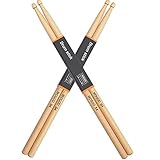
- WOGOD Maple Drum sticks: Our 5A drumsticks are crafted from high-quality maple, providing a comfortable grip and excellent response for any style of drumming. The unique water drop-shaped tip enhances articulation and tone.
- Unleash Your Drumming Potential: Our drumsticks are the perfect choice for drummers of all levels. Whether you are a beginner or a professional, WOGOD drum sticks will help you achieve your musical goals.
- Durable and Stable: Our drumsticks are meticulously crafted to ensure strength and durability, with a well-balanced design that helps you maintain accurate strikes and rhythms.
- Perfect for a Wide Range of Musical Styles: Whether you're playing rock, jazz, blues, or any other style, our drumsticks will help you deliver the perfect sound and feel. They are also ideal for marching bands and drum corps.
- Satisfaction Guaranteed: At WOGOD, we are committed to providing you with the highest quality drumsticks that meet and exceed your expectations. If you are not satisfied with your purchase, please let us know and we will do everything we can to make it right.
For orientation, the entries are grouped into four broad historical sections. The numbers remain the ranking.
The 100 greatest drummers of all time
1–25: The architects
- Buddy Rich — The benchmark for jazz-drumming technique, precision and showmanship. Rich could drive a big band with astonishing power while retaining exacting control over dynamics and articulation.
- John Bonham — Bonham made rock drums sound enormous without losing the pocket. His work with Led Zeppelin combined weight, swing, space and “unfailing time,” from the stomp of “When the Levee Breaks” to the shifting architecture of “Kashmir.”
- Max Roach — A foundational bebop voice whose ride-cymbal phrasing, independence and melodic solos helped move jazz drumming beyond keeping time into conversational, compositional territory.
- Art Blakey — Blakey’s attack, blues feeling and deep pulse made him one of hard bop’s defining drummers. As leader of the Jazz Messengers, he also shaped generations of musicians through his bandstand.
- Kenny Clarke — Clarke helped establish modern jazz drumming by moving timekeeping toward the ride cymbal and using the bass drum for accents rather than a constant four-beat thump.
- Gene Krupa — Krupa turned the drummer into a visible popular-culture star. His work with Benny Goodman helped make the drum solo a headline event and expanded the public image of the drum set.
- Neil Peart — Peart brought orchestration, precision, electronics, concert percussion and elaborate arrangements to progressive rock. His playing with Rush was as much about structure and narrative as virtuosity.
- Ringo Starr — Starr’s greatness is in selection: the right beat, the right fill and the right amount of space. His distinctive parts gave The Beatles a rhythmic foundation that was simple to imitate badly and difficult to reproduce convincingly.
- Ginger Baker — Baker fused jazz phrasing, African rhythms, rock volume and double-bass-drum technique. His work with Cream made the extended rock drum performance a central part of the group’s identity.
- Tony Williams — Williams changed the expectations for youthful modern-jazz drumming, bringing explosive dynamics, elastic time and a remarkably advanced sense of form to recordings with Miles Davis and beyond.
- Elvin Jones — His rolling triplets and polyrhythmic force gave John Coltrane’s classic quartet a restless, surging energy. Jones could make time feel both massive and in motion.
- Earl Palmer — Palmer helped translate swing and rhythm-and-blues vocabulary into the straight backbeat of early rock ’n’ roll. His studio work is embedded in the sound of the genre’s formation.
- Hal Blaine — As a leading member of Los Angeles’s Wrecking Crew, Blaine played on an extraordinary body of hit records. His contribution shows why studio drummers deserve equal status with famous band members.
- Jeff Porcaro — Porcaro combined impeccable pocket, subtle ghost notes and a producer’s sense of arrangement. His drumming with Toto and on countless sessions became a model for polished pop-rock groove.
- Steve Gadd — Gadd’s session and jazz work is a study in authority without excess. His phrasing, touch and ability to make complex parts feel natural influenced players across fusion, pop and studio music.
- Roy Haynes — With a crisp, modern attack and an unusually alert sense of interaction, Haynes remained relevant across swing, bebop, post-bop and fusion for more than seven decades.
- Chick Webb — Webb’s power and precision transformed the swing-era big-band drum chair. Despite his physical limitations, he led from the drums and became one of the era’s most formidable bandleaders.
- Jo Jones — Jones helped shift jazz time away from a rigid bass-drum emphasis toward a flowing hi-hat and ride-cymbal pulse. His work with Count Basie remains a masterclass in economy.
- Baby Dodds — Dodds carried New Orleans drumming into the recording era, preserving and extending the language of press rolls, syncopation, breaks and parade-derived rhythm.
- Sid Catlett — Catlett connected swing’s elegance with a powerful, modern attack. His ability to support singers, big bands and small-group improvisers made him one of the period’s most versatile players.
- Louis Bellson — Bellson popularized the use of two bass drums in jazz and combined orchestral color with formidable technique, arranging skill and big-band leadership.
- Roy Burns — Burns was an influential drummer, educator and clinician whose playing and teaching helped connect swing-era practice with the developing modern drum-set community.
- Louie Bellson — The same musician is sometimes listed under the spelling Louis Bellson; his double-bass vocabulary, composing and big-band work place him among the important post-swing innovators.
- Paul Motian — Motian made understatement radical. His loose, textural approach with Bill Evans and later ensembles treated cymbal color, silence and rhythmic implication as compositional tools.
- Billy Higgins — Higgins’s buoyant, conversational time became a defining sound of hard bop and post-bop. He could make accompaniment feel generous while responding constantly to the soloist.
26–50: Groove, soul and the rock revolution
- Benny Benjamin — “Papa Zita” supplied much of the early Motown rhythmic identity. His firm backbeat and deceptively economical parts helped make dozens of songs feel immediate and danceable.
- Al Jackson Jr. — Jackson’s drumming with Booker T. & the M.G.’s is a model of economy and placement. He made a small number of notes carry enormous emotional and structural weight.
- Clyde Stubblefield — His work with James Brown, especially the break on “Funky Drummer,” became foundational material for hip-hop producers and a vocabulary lesson for generations of funk players.
- Jabo Starks — Starks brought a different but equally important James Brown vocabulary: hard, syncopated, sharply articulated funk that locked the band to the horn section and bass.
- Bernard Purdie — The “Purdie Shuffle” is only one part of his legacy. Purdie’s deep pocket, ghost notes and control of backbeat feel made him one of the most imitated session drummers in popular music.
- James Gadson — Gadson’s restraint, authority and relationship with the bass line defined much of the sound of 1970s soul and R&B, particularly through his work with Bill Withers and other major artists.
- Zigaboo Modeliste — Modeliste’s New Orleans funk drumming with The Meters is built from syncopation, repetition and space. His grooves sound loose on the surface but are rhythmically exact.
- David Garibaldi — Garibaldi developed a highly orchestrated funk language with Tower of Power, using ghost notes, linear patterns and precise accents to make the kit operate like a horn section.
- Greg Errico — As Sly and the Family Stone’s original drummer, Errico helped establish a compact, interlocking funk feel in which every part served the groove rather than competing for attention.
- Fred Below — Below’s work with Little Walter and the Aces helped define amplified Chicago blues drumming: strong time, carefully placed accents and a direct connection to the song’s vocal phrasing.
- D.J. Fontana — Fontana gave Elvis Presley’s early records a forceful, country-informed rock pulse. His fills helped move the drum set from background accompaniment toward a recognizable part of the hit-making sound.
- Jim Keltner — Keltner’s broad studio career is marked by feel rather than a signature gimmick. He could play rootsy, sparse, funky or carefully arranged parts while making each recording sound lived-in.
- Charlie Watts — Watts understood that a rock drummer’s job is not to fill every gap. His controlled swing, understated fills and relationship with Keith Richards supplied The Rolling Stones with durable rhythmic identity.
- Keith Moon — Moon treated the kit as an explosive orchestral instrument. His active, unpredictable playing enlarged the theatrical role of the rock drummer, even when it deliberately pushed against conventional restraint.
- Mitch Mitchell — Mitchell brought jazz vocabulary, triplet phrasing and improvisational interaction to the Jimi Hendrix Experience. He did not merely accompany Hendrix; he helped create the trio’s volatile sound.
- Stewart Copeland — Copeland’s hi-hat precision, syncopation and combination of punk aggression with reggae phrasing gave The Police a rhythm section that was instantly identifiable.
- Bill Ward — Ward’s drumming was central to the heaviness of early Black Sabbath, but it also retained blues swing and dynamic contrast. He helped establish a template for metal that was not mechanically rigid.
- Ian Paice — Paice combined speed, swing and a sharp snare sound with Deep Purple’s demanding arrangements. His playing helped define the muscular but musical side of hard rock.
- Nick Mason — Mason’s value in Pink Floyd was architectural. He created patient, spacious parts that supported atmosphere and studio construction rather than treating every song as a display of technique.
- Roger Taylor — Taylor supplied Queen with a powerful rock backbeat, bright vocal harmonies and enough flexibility to move from heavy guitar music to theatrical pop arrangements.
- Karen Carpenter — Carpenter’s smooth time, taste and vocal-drumming independence made The Carpenters’ records unusually cohesive. Her playing is a reminder that control and restraint can be as difficult as speed.
- Sheila E. — A percussionist, drummer, bandleader and performer, Sheila E. brought Latin rhythmic knowledge, pop precision and commanding stage presence to a wide range of projects.
- Viola Smith — Smith was a pioneering big-band drummer and an early visible woman in a field often presented as exclusively male. Her technique, showmanship and advocacy expanded the public idea of who could lead from the drum chair.
- Carl Palmer — Palmer combined classical-style arrangement, rock power and progressive-rock virtuosity with Emerson, Lake & Palmer and earlier groups. His parts were designed as much for structure and spectacle as for groove.
- Bill Bruford — Bruford’s career across Yes, King Crimson, Genesis-related projects and jazz-oriented ensembles demonstrates unusual stylistic evolution. His angular phrasing made complex meters sound purposeful rather than merely difficult.
51–75: Jazz expansion, fusion and global rhythm
- Billy Cobham — Cobham’s explosive fusion drumming combined immense volume, intricate coordination and a strong compositional sense. His work helped establish the drum-heavy vocabulary of 1970s jazz-rock.
- Lenny White — White brought rock energy and jazz interaction to Return to Forever, helping make fusion both technically ambitious and physically forceful.
- Dave Weckl — Weckl’s precision, touch and orchestration influenced the modern fusion drummer’s approach to sound, independence and technical cleanliness.
- Gary Chester — A prolific New York session drummer and influential teacher, Chester demonstrated how studio adaptability and deep rhythmic knowledge could shape commercial recordings without a public profile.
- Elvin Jones — Jones’s place is already secured higher on the list, but his impact deserves repeating: the triplet-based, polyrhythmic “rolling” language he popularized remains a central reference for modern jazz drummers.
- Tony Allen — Allen’s drumming with Fela Kuti helped create Afrobeat’s interlocking, cyclical engine. He treated rhythm as a layered conversation between drums, bass, guitars, horns and voice.
- Carlton Barrett — Barrett’s “one drop” and other reggae patterns gave Bob Marley and the Wailers a spacious, authoritative foundation. His parts show how omission can create enormous groove.
- Sly Dunbar — Dunbar expanded reggae’s studio vocabulary through disciplined pocket, inventive pattern design and prolific work across reggae, dub, pop and international music.
- Airto Moreira — Moreira helped bring Brazilian percussion and rhythmic concepts into jazz and fusion, combining kit playing with a broad palette of hand percussion and sound color.
- Milford Graves — Graves approached free jazz as physical, timbral and deeply responsive music. His playing made pulse, noise, resonance and improvisational reaction equally important.
- Sunny Murray — Murray’s floating, deconstructed approach challenged the assumption that a drummer must continuously mark a conventional beat, opening new space for free improvisation.
- Andrew Cyrille — Cyrille balanced clarity with openness, supporting avant-garde ensembles while retaining a powerful sense of form, texture and conversational timing.
- Jack DeJohnette — DeJohnette moved fluently among post-bop, fusion, free jazz and rock-informed settings. His drumming is both structurally intelligent and intensely responsive.
- Roy Haynes — Haynes’s long career crosses swing, bebop, modal jazz and modern improvisation. His crisp attack and forward motion influenced players who wanted clarity without stiffness.
- Joe Morello — Morello made unusual meters and intricate subdivisions sound musical, especially with the Dave Brubeck Quartet. His control and sensitivity made technical ideas accessible to a wide audience.
- John McLaughlin — McLaughlin is principally known as a guitarist, but his Mahavishnu Orchestra drummers—especially Billy Cobham—were central to the group’s identity; he belongs here as a bandleader whose arrangements expanded the role of the drum set.
- Terri Lyne Carrington — Carrington is a major modern jazz drummer, composer and educator whose playing combines sophistication, groove and responsive ensemble leadership.
- Cindy Blackman Santana — Blackman Santana’s work spans jazz, rock and improvisation. Her forceful sound and expressive phrasing show how a drummer can move between idioms without reducing either to a stereotype.
- Susie Ibarra — Ibarra’s work in improvisation, new music and cross-cultural projects treats percussion as a meeting point for composition, environment and tradition.
- Sheila E. — Her command of percussion, Latin-derived patterns and pop performance has made her one of the most influential modern artists to place rhythmic identity at the center of a mainstream career.
- Philly Joe Jones — Jones’s sharp accents, rolling figures and hard-swinging time made him a defining voice of 1950s modern jazz, particularly in the Miles Davis orbit.
- Roy Haynes — His recurring presence across generations is evidence of an unusually durable influence: Haynes could sound elegant in swing, urgent in bebop and modern in later settings.
- Art Taylor — Taylor was a dependable, forceful hard-bop drummer whose recorded work shows how much artistry lies in supporting a soloist while maintaining a clear formal map.
- Ed Blackwell — Blackwell’s spare, intricate language drew on New Orleans roots while reaching toward avant-garde jazz. His rhythmic placement is economical but never predictable.
- Rashied Ali — Ali’s two-drummer work with John Coltrane and later free-jazz projects reimagined the drum role as simultaneous texture, pressure and dialogue.
76–100: Punk, alternative, metal and modern influence
- Dave Lombardo — Lombardo’s speed, attack and accent control helped define extreme-metal drumming, especially through Slayer. His playing remains aggressive without becoming rhythmically anonymous.
- Lars Ulrich — Ulrich’s importance is compositional and historical as much as technical. Metallica’s arrangements helped bring thrash-metal drumming, shifting structures and double-bass figures to a huge audience.
- Vinnie Paul — Pantera’s groove-heavy metal depended on Paul’s muscular pocket, precise double-kick work and ability to make heavy riffs feel danceable rather than merely fast.
- Gene Hoglan — Hoglan’s combination of endurance, clarity and intricate rhythmic design made him a key figure in technical and progressive extreme metal.
- Sean Reinert — Reinert brought unusual fluidity and jazz-informed phrasing to progressive death metal with Death and Cynic, helping the genre move beyond standard blast-beat patterns.
- Pete Sandoval — Sandoval’s high-speed precision with Morbid Angel became a reference point for death-metal drumming, particularly in the development of relentless double-bass and blast-beat technique.
- Joey Jordison — Jordison combined metal speed, showmanship and memorable arrangement with Slipknot, helping make highly physical modern drumming part of mainstream heavy music.
- Brann Dailor — Dailor’s dense, melodic and polyrhythmic playing gives Mastodon’s progressive metal its restless forward motion. His parts often function as a second lead voice.
- Topper Headon — Headon’s work with The Clash joined punk directness to reggae, funk and soul vocabulary. That rhythmic range helped the band avoid a narrow three-chord template.
- Clem Burke — Burke gave Blondie a crisp, energetic engine capable of punk attack, disco precision and pop clarity. His adaptability is central to the band’s crossover success.
- Stephen Morris — Morris’s programmed-sounding precision and use of electronic rhythm with Joy Division and New Order helped define post-punk’s colder, more architectural side.
- Jaki Liebezeit — Liebezeit pursued a hypnotic, highly controlled form of repetition with Can. His playing made minimal variation feel powerful rather than static.
- Moe Tucker — Tucker’s stripped-down, floor-tom-centered approach with The Velvet Underground showed that impact could come from directness, limited equipment and refusal of conventional rock ornament.
- Janet Weiss — Weiss combined force, arrangement intelligence and emotional control with Sleater-Kinney and other projects. Her playing was a major part of the modern rock trio’s expressive vocabulary.
- Meg White — White’s minimal, sometimes deliberately raw approach with The White Stripes served the duo’s blues-rock tension. The group’s 2025 Rock & Roll Hall of Fame induction further underlined her place in the history of 21st-century rock.
- Gavin Harrison — Harrison’s intricate control of odd meters, metric modulation and sound design has made him a defining progressive-rock drummer of the modern era.
- Phil Collins — Collins combined distinctive drum sounds, songwriting, singing and production. His work with Genesis and as a session musician helped make the drummer’s role central to sophisticated pop arrangement.
- Steve Smith — Smith brought jazz, fusion and rock technique into a highly musical mainstream setting with Journey, then continued developing as a bandleader and educator.
- Simon Phillips — Phillips’s precision, stamina and ability to handle complex arrangements made him a major rock and fusion session player, from Toto to progressive projects.
- Mike Portnoy — Portnoy’s work with Dream Theater helped popularize technically elaborate progressive-metal drumming, while his arranging and ensemble leadership kept the complexity tied to song form.
- Thomas Lang — Lang represents the modern technical drummer’s expanded toolkit: extreme coordination, orchestration, independence and a highly developed approach to educational performance.
- Travis Barker — Barker’s fast, sharply accented punk-pop vocabulary with Blink-182 influenced a generation of players and made drumming a prominent visual and compositional feature of pop-punk.
- Dave Grohl — Grohl’s drumming with Nirvana and Queens of the Stone Age showed how huge impact can come from directness, dynamics and song-first arrangement. His later career also demonstrates a drummer’s influence as a bandleader.
- Meg White — White’s place is worth defending against technique-only rankings. The tension, limitations and stark dynamics of her playing were inseparable from The White Stripes’ sound and helped inspire a generation of minimalist rock duos.
- J Dilla — Though primarily a producer and beatmaker rather than a conventional kit drummer, Dilla’s manipulation of sampled drums profoundly influenced modern groove, microtiming and the way musicians hear “behind” or “ahead” of the beat.
Important corrections to the usual drummer list
- Rock did not invent modern drumming. Bebop, swing, New Orleans jazz, blues, soul and studio rhythm sections supplied many of the ideas rock later amplified.
- Session players are not supporting evidence; they are history. Earl Palmer, Hal Blaine, Benny Benjamin, Al Jackson Jr., Bernard Purdie, Steve Gadd and Jeff Porcaro shaped recordings heard by millions.
- Technique is not a leaderboard. A drummer can play extremely fast and still fail to serve a song. Ringo Starr, Al Jackson Jr., Charlie Watts and Moe Tucker demonstrate how limitation, placement and personality can be decisive.
- Women belong in the central story. Viola Smith, Karen Carpenter, Sheila E., Terri Lyne Carrington, Cindy Blackman Santana, Susie Ibarra, Janet Weiss and Meg White are not optional additions to an otherwise complete history.
How to use the list as a listening guide
- Start with a drummer’s best-known band, then compare a live recording with a studio recording. The difference often reveals more than a drum solo does.
- Listen once for the kick drum and bass relationship, once for the snare and backbeat, and once for cymbal time. This makes different traditions easier to compare.
- Pair an apparent stylistic opposite: John Bonham with Al Jackson Jr., Buddy Rich with Ringo Starr, Tony Allen with Stewart Copeland, or Dave Lombardo with Jaki Liebezeit.
- Judge the part in context. The question is not simply “How difficult is this?” but “What would the song lose if this drummer played it differently?”
Source note: The ranking was informed by historical and editorial surveys from Rolling Stone, Modern Drummer and MusicRadar, alongside Rock & Roll Hall of Fame biographies and induction records. Those sources use different scopes, which is why they are treated as reference points rather than a single authority.
Rank #2

- 12 Pairs 5A Drumsticks: Includes 24 maple wood drumsticks in a bulk practice pack, each about 16 in long and 0.55 in diameter for lessons, backup use, and daily practice
- Beginner-Friendly Maple Feel: Lightweight 5A drum sticks are easy to hold for beginners learning rhythm, grip control, and stick movement
- Smooth Wood Tip Design: Rounded wood tips and a sanded natural finish support everyday practice on pads, snare drums, electronic drum kits, and home setups
- Ready for Music Classrooms: The 12-pair pack supports teachers, school bands, drum clubs, and group lessons with extra sticks for practice and replacements
- Practice Value Pack: Made for lessons, starter training, and light daily use; players seeking a heavier, denser feel can compare other stick options
FAQ
Who is the greatest drummer of all time?
There is no universally accepted answer. This editorial ranking places Buddy Rich first for his combination of technical command, big-band leadership, influence, recorded legacy and showmanship. John Bonham, Max Roach, Art Blakey and Neil Peart would lead other defensible rankings.
Why are session drummers included in the list?
Session players shaped the records that defined popular music, even when listeners did not know their names. Earl Palmer, Hal Blaine, Benny Benjamin, Al Jackson Jr., Bernard Purdie, Steve Gadd and Jeff Porcaro influenced rhythm as directly as many famous frontmen.
Rank #3

- ♫ STRONG AND DURABLE--Made from North American hard maple strong durable and strong sense of gravity.
- ♫ NATURAL FINISH- Comfortable and Slip Resistant .
- ♫ Perfect for Youth Rock Bands and Drummer playing ,and more
- ♫ RESILIENCE REACTIVE FAST--Light and fast for jazz orchestral pit work.
- ♫ Drum Stick Made from High quality North American maple.
Is Neil Peart or Neal Peart the correct spelling?
The correct spelling is Neil Peart. He was Rush’s drummer and lyricist, known for progressive-rock arrangements, technical precision, electronics and expanded percussion.
Why is technical speed not the only measure of drumming greatness?
A drummer’s musical value also comes from time, touch, dynamics, phrasing, invention, ensemble awareness and the ability to serve a composition. A simple part can be more influential or effective than a technically difficult one.
Rank #4

- 【Package Include】- Package includes 2 pairs 5A drum sticks. It is suitable for adult or skilled person.
- 【Tear Drop Tip】- The top of the stick has a teardrop shape. This allows the stick to bounce back quickly when hitting the drum surface, producing a clearer sound.
- 【Easy To Grip】- The drum sticks have a polished surface and a light grip to reduce wrist fatigue. They are comfortable and non-slip for long playing sessions.
- 【High-quality Drum Sticks】- The drum sticks are made from solid maple wood, and each drum sticks is the same weight for perfect balance.
- 【Wide Application】- The drum sticks are suitable for playing rock, jazz, blues and any other style. They can be used by students, adults, orchestra players, youth rock bands and drummers.
The Bottom Line
The strongest drummers did more than demonstrate control over four limbs. They changed the feel of a genre, gave a band its identity, made studio recordings move, or expanded the musical and cultural role of the drum set. Buddy Rich, John Bonham, Max Roach, Art Blakey and Neil Peart sit near the top here, but the fuller history also depends on Palmer, Benjamin, Stubblefield, Barrett, Tucker, Weiss, White and many other players whose influence cannot be reduced to soloing speed.
Quick Recap
Best Value

- Standard Size: 1.6cm / 0.63 inches. Length: 40.6cm / 16 inches. You will receive 12 pairs wooden drumsticks total.
- These 2B maple drum sticks fit for all drums, enough to meet your different needs. Can be used by students, adults, orchestra players.
- The drumsticks are made of good quality maple wood, which is strong, durable, exquisite and lightweight. Smooth polished surface for comfortable grip.
- Maple drum sticks provide lightning speed play with a stronger, straighter, and long lasting design. They are the most popular choice for new drummers, young drum students & practicer due to its durability, resilience, and comfortable feeling.
- Feature: Drumsticks with oval-shaped wooden tip will offer a warmer and quieter sound, to give a clear cymbal ring.
Product prices and availability are accurate as of the date/time indicated and are subject to change. Any price and availability information displayed on Amazon at the time of purchase will apply.
The Tool Desk
Outbyte PC Repair FREERepair Windows errors before they cause bigger problemsFix Now →Outbyte Driver Updater FREEFix the driver behind crashes, sound loss and screen glitchesFind Drivers →




Say something about this film