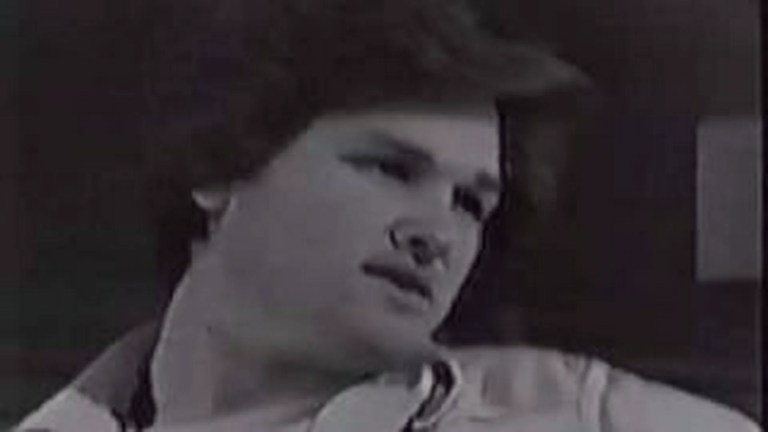
The ten examples below come from Toptenz’s list, originally published in 2013 and updated in 2015; they are not a definitive ranking or a complete count of whitewashing in film. The cases range from fictional characters to real people, and from racialized performance to casting that drew different responses from people connected to the story. That distinction matters: the criticism is about more than whether an actor and character appear to have different backgrounds.
What “whitewashing” means in these cases
“Whitewashing” is commonly used to criticize the casting of a white actor in a role understood to belong to a person of color or a specific cultural community. It can refer to different things: a white actor playing a real person of color, an adaptation changing or obscuring a character’s established identity, or a performance that uses racialized makeup or mannerisms. Those practices have different histories and effects, so the label should not erase the details of an individual film.
![Sneakers [Blu-ray]](https://m.media-amazon.com/images/I/51q+KNVOTJL._SL160_.jpg)
![Great Deal 4K Classic Hollywood 5 Movies Collection Greatest Films (The Wizard of OZ, Singin in the Rain, Casablanca, Rebel Without a Cause, Citizen Kane) 100 Years of WB Limited Edition - [4K UHD + Blu-Ray]](https://m.media-amazon.com/images/I/41jsw76Jp5L._SL160_.jpg)

A central concern is access: when a role tied to a community goes to an actor outside it, performers from that community may lose an opportunity, and audiences may see fewer people from that community represented on screen. Criticism can also concern the way a character is depicted, not just who plays the part. But a list of contested castings cannot by itself establish why a production made a choice, what every audience member thought, or whether everyone connected with a film objected.
The 10 examples in Toptenz’s list
This is the selection made by Toptenz, not an objective census. The descriptions below follow the list’s account; they distinguish real people from fictional roles and avoid treating every casting choice as the same kind of case.
#1 Best Overall

- The 9th film from Quentin Tarantino features a large ensemble cast and multiple storylines in a tribute to the final moments of Hollywood?s golden age.
| Actor and film | Role as described by Toptenz | Type of case |
|---|---|---|
| Elvis Presley, Stay Away, Joe (1968) | Joe Lightcloud, a Native American character | Fictional character associated with a specific community |
| Natalie Wood, West Side Story (1961) | Maria, a Puerto Rican character | Fictional character associated with a specific community |
| Mickey Rooney, Breakfast at Tiffany’s (1961) | Mr. Yunioshi, a Japanese character | Fictional character; a case often discussed in relation to racialized performance |
| Laurence Olivier, Othello (1965) | Othello | Fictional role in a Shakespeare adaptation; a case associated with racialized performance |
| Jake Gyllenhaal, Prince of Persia: The Sands of Time (2010) | Dastan | Fictional character in an adaptation |
| Marlon Brando, The Teahouse of the August Moon (1956) | Sakini, an Okinawan interpreter | Fictional character associated with a specific community |
| Angelina Jolie, A Mighty Heart (2007) | Mariane Pearl | Real person |
| Benedict Cumberbatch, Star Trek Into Darkness (2013) | Khan | Fictional character in a continuing franchise |
| Ben Affleck, Argo (2012) | Tony Mendez | Real person |
| Johnny Depp, The Lone Ranger (2013) | Tonto | Fictional character associated with a specific community |
Elvis Presley as Joe Lightcloud in Stay Away, Joe (1968)
Toptenz identifies Joe Lightcloud as a Native American character. The issue raised by this kind of casting is not simply whether an actor can portray someone unlike himself: it is whether a role grounded in a particular community is being taken away from actors of that community, and how the film represents that identity. The list supplies the example but does not establish the production’s casting rationale or a uniform Native audience response.
Natalie Wood as Maria in West Side Story (1961)
Toptenz describes Maria as Puerto Rican. This case is about a fictional character whose identity is central enough to prompt questions about who gets cast in roles tied to a specific community. The list does not establish what the production considered in making its choice, or how people connected with the film responded at the time.
Rank #2
- The 9th film from Quentin Tarantino features a large ensemble cast and multiple storylines in a tribute to the final moments of Hollywood?s golden age.
Mickey Rooney as Mr. Yunioshi in Breakfast at Tiffany’s (1961)
Mr. Yunioshi is identified by Toptenz as Japanese. Rooney’s portrayal is often discussed as a case of racialized performance, which raises a different concern from casting a white actor in a role without such transformation: the performance itself can turn a character’s identity into a caricature. The list names the example but does not provide a complete record of the film’s production history or audience responses.
Laurence Olivier as Othello in the 1965 film
Othello is a fictional character in Shakespeare’s play. Olivier’s casting is notable among these examples because it is associated with racialized performance, rather than only with the assignment of a role to an actor outside the character’s community. The play’s age does not make questions about representation irrelevant; it does mean the case belongs to a different historical and adaptation context than a contemporary film about a real person.
What’s actually slowing this PC down?
Pick the symptom - the matching free tool is one click away.
Rank #3
Jake Gyllenhaal as Dastan in Prince of Persia: The Sands of Time (2010)
Toptenz includes Dastan as a white actor’s portrayal of a character in an adaptation. The broader criticism of this kind of casting asks why performers from the community or background associated with a character were not chosen, and whether the adaptation changes how that identity is presented. The list does not establish the character’s full background, the filmmakers’ rationale, or a particular community’s response, so those details should not be inferred from the entry alone.
Marlon Brando as Sakini in The Teahouse of the August Moon (1956)
The list describes Sakini as an Okinawan interpreter. A role tied to a specific place and community can raise concerns about both casting access and whether a character is rendered through an outsider’s assumptions. Toptenz identifies the casting but does not supply enough evidence to assign a single intent or response to the production or its audiences.
Angelina Jolie as Mariane Pearl in A Mighty Heart (2007)
Unlike most entries here, this is a portrayal of a real person. A later BuzzFeed article reported that Pearl did not object to Jolie’s casting and said she chose her for who she was. That reported response is important context, but it should not be treated as proof that all criticism of casting real people of color is misplaced, or that one person can speak for an entire community.
Benedict Cumberbatch as Khan in Star Trek Into Darkness (2013)
Toptenz lists Cumberbatch as Khan, a fictional character in a franchise. This example belongs to debates over how an adaptation or continuation handles an established character’s identity. A later BuzzFeed article also reported Marvel president Kevin Feige’s reflection that casting Tilda Swinton as the Ancient One in Doctor Strange was a mistake, despite the filmmakers’ stated effort to avoid an Asian stereotype. That is a separate film and role, but it illustrates why an intention to avoid one representational problem does not automatically resolve the questions raised by casting.
Quick wins for a faster PC:
Clear out junk files and repair common Windows errorsFree Scan →Scan for outdated or missing drivers - takes under a minuteDriver Scan →Best Value
Ben Affleck as Tony Mendez in Argo (2012)
Tony Mendez was a real person, making this a different kind of decision from casting a fictional character. Portraying a real person raises questions about fidelity to the person’s identity and about which actors are given access to such roles. Toptenz includes the example, but the list does not provide a production record or a documented response from Mendez or his family; claims about those matters need separate support.
Johnny Depp as Tonto in The Lone Ranger (2013)
Tonto is a fictional character associated with a specific community, according to the list. Discussion of this kind of casting can involve both who gets the role and how an adaptation depicts the character. The Toptenz entry does not, on its own, establish the filmmakers’ intentions or the range of Native viewers’ responses.
Independent reader supportYour contribution helps us test, update, and keep practical guides available for everyone.What representation data can—and cannot—show
Film representation statistics give useful context for questions about access, but they do not count whitewashing incidents or explain individual casting decisions. USC Annenberg’s 2021 study examined 1,300 top-grossing films released from 2007 through 2019. Across those films, 3,034 of 51,159 speaking characters—5.9%—were Asian, Asian American, or Native Hawaiian/Pacific Islander. The report says 13 API researchers conducted its qualitative assessment, which considered stereotypes as well as representation.
A separate USC Annenberg report examining 1,800 popular films from 2007 through 2024 reports that, in 2024, white women held 64% of casting-director jobs and white men held 20.9%. Those figures describe who held casting-director jobs in that year; they are not measures of the frequency of whitewashing and do not prove the rationale behind any casting choice. Taken together, the figures describe parts of the representation and workforce picture, not a verdict on any one film.
Quick Recap
How to read a list of contested casting choices
- Separate the role types. A real-person portrayal, a fictional character, an adaptation, and a performance involving racialized makeup or mannerisms are not interchangeable cases.
- Attribute responses. One person’s approval, regret, criticism, or later acknowledgment of error should be identified as that person’s response, not presented as a community-wide consensus.
- Distinguish intent from impact. A stated effort to avoid a stereotype does not settle whether the casting was appropriate or what opportunities it displaced.
- Do not treat one list as a census. Toptenz’s ten examples show what that publication selected; they do not establish the full history or prevalence of whitewashing.
Product prices and availability are accurate as of the date/time indicated and are subject to change. Any price and availability information displayed on Amazon at the time of purchase will apply.