Free tools Windows power users keep installed
One-click scans. No signup required.
Five Nights at Freddy’s 2 exists in that rare space where a sequel doesn’t just expand a horror game’s mechanics, but quietly rewires its mythology. Released during the rise of YouTube lore culture and long before the franchise’s blockbuster film adaptation, the game became a communal puzzle box, dissected frame by frame by fans searching for meaning in static, shadows, and silence. What initially felt like a faster, louder follow-up revealed itself as something far more deliberate and unsettling.
Unlike the original game’s relatively contained mystery, Five Nights at Freddy’s 2 is built to reward obsession. Its design encourages players to look away from survival long enough to notice what shouldn’t be there: faces in hallways, sprites that flicker for a single frame, minigames that appear without warning and vanish just as quickly. These moments are not cosmetic flourishes, but fragments of a story told through implication rather than exposition.
This is why the game remains a goldmine for hidden secrets. Nearly every system, from the malfunctioning animatronics to the unreliable camera feeds, doubles as a storytelling device that buries lore beneath mechanics. The following Easter eggs are not just clever tricks or spooky surprises, but connective tissue linking Five Nights at Freddy’s 2 to the franchise’s darkest themes, its most debated timelines, and the haunting question at the center of the series: how much of this story was meant to be found at all?
Ranking Criteria: What Makes an Easter Egg Truly Significant in FNaF 2?
Not every hidden detail in Five Nights at Freddy’s 2 carries the same narrative weight. Some exist purely to unsettle, while others quietly reshape how players understand the franchise’s timeline, characters, and moral rot beneath the mascots. To separate fleeting scares from truly meaningful discoveries, it’s essential to look at how each Easter egg functions within the game’s larger design and lore ecosystem.
#1 Best Overall

- Five Nights at Freddy's: Help Wanted 2 on PS5 is also compatible with PSVR2. PSVR2 IS NOT REQUIRED to play
- Go Backstage as a VIP to help Roxanne Wolf & the S.T.A.F.F Bots get ready for their performances in the Pizzaplex Salon
- Head into the Fazcade and enjoy classic games like Bonk-a-Bon and Fazerblast! See if you can top all the high scores
- Take care of things behind the scenes in the Staff Only section of the Pizzeria; deliver First Aid to patients who aren’t quite feeling themselves
- Deliver First Aid to patients who aren’t quite feeling themselves, and help animatronics perform routine diagnostics & maintenance
Narrative Impact and Lore Expansion
The most significant Easter eggs don’t just surprise the player; they add new information or recontextualize what was already assumed. In FNaF 2, this often means revealing fragments of the Missing Children Incident, the identity of key figures like the Puppet, or hints at William Afton’s escalating violence. An Easter egg earns higher importance if it meaningfully alters how the story is interpreted rather than merely reinforcing what fans already know.
Integration With Gameplay Mechanics
FNaF 2 is built around multitasking under pressure, and its strongest Easter eggs are woven directly into that chaos. Secrets that appear during camera checks, mask usage, or sudden system failures feel intentional, as if the game is daring players to choose curiosity over survival. When an Easter egg forces the player to momentarily abandon optimal play, it reinforces the idea that knowledge itself is dangerous in this world.
Rarity and Conditions for Discovery
Significance is also tied to how difficult an Easter egg is to trigger. Events that require specific nights, random chance, or unusual player behavior feel more like buried truths than scripted scares. In a game obsessed with unpredictability, rarity gives these moments a mythic quality, turning them into shared discoveries passed between fans rather than guaranteed content.
Connection to the Broader FNaF Timeline
The strongest Easter eggs in FNaF 2 rarely exist in isolation. They echo forward into later games or retroactively clarify elements from the original Five Nights at Freddy’s. Whether it’s a minigame sprite, a cryptic hallucination, or a background detail, an Easter egg gains weight if it helps stitch FNaF 2 into the franchise’s fractured chronology.
Do these 3 things before closing this tab:
1Clear out junk files and repair common Windows errors2Fix the driver behind crashes, sound loss and screen glitches3Repair Windows errors before they cause bigger problemsEmotional and Thematic Resonance
Finally, truly significant Easter eggs tap into the series’ core themes: guilt, lost innocence, and the horror of forgotten victims. These moments linger not because they’re loud, but because they’re quiet and unsettling, often presenting tragedy without context or explanation. In a game defined by implication, emotional impact is often the clearest signal that a secret matters.
These criteria shape the ranking ahead, highlighting Easter eggs that do more than hide in plain sight. Each one reflects how Five Nights at Freddy’s 2 uses secrecy as a storytelling language, rewarding players who look past the jumpscares and listen to what the silence is trying to say.
Easter Eggs #10–#8: Blink-and-You’ll-Miss-It Visual Oddities That Hint at a Darker Past
The lowest entries on this list aren’t loud or mechanically complex, but they’re some of the most unsettling moments FNaF 2 has to offer. These Easter eggs rely on fleeting imagery, random chance, and the player’s divided attention, often appearing only when you’re least prepared to notice them. They function less like rewards and more like intrusive memories, slipping through the cracks of normal gameplay.
#10: The Watching Endoskeleton in the Prize Corner
On rare occasions, the Prize Corner camera reveals a bare animatronic endoskeleton standing upright, staring directly into the lens. It never moves, never attacks, and never triggers a jumpscare, which makes its presence far more disturbing than a traditional threat. The fact that it appears where the Puppet is contained subtly links it to themes of control, imprisonment, and something unfinished beneath the suits.
What’s actually slowing this PC down?
Pick the symptom - the matching free tool is one click away.
Lore-wise, the endoskeleton serves as a visual reminder that the animatronics are more than costumes gone wrong. Stripped of personality and branding, it represents the raw machinery behind the franchise’s horrors, suggesting that whatever animates these characters doesn’t need a friendly face to exist.
#9: The Paper Pals That Seem a Little Too Alive
The Paper Pals on the office wall are easy to ignore, blending into the clutter of a security guard’s workstation. However, players who pay close attention may notice their expressions subtly changing between nights, or even appearing to watch the player. These shifts are never acknowledged by the game, making them feel accidental rather than scripted.
Their simplicity is what makes them effective. Childlike drawings becoming observant echoes the series’ fixation on corrupted innocence, hinting that even the most harmless decorations in Freddy Fazbear’s Pizza are touched by whatever tragedy occurred there.
#8: Shadow Bonnie’s Silent Appearance
Shadow Bonnie, officially known by fans as RWQFSFASXC, can randomly appear in the Parts and Service room as a pitch-black, translucent version of Toy Bonnie. It doesn’t attack in the traditional sense, instead forcing the player to stare at it until it vanishes, often crashing the game if mishandled. The encounter feels less like gameplay and more like a glitch bleeding into reality.
Unlike most animatronics, Shadow Bonnie has no clear origin or motivation. Its ghostly design and non-physical behavior suggest it isn’t bound by the same rules as the others, positioning it as a manifestation of past violence rather than a possessed machine. This brief, easily missed encounter quietly expands FNaF’s mythology, implying that some horrors at Freddy’s can’t be contained by metal or programming alone.
Easter Eggs #7–#5: Gameplay Secrets That Quietly Rewrite the Timeline
If the earlier Easter eggs hint at lingering spirits and corrupted spaces, the next set goes further, quietly challenging what players think they know about when Five Nights at Freddy’s 2 actually takes place. These secrets don’t announce themselves with jump scares or cutscenes. Instead, they hide inside mechanics players interact with every night, subtly reshaping the franchise’s internal timeline.
Rank #2

- UK PSN account may be required for any online features
#7: The Phone Guy’s Pre-Recorded Messages That Shouldn’t Exist
On the surface, Phone Guy’s calls in FNaF 2 function as familiar tutorials, easing players into new systems like the Freddy mask and music box. However, careful listeners notice something off: the calls are clearly pre-recorded, yet they reference animatronics being “scrapped” and locations shutting down as if the speaker already knows the outcome. This is information the player, chronologically, shouldn’t have yet.
This detail suggests the events of FNaF 2 are being framed after the fact, with Phone Guy unknowingly narrating a doomed workplace from the future. It subtly implies that the game is a prequel, even as it constantly gestures toward an impending disaster. The recordings don’t just teach mechanics; they establish that this location’s fate is sealed before the player ever clocks in.
Recommended Free Tools
#6: The Freddy Mask as a Lore-Breaking Disguise
Mechanically, the Freddy Fazbear mask is presented as a simple survival tool, tricking animatronics into thinking the player is one of them. Lore-wise, it raises unsettling questions. If a cheap, hollow mask is enough to fool haunted machines, then recognition in FNaF isn’t visual or intelligent, but ritualistic and rule-bound.
This implies the animatronics operate on broken instincts rather than awareness, responding to symbols instead of reality. The mask becomes evidence that these characters aren’t hunting with purpose, but reacting to trauma-coded behaviors. It reframes their aggression as fragmented memory loops, quietly redefining how possession works in the series.
#5: Balloon Boy’s Ability to Kill Without Touching You
Balloon Boy never physically attacks the player, yet his presence is often a death sentence. By disabling the flashlight and draining batteries, he creates conditions where other animatronics can strike, effectively killing the player without ever appearing in the kill screen. This makes him one of the most passive yet lethal entities in the game.
From a lore perspective, this introduces a new kind of threat within the FNaF universe: influence without contact. Balloon Boy doesn’t behave like a possessed suit or a vengeful spirit bound to metal. He operates more like a parasitic presence, manipulating systems rather than bodies, hinting that not every supernatural force at Freddy’s needs a physical anchor to be deadly.
The Tool Desk
Outbyte PC Repair FREEClear out junk files and repair common Windows errorsFree Scan →Outbyte Driver Updater FREEFix the driver behind crashes, sound loss and screen glitchesFind Drivers →Together, these Easter eggs quietly destabilize the player’s understanding of time, identity, and agency within Five Nights at Freddy’s 2. They’re woven so deeply into moment-to-moment gameplay that most players never question them, yet they fundamentally reshape how the story fits together behind the flickering lights of the security office.
Easter Eggs #4–#2: Lore Bombs That Connect FNaF 2 to the Missing Children and Afton Mythos
As Five Nights at Freddy’s 2 moves deeper into its nightmarish routine, the Easter eggs stop feeling like curiosities and start functioning like crime scene evidence. These moments don’t just hint at a backstory; they actively reconstruct the Missing Children Incident and quietly position William Afton at the center of it all. What follows are three of the game’s most lore-dense secrets, each one reframing familiar mechanics as fragments of a much darker truth.
#4: The SAVETHEM Minigame and the Second Set of Victims
Triggered at random, the SAVETHEM minigame drops the player into a distorted version of the FNaF 2 location, where children’s bodies are scattered across the building. Unlike earlier minigames, there’s no attempt to hide the aftermath here; the rooms are marked by bloodstains, broken animatronics, and a sense that something has gone catastrophically wrong. The message is blunt and horrifying: this is not the first time, and it won’t be the last.
This Easter egg introduces the idea of a second wave of murders, separate from the original Missing Children Incident tied to the older animatronics. The presence of the Toy animatronics in this timeline implies that they, too, may be contaminated by violence rather than possession alone. It expands the scope of Afton’s crimes, suggesting a pattern of escalation rather than a single, isolated tragedy.
#3: Shadow Freddy and Shadow Bonnie as Echoes of Afton’s Crimes
The rare appearances of Shadow Freddy and Shadow Bonnie are easy to dismiss as visual glitches or spooky flair, but their implications run far deeper. These figures don’t behave like normal animatronics, nor do they follow the same rules of attack or containment. They appear briefly, silently, and without explanation, as if bleeding into the game from somewhere else.
Lore-wise, the Shadow animatronics are often interpreted as manifestations of lingering agony or spiritual residue left behind by murder. Their design recalls both Golden Freddy and Spring Bonnie, visually tying them to Afton’s methods and his most infamous suit. Rather than being possessed by individual children, they feel like byproducts of repeated trauma, spectral reminders that the building itself remembers what happened inside it.
#2: Give Gifts, Give Life and the Birth of the Possessed Animatronics
The Give Gifts, Give Life minigame remains one of the most important pieces of hidden storytelling in the entire franchise. Playing as the Puppet, the player places masks on the bodies of dead children, after which the animatronics visibly come to life. The final moment, revealing Golden Freddy as something separate and unfinished, adds an extra layer of unease.
This Easter egg doesn’t just confirm that the animatronics are possessed; it shows how it happened. The Puppet is positioned as a tragic intermediary, not a villain, granting life where there should be none in a desperate attempt to make sense of loss. By extension, it frames William Afton as the true catalyst of everything that follows, the unseen force whose actions necessitated this unnatural resurrection in the first place.
Rank #3

- Includes: 4 figures, 4 character cards, 4 character tokens, Mr. Cupcake token, security camera & base, game board, Scare Tracker, bag, 36 item tokens, 2 guard tokens, 19 miss tokens, 5 action tokens, 18 Action cards, 12 Event cards, instructions.
- Fast-Paced Family Fun: In the Five Nights at Freddy’s Night of Frights board game, play as Freddy, Chica, Bonnie, or Foxy in a race to capture the security guard before time runs out!
- Race Through the Pizzeria: Move strategically across the pizzeria game board, collect snack tokens, and trade them in to advance your character on the Scare Tracker. Use special abilities and strategic timing to outmaneuver the competition.
- Unpredictable Twists: Action cards add surprises, bonuses, and ways to mess with opponents, while Event cards raise the stakes—if the deck runs out, everyone loses.
- Make or Break Moment: When the time is right, draw a token from the bag. Find the guard token and claim victory, or miss your chance and lose precious ground.
Together, these Easter eggs transform FNaF 2 from a simple prequel into a narrative keystone. They bridge gameplay, myth, and memory, revealing a world where every flickering hallway and broken mascot is part of a much larger cycle of violence and consequence.
The #1 Most Disturbing Hidden Easter Egg in FNaF 2—and Why It Changed the Series Forever
If Give Gifts, Give Life explains how the animatronics became haunted, FNaF 2’s most disturbing Easter egg shows why it happened at all. Buried inside a deceptively simple Atari-style minigame is the franchise’s first unambiguous depiction of murder, and it reframes everything the player thought they understood about Freddy Fazbear’s Pizza.
This moment isn’t loud or dramatic. It’s quiet, sudden, and cruel, and that restraint is precisely what makes it unforgettable.
Take Cake to the Children and the First On-Screen Murder
The Take Cake to the Children minigame places the player in control of Freddy, tasked with handing out cake to smiling children. The colors are bright, the music cheerful, and the goal mundane, until the screen scrolls just far enough to reveal a lone child standing outside the building.
PC Slower Than It Used to Be?
A free scan shows the junk files, broken settings and background clutter dragging Windows down - then fixes them in one click.Free scan · Windows 10 & 11Outdated Drivers Are Slowing You Down
One free scan finds every outdated or missing driver and matches the right update for your exact hardware.Free scan · exact hardware matchThen the purple car pulls up.
Without warning, William Afton emerges, kills the child in full view of the player, and drives away, leaving the body slumped in the rain. No jump scare follows. The minigame simply ends, forcing the player to sit with what they just witnessed.
The Puppet’s Origin and the Birth of Moral Horror
Moments later, the Puppet appears, crawling toward the child’s corpse as the screen fades to black. This visual directly establishes the Puppet as the first possessed entity in the timeline, animated not by vengeance, but by proximity to injustice and neglect.
It also reframes the Puppet’s role throughout the series. Rather than another monster in the dark, it becomes a tragic response to human evil, driven to protect children after failing to save one. Horror in FNaF stops being about animatronics attacking guards and starts being about systems that failed long before the night shift began.
Why This Easter Egg Changed FNaF Forever
Before Take Cake to the Children, FNaF’s story existed mostly in implication. After it, the series commits fully to environmental storytelling centered on murder, guilt, and consequence. Afton is no longer a theoretical villain; he is a presence the player has seen, an act they have witnessed but could not stop.
Quick wins for a faster PC:
Fix the driver behind crashes, sound loss and screen glitchesFind Drivers →Clear out junk files and repair common Windows errorsFree Scan →Scan for outdated or missing drivers - takes under a minuteDriver Scan →This Easter egg also sets the template for the franchise’s future storytelling. Fragmented minigames, unreliable perspectives, and moments of horror that linger longer than any jump scare all trace back to this scene. FNaF becomes less about surviving the night and more about uncovering the truth buried beneath years of corporate cheer and broken mascots.
In one silent, rain-soaked screen, Five Nights at Freddy’s 2 transformed from a clever horror sequel into a modern myth about violence echoing through machines, memory, and time.
Independent reader supportYour contribution helps us test, update, and keep practical guides available for everyone.How These Easter Eggs Shaped Future FNaF Games and Fan Theories
The hidden details in Five Nights at Freddy’s 2 didn’t just reward observant players in the moment. They quietly rewired how the franchise would tell stories, train its audience to look for meaning, and blur the line between gameplay mechanics and narrative truth. Nearly every future FNaF mystery can trace its DNA back to the secrets buried in this prequel.
Training Players to Distrust the Surface Narrative
FNaF 2 is where Scott Cawthon taught players that what the game says and what it shows are rarely the same. Phone Guy insists the animatronics are harmless during the day, yet background details like staring Toy animatronics and broken facial recognition systems tell a different story.
This tension becomes foundational in later games. Sister Location, Pizzeria Simulator, and even Security Breach all rely on the assumption that official explanations are incomplete at best. Fans learned to analyze static screens, side mechanics, and visual glitches as narrative evidence rather than flavor.
The Minigame Language That Defined the Series
The Atari-style death minigames introduced in FNaF 2 established a storytelling grammar the franchise still uses. Cryptic visuals, limited movement, and abrupt endings became shorthand for historical truth within the universe.
Rank #4
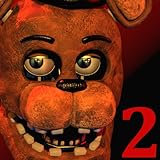
- 5 more nights of animatronic terror!
- Bonus 6th night mode
- Bonus 7th night sandbox mode
Later entries expand this idea with increasingly abstract sequences, but the rules remain the same. If a minigame appears broken, minimal, or oddly placed, it probably contains the most important lore. That expectation was born entirely from FNaF 2’s hidden content.
The Purple Guy Becomes a Central Myth Figure
Before FNaF 2, the Purple Guy was an internet nickname attached to a sprite. After its Easter eggs, he becomes William Afton, a recurring antagonist whose presence warps every timeline discussion that follows.
Quick wins for a faster PC:
Fix the driver behind crashes, sound loss and screen glitchesFind Drivers →Clear out junk files and repair common Windows errorsFree Scan →Scan for outdated or missing drivers - takes under a minuteDriver Scan →Details like his car, his posture, and his association with specific locations allowed fans to retroactively reinterpret earlier games. Later titles lean heavily into this, trusting players to recognize visual motifs rather than spelling out identities outright.
Possession as Tragedy, Not Just Threat
Small background details, from crying children posters to the Puppet’s unique behavior, reframed animatronic possession as a moral consequence rather than a horror gimmick. This shift profoundly shaped fan theories about motivation and agency.
Future games build entire plots around this idea. The animatronics are no longer just enemies to survive but victims acting on fragmented memory and pain. That thematic depth starts with FNaF 2’s quiet, easily missed clues.
Gameplay Mechanics as Lore Evidence
Features like the Freddy mask and music box initially feel like pure survival tools. Easter eggs reveal they are also narrative statements about how the animatronics perceive authority, comfort, and threat.
This approach becomes a franchise staple. From shock panels to sound cues, mechanics double as storytelling devices. FNaF 2 taught fans that how you play is often why things happen.
The Birth of Timeline Obsession
By presenting itself as a sequel that is secretly a prequel, FNaF 2 shattered linear storytelling expectations. Subtle clues like older animatronic designs and the absence of certain characters ignited the community’s obsession with chronology.
This directly fuels later timeline debates, from the order of restaurant closures to the age of victims. Without FNaF 2’s Easter eggs, the franchise’s famously complex timeline culture wouldn’t exist.
Environmental Horror Over Jump Scares
Moments like empty hallways with staring animatronics or rare hallucinations conditioned players to fear stillness as much as movement. These Easter eggs proved that horror could exist without an attack ever coming.
Outdated Drivers Are Slowing You Down
One free scan finds every outdated or missing driver and matches the right update for your exact hardware.Free scan · exact hardware matchPC Slower Than It Used to Be?
A free scan shows the junk files, broken settings and background clutter dragging Windows down - then fixes them in one click.Free scan · Windows 10 & 11Later games escalate this philosophy, especially in moments where nothing happens for long stretches. The discomfort is intentional, and it traces back to FNaF 2’s subtle visual storytelling.
Encouraging Community Collaboration
Many of FNaF 2’s secrets were impossible to fully decode alone. Rare screens, low-percentage events, and hidden sprites required collective documentation.
This fostered a fandom built on shared investigation. Future games are designed with this in mind, often including details that only make sense once thousands of players compare notes.
The Idea That No Detail Is Accidental
From the angle of a character’s eyes to the placement of a poster, FNaF 2 convinced fans that every asset could matter. This dramatically changed how the audience engaged with future releases.
Free tools Windows power users keep installed
One-click scans. No signup required.
Best Value

- Go Backstage as a VIP to help Roxanne Wolf & the S.T.A.F.F Bots get ready for their performances in the Pizzaplex Salon
- Head into the Fazcade and enjoy classic games like Bonk-a-Bon and Fazerblast; See if you can top all the high scores
- Take care of things behind the scenes in the Staff Only section of the Pizzeria; Deliver First Aid to patients who aren't quite feeling themselves
- Our Food Prep course will help you get the federally mandated amount of value preparing food in the Pizzaplex
- Head over to the Ticket Booth to test out our E-ticket attractions, such as Captain Foxy's Cowboy Adventure
Developers leaned into that expectation, knowing players would dissect everything. What began as Easter egg hunting became a core way the franchise communicates.
Setting the Tone for Endless Theory Cycles
Perhaps most importantly, FNaF 2 established that answers would always generate more questions. Each hidden detail clarified one mystery while complicating three others.
That design philosophy defines the series to this day. FNaF doesn’t aim for closure; it thrives on reinterpretation, and it all started with the secrets hidden behind flickering lights and pixelated ghosts in Five Nights at Freddy’s 2.
What FNaF 2’s Hidden Details Reveal About Scott Cawthon’s Storytelling Philosophy
At its core, Five Nights at Freddy’s 2 isn’t just hiding secrets for the thrill of discovery. Its Easter eggs form a blueprint for how Scott Cawthon tells stories, prioritizing implication over exposition and trusting players to assemble meaning from fragments. The game quietly teaches you how to read it.
What’s actually slowing this PC down?
Pick the symptom - the matching free tool is one click away.
Storytelling Through Glitches and Anomalies
Many of FNaF 2’s most infamous Easter eggs masquerade as technical errors. Shadow Bonnie flickering into view, Shadow Freddy lurking in Parts and Service, or Golden Freddy’s oversized head crashing the game all feel unstable by design.
Cawthon uses these moments to suggest a broken reality rather than a haunted building alone. The glitches imply that something has gone fundamentally wrong in the world itself, not just in the animatronics, pushing the lore beyond a simple ghost story.
Minigames as Fractured Memory
The Atari-style death minigames are easy to overlook, but they quietly anchor the franchise’s emotional weight. Details like the crying children, the Puppet’s origins, and Purple Guy’s looming presence are delivered without dialogue or explanation.
These sequences feel less like flashbacks and more like corrupted memories. Their vagueness reinforces the idea that the truth exists, but it’s incomplete, distorted, and painful to access.
Recommended Free Tools
Gameplay Mechanics That Carry Lore
Some Easter eggs are embedded directly into how you survive the night. Balloon Boy disabling your flashlight, Foxy attacking from the hallway, or Mangle crawling on the ceiling aren’t just mechanical twists.
They reinforce personality and narrative through function. The animatronics don’t behave randomly; their mechanics hint at intelligence, resentment, and adaptation, blurring the line between AI behavior and haunted intent.
Background Details as Narrative Signals
Paper Pals changing expressions, the Endo-02 appearing in the Prize Corner, or posters subtly altering between nights reward obsessive observation. None of these elements are acknowledged by the game, yet fans quickly learned to treat them as meaningful.
Cawthon’s philosophy assumes an audience willing to watch the edges of the screen. The story often lives in the background, daring players to notice what the game never highlights.
Weaponizing Absence and Silence
Some of FNaF 2’s most powerful Easter eggs are what never fully appear. The missing Phone Guy after Night 6, the unexplained Night 7, and characters who vanish without resolution all contribute to an unsettling incompleteness.
Rather than offering closure, Cawthon uses silence as a narrative tool. The lack of answers becomes part of the horror, encouraging endless speculation rather than finality.
A Lore System Built for Obsession
Taken together, FNaF 2’s hidden details reveal a creator designing for long-term engagement, not immediate clarity. Each Easter egg, from rare hallucinations to hidden sprites, is a puzzle piece that only gains meaning when placed alongside others.
Scott Cawthon’s storytelling philosophy thrives on trust: trust that players will notice, connect, and debate. Five Nights at Freddy’s 2 doesn’t just tell a story, it teaches its audience how to uncover one, ensuring the franchise’s mythology would live far beyond the game itself.
Quick Recap
Product prices and availability are accurate as of the date/time indicated and are subject to change. Any price and availability information displayed on Amazon at the time of purchase will apply.