The best Pam Grier movies show more than one kind of star: she moved from early women-in-prison films to defining 1970s action roles, then returned to a leading part in Jackie Brown. This is an editorial ranking, not a canonical film-history list. It weighs how central Grier is to each film, what the performance reveals, the title’s career significance, and how well it plays for viewers now.
10. The Big Bird Cage (1972)
Directed by Jack Hill, this women-in-prison film belongs to Grier’s early New World Pictures period. It followed The Big Doll House, but PBS describes it as a non-sequel follow-up rather than a direct continuation. The distinction matters: the two films are useful companion pieces for seeing how Grier’s screen career began, not chapters in one continuous story.
| # | Preview | Product | Price | |
|---|---|---|---|---|
| 1 |
|
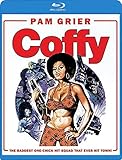
Coffy | $16.53 | Buy on Amazon |
| 2 |

|
Jackie Brown | Buy on Amazon | |
| 3 |

|
Friday Foster | $22.67 | Buy on Amazon |
| 4 |
|
Stand Alone | Buy on Amazon |
PBS’s American Masters timeline places the film in that early chronology.
9. The Big Doll House (1971)
Grier’s first major film role came in this women-in-prison picture, an early example of the direct, low-budget exploitation cinema that shaped her first screen years. Its value in a Grier watchlist is partly historical: it shows the setting from which she moved toward starring vehicles, even though the film is not as fully built around her as her later action leads.
#1 Best Overall
It is best approached with its period in mind. The genre’s sensational premises and rough-edged style are part of the film’s identity, rather than a template for the very different performances that followed.
8. Sheba, Baby (1975)
In this action film directed by William Girdler, Grier plays private investigator Sheba Shayne, returning to Louisville to help her father. The role gives her another chance to carry a story through physical confidence and an unshowy command of the frame. It is a useful pick for viewers who want to explore the run of 1970s action leads beyond the better-known Coffy and Foxy Brown.
7. Friday Foster (1975)
Directed by Arthur Marks and based on the comic strip of the same name, Friday Foster casts Grier as a photographer caught up in a conspiracy. The part shifts her from the revenge-driven center of Coffy toward a reporter-investigator figure, while preserving the action-heroine appeal that made her a distinctive lead.
Rank #2
Criterion identifies it as Grier’s final film for American International Pictures. That makes it a particularly apt endpoint for considering her mid-1970s star run, rather than simply another title in the same cycle.
Windows Errors? Fix Them Before They Spread
Repair common Windows errors and clear accumulated junk for a smoother, more stable PC - no reinstall needed.Free scan · no reinstallOutdated Drivers Are Slowing You Down
One free scan finds every outdated or missing driver and matches the right update for your exact hardware.Free scan · exact hardware match6. Scream Blacula Scream (1973)
In this William Crain-directed sequel to Blacula, Grier plays Lisa Fortier, a voodoo priestess whose knowledge and authority place her at the story’s center. The supernatural-horror setting offers a welcome change of register from crime and revenge films, and gives Grier a role defined as much by composure and spiritual command as by action.
5. The Arena (1974)
Steve Carver’s historical adventure puts Grier among women forced to fight as gladiators in ancient Rome. It is a vivid example of how far her early screen persona could travel across genre: the film uses the period spectacle of its setting, but Grier’s physical presence remains the attraction. The premise and production style are firmly rooted in 1970s exploitation cinema, so it is more compelling as a showcase for her than as a historically grounded drama.
Rank #3
4. Sheba, Baby (1975)
In William Girdler’s crime-action film, Grier plays a private investigator who returns home to protect her father and confront the people threatening him. The story lets her combine investigative work with the tough, self-possessed action persona audiences associated with her 1970s leads. Its place here reflects that combination, though it is not as defining a career landmark as the three films above it.
3. Jackie Brown (1997)
Quentin Tarantino’s adaptation of Elmore Leonard’s Rum Punch gives Grier the title role: Jackie, a flight attendant who becomes entangled in a smuggling case and tries to outmaneuver both law enforcement and a gun dealer. Unlike the fast-moving revenge leads of the 1970s, Jackie relies on patience, calculation, and what other people underestimate about her.
What’s actually slowing this PC down?
Pick the symptom - the matching free tool is one click away.
The casting deliberately reconnects Grier with the image established by her earlier films, but the performance is not simply a return to it. Criterion calls the role a career-reviving casting and an homage to her earlier screen persona; Turner Classic Movies likewise places the film in the context of her long-awaited star vehicles. It is her most substantial later-career leading role and a striking demonstration of how presence can command a film without constant action.
Rank #4
2. Foxy Brown (1974)
Jack Hill’s Foxy Brown is one of Grier’s signature starring roles. After her boyfriend is killed, Foxy takes on the criminal operation responsible, and Grier makes the character’s anger, resourcefulness, and resolve feel inseparable. The film is a direct companion to Coffy: both are forceful revenge stories, but Foxy’s name and persona became especially enduring shorthand for Grier’s star image.
Its exploitation-era conventions are unmistakable, including violence and provocative material. Those elements are part of the film’s historical style, but the reason to watch it now is Grier’s command of the lead: the story gives her room to turn a familiar revenge framework into a star vehicle.
1. Coffy (1973)
Also directed by Jack Hill, Coffy is the strongest single starting point for Grier’s filmography. She plays a nurse who goes after drug dealers after her younger sister is harmed by addiction. The role is both physically forceful and emotionally grounded, giving Grier a clear motivation and a larger-than-life mission without reducing her to the action around her.
The breakout starring role helped establish Grier as a major action performer and became one of the defining films of the cycle that Criterion describes as a move from New World’s women-in-prison pictures to American International Pictures’ blaxploitation hits. The term describes a specific period and commercial tradition, not every film Grier made. In a 2022 Criterion essay, Grier reflected: “I prepared [audiences] to accept a woman in leadership, who could be a jungle guerrilla with a gun and fight wars—just things I hadn’t seen,” speaking to Erica Thompson of the Columbus Dispatch. Coffy remains the clearest illustration of that ambition and of the force she brought to a leading role.
How to approach Grier’s filmography
These ten films trace a progression rather than a single genre: the early New World women-in-prison pictures, the action-led roles that made Grier a star, and a later performance that reinterpreted that screen history. The AFI Catalog’s Pam Grier filmography is a useful reference for her credits; Criterion’s career overview and TCM’s career context help place the films in their periods.
Quick Recap
Product prices and availability are accurate as of the date/time indicated and are subject to change. Any price and availability information displayed on Amazon at the time of purchase will apply.




