Published in 1843 and written in a creative white heat, A Christmas Carol remains one of the most perfectly engineered stories in English literature. Dickens fused social critique, supernatural suspense, and emotional catharsis into a lean novella whose moral clarity never feels simplistic. Its images are indelible, its dialogue musical, and its structure so precise that even small deviations can tilt the story toward sentimentality or spectacle.
That precision is what makes faithful adaptation so deceptively difficult. Dickens balances humor with menace, warmth with genuine dread, and redemption with hard-earned self-reckoning, all within a tightly paced framework of five staves. The ghosts are not interchangeable set pieces but moral instruments, and Scrooge’s transformation depends on rhythm, restraint, and performance choices as much as plot fidelity.



Every screen version, from silent cinema to prestige television, must decide how closely to honor Dickens’ language, narrative economy, and tonal contrasts while still functioning as a piece of visual storytelling. This list ranks adaptations not just by how beloved they are, but by how well they understand what Dickens actually wrote and why it works. Fidelity here is not about copying every line, but about preserving the story’s moral architecture, emotional balance, and enduring human truth.
How We Ranked Them: Defining ‘Accuracy’ vs. Artistic Interpretation
To rank adaptations of A Christmas Carol meaningfully, we had to define what “accuracy” actually means for a story that has been reimagined hundreds of times across mediums, cultures, and generations. Literal fidelity alone is not enough, nor is affection or nostalgia. The strongest adaptations honor Dickens’ intentions even when they depart from his exact words.
#1 Best Overall
Textual Fidelity and Narrative Structure
First and foremost, we looked at how closely each version adheres to the novella’s core structure: the five-stave progression, the function of each ghost, and the cause-and-effect logic of Scrooge’s transformation. Adaptations that compress, reorder, or omit staves were not automatically penalized, but those changes had to preserve the story’s moral momentum. When Scrooge reforms, it should feel earned through confrontation, not rushed by sentiment.
We also evaluated how adaptations handle Dickens’ dialogue and narration, whether through direct quotation, voiceover, or dramatized equivalents. Some versions preserve entire passages; others translate them into visual storytelling. Accuracy here is about intent and meaning rather than verbatim recitation.
Tonal Balance: Humor, Darkness, and Redemption
Dickens walks a careful tonal line, blending sharp social satire, genuine fear, and emotional release. Adaptations that tilt too far toward whimsy risk defanging the story’s moral urgency, while those that emphasize darkness without warmth lose its redemptive power. We favored versions that allow the ghosts to be unsettling, Scrooge to be unpleasant, and the redemption to feel both joyful and hard-won.
This balance is often where accuracy reveals itself most clearly. A faithful adaptation understands that A Christmas Carol is not cozy escapism until the final stave earns it.
Characterization and Performance
Scrooge is the axis on which every adaptation turns, and performance quality mattered as much as textual adherence. We assessed whether portrayals captured his miserliness, wit, vulnerability, and eventual transformation without softening him prematurely. Supporting characters, especially Marley and the three spirits, were evaluated based on how clearly they fulfill their narrative and moral roles rather than how memorable or elaborate they are.
Performances that clarified Dickens’ psychology and themes elevated an adaptation’s standing, even when creative liberties were taken elsewhere.
Artistic Interpretation and Cultural Impact
Finally, we considered how each adaptation uses the strengths of its medium. Film, television, animation, and even musical formats can illuminate different aspects of Dickens’ story when handled thoughtfully. Creative choices were rewarded when they deepened theme, clarified character, or sharpened the moral stakes rather than distracting from them.
Cultural impact also played a role, not as a measure of popularity, but as evidence that an adaptation has helped preserve Dickens’ vision for new audiences. The highest-ranked versions prove that accuracy and artistry are not opposing forces, but complementary ones when the source material is truly understood.
Free tools Windows power users keep installed
One-click scans. No signup required.
Ranks #10–#8: Looser Adaptations That Capture the Spirit More Than the Letter
These entries take broader liberties with Dickens’ text, whether through modernization, abbreviation, or tonal softening. What they lack in strict fidelity, they often compensate for with clarity, warmth, and an instinctive grasp of the story’s moral core. Each succeeds less as a line-by-line translation and more as a reminder of why A Christmas Carol endures.
#10: Scrooged (1988)
Richard Donner’s Scrooged is the boldest departure on this list, transplanting Dickens’ moral fable into the late-1980s media landscape. Bill Murray’s Frank Cross is not Ebenezer Scrooge in temperament or texture, but he embodies the same corrosive cynicism and spiritual emptiness that Dickens targeted. The ghosts are reimagined as abrasive, often surreal figures, trading Victorian solemnity for dark comedy and satire.
Accuracy here is thematic rather than textual. Scrooged understands that A Christmas Carol is fundamentally about self-recognition and moral reckoning, even when filtered through corporate greed and television excess. Its cultural longevity stems from that insight, proving the story’s flexibility without losing its ethical spine.
Rank #2
#9: Mickey’s Christmas Carol (1983)
At just 26 minutes, Mickey’s Christmas Carol is necessarily compressed, but its storytelling efficiency is remarkable. Casting Scrooge McDuck as Ebenezer Scrooge is an inspired choice that aligns Dickens’ miser with a character already defined by avarice. The narrative hits every essential beat, from Marley’s warning to the hard-earned redemption, with surprising narrative clarity.
What’s actually slowing this PC down?
Pick the symptom - the matching free tool is one click away.
While the tone is gentler and the stakes softened for younger viewers, the adaptation respects Dickens’ structure and moral logic. Its enduring popularity lies in how effectively it introduces the story’s core ideas without distorting them. For many viewers, this version serves as an accessible gateway rather than a definitive interpretation.
#8: A Christmas Carol (1938)
MGM’s 1938 adaptation reflects the studio-era impulse toward sentiment and reassurance. Reginald Owen’s Scrooge begins warmer and more approachable than Dickens intended, muting the severity of his transformation. Several darker elements, including the more unsettling aspects of the ghosts and social critique, are streamlined or softened.
Yet the film retains a sincere reverence for Dickens’ narrative and emotional goals. Its classical craftsmanship, clear storytelling, and emphasis on communal warmth helped define how mid-20th-century audiences understood the tale. While less severe and less searching than the novel, it preserves the spirit of redemption that remains central to A Christmas Carol’s lasting appeal.
Ranks #7–#5: Strong Performances and Selective Fidelity to Dickens’ Language
As the rankings rise, these adaptations move closer to Dickens’ prose and psychological depth, even when they diverge stylistically. What distinguishes this tier is a heightened respect for the novel’s language and structure, paired with performances that actively engage with Scrooge as a complex moral subject rather than a caricature.
Quick wins for a faster PC:
Clear out junk files and repair common Windows errorsFree Scan →Scan for outdated or missing drivers - takes under a minuteDriver Scan →#7: A Christmas Carol (1999, TNT)
Patrick Stewart’s made-for-television adaptation is among the most textually faithful versions ever produced. Much of Dickens’ dialogue is preserved verbatim, and Stewart’s background in classical theater lends the narration a literary gravity rarely attempted on screen. The result feels closer to an illustrated novel than a conventional film.
The production’s modest visuals and stage-bound blocking occasionally limit its cinematic impact. Still, for viewers prioritizing fidelity to Dickens’ language and moral clarity over spectacle, this version offers a disciplined, reverent interpretation anchored by a commanding central performance.
#6: A Christmas Carol (2009)
Robert Zemeckis’ motion-capture adaptation is one of the most narratively complete screen versions of the novel. The script restores several passages often omitted, including extended sequences with the Ghost of Christmas Past and a more harrowing vision of Ignorance and Want. Jim Carrey’s multi-role performance leans heavily into Dickens’ grotesque imagery, emphasizing Scrooge’s psychological terror.
Where the film divides audiences is in its aesthetic approach. The digital realism can feel uncanny, occasionally distancing viewers from the emotional intimacy of the story. Yet in terms of structure, thematic seriousness, and narrative scope, this remains one of the most thorough attempts to translate Dickens’ text directly to the screen.
#5: Scrooge (1970)
Albert Finney’s turn in the musical Scrooge may seem an unlikely candidate for accuracy, yet it captures Dickens’ emotional architecture with surprising precision. While the songs naturally replace sections of dialogue, they often paraphrase Dickens’ themes rather than dilute them. Finney’s performance charts Scrooge’s journey with sharp tonal control, moving from bitterness to vulnerability with convincing momentum.
The film balances spectacle with introspection, preserving the story’s social conscience beneath its theatrical flourishes. Though not textually literal, its emotional fidelity and clear understanding of Dickens’ moral design earn it a deserved place among the most respected adaptations.
Rank #3
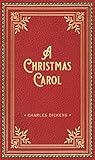
- Our elegant gift edition features Arthur Rackham's classic illustrations.
- With archival-quality printing, this compact volume is designed for both portability and longevity.
- The perfect book to read by the fire on Christmas Eve!
- A must for the home library.
- Hardcover gift edition with dust jacket.
Ranks #4–#2: Near-Definitive Adaptations That Balance Textual Accuracy and Cinema
By this point in the ranking, fidelity to Dickens’ text is no longer the sole criterion. These adaptations succeed because they pair narrative faithfulness with cinematic confidence, using performance, tone, and visual storytelling to translate the novel’s spirit for broad audiences without compromising its moral spine.
#4: A Christmas Carol (1984)
The 1984 television film starring George C. Scott is often cited as the most straightforwardly “Dickensian” live-action adaptation. Its script adheres closely to the novel’s structure and dialogue, restoring character moments and narrative beats that many theatrical versions streamline or omit. The result is a clear, literate retelling that respects Dickens’ pacing and moral logic.
Crashes, No Sound, or Screen Glitches?
Random freezes, missing sound and display glitches usually trace back to one bad driver. Find and replace yours safely.Free scan · under a minuteWindows Errors? Fix Them Before They Spread
Repair common Windows errors and clear accumulated junk for a smoother, more stable PC - no reinstall needed.Free scan · no reinstallScott’s Scrooge is stern and severe rather than flamboyant, emphasizing the character’s rigidity and emotional isolation. His transformation unfolds gradually, grounded in introspection rather than showmanship. While the production values are modest and firmly rooted in its made-for-TV origins, the film’s seriousness of purpose and textual discipline give it lasting authority.
#3: Scrooge (1951)
Often regarded as the gold standard for traditional adaptations, the 1951 Scrooge starring Alastair Sim strikes a rare balance between textual expansion and emotional accessibility. The screenplay largely follows Dickens’ narrative while deepening Scrooge’s backstory, offering psychological context without undermining the original themes. These additions feel like literary interpretation rather than embellishment.
Sim’s performance remains one of the most nuanced ever put to screen, capturing Scrooge’s cruelty, wit, and eventual warmth with remarkable precision. The film’s shadowy cinematography and restrained supernatural elements reinforce the story’s moral gravity. For many viewers, this version defines what A Christmas Carol is meant to feel like.
#2: The Muppet Christmas Carol (1992)
At first glance, a Muppet adaptation might seem ill-suited to a discussion of accuracy. Yet this version is one of the most textually faithful ever produced, preserving Dickens’ language, structure, and narrative framing with unusual care. Michael Caine’s decision to play Scrooge completely straight anchors the film in emotional sincerity.
Recommended Free Tools
The Muppets function as a surprisingly effective chorus, translating Dickens’ social satire into visual and comedic shorthand without erasing its bite. The use of Charles Dickens himself as a character-narrator reinforces the literary roots of the story. What elevates this adaptation is its ability to make fidelity joyful, proving that reverence and accessibility need not be at odds.
#1 Best & Most Accurate Adaptation: Why This Version Comes Closest to Dickens’ Original Vision
More than any other screen version, the 1984 television film starring George C. Scott treats A Christmas Carol not as seasonal entertainment but as a serious literary adaptation. Its priority is fidelity: to Dickens’ language, moral architecture, and carefully calibrated emotional progression. Rather than modernizing or softening the story, the film trusts the original text to carry its power.
What distinguishes this adaptation is its commitment to tone. Dickens’ Carol is not whimsical by default; it is severe, spiritually anxious, and socially confrontational before it earns its warmth. The 1984 film preserves that balance, allowing the joy of redemption to feel hard-won rather than inevitable.
Textual Precision Without Theatrical Excess
The screenplay adheres closely to Dickens’ structure, moving cleanly through the staves without collapsing or reordering key events. Dialogue frequently echoes the novel verbatim, particularly in Scrooge’s confrontations with the spirits. This attention to language gives the adaptation a literary rhythm rarely maintained on screen.
Do these 3 things before closing this tab:
1Repair Windows errors before they cause bigger problems2Fix the driver behind crashes, sound loss and screen glitches3Clear out junk files and repair common Windows errorsCrucially, the supernatural elements are presented with restraint. The Ghosts are unsettling rather than spectacular, reinforcing Dickens’ intent that they function as moral instruments, not visual attractions. The film understands that Carol’s power lies in revelation, not ornamentation.
Rank #4
George C. Scott’s Scrooge as Dickens Wrote Him
Scott’s interpretation aligns closely with Dickens’ description of Scrooge as emotionally frozen, intellectually sharp, and deeply resistant to self-examination. He is not playful or eccentric, but rigid and severe, a man whose isolation feels structural rather than performative. This makes his early scenes deliberately uncomfortable, as Dickens intended.
The transformation is gradual and internal. Scott allows Scrooge’s fear, shame, and dawning empathy to register in stages, mirroring the novel’s psychological progression. By the time joy arrives, it feels earned through moral reckoning rather than emotional release.
A Production That Serves the Story, Not Itself
While clearly a product of 1980s television, the film’s modest production values work in its favor. The grounded sets and muted visual palette keep attention on character and theme rather than spectacle. This restraint reflects Dickens’ own focus on social reality over fantasy.
The Tool Desk
Outbyte PC Repair FREEClear out junk files and repair common Windows errorsFree Scan →Outbyte Driver Updater FREEFix the driver behind crashes, sound loss and screen glitchesFind Drivers →The supporting cast further reinforces the film’s seriousness of purpose. Figures like Bob Cratchit, Fred, and the Ghost of Christmas Yet to Come are portrayed with clarity and narrative function, not sentimentality. Each exists to sharpen the story’s ethical stakes.
Why Accuracy Matters Here
Accuracy is not merely about reproducing plot points; it is about preserving intent. This adaptation understands A Christmas Carol as a moral argument about responsibility, empathy, and social obligation, wrapped in a ghost story. It neither dilutes Dickens’ critique nor apologizes for its severity.
For viewers seeking the closest possible encounter with Dickens’ original vision, this version remains unmatched. It may lack the exuberance or novelty of other adaptations, but it offers something rarer: a clear, disciplined translation of one of literature’s most enduring works into cinematic form.
Independent reader supportYour contribution helps us test, update, and keep practical guides available for everyone.Honorable Mentions: Not Quite Dickens-Accurate, but Culturally Essential
Not every adaptation aims for textual fidelity, and not every deviation from Dickens is a flaw. Some versions reshape A Christmas Carol to fit new media, new audiences, or new cultural moments, sacrificing precision in exchange for reach and longevity. These adaptations may not rank among the most accurate, but they remain essential to how the story lives on.
A Christmas Carol (1938) – Hollywood Humanizes Scrooge
The 1938 MGM version, starring Reginald Owen, plays a pivotal role in popularizing A Christmas Carol for American cinema audiences. It softens Scrooge considerably, portraying him as brusque but fundamentally warm-hearted, which runs counter to Dickens’ insistence on his near-total emotional isolation. The film also reduces the sharpness of the social critique in favor of family-friendly sentiment.
Yet its importance is undeniable. This adaptation helped cement Carol as a Christmas tradition rather than a moral warning, and its influence can be felt in countless later versions. While less severe than Dickens intended, it established the story’s place in Hollywood’s holiday canon.
Scrooge (1970) – Musical Expansion Over Moral Precision
Albert Finney’s Scrooge transforms Dickens’ tightly structured novella into a large-scale musical, complete with elaborate production numbers and emotional crescendos. The added songs often externalize Scrooge’s inner life, explaining feelings Dickens preferred to reveal gradually through action and confrontation. As a result, the psychological rigor of the transformation is softened.
Still, Finney’s performance captures a volatile, restless Scrooge whose eventual joy feels theatrically earned. The film’s ambition and craftsmanship have made it a perennial favorite, particularly in the UK. It may embellish Dickens’ text, but it does so with evident respect for the story’s emotional core.
PC Slower Than It Used to Be?
A free scan shows the junk files, broken settings and background clutter dragging Windows down - then fixes them in one click.Free scan · Windows 10 & 11Crashes, No Sound, or Screen Glitches?
Random freezes, missing sound and display glitches usually trace back to one bad driver. Find and replace yours safely.Free scan · under a minuteBest Value
Mickey’s Christmas Carol (1983) – Condensed, But Surprisingly Faithful in Spirit
At just over 20 minutes, Disney’s animated adaptation is necessarily reductive. Entire subplots and secondary characters are streamlined or omitted, and the casting of familiar Disney figures shifts the tone toward gentle comedy. From a purely literary standpoint, it is incomplete by design.
What distinguishes it is how clearly it understands Dickens’ narrative engine. The cause-and-effect logic of Scrooge’s journey remains intact, and the ghosts function exactly as moral instructors rather than mascots. For many viewers, this was their first exposure to Dickens’ story, making its cultural impact far greater than its runtime suggests.
The Muppet Christmas Carol (1992) – Irreverence That Honors the Text
On paper, a Muppet adaptation seems destined for parody, yet this version comes closer to Dickens’ language than most live-action films. Large portions of the original dialogue are preserved, often delivered straight, with humor layered around rather than over them. Michael Caine’s decision to play Scrooge without irony anchors the film in genuine dramatic stakes.
Its inaccuracies lie primarily in tone, not structure. The presence of Muppets reframes moments of despair and fear through humor, easing the story’s severity. Even so, the adaptation demonstrates that fidelity is not only about seriousness, but about understanding what must remain untouched for the story to work.
Final Verdict: Which Version to Watch Depending on What You Value Most
No single adaptation can satisfy every definition of accuracy, because Dickens’ novella operates simultaneously as moral fable, social critique, ghost story, and character study. The most successful screen versions choose which of those elements to privilege, then commit fully. What follows is not a single winner, but a guide to the version that best aligns with what you value most in A Christmas Carol.
For Pure Literary Fidelity
If textual accuracy and narrative structure matter above all else, the 1984 television film starring George C. Scott remains the gold standard. Its dialogue adheres closely to Dickens’ prose, the ghosts retain their unsettling authority, and the moral logic unfolds with clarity and restraint. It may lack cinematic flourish, but as a translation of the novella’s mechanics and meaning, it is exceptionally precise.
For the Definitive Performance of Scrooge
Alastair Sim’s 1951 portrayal continues to define the character for many readers and viewers. His Scrooge evolves organically, revealing humor, cruelty, fear, and vulnerability in carefully measured stages that mirror Dickens’ pacing. Even where the film takes mild liberties, Sim’s performance preserves the psychological truth at the heart of the story.
For Emotional Accessibility and Holiday Warmth
The Muppet Christmas Carol remains unmatched in its ability to welcome new audiences without hollowing out Dickens’ intent. By preserving large portions of the original text and framing them with humor rather than satire, it achieves a rare balance of reverence and joy. Its enduring popularity is not accidental; it understands that A Christmas Carol is meant to be shared.
Quick wins for a faster PC:
Repair Windows errors before they cause bigger problemsFix Now →Fix the driver behind crashes, sound loss and screen glitchesFind Drivers →For Musical Theatricality and Scale
Scrooge (1970), starring Albert Finney, offers the most expansive emotional canvas. While its songs and psychological additions soften the novella’s severity, they also externalize Scrooge’s turmoil in a way that suits the stage-to-screen tradition. It is less exacting than other versions, but undeniably heartfelt and ambitious.
For Introducing the Story to Children
Mickey’s Christmas Carol remains an efficient and surprisingly respectful gateway to Dickens. Its brevity necessitates omission, but its moral architecture is intact, and its ghosts function exactly as they should. As a first encounter with the story, it succeeds where many longer adaptations falter.
Ultimately, the most “accurate” adaptation is not always the one that copies Dickens line by line, but the one that preserves his intent: transformation through confrontation, empathy earned through suffering, and redemption that feels costly but sincere. A Christmas Carol endures because it invites reinterpretation, and the best adaptations honor that flexibility while keeping Scrooge’s hard-won awakening intact. Whichever version you choose, the true measure of success is simple: by the final scene, you believe the change.
Quick Recap
Product prices and availability are accurate as of the date/time indicated and are subject to change. Any price and availability information displayed on Amazon at the time of purchase will apply.

