Outdated Drivers Are Slowing You Down
One free scan finds every outdated or missing driver and matches the right update for your exact hardware.Free scan · exact hardware matchPC Slower Than It Used to Be?
A free scan shows the junk files, broken settings and background clutter dragging Windows down - then fixes them in one click.Free scan · Windows 10 & 11Few actors have commanded American cinema the way James Earl Jones has, and fewer still have done so with such effortless authority. Across more than six decades, Jones became a rare constant in an industry defined by reinvention, lending gravity to prestige dramas, cultural milestones, and global blockbusters alike. His presence never demanded attention; it simply claimed it, whether he stood at the center of the frame or existed as a voice echoing through cinematic history.
What makes Jones endure is not just the singularity of his voice, though that voice remains one of the most recognizable instruments ever captured on film. It is the way his performances carry intellectual weight, moral seriousness, and emotional restraint, often transforming genre films into something richer and more enduring. From Shakespearean tragedy to political thrillers, animated epics to space operas, Jones brought a classical actor’s discipline to modern entertainment, elevating every project he touched.
| # | Preview | Product | Price | |
|---|---|---|---|---|
| 1 |

|
6-Movies With Soul V.2 | $7.46 | Buy on Amazon |
| 2 |
|
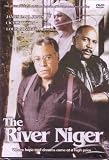
The River Niger | $13.09 | Buy on Amazon |
| 3 |
|
Urban Drama Four Feature Collector's Set | $11.12 | Buy on Amazon |
| 4 |
![Deadly Drifter / Blood Tide [DVD]](https://m.media-amazon.com/images/I/51zOlqTJ-QL._SL160_.jpg)
|
Deadly Drifter / Blood Tide [DVD] | $5.79 | Buy on Amazon |
| 5 |

|
The River Niger/A Gathering Of Old Men | $7.19 | Buy on Amazon |
Voice as Myth, Presence as Power
Jones’ voice did more than narrate or intimidate; it shaped myth. As Darth Vader, he gave physical form to pure authority and internal conflict, crafting one of cinema’s most iconic villains without ever appearing on screen. That same vocal command allowed him to move effortlessly between animation, narration, and live-action performance, proving that voice acting could be as psychologically complex and culturally impactful as any on-camera role.
The Weight of Stillness
Equally important was Jones’ physical presence, defined by restraint rather than showmanship. He understood the power of silence, posture, and timing, often conveying more through stillness than others did through spectacle. In films driven by political tension, historical reflection, or moral debate, Jones became a stabilizing force, grounding stories in credibility and emotional truth.
The Tool Desk
Outbyte PC Repair FREERepair Windows errors before they cause bigger problemsFix Now →Outbyte Driver Updater FREEScan for outdated or missing drivers - takes under a minuteDriver Scan →#1 Best Overall
A Legacy That Crosses Generations
Ranking the best James Earl Jones movies is ultimately an exploration of range and endurance. His career bridges classic Hollywood traditions and modern blockbuster filmmaking, connecting generations of moviegoers through performances that feel timeless rather than dated. The films that define his legacy are not just memorable for what he said or how he sounded, but for the authority, intelligence, and humanity he brought to every role.
Ranking Criteria: Performance Impact, Cultural Legacy, and Enduring Influence
Determining the definitive James Earl Jones performances requires more than counting screen time or box office success. His career demands a broader lens, one that accounts for how deeply a role resonates, how widely it echoes across culture, and how long it continues to shape the language of cinema. These rankings reflect not just excellence, but significance.
Performance Impact
At the core of every selection is the power of Jones’ individual performance within its film. This includes vocal precision, emotional control, and the intelligence he brought to dialogue-heavy material, often elevating scripts through sheer authority. Whether anchoring a political thriller or redefining villainy through voice alone, Jones consistently made his presence feel essential rather than supplemental.
His greatest performances are not necessarily the loudest or most overtly dramatic. Instead, they reveal an actor who understood when to assert dominance and when to recede, allowing tension, dignity, or menace to build organically. Impact, in Jones’ case, often came from restraint.
Do these 3 things before closing this tab:
1Fix the driver behind crashes, sound loss and screen glitches2Repair Windows errors before they cause bigger problems3Scan for outdated or missing drivers - takes under a minuteCultural Legacy
Some James Earl Jones roles have transcended their films to become cultural landmarks. These performances live on through quotation, imitation, and collective memory, shaping how audiences understand power, leadership, and moral conflict. Few actors have contributed characters so deeply embedded in pop culture while maintaining artistic credibility.
This criterion also considers how his work helped redefine genres. Jones brought gravitas to science fiction, legitimacy to animation, and classical weight to mainstream blockbusters, expanding what audiences expected from these forms. His influence often reshaped the tone of entire franchises.
Enduring Influence
Finally, longevity matters. The films ranked here are those that continue to feel relevant decades later, sustained by Jones’ timeless approach to character. His performances resist aging because they are rooted in universal themes rather than stylistic trends.
Enduring influence also reflects how these roles inspired future performers, particularly in voice acting and dramatic cinema. Jones set a standard for authority, clarity, and emotional depth that remains a benchmark today, ensuring that his most essential films are not just remembered, but continually rediscovered.
10–8: Early Breakthroughs and Defining Dramatic Roles
These early selections capture James Earl Jones at the moment his screen presence began to register as something singular. Long before franchise fame or iconic voice work, Jones established himself through performances that demanded emotional precision and moral weight. Each of these films showcases a young actor asserting authority not through volume, but through intellect, restraint, and commanding physicality.
10. The River Niger (1976)
Adapted from Joseph A. Walker’s Pulitzer Prize-winning play, The River Niger gave Jones a richly interior role as Johnny Williams, a poet and former activist grappling with middle age, responsibility, and unrealized dreams. The performance is measured and introspective, revealing Jones’ ability to convey disappointment and dignity within the same breath.
Rank #2
Rather than leaning into melodrama, Jones grounds the character in lived-in realism, allowing silences and subtle shifts in tone to do much of the work. It is a performance that reflects the complexity of Black masculinity in 1970s American cinema, and one that quietly affirms Jones’ dramatic credibility beyond the stage.
9. Claudine (1974)
In Claudine, Jones delivers one of his warmest and most human performances as Roop, a garbage collector who becomes romantically involved with a single mother navigating systemic hardship. The film balances social realism with romantic intimacy, and Jones proves adept at both, offering charm without sacrificing gravity.
What’s actually slowing this PC down?
Pick the symptom - the matching free tool is one click away.
His chemistry with Diahann Carroll anchors the film, grounding its social commentary in genuine emotional connection. Jones brings patience and empathy to Roop, crafting a character defined by decency rather than grand gestures, and demonstrating an early mastery of understated screen acting.
8. The Great White Hope (1970)
Jones’ breakthrough film role remains one of his most ferocious. Reprising his Tony-winning stage performance as boxer Jack Jefferson, a thinly veiled portrait of Jack Johnson, Jones commands the screen with physical power and intellectual defiance. The role demands both athletic intensity and rhetorical sharpness, and Jones delivers both with intimidating ease.
What elevates the performance is its emotional intelligence. Jones refuses to simplify Jefferson into either martyr or rebel, instead portraying a man fully aware of the consequences of his defiance and unwilling to soften himself for acceptance. The result is a towering early performance that announced James Earl Jones as a force American cinema could no longer ignore.
7–5: Prestige Cinema and Awards-Season Powerhouses
As Jones’ career matured, his filmography increasingly intersected with prestige cinema aimed at awards recognition and historical gravitas. These performances lean into moral authority, emotional restraint, and thematic weight, showcasing how effortlessly Jones could elevate serious material without dominating it.
7. Cry, the Beloved Country (1995)
In Cry, the Beloved Country, Jones takes on the role of Reverend Stephen Kumalo, a rural South African priest searching for his lost son amid the brutal realities of apartheid-era Johannesburg. The performance is quiet, dignified, and deeply sorrowful, built around restraint rather than overt emotional release. Jones allows grief to settle into the character’s posture and voice, creating a portrait of suffering shaped by faith and endurance.
What makes the performance resonate is its moral clarity without sanctimony. Jones never turns Kumalo into a symbol alone; he remains a father first, struggling to reconcile spiritual conviction with personal devastation. The film may move at a measured pace, but Jones’ presence gives it emotional gravity and classical seriousness.
6. Matewan (1987)
John Sayles’ Matewan stands as one of the great American labor dramas, and Jones’ supporting performance as Few Clothes Johnson is quietly indispensable. As an experienced Black miner navigating racial tension and union politics in 1920s West Virginia, Jones brings wisdom and weary insight to a film defined by ideological conflict. His role serves as a moral compass within the story’s volatile social dynamics.
Jones imbues Few Clothes with calm intelligence, suggesting a man who has learned survival through observation rather than confrontation. The performance exemplifies Jones’ ability to enrich ensemble films, adding historical texture and emotional credibility without drawing focus away from the collective struggle. It is prestige filmmaking at its most principled, anchored by Jones’ lived-in authority.
Rank #3
- Factory sealed DVD
5. Field of Dreams (1989)
Field of Dreams remains one of the most enduringly emotional films of late-20th-century American cinema, and Jones’ role as reclusive writer Terence Mann is central to its mythic power. Entering the film with abrasive skepticism, Jones gradually reveals layers of idealism, regret, and wonder beneath Mann’s sharp intellect. His transformation mirrors the film’s own leap from realism into spiritual allegory.
Jones delivers one of his most quoted monologues here, but the performance works because it never feels like speechifying. He grounds the film’s nostalgia and belief in something larger than logic, lending credibility to a story that might otherwise drift into sentimentality. Field of Dreams endures in part because Jones makes faith in memory and imagination feel earned.
4–3: Mainstream Breakouts and Blockbuster Elevation
By the late 1970s and 1980s, James Earl Jones had already secured his reputation as a formidable dramatic actor. What these films represent is something different: the moment his talent collided with mass popular culture, transforming him into a presence recognized far beyond prestige cinema. These roles expanded his reach without diminishing his craft, proving that authority and accessibility could coexist.
4. Coming to America (1988)
Coming to America showcased James Earl Jones in a mode audiences rarely saw from him at the time: regal comedy. As King Jaffe Joffer of Zamunda, Jones blends Shakespearean gravitas with impeccable comic timing, anchoring the film’s heightened fantasy with sincere paternal authority. His performance gives the movie its fairy-tale credibility, even as it indulges in broad humor.
Jones never plays Jaffe as a joke, which is precisely why the jokes land. He treats the role with complete seriousness, allowing the absurdities around him to flourish organically. In doing so, he elevates Coming to America beyond sketch comedy, helping it become one of the most beloved studio comedies of its era and a defining piece of late-’80s pop culture.
3. Star Wars: Episode IV – A New Hope (1977)
It is impossible to discuss James Earl Jones’ legacy without confronting the seismic impact of Darth Vader. Though his contribution is purely vocal, Jones’ performance is among the most influential in film history, defining the sound of cinematic villainy for generations. His voice imbues Vader with calm menace, authority, and tragic depth long before the character’s full arc was revealed.
What makes Jones’ work here extraordinary is its restraint. He avoids overt aggression, relying instead on controlled cadence and resonant stillness to suggest overwhelming power. Star Wars launched him into the realm of global mythmaking, ensuring that his voice would become as iconic as any face in cinema, and cementing his place in blockbuster history without compromising artistic integrity.
2: The Performance That Redefined Villainy and Voice Acting
Star Wars: Episode V – The Empire Strikes Back (1980)
If A New Hope introduced Darth Vader as an icon, The Empire Strikes Back transformed him into a legend. This is the film where James Earl Jones’ voice acting achieves operatic depth, turning a formidable antagonist into one of cinema’s most psychologically complex villains. His performance does not simply intimidate; it commands, seduces, and ultimately devastates.
Quick wins for a faster PC:
Scan for outdated or missing drivers - takes under a minuteDriver Scan →Clear out junk files and repair common Windows errorsFree Scan →Fix the driver behind crashes, sound loss and screen glitchesFind Drivers →Jones modulates Vader’s voice with extraordinary precision, shifting from cold authority to restrained fury and, finally, to a chilling intimacy. The now-immortal revelation in the film’s final act works not because of shock alone, but because Jones delivers it with eerie calm, as though destiny itself is speaking. That composure makes the moment more unsettling than any shouted confession ever could.
What sets this performance apart is its emotional layering. Jones allows vulnerability to seep through Vader’s mechanical exterior, suggesting regret, longing, and a twisted sense of parental resolve without ever softening the character’s menace. It is a masterclass in how vocal performance can carry narrative weight, subtext, and emotional complexity equal to any on-screen physical acting.
Rank #4
- Factory sealed DVD
The Empire Strikes Back permanently altered how villains were written, performed, and heard. Jones’ work elevated voice acting to a form of dramatic authorship, influencing generations of performers across animation, video games, and blockbuster cinema. In redefining what a villain could sound like, he reshaped the language of popular storytelling itself.
1: The Definitive James Earl Jones Movie — A Cultural Monument
If The Empire Strikes Back proved James Earl Jones could redefine mythic villainy, his greatest achievement lies at the opposite end of the emotional spectrum. This is the performance that distilled his voice, intellect, and moral authority into something timeless, human, and profoundly American. It is the role that transformed him from an icon of pop mythology into a spiritual narrator of national memory.
Field of Dreams (1989)
Field of Dreams stands as the definitive James Earl Jones movie because it captures the full resonance of what made him irreplaceable. As Terence Mann, Jones embodies conscience, history, and cultural longing in human form, grounding a fantastical premise with intellectual gravity and emotional truth. Without his presence, the film’s sentimentality might drift into abstraction; with him, it becomes myth rooted in lived experience.
Jones delivers one of the most celebrated monologues in American cinema, a speech that feels less performed than summoned. His cadence turns nostalgia into philosophy, reminding audiences why stories, memory, and belief endure across generations. The power of the moment lies not in volume or theatrics, but in conviction, as though Jones is articulating truths we already know but rarely hear spoken aloud.
What elevates the performance is its generosity. Mann is prickly, wounded, and intellectually defensive, yet Jones allows warmth and vulnerability to gradually surface, revealing a man reconnecting with wonder after years of disillusionment. It is a masterclass in restraint, proving that emotional impact often comes from measured clarity rather than overt dramatization.
Culturally, Field of Dreams endures because it speaks to collective longing, and James Earl Jones is the film’s moral compass. His voice does not dominate the story; it anchors it, offering reassurance that belief itself has value in an increasingly cynical world. Decades later, his performance remains inseparable from the film’s legacy, a reminder that some actors do not merely appear in great movies—they give them their soul.
Free tools Windows power users keep installed
One-click scans. No signup required.
Honorable Mentions and Voice Performances That Shaped Pop Culture
Even beyond his most celebrated leading roles, James Earl Jones built a parallel legacy through performances that reshaped blockbuster cinema and popular culture itself. These roles may not always dominate traditional “best of” lists, but their cultural reach is immeasurable, proving that presence and impact are not defined by screen time alone.
Star Wars Franchise (1977–2019)
No discussion of James Earl Jones can avoid the seismic impact of Darth Vader. Jones’ voice transformed a physically imposing villain into a mythic force, blending menace, authority, and tragic restraint into a performance that redefined cinematic antagonists. Without ever appearing onscreen in the original trilogy, he became the soul of one of cinema’s most iconic characters.
What makes the performance endure is its precision. Jones never overplays Vader’s evil; instead, he imbues every line with calm certainty, making the character terrifying through control rather than rage. The voice became instantly recognizable across generations, embedding itself into global pop culture as shorthand for power, inevitability, and fallen greatness.
The Lion King (1994)
As Mufasa, Jones offered something entirely different: warmth, wisdom, and paternal strength rendered through voice alone. His performance gives emotional gravity to an animated epic, anchoring its themes of responsibility and legacy with Shakespearean resonance. Mufasa’s lessons feel timeless because Jones delivers them as lived truths rather than moral instruction.
Recommended Free Tools
Best Value
- Factory sealed DVD
The brilliance lies in the contrast to Vader. Where one voice instills fear, the other inspires trust, demonstrating Jones’ extraordinary emotional range. For many viewers, Mufasa became a formative cinematic father figure, reinforcing Jones’ unique ability to embody moral authority across genres and generations.
Honorable Live-Action Performances Worth Revisiting
Several live-action roles narrowly miss the top rankings but remain essential to understanding Jones’ career. In Matewan (1987), he delivers a quietly powerful performance as a union organizer, embodying dignity, intellect, and collective resolve in one of the most politically resonant films of the decade. It is a reminder of his deep roots in socially conscious cinema.
In Coming to America (1988), Jones reveals his underrated comic timing, playing King Jaffe Joffer with regal seriousness that amplifies the film’s humor. By committing fully to the character’s authority, he allows the comedy to bloom around him, proving that even in lighter roles, his presence elevates the material rather than overpowering it.
These honorable mentions and voice performances reinforce a singular truth about James Earl Jones: his legacy is not confined to any one genre, medium, or era. Whether anchoring historical drama, elevating animation, or lending his voice to cinematic mythology, he shaped how audiences experience power, wisdom, and humanity on screen.
Final Take: James Earl Jones’ Lasting Legacy in Film History
James Earl Jones occupies a rare place in cinema history, not simply as a great actor, but as a defining presence. Across the ten films highlighted here, his performances reveal a career built on authority without arrogance, strength tempered by intelligence, and emotional truth delivered with remarkable control. Few actors have shaped the emotional language of film so decisively while remaining so versatile.
A Voice That Became Myth
It is impossible to discuss Jones without acknowledging how profoundly his voice altered cinematic storytelling. Darth Vader and Mufasa are not just iconic characters; they are archetypes whose power is inseparable from Jones’ vocal command. His voice gave blockbusters gravitas, elevated animation to Shakespearean drama, and proved that sound alone can carry mythic weight.
Yet reducing his legacy to vocal performances misses the full scope of his impact. In films like The Great White Hope, Matewan, and Field of Dreams, Jones demonstrated a deeply physical, human performance style rooted in intellect and moral clarity. These roles reveal an actor equally comfortable with vulnerability, righteous anger, humor, and quiet resolve.
Range That Defied Categorization
What ultimately distinguishes Jones is his refusal to be confined by genre or expectation. He moved effortlessly between prestige drama, political cinema, broad comedy, animation, and world-building franchises, often becoming the emotional anchor regardless of screen time. His presence signaled seriousness, even when surrounded by spectacle or satire.
Free tools Windows power users keep installed
One-click scans. No signup required.
That adaptability allowed Jones to remain culturally relevant across decades without chasing trends. Instead, filmmakers adapted to him, shaping characters that could hold the weight of his authority and nuance. Few actors can claim such influence across multiple eras of Hollywood.
A Legacy Measured in Impact, Not Volume
James Earl Jones never needed constant visibility to remain essential. His performances endure because they resonate on a foundational level, shaping how audiences understand leadership, morality, and power on screen. These ten films collectively demonstrate a career defined not by excess, but by precision and purpose.
In the end, Jones’ legacy is not merely one of unforgettable roles, but of cinematic trust. When he appeared, audiences listened. When he spoke, the story mattered. That enduring bond between actor and audience ensures that James Earl Jones will remain a towering figure in film history for generations to come.
Quick Recap
Product prices and availability are accurate as of the date/time indicated and are subject to change. Any price and availability information displayed on Amazon at the time of purchase will apply.
The Tool Desk
Outbyte Driver Updater FREEScan for outdated or missing drivers - takes under a minuteDriver Scan →Outbyte PC Repair FREERepair Windows errors before they cause bigger problemsFix Now →



