“Now and Then” won Best Rock Performance at the 2025 Grammy Awards, but I don’t think it deserved that particular prize. The recording is a moving, carefully completed Beatles project; the problem is that a performance award should chiefly recognize a performance, while this track’s defining achievement is the construction of one from recordings made decades apart. That is an argument about merit, not a claim that the Grammy rules made the win improper.
What Grammy did “Now and Then” win?
The Recording Academy named “Now and Then” the 2025 winner for Best Rock Performance. It was also nominated for Record Of The Year, but it did not win that category. The Academy describes Best Rock Performance as being “For new vocal or instrumental solo, duo/group or collaborative rock recordings.” That short description does not define exactly what “new” means or require every element to have been recorded in the same period. The Academy’s 2025 winners and nominees list records the result and the category description.


Why does the recording’s timeline complicate the award?
The finished song is a temporal collage rather than a conventional performance captured by a group in one session. John Lennon wrote and sang the song on a home demo in the late 1970s. Yoko Ono Lennon gave the recording to Paul McCartney, George Harrison and Ringo Starr in 1994; the three surviving Beatles worked on it in February 1995, recording parts that included Harrison’s guitar. They set it aside because they could not separate Lennon’s vocal clearly enough from the piano.
In 2022, McCartney and Starr returned to complete it. The Beatles’ release account credits Harrison’s electric and acoustic guitars from 1995, new drums from Starr, and McCartney on bass, guitar, piano and slide guitar, with backing vocals from McCartney and Starr. A string arrangement was created by McCartney, Giles Martin and Ben Foster. McCartney and Giles Martin produced the finished track, with Jeff Lynne credited for additional production and Mark “Spike” Stent as mixer. These details come from The Beatles’ release announcement of 26 October 2023.
#1 Best Overall
![Now and Then[7' Single]](https://m.media-amazon.com/images/I/31WjgWT+TZL._SL160_.jpg)
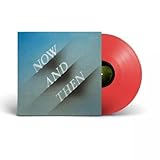
- The Beatles' double-A-side single for "Now And Then" & "Love Me Do" pairs the last Beatles song with their first UK single
That history makes the central question unavoidable: does a new final recording assembled from old and new performances count as a “new” performance in the sense listeners usually expect from a performance award? The Academy accepted the recording and voters chose it, but neither fact reveals how individual voters interpreted the category or what they thought the award should recognize.
Did AI create Lennon’s part?
No. The Beatles’ account says Peter Jackson’s sound team, led by Emile de la Rey, used source separation and machine-assisted learning to isolate Lennon’s existing vocal from the piano on the demo. It describes restoring and separating a recorded voice—not generating new Lennon lyrics or a new vocal performance. The distinction matters: the technology made the original recording usable in the finished track, but it does not turn Lennon’s contribution into a newly performed vocal.
Rank #2
Why I don’t think it deserved Best Rock Performance
My standard is straightforward: a performance award should primarily honor the musical performance being recognized, not the historical importance of the artists or the ingenuity involved in assembling a recording. “Now and Then” is worthy of attention as a Beatles reunion across time and as a production achievement. But the timeline makes it difficult to treat the award as a clear recognition of a new group performance: Lennon’s central vocal comes from a home demo, Harrison’s guitar from 1995, and only McCartney and Starr’s listed contributions were newly recorded in 2022.
That is not an argument that the older parts count for nothing, nor that the new contributions are insignificant. It is an argument about category fit. The Academy’s description emphasizes a “new” rock recording, while the song’s distinctiveness rests heavily on connecting historical performances with later ones. For me, that makes the win feel more like a tribute to the Beatles’ legacy and the completion of an extraordinary archival project than the strongest choice for a performance honor.
Crashes, No Sound, or Screen Glitches?
Random freezes, missing sound and display glitches usually trace back to one bad driver. Find and replace yours safely.Free scan · under a minuteWindows Errors? Fix Them Before They Spread
Repair common Windows errors and clear accumulated junk for a smoother, more stable PC - no reinstall needed.Free scan · no reinstallWhy the win can still make sense
There is a reasonable alternative reading. The Academy calls for a new recording, not a recording in which every artist performs contemporaneously. McCartney and Starr recorded new parts; the surviving members shaped the finished track; and McCartney and Giles Martin produced it. Under that interpretation, the final recording is a new collaborative rock performance even though it incorporates earlier material.
Paul McCartney called it “a genuine Beatles recording” in the band’s announcement. Ringo Starr described the process as “the closest we’ll ever come to having him back in the room,” an emotional account of what Lennon’s recovered voice meant to the participants. Those perspectives help explain the song’s significance, but emotional and historical importance do not by themselves answer whether it was the best performance in the category.
The distinction between categories also helps frame the disagreement. The Academy’s Record Of The Year description recognizes artists and a broader range of production and recording roles, whereas Best Rock Performance is framed around a rock recording’s performance. “Now and Then” was only a Record Of The Year nominee. Its Best Rock Performance win is therefore the specific decision at issue, not recognition it received for Record Of The Year.
Independent reader supportYour contribution helps us test, update, and keep practical guides available for everyone.Was the win against Grammy rules?
The available evidence does not establish that it was. The Academy’s published category wording leaves “new” undefined at this level of detail, and the Academy accepted the entry and awarded it the prize. The Recording Academy says voting members cast ballots subject to classification and qualifications approved by its Board of Trustees; its rules and guidelines page provides that general governance context. It should not be read as a retroactive explanation of every 2025 eligibility decision.
What’s actually slowing this PC down?
Pick the symptom - the matching free tool is one click away.
When asked about this case, Academy president and CEO Harvey Mason jr. told the Associated Press that “AI enhanced the record and allowed it to be eligible in the categories that it was eligible in.” That is Mason’s explanation as reported by the Associated Press; it is not a complete account of the rules or the voters’ reasoning. Eligibility and deservingness are different questions: a recording can qualify and win while still being, in my view, a poor fit for the award’s central idea.
Quick Recap
Product prices and availability are accurate as of the date/time indicated and are subject to change. Any price and availability information displayed on Amazon at the time of purchase will apply.