Chhau did not leave royal palaces in one documented moment. It is a family of regional dances with roots in indigenous and martial practices, performed in community settings and, in some places, shaped by courtly patronage. The history is especially visible in Purulia, where village performance, support from the Bagmundi ruler, economic hardship and later touring all formed part of the story.
What is the history of Chhau dance?
Picture a night-time performance in an open space: dancers move through martial gestures, animal-like motion and scenes drawn from stories, while a community gathers to watch. This is a useful way to understand Chhau as a living performance tradition—not as a reenactment of a single historical event. Sangeet Natak Akademi describes Chhau as integral to community culture and says it brings together people across social strata and ethnic backgrounds.
The Akademi traces Chhau’s origins to indigenous forms of dance and martial practices. Its movement vocabulary includes mock combat, animal movements and gestures modeled on everyday domestic work. Its subject matter extends beyond combat: performances may draw on episodes from the Ramayana and Mahabharata, local folklore and abstract themes. Chhau is also connected with community traditions and the spring festival Chaitra Parva.
Those roots do not rule out royal influence. Rather, community practice and patronage could coexist. The available accounts describe that relationship most concretely in Purulia, but they do not establish a single palace-to-public chronology for all Chhau.
Quick wins for a faster PC:
Repair Windows errors before they cause bigger problemsFix Now →Scan for outdated or missing drivers - takes under a minuteDriver Scan →#1 Best Overall
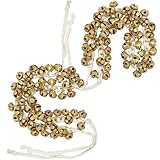
- Authentic Sound Quality: High-quality brass bells deliver a clear, melodious chime, essential for traditional Indian dance rhythms.
- Comfortable Fit: Cotton-padded strings provide a snug and comfortable fit around the ankles, allowing for extended wear during rehearsals and performances.
- Versatile Use: Suitable for various Indian classical dance forms, including Kathak, Bharatanatyam, and Odissi, catering to both students and seasoned performers.
- Handcrafted Excellence: Each pair is meticulously handcrafted by skilled artisans, ensuring superior quality and attention to detail.
- Multiple Bell Options: Choose from 25, 50, or 100 bell configurations to match your skill level and performance needs.
What are the three types of Chhau?
Chhau names three regional styles, not one uniform dance. Their differences—particularly whether performers wear masks—reflect distinct local directions in the tradition.
| Style | Region | Masks | Distinction described in the sources |
|---|---|---|---|
| Seraikella | Seraikella region | Yes | The mask is central to the style; the district account describes its masks as more conceptually and formally refined than Purulia’s. |
| Purulia | Purulia region | Yes | The district account describes village performance, reported Bagmundi patronage, migration to cities and touring groups. Chorida is associated with its mask-making tradition. |
| Mayurbhanj | Mayurbhanj region | No | The district account links dancing without masks to greater freedom of movement. |
These are distinctions in the descriptions, not a ranking of artistic quality. The styles are recognized together as Chhau, but a mask or movement feature from one should not be treated as representative of all three.
Rank #2

- Ghungroo Anklet Dancing Professional Ghungru 50 +50 big brass bells tied with Red Cotton Cord Musical Instrument Kathak, Bharatnatyam, Kuchipudi, Odissi Ghungru From India
- Size : Width - 4 Length - 9.5", Weight : 500 GMS Bells of Brass Tied with velvet Cloth
- Sold in Pair, Perform classical Indian dance Kathak Bharatnatayam Indian traditional dance anklets brass bells ghungroo pair tied over velvet
- Fixed on Cotton Cord cloth, light weight, soft on dancer, 100 Big bell New, Dancing Bells Kathak Ghungroo Pair Handmade Indian 100 Classical Dancers Accessories
Was Chhau performed in royal courts?
Royal patronage is part of the history described for Purulia, not proof that Chhau began as court entertainment everywhere. Purulia District Administration reports that the Bagmundi ruler supported Chhau performers into the early decades of the 20th century. The same account describes the ruler’s limited ability to help performers in a region marked by poor agricultural conditions.
The district account also cautions that written records are scarce and historical accounts incomplete. Its reconstructed notes place the rise of local and some Hindu chieftaincies in parts of the region after the 12th–14th centuries, but that is not a date for Chhau’s origin. The national heritage account connects the dance to indigenous practices, martial forms and community life; it does not supply a general history of Chhau moving from palace to public.
Do these 3 things before closing this tab:
1Repair Windows errors before they cause bigger problems2Scan for outdated or missing drivers - takes under a minute3Clear out junk files and repair common Windows errorsRank #3

- Ghungroo Anklet Dancing Professional Ghungru 25 +25 big brass bells tied with Red Cotton Cord Musical Instrument Kathak, Bharatnatyam, Kuchipudi, Odissi Ghungru From India
- Total 50 Big Bells Weight : 200 GMS Bells of Brass Tied with Red Cotton Cord Cloth
- Sold in Pair, Perform classical Indian dance Kathak Bharatnatayam Indian traditional dance anklets brass bells ghungroo pair tied over velvet
- Fixed on Cotton Cord cloth, light weight, soft on dancer, 50 Big bell New, Dancing Bells Kathak Ghungroo Pair Handmade Indian Classical Dance Accessories
How did Purulia Chhau reach wider audiences?
The Purulia account describes a gradual and uneven path, rather than a documented release from court. Village and community performance existed alongside reported ruler patronage. Economic hardship also shaped performers’ choices: the district says some migrated to nearby urban centers, including Calcutta, to earn a living.
It records another stage in the form’s circulation in 1961, when an anthropologist witnessed Chhau in a remote Purulia village. The account says that subsequent visits were followed by the formation of local groups anticipating sponsored overseas trips. This date documents a moment in the account of organized touring; it is not the origin of Chhau or the beginning of its public performance. Nor does the account establish that this sequence explains how all three styles reached audiences beyond their home regions.
That distinction matters to the title’s “escaped” image. The evidence points to overlapping community settings, regional patronage, livelihoods and touring—not one event in which a single court tradition suddenly became popular entertainment.
Rank #4

- Traditional ghungroo anklet bells designed for classical Indian dance performances including Kathak Bharatanatyam Kuchipudi Odissi and folk dance. Available in multiple bell count options to suit beginners practice sessions and stage performances.
- Crafted with polished brass bells securely attached on a comfortable padded strap for balanced sound and comfortable wear during rehearsals dance classes cultural events and performances.
- Multiple variations allow dancers to choose the suitable bell count according to training level performance style rhythm intensity and personal preference while maintaining traditional aesthetics.
- Suitable for dance schools academies cultural programs competitions stage performances temple events workshops festivals and professional dance practice throughout the year.
- An excellent addition to every dancer's practice accessories collection. Designed to produce a clear rhythmic sound while complementing traditional Indian dance costumes.
Why do some Chhau dancers wear masks?
Seraikella and Purulia Chhau use masks; Mayurbhanj does not. The mask is therefore a feature of two regional styles, not a universal Chhau costume. The Purulia district account identifies Chorida with mask-making and distinguishes Purulia masks from those of Seraikella. It also describes movement without a mask in Mayurbhanj as allowing greater freedom of movement. These accounts establish stylistic differences, rather than one explanation for why masks originated.
Recommended Free Tools
What does UNESCO recognition mean for Chhau today?
UNESCO inscribed Chhau on its Representative List of the Intangible Cultural Heritage of Humanity in 2010. That recognition affirms the tradition’s heritage significance; it does not by itself establish performers’ economic security or guarantee uninterrupted community participation.
Best Value

- Ghungroo Anklet Dancing Professional 16 No Ghungru Tow Lines, 60 big brass bells tied with Orange pad Musical Instrument Kathak, Bharatnatyam, Kuchipudi, Odissi Ghungru From India
- Size : Width - 3 Length - 9.5", Weight : 350 GMS Bells of Brass Tied with velvet Cloth
- Sold in Pair, Perform classical Indian dance Kathak Bharatnatayam Indian traditional dance anklets brass bells ghungroo pair tied over velvet
- Fixed on velvet cloth, light weight, soft on dancer, 3 row of bell New, Dancing Bells Kathak Ghungroo Pair Handmade Indian Classical Dance Accessories
Sangeet Natak Akademi identifies industrialization, economic pressure and new media among factors associated with declining collective participation. The story of Chhau’s wider circulation is therefore not simply a story of greater visibility: the tradition continues to depend on communities and performers even as the conditions around participation change.
Quick Recap
Product prices and availability are accurate as of the date/time indicated and are subject to change. Any price and availability information displayed on Amazon at the time of purchase will apply.




