What’s actually slowing this PC down?
Pick the symptom - the matching free tool is one click away.
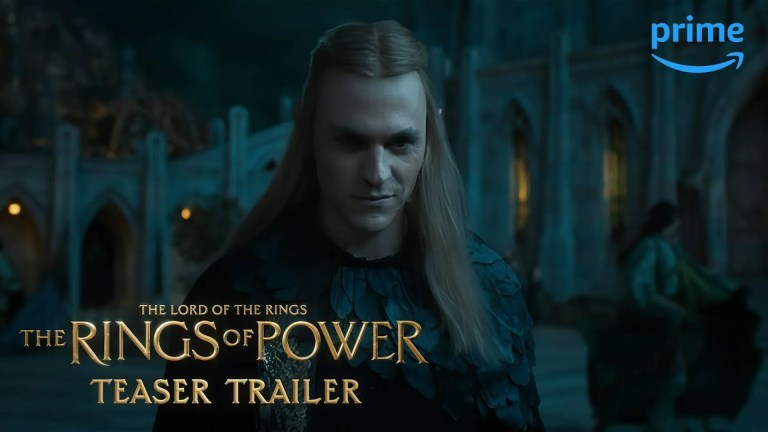
The Rings of Power Season 2 is set against Tolkien’s Second Age, but an episode title or an official season overview cannot establish whether a particular scene matches the books. The available episode index confirms eight titles; it does not describe their scenes. So a responsible comparison can identify the season’s documented frame and show what evidence a scene-by-scene verdict requires, but it cannot honestly label every episode faithful, invented or contradictory without matching its plot beats to Tolkien’s text.
What can be confirmed about Season 2?
Amazon says the eight-episode season premiered on August 29, 2024, and is available exclusively on Prime Video. Its overview frames the story around the forging of the Three Elven Rings, Sauron’s return and his attempt to influence Celebrimbor as Annatar. Amazon’s official trailer article also identifies the Siege of Eregion as a major event. These statements establish how Amazon presents the season; they do not settle whether any particular scene appears in Tolkien’s writings.


The distinction matters because “not stated in the text” is not the same as “impossible in the text.” A scene may be an adaptation’s connective invention, a compressed or reordered event, or a choice the surviving accounts simply do not address. Calling it a contradiction requires identifying both the scene and the specific textual statement it conflicts with.
What does Tolkien actually say? Start with the source and the claim
For a lore check, keep the source scope visible. The Lord of the Rings and its appendices provide the published baseline; The Silmarillion and Unfinished Tales add posthumously published material; Christopher Tolkien’s editorial history helps explain how accounts and chronologies developed. The Amazon cast interview names The Silmarillion and Unfinished Tales as books relevant to character research. Actor Charles Edwards said a description of Celebrimbor in Unfinished Tales informed his performance. Charlie Vickers, discussing his portrayal of Sauron, said, “Tolkien’s letters really have influenced my depiction of the character.” These are statements about the actors’ research and creative work, not evidence that a particular Season 2 scene comes from those books.
Quick wins for a faster PC:
Fix the driver behind crashes, sound loss and screen glitchesFind Drivers →Repair Windows errors before they cause bigger problemsFix Now →#1 Best Overall
A useful verdict for any scene should answer four questions:
- What happens on screen? Identify the episode beat rather than inferring plot from its title.
- What text is being compared? Name the book, appendix, chapter or editorial source, and distinguish published chronology from earlier drafts.
- What does that text establish? Separate what it states directly from what it implies, leaves open or does not cover.
- What kind of adaptation choice is it? Use terms such as compression, reordered events, composite character, invented connective material or direct change to an explicit textual claim. Reserve “contradiction” for the last case.
This is especially important for the Second Age. Tolkien Gateway’s account of Christopher Tolkien’s discussion describes multiple changing chronology drafts and differences between earlier schemes and the published Appendix B. On that published chronology, the One Ring is taken in S.A. 3441 and lost in T.A. 2. Earlier drafts should be identified as drafts, not blended into the published timeline. The chronology reference is a secondary account; a claim about what Appendix B says should be checked against Appendix B itself.
Rank #2
Episode-by-episode: what the available evidence establishes
The Digital Tolkien Project lists the following Season 2 episode titles. A title can suggest a theme, but it cannot prove a lore connection or establish what happens in an episode. The official season framing establishes broad topics—not the episode-by-episode plot beats needed for a textual comparison.
| Episode | What the title can establish | What a Tolkien comparison still needs |
|---|---|---|
| 1. “Elven Kings Under the Sky” | The episode title. | The episode’s actual plot beat and a specific Tolkien passage that addresses it. The title alone does not establish a textual connection. |
| 2. “Where the Stars are Strange” | The episode title. | The scene or claim being tested, plus a cited passage. The title alone does not establish what Tolkien says about the episode’s events. |
| 3. “The Eagle and the Sceptre” | The episode title. | The relevant on-screen event and the text against which it is compared. Neither the title nor the season overview supplies that match. |
| 4. “Eldest” | The episode title. | The identity or event the episode invokes, if any, and a textual anchor. A shared word is not evidence of fidelity. |
| 5. “Halls of Stone” | The episode title. | The episode’s specific plot beat and the relevant passage; the title does not show whether the scene is stated, implied or unattested. |
| 6. “Where Is He?” | The episode title. | The person or event meant on screen and a passage that bears on it. The title does not resolve either question. |
| 7. “Doomed to Die” | The episode title. | The fate or claim depicted in the episode and the textual evidence for comparison. The title is not itself a lore verdict. |
| 8. “Shadow and Flame” | The episode title. | The scene the phrase refers to and a specific passage. The season overview’s references to Sauron, the Rings and Eregion do not establish what this finale changes or preserves. |
For each episode, the sound conclusion from these sources is therefore limited: its title is documented, but its scene-level relationship to Tolkien’s writings is not established. That is not a finding that the episode is inaccurate, nor a claim that the books are silent. It means a verdict requires the actual scene and an identified passage.
Rank #3
How to read the show’s Second Age context without overstating it
Amazon presents Season 2 as following the forging of the Three Elven Rings and Sauron’s return, with Sauron approaching Celebrimbor as Annatar. It also describes the Siege of Eregion as a major season event. Those are useful orientation points for viewers, but the season framing is not a substitute for checking the corresponding passages in Tolkien’s works. A careful article or viewing note should attach a textual anchor to each claim about what the books say, then state whether the show’s version is supported, adapted, unattested in the source consulted or in conflict with an explicit statement.
The same caution applies to Rhûn. Showrunner Patrick McKay described the Stranger’s journey with his halfling companions east into Rhûn, and said the series filmed Rhûn-related material in the Canary Islands. That is production and creative context. It does not show that the show’s specific Rhûn plot appears in Tolkien’s writings.
Rank #4
What audience and episode counts do—and don’t—tell you
The Digital Tolkien Project’s Season 2 dataset reports 11 regions, 225 scenes, 62 named speaking characters, 2,546 lines and 24,682 words. The project says all counts other than regions are based on subtitle speech, and that its character count includes named speaking characters only. These figures describe the project’s dataset and counting method; they measure neither Tolkien’s text nor the season’s lore coverage.
Amazon separately reported that Season 1 had been viewed by more than 100 million people worldwide. That is Amazon’s figure for Season 1, not a Season 2 audience count. It says nothing about whether the adaptation follows a particular passage.
A practical standard for episode-level verdicts
When a scene is compared with Tolkien, the clearest result is a sourced, scoped statement—not a blanket label such as “canon” or “not canon.” A direct textual statement can support a high-confidence comparison; a fragmentary account or interpretive inference calls for a qualified one. If the consulted text does not address the event, say it is unattested there rather than impossible. If a scene does appear to change an explicit claim, name that claim and the source before calling the change a contradiction.
Amazon’s own season guide says familiarity with the source may help viewers spot references while also presenting the series as able to stand on its own. That is the company’s framing, not an independent judgment of fidelity. For readers wanting to check the published chronology, The Lord of the Rings with its appendices is the most direct starting point; The Silmarillion and Unfinished Tales provide additional published material, with their distinct source status kept clear.
Quick Recap
Product prices and availability are accurate as of the date/time indicated and are subject to change. Any price and availability information displayed on Amazon at the time of purchase will apply.