Recommended Free Tools
Mario Vargas Llosa (1936–2025) was a Peruvian novelist, essayist and public intellectual whose fiction examined how power shapes people’s lives—and how individuals resist, revolt or are defeated by it. The Swedish Academy awarded him the 2010 Nobel Prize in Literature for his “cartography of structures of power” and his images of individual resistance, revolt and defeat. His novels offer readers a way into that work, while his Nobel Lecture explains what he believed fiction could do.
Who was Mario Vargas Llosa?
Vargas Llosa was born in Arequipa, Peru, on 28 March 1936. He studied law and literature in Lima and Madrid, according to the Nobel Prize’s biographical note. His writing ranged beyond novels to essays and journalism, and his public life included prominent national and international affiliations.
| # | Preview | Product | Price | |
|---|---|---|---|---|
| 1 |
|
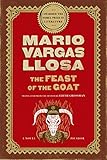
The Feast of the Goat | $11.66 | Buy on Amazon |
| 2 |

|
I Give You My Silence: A Novel | $15.60 | Buy on Amazon |
| 3 |

|
Conversation in the Cathedral: A Haunting Exploration of Dictatorship and Identity in 1950s Peru | $10.52 | Buy on Amazon |
| 4 |

|
The Bad Girl: A Novel | $11.10 | Buy on Amazon |
| 5 |

|
War of the End of the World | $34.42 | Buy on Amazon |
He became a member of the Peruvian Academy of Language in 1975 and was elected to the Académie française in November 2021. He held Peruvian and Spanish nationalities from 1993, according to the ASALE profile. He died in Lima on 13 April 2025, aged 89; the Associated Press reported that his children announced his death (AP; see also the Library of Congress author record).
Why did Vargas Llosa win the Nobel Prize?
The Swedish Academy awarded him the 2010 Nobel Prize in Literature. Its citation recognized “his cartography of structures of power and his trenchant images of the individual’s resistance, revolt, and defeat.” The phrase points to a recurring concern in his fiction: institutions and political systems are not just backdrops, but forces that press on private lives. His characters’ responses to that pressure—whether resistance, rebellion or failure—are central to the Academy’s description of his work. The official citation and biography are available from the Nobel Prize.
#1 Best Overall
What are Mario Vargas Llosa’s best-known books?
These novels provide a useful map of his career, rather than a definitive ranking. The Nobel biography identifies several as well-known works, and the Library of Congress also highlights key titles.
- The Time of the Hero (1963)
- The Green House (1966)
- Conversation in the Cathedral (1969)
- The War of the End of the World (1981)
- The Feast of the Goat (2000)
The first two titles and The War of the End of the World are also featured in the Library of Congress record. The Nobel Prize’s biography supplies the broader selection and publication years.
Rank #2
What should you read first?
There is no single required starting point. Choose by the kind of reading experience you want:
- For an entry into his fiction: Start with The Time of the Hero or The Green House, two early novels recognized among his major works.
- For political and historical scope: Continue to Conversation in the Cathedral or The War of the End of the World.
- For a later novel on the list: Try The Feast of the Goat (2000).
This is a practical reading path, not a claim that critics or readers agree on one best book. The cited institutional records establish the titles and their place in his bibliography, but do not provide a consensus ranking.
Do these 3 things before closing this tab:
1Clear out junk files and repair common Windows errors2Fix the driver behind crashes, sound loss and screen glitches3Repair Windows errors before they cause bigger problemsRank #3
How did Vargas Llosa understand fiction?
In his Nobel Lecture, delivered at the Swedish Academy in Stockholm on 7 December 2010, Vargas Llosa described writing as a way to create another life alongside the one we inhabit. He wrote: “Thanks to them, and certainly to my obstinacy and some luck, I have been able to devote most of my time to the passion, the vice, the marvel of writing, creating a parallel life where we can take refuge against adversity, one that makes the extraordinary natural and the natural extraordinary, that dissipates chaos, beautifies ugliness, eternalizes the moment, and turns death into a passing spectacle.” This is his own account of the imaginative work of writing, not an assessment by the Nobel committee. Read the Nobel Lecture.
Independent reader supportYour contribution helps us test, update, and keep practical guides available for everyone.Beyond the novels: his journalism
Vargas Llosa’s literary record also includes a substantial body of journalism. ASALE lists three volumes of Obra periodística Vargas Llosa, published across 2022–2025:
Rank #4
- El fuego de la imaginación: Libros, escenarios, pantallas y museos (2022)
- El país de las mil caras: Escritos sobre el Perú (2024)
- El reverso de la utopía: América Latina y Oriente Medio (2025)
The profile records these titles and dates, showing that journalism remained part of his published work late in life (ASALE).
Quick Recap
Best Value
Product prices and availability are accurate as of the date/time indicated and are subject to change. Any price and availability information displayed on Amazon at the time of purchase will apply.




