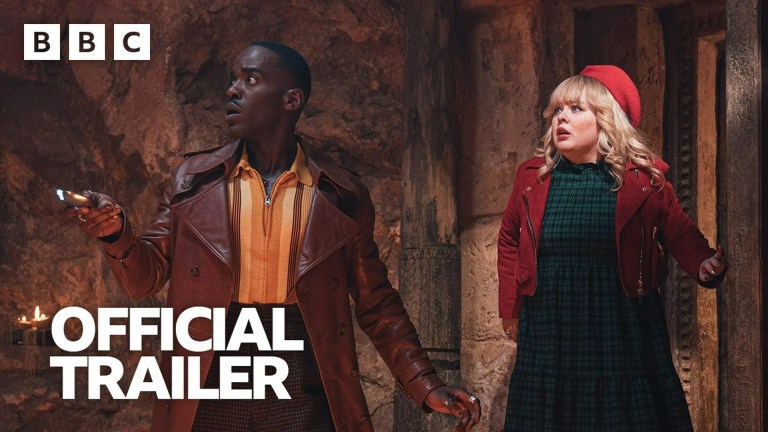
Spoilers for “Lucky Day.” In Daniel Cooper’s May 3, 2025 review for Engadget, the apology is a critical reversal: after disliking Pete McTighe’s “Kerblam!,” Cooper found “Lucky Day” more persuasive in its political focus on conspiracy-driven attacks against UNIT. The episode earns that reaction by making Ruby Sunday’s life after the Doctor—not the Doctor himself—the center of a story that shifts from romance to horror to thriller.
What happens in “Lucky Day”
The official Doctor Who episode feature describes Ruby’s return and UNIT’s role against the Shreek, while Disney+’s season synopsis asks whether Ruby and UNIT can save her boyfriend Conrad. Plot specifics below follow Cooper’s recap in his Engadget review.
| # | Preview | Product | Price | |
|---|---|---|---|---|
| 1 |

|
Space Patrol 68 Television Shows, 12 DVDs, B&W | $34.95 | Buy on Amazon |
| 2 |
![Sci-Fi 4-Movie Series (Oblivion / Lucy / R.I.P.D. / Seventh Son) [DVD]](https://m.media-amazon.com/images/I/51Rf0sQVy0L._SL160_.jpg)
|
Sci-Fi 4-Movie Series (Oblivion / Lucy / R.I.P.D. / Seventh Son) [DVD] | $7.99 | Buy on Amazon |
The story begins in 2007, when the Doctor and Belinda arrive in London at New Year. Seventeen years later, Conrad sees the TARDIS and encounters the Shreek. Ruby and the Doctor rescue him, and Conrad learns that Ruby’s adventures are real. After Ruby leaves the TARDIS, Conrad courts her while cultivating a public image built around the claim that UNIT is fraudulent. A staged threat and manipulated coverage bring the conflict into public view, with UNIT and its staff exposed to the consequences.
Why Cooper says he owes Pete McTighe an apology
Cooper’s headline is deliberately personal: it records his own change of mind, not an official verdict or a claim that viewers agree. He uses “Kerblam!” as the point of comparison. Where that earlier McTighe episode left him skeptical, he believes “Lucky Day” handles its political target more effectively by focusing on conspiracy content and distrust aimed at UNIT.
#1 Best Overall
- Space Patrol Television Shows DVDs, 1951-1955, Bonus Old Time Radio Shows
- New Case Sealed, Collectors Choice, YourRadioShows, Original Artwork
That distinction matters. The review is not simply praising an episode for being topical; it argues that the subject fits the drama. Ruby’s connection to Conrad makes the attack intimate, while UNIT’s public role turns his claims into a threat to an institution. The episode’s politics therefore grow out of character and plot rather than arriving only as a speech.
How the genre shifts shape Ruby’s story
McTighe explained in an official Doctor Who interview that the episode was designed to change genre at each major turn: “a rom-com first, then a gothic horror, then a contemporary thriller.” That structure gives the story distinct phases: Conrad’s courtship, the Shreek encounter, and the conspiracy campaign surrounding UNIT.
McTighe also said the initial idea developed into a Ruby-focused episode. He felt her previous adventures would plausibly affect her, and that Conrad’s betrayal compounds her vulnerability. That is the writer’s account of how he approached a fictional character, not a clinical diagnosis. The episode’s Doctor-lite focus follows from this choice: the emotional center is Ruby trying to live an ordinary life after extraordinary experiences.
Does the political satire work?
Cooper’s positive response rests on the episode’s use of conspiracy as a dramatic engine. Conrad does not merely voice distrust; he builds a public persona around it, and the staged threat and coverage make that performance consequential. The resulting conflict raises a useful critical question: does UNIT’s response feel credible as the story moves from private deception to public danger? Cooper reads the escalating plot as a stronger fit for McTighe’s political direction than “Kerblam!” was.
The Guardian’s recap supplies another perspective. Martin Belam highlights the doxing of UNIT staff, an armed livestream standoff, and conspiracy material entering mainstream media. These are the critic’s observations about the episode, not evidence about how common such events are in real life. Belam likewise argues that the conspiracy-focused target works better here than the messaging in “Kerblam!”
Independent reader supportYour contribution helps us test, update, and keep practical guides available for everyone.What a second review notices
Belam also places “Lucky Day” in the tradition of stories that give the Doctor’s orbit to an ordinary person, drawing comparisons to “Love and Monsters,” “Blink,” “Turn Left,” and “73 Yards.” He sees the familiar echoes as both a strength and a risk: they help establish the episode’s place in the run, but can make its beats feel recognizable. He praises Millie Gibson’s performance as Ruby. These are individual critical judgments, not a consensus rating.
Taken together, the two reviews suggest four productive ways to assess the episode: whether its Doctor-lite focus gives Ruby enough room; whether Conrad’s deception and UNIT’s response sustain tension; whether the political satire is integrated into the plot; and whether Ruby’s emotional life after the TARDIS makes the story feel distinct from earlier companion-centered episodes. The critics are evaluating those questions, not measuring them objectively.
What McTighe intended—and what remains interpretation
In the official interview, McTighe said misinformation and distrust inspired Think Tank, the group name in the story. He also described it as a deliberate callback to “Robot,” a Fourth Doctor story. Cooper recognizes the reference but questions how well it fits thematically. The difference is revealing: knowing what a creator intended can clarify a choice without settling whether it works for a viewer.
McTighe said he was sent twelve new Doctor Who episodes to study while preparing to write “Lucky Day.” That is a production anecdote about his preparation, not an audience statistic. The sources cited here provide no viewing figures, survey results, or ratings data that would establish how widely the episode was liked.
Where to watch
The official Doctor Who interview says “Lucky Day” is available on BBC iPlayer in the UK and on Disney+ where available. Streaming catalogs and geographic availability can change, so check the service in your region.
Quick Recap
Product prices and availability are accurate as of the date/time indicated and are subject to change. Any price and availability information displayed on Amazon at the time of purchase will apply.