Quick wins for a faster PC:
Fix the driver behind crashes, sound loss and screen glitchesFind Drivers →Repair Windows errors before they cause bigger problemsFix Now →Scan for outdated or missing drivers - takes under a minuteDriver Scan →These ten films became the focus of disputes over defamation, stunt safety, likeness rights, compensation, copyright, contracts and alleged plagiarism. The cases ended in different ways: some reportedly settled, some were dismissed or dropped, and at least one had no publicly disclosed final outcome in the account cited here. A lawsuit records allegations, not proof of wrongdoing; the amounts below are demands or reported settlements, not necessarily court awards.
Ten films and the legal disputes they faced
The case descriptions and figures in this list are reported by Listverse (2024), except for Black Widow, which is covered by Listorati (2025). These accounts summarize the disputes; they are not a substitute for the underlying court records.


1. American Hustle (2013): alleged defamation
Former New Yorker writer Paul Brodeur sued the film’s producers after a character attributed to him the claim that microwaves reduce food’s nutritional value. Listverse reports that Brodeur sought $1 million. It describes a California appellate justice as concluding that the film’s comedic context left the claim without a reasonable chance of success. The $1 million was a demand, not an award.
2. Resident Evil: The Final Chapter (2016): stunt injury
Stunt performer Olivia Jackson suffered serious injuries during a motorcycle stunt in Cape Town. According to Listverse, she sued director Paul W.S. Anderson and producer Jeremy Bolt in Los Angeles, where the claim was dismissed. She later pursued South African company Bickers Actions SA and obtained an undisclosed settlement. These were separate proceedings; the account does not establish a judicial finding of fault.
#1 Best Overall
3. Back to the Future Part II (1989): likeness rights
Actor Crispin Glover sued Universal over the sequel’s use of a prosthetic likeness modeled on his earlier performance, while Jeffrey Weissman played George McFly. Listverse reports a $760,000 settlement. That figure is reported as a settlement, not a court-ordered damages award.
4. Camp Hell (2010): promotion and image use
Jesse Eisenberg sued distributors Lionsgate and Grindstone, alleging that promotional materials prominently used his name and image despite his brief appearance in the film. Listverse reports that he claimed $3 million and that a motion to dismiss under anti-SLAPP law was denied. The account says the final disposition was not publicly disclosed, so it does not establish how the dispute ultimately ended.
Rank #2

- 1 subject notebook comes with 70 wide ruled, double-sided sheets. Wide ruling is ideal for the younger student who needs more space between lines.
- Sheets measure 7-1/2" x 10-1/2" when torn out with an overall size of 8" x 10-1/2". Perforation easily tears out with clean edges.
- Notebook is 3-hole punched to store in your favorite binder. Covers are coated for durability and have writable label on front cover.
- Includes 6 notebooks in randomly selected colors: Red, Blue, Green, Yellow, Purple or Black. Colors will vary with each purchase.
- Assembled in U.S.A. with U.S. and foreign parts
5. Giallo (2009): unpaid compensation
Adrien Brody sought payment of a claimed $640,000 fee. Listverse says a judge temporarily restricted use of his likeness and distribution of the film while the dispute was pending, and that the matter later settled with payment. The reported fee was the amount he claimed; it should not be mistaken for a damages award, and the account does not give the settlement terms.
6. Happy Death Day (2017): alleged copied character design
Jonathan Bertuccelli, creator of the New Orleans Pelicans’ King Cake Baby mascot, sued Universal over what he said was a resemblance between the mascot and the film’s Babyface mask. Listverse reports that he sought at least 50% of the film’s profits and that the case settled in 2021. The demand and settlement do not establish that a court found the design had been copied.
Rank #3
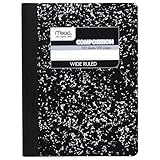
- Composition book contains 100 double-sided sheets; A classic favorite for journaling and lab notes
- Wide ruling gives you plenty of writing space for notetaking
- Sewn binding is smooth, helps keep pages securely in place and lays flat when open
- Inside covers feature a class schedule, multiplication tables, conversion tables and grammar rules
- Pages measure 7.5" x 9.75"; Black Marble Soft Cover
7. Predator (1987): screenplay rights
Screenwriters John and James Thomas sought to terminate Disney/Fox’s rights to their screenplay under the Copyright Act’s termination provisions; Disney/Fox counterclaimed. Listverse says the litigation was dropped and resolved in 2022, around the release of Prey. That reported resolution was not a court ruling on the merits.
8. The Unborn (2009): implied contract
Daniel Segal alleged that the film’s development breached an implied contract after he had earlier proposed an adaptation of Erna Segal’s Transfers. Listverse says the Ninth Circuit rejected the claim in 2011 for insufficient similarity and that a later appeal also failed. This was an implied-contract dispute, not a copyright ruling.
Rank #4

- Upgraded Two Zipper Pockets: Forvencer server books feature two secure zipper pockets for better organization of coins, cash, and receipts, ensuring that everything you collect has a safe and secure place
- Smart Storage & Quick Access: Designed with 8 multi-functional compartments, the right side includes a guest receipt pad, while the left has a money pocket, ticket pocket, and credit card slot. Two small clear pockets store bills, receipts, and other visible items. A stitched pen loop ensures you always have your favorite pen ready
- High-quality & Easy to Clean: Crafted from high-quality PU leather with heavy-duty stitching, this server book is built to last. It resists tears, scratches, and its waterproof surface makes cleaning easy with just a damp cloth or a non-chlorine sanitizer
- Perfect Fit for Your Apron: Measuring 5” x 8”, this compact organizer is slightly smaller than other models, making it ideal for bending or sitting while carrying in your server apron. It holds everything a waitress needs—a place for everything
- What's Included: This server organizer comes with multiple open and zippered pockets to store money, receipts, tips, etc. Clear sleeves are perfect for keeping menus or special lists while serving. Available in a variety of colors, allowing you to express yourself even when in uniform
9. Black Widow (2021): compensation and release strategy
Scarlett Johansson sued Disney, alleging that the simultaneous Disney+ release breached her compensation agreement by reducing earnings tied to box-office performance. Listorati reports that the dispute settled and that Johansson received $40 million. That figure is a reported settlement payment, not a court finding that Disney was liable.
10. The Cabin in the Woods (2011): alleged plagiarism
Author Peter Gallagher sued Joss Whedon, Drew Goddard and Lionsgate, alleging that the film copied the premise of his novel. Listverse reports that he sought $10 million and that the case was dismissed, with the premise described as unprotectable. The outcome addresses that dispute; it is not a general rule that similarities between creative works can never support a claim.
Crashes, No Sound, or Screen Glitches?
Random freezes, missing sound and display glitches usually trace back to one bad driver. Find and replace yours safely.Free scan · under a minuteWindows Errors? Fix Them Before They Spread
Repair common Windows errors and clear accumulated junk for a smoother, more stable PC - no reinstall needed.Free scan · no reinstallBest Value
Why a similarity claim is not automatically a copyright case
Claims about creative works can turn on the legal theory and the particular facts. The U.S. Copyright Office explains that “Courts evaluate fair use claims on a case-by-case basis.” Its guidance identifies four statutory factors: the purpose and character of the use; the nature of the copyrighted work; the amount and substantiality used; and the effect on the potential market. It also cautions that no preset percentage or word count guarantees fair use. These factors can help frame a copyright dispute, but they do not decide claims involving likeness, contracts, defamation or physical injury. The Copyright Office’s Fair Use Index was last updated in July 2026, is not comprehensive, and is not legal advice: U.S. Copyright Office Fair Use Index.
How the outcomes differ
The reported endings range from dismissal and failed appeals to settlements, a dropped dispute and an unknown public endpoint. A settlement resolves a dispute without necessarily proving the allegations; a dismissal or unsuccessful claim is tied to the particular case and legal theory. Reported dollar figures also need their labels: Brodeur, Eisenberg, Brody, Bertuccelli and Gallagher were said to have sought the amounts described, while the Glover and Johansson figures are reported settlements.
A related but separate example is Raging Bull (1980). In Petrella v. MGM, Paula Petrella sued in 2009 over alleged infringement involving underlying screenplay material and renewal rights. Cornell Law School’s Legal Information Institute summarizes the Supreme Court dispute over whether laches could bar copyright claims filed within the statutory limitations period: Cornell LII: Petrella v. MGM. It is useful context for film-rights litigation, but it is not one of the ten films above.
Quick Recap
Product prices and availability are accurate as of the date/time indicated and are subject to change. Any price and availability information displayed on Amazon at the time of purchase will apply.