Do these 3 things before closing this tab:
1Clear out junk files and repair common Windows errors2Scan for outdated or missing drivers - takes under a minute3Repair Windows errors before they cause bigger problems28 Years Later is worth watching if you’re open to a horror film that is as formally restless as it is frightening. Danny Boyle and Alex Garland return to the franchise with a story about a boy, Spike, venturing beyond the safety of an island with his parents, Jamie and Isla. Its most effective new charge comes from the way this family journey turns the Rage Virus setting into a coming-of-age story—and from images that can feel intimate, unstable and startling. That same visual and tonal volatility sometimes competes with the story, and the ending leaves substantial room open.
What is 28 Years Later about?
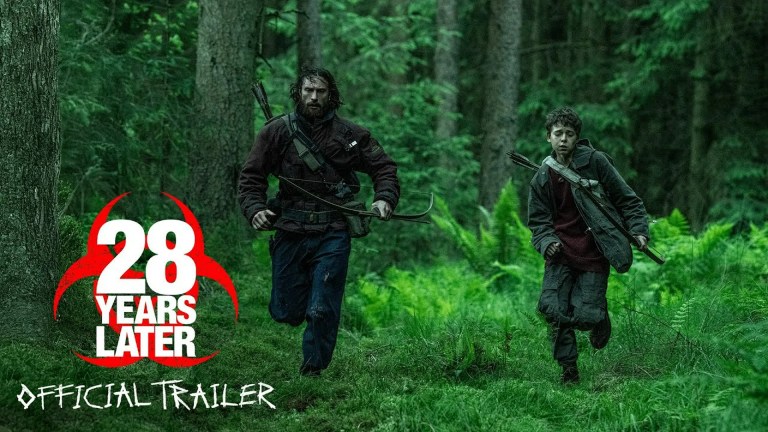
Nearly three decades after the Rage Virus escaped, survivors live on a small island connected to the mainland by a heavily defended causeway. Spike sets out with his parents, Jamie and Isla, on a journey shaped by his coming of age and his wish to help his ill mother. Beyond the island, he encounters dangers among both infected people and other survivors. The premise gives the film a broader canvas than a contained outbreak siege, while keeping its emotional focus close to one family.
| # | Preview | Product | Price | |
|---|---|---|---|---|
| 1 |

|
28 Years Later - Blu-ray + Digital | $18.89 | Buy on Amazon |
| 2 |

|
28 Years Later: The Bone Temple - Blu-ray + Digital | $20.00 | Buy on Amazon |
| 3 |

|
28 Years Later - 4K + Blu-ray + Digital | $22.00 | Buy on Amazon |
| 4 |

|
28 Years Later - 4K + Blu-ray + Digital | $38.49 | Buy on Amazon |
| 5 |
![28 Weeks Later [Blu-Ray]](https://m.media-amazon.com/images/I/51ph8zkJRmL._SL160_.jpg)
|
28 Weeks Later [Blu-Ray] | $25.99 | Buy on Amazon |
Calling them the infected rather than zombies matters to the film’s perspective: they are diseased people, not supernatural undead. In an interview with Time, Boyle explained that “zombies” obscures their humanity. The distinction suits a story interested in what prolonged catastrophe does to people who are still trying to live.
How does this chapter change the franchise?
From outbreak panic to a changed society
The long passage of time lets 28 Years Later imagine more than the immediate collapse of order. The quarantine has produced an altered society, with survivors’ own systems and moral compromises; the infected, too, have changed. Moving from the island to the mainland turns the film into a journey through a world that has had years to adapt to catastrophe, rather than a repeat of the original’s more immediate survival premise.
#1 Best Overall
- Decades after the rage virus outbreak, survivors live in isolation. When one leaves his ruthlessly quarantined island sanctuary, he uncovers haunting secrets and mutations in both the infected and the remaining humans. From director Danny Boyle and writer Alex Garland comes a bold return to the world of 28 Days Later.
A more conspicuous visual style
The film’s images rarely settle. The Atlantic describes tilted angles, extreme close-ups, jarring cuts and freeze frames, and reports that the movie was shot mostly on iPhones using a horseshoe-shaped rig. On screen, that approach can make the world feel unstable and unnervingly intimate, at times almost like a video game. It also puts the filmmaking itself in the foreground: when the editing and framing call attention to their own energy, some scenes feel overworked rather than more frightening.
That formal excess is not a simple upgrade on the original’s rawer horror. It is a deliberate change in register, and whether it deepens the fear or distracts from it is one of the film’s central tests.
Rank #2
- Dr. Kelson finds himself in a shocking new relationship - with consequences that could change the world as they know it - and Spike's encounter with Jimmy Crystal becomes a nightmare he can't escape. In the world of The Bone Temple, the infected are no longer the greatest threat to survival - the inhumanity of the survivors can be stranger and more terrifying.
Does the family story give the horror an emotional center?
Spike’s bond with Jamie and Isla gives the film a human-scale reason to cross its dangerous landscape. His desire to help his mother is more than a plot device: it makes survival a question of what a child can do for a parent when the world offers few safe choices. The Atlantic identifies that desire to save his mother, even at personal cost, as the story’s emotional center.
That family focus also makes the film’s shifts in tone consequential. It moves among grotesque bodily horror, bleakness, strange beauty and moments that can read as absurd or darkly comic. Time praises the tension-and-release in Boyle and Garland’s approach, while also finding parts mawkishly morbid. The shifts can give the film a distinctive emotional range, but they do not always land with equal force.
The Tool Desk
Outbyte PC Repair FREERepair Windows errors before they cause bigger problemsFix Now →Outbyte Driver Updater FREEScan for outdated or missing drivers - takes under a minuteDriver Scan →Rank #3
- Decades after the rage virus outbreak, survivors live in isolation. When one leaves his ruthlessly quarantined island sanctuary, he uncovers haunting secrets and mutations in both the infected and the remaining humans. From director Danny Boyle and writer Alex Garland comes a bold return to the world of 28 Days Later.
Where do the film’s risks pay off—and where do they divide viewers?
The movie’s most persuasive moments fuse style and feeling: an unsettled image or abrupt cut can make danger feel immediate, while the family story gives that danger weight. But the techniques sometimes compete with narrative clarity. Matt Donato of Daily Dead, quoted in Rotten Tomatoes’ first-review roundup, says the fast-paced music-video interludes distract from the storytelling. Shirley Li’s The Atlantic review, by contrast, finds the freewheeling plot and tonal shifts strikingly able to hold together. The disagreement captures the film’s appeal: its ambition is also the source of its unevenness.
The ending is not a conventionally self-contained conclusion. The story leaves material open, and some viewers may experience that as an intriguing continuation of a larger world; others may find it closer to a setup than a satisfying finish. The film asks for tolerance of that incompleteness as part of its design.
Rank #4
- Decades after the rage virus outbreak, survivors live in isolation. When one leaves his ruthlessly quarantined island sanctuary, he uncovers haunting secrets and mutations in both the infected and the remaining humans. From director Danny Boyle and writer Alex Garland comes a bold return to the world of 28 Days Later.
How does it compare with 28 Days Later?
| What to compare | 28 Days Later | 28 Years Later |
|---|---|---|
| Horror style | Rawer, more immediate horror, as characterized in the franchise comparisons reported by Rotten Tomatoes. | More visibly stylized image-making and editing, which some critics find immersive and others distracting. |
| Story shape | Outbreak survival. | A coming-of-age and family journey through a society altered by years of quarantine. |
| Ending | Not compared in the cited material. | Leaves story material open rather than offering a fully self-contained close. |
The available comparison is about different priorities, not a definitive ranking. If you want the original’s rawer, more immediate terror, Boyle and Garland’s more experimental approach may be a departure rather than a return to form. If you welcome a wider emotional and visual range, the change is the point.
Independent reader supportYour contribution helps us test, update, and keep practical guides available for everyone.Is 28 Years Later worth watching, and what should you know first?
Yes, especially for viewers who value atmosphere, unusual images and a family story within their horror. It is less satisfying if you need tonal consistency, restrained visual style or a neatly closed ending. The critical split is not simply about whether the film is frightening; it is about whether its stylistic freedom intensifies the fear and grief or pulls attention away from them.
Best Value
- Blu-Ray
- Do you need to watch 28 Days Later first? The story is set in the same world and follows the original creative partners, Danny Boyle and Alex Garland, back to the franchise. The available material does not establish a viewing prerequisite; the new story’s premise is presented through its own family journey.
- Is it scary? Expect graphic, bloody horror alongside bleakness, strange beauty and darkly comic or absurd moments, rather than an unbroken run of conventional scares.
- How long is it, and what is the rating? Rotten Tomatoes lists a two-hour runtime. The film is rated R in the US for graphic nudity, brief sexuality, grisly images, language and strong bloody violence.
Where can you watch it?
Availability varies by region and can change. Sony lists the film on Blu-ray and digital, with digital options including Apple TV, Prime Video, Fandango, DIRECTV and Sony Pictures Core on its official film page. Rotten Tomatoes listed Netflix subscription streaming and Fandango rental or purchase when accessed on 2026-10-04. Check current local listings before choosing a format. Sony’s 4K HDR playback note specifies a 4K UHD TV, an Ultra HD Blu-ray player and high-speed HDMI 2.0A cables for that playback mode.
Rotten Tomatoes’ page showed an 88% Tomatometer from 399 reviews and a 63% Popcornmeter from 5,000+ verified ratings when accessed on 2026-10-04. These are changing platform snapshots, not permanent measures of the film’s quality. The critics’ consensus calls it a haunting, visceral ride that defies expectations; its audience summary notes that some fans of the original’s raw horror may be disappointed, even as many respond to the cast’s emotional work.
Quick Recap
Product prices and availability are accurate as of the date/time indicated and are subject to change. Any price and availability information displayed on Amazon at the time of purchase will apply.