PC Slower Than It Used to Be?
A free scan shows the junk files, broken settings and background clutter dragging Windows down - then fixes them in one click.Free scan · Windows 10 & 11Crashes, No Sound, or Screen Glitches?
Random freezes, missing sound and display glitches usually trace back to one bad driver. Find and replace yours safely.Free scan · under a minuteSecure a VPS for continuous YouTube streaming by exposing only the access the encoder needs, protecting SSH and the stream key, keeping the operating system patched, and sending the broadcast over RTMPS. Then test the encoder and plan for process failures, alerts, backups, and provider-console recovery. These controls solve different problems: a firewall limits network reachability, while RTMPS encrypts the connection to YouTube; neither secures the other layer.
1. Decide what the VPS must expose
A streaming VPS normally needs outbound connectivity to reach YouTube’s ingestion service. Inbound access is a separate question: the public internet does not need to reach the encoder just because it sends a stream. Keep inbound services to the minimum required for administration and any explicitly needed function.
Review provider and guest firewalls
- Use the VPS provider’s network firewall or security rules, if available, to limit which inbound ports are reachable and which source addresses can reach them. Google Cloud describes firewall rules as a first line of defense for its Compute Engine VMs and recommends allowing only intended services and traffic; menus and behavior differ at other providers.
- Check the operating system’s firewall as well. A provider firewall and a guest firewall are separate controls; confirm that their combined rules allow your chosen administration path without opening unrelated services.
- Do not assume that blocking inbound traffic encrypts credentials, commands, logs, or stream data in transit. Google Cloud explicitly cautions that firewalls are not a standalone protection for sensitive information in transit.
- Before changing firewall rules, confirm you have a working recovery route, such as the provider’s console or another supported secure access method. A mistaken rule can lock you out.
Choose a recovery path before tightening access
Provider consoles, firewall controls, and emergency access differ. Verify how you can regain access if SSH becomes unavailable, and keep that route independent of the SSH session you are about to modify. Apply restrictive changes in small steps and test a fresh connection before closing your existing session.
2. Harden SSH and maintain the host
Restrict administration access
- Prefer the provider’s supported secure access method where it meets your needs. Otherwise, constrain SSH reachability to trusted source networks when practical rather than leaving it open to every address.
- Use key-based authentication, verify the server host key when connecting, and protect private keys from disclosure. Ubuntu’s OpenSSH documentation describes adding two-factor authentication on top of key-based authentication; availability and configuration depend on the operating system and your access setup.
- Review the SSH server configuration using the documentation for the installed distribution and version. Do not paste in settings intended for a different system without checking their effect.
- Keep a working session and recovery route while applying SSH changes. Test a new login before ending the old session so a syntax error or access-rule mistake does not strand you.
Apply supported security updates
Keep the operating system and exposed remote-access software current through the distribution’s supported security-update process. Google Cloud’s OpenSSH bulletin for CVE-2024-6387, published July 1, 2024, advised applying Linux distribution updates as they became available and limiting public SSH access when necessary. That dated bulletin is not evidence that a particular server is vulnerable now; check the status and update guidance for your own distribution.
Recommended Free Tools
#1 Best Overall

- 【AMD Ryzen 7330U】 – The Efficiency-Tuned Powerhouse,AMD Ryzen 7330U (Zen 3, SMT, 4C/8T) in KAMRUI P2 mini PC crushes rivals: Intel i3-10110U (2C/4T, 2019) and N95 (4 efficiency cores, no HT, single-channel memory). Vs predecessor Ryzen 3 4300U (4C/4T): ~50% faster single-core, ~46% multi-core, 8MB L3 cache (vs 4MB). Beats both Intel chips hugely in multi-core, making heavy multitasking, coding, data work smooth at just 15W TDP. High-end power in a cool, efficient box.
- 【AMD Radeon Graphics】– Triple 4K Vision & Fluidity,The integrated Radeon Graphics (based on the modern Vega architecture with 6 CUs) is a visual beast, outclassing the iGPU offerings from both AMD's prior generation and Intel. The Intel UHD Graphics (i3-10110U/N95) struggles with single-channel memory and low execution units, crippling its gaming performance and barely handling basic 4K video without stuttering. While the older Radeon Vega 5 (4300U) was decent, our 7330U's Radeon Graphics (6 CUs) pushes the boundaries, delivering higher graphics clock speeds (up to 1.8GHz) and significantly better rendering capabilities. It can drive triple 4K@60Hz displays with zero lag, edit photos/videos.
- 【Generous Storage & Easy Expansion】The KAMRUI Pinova P2 mini desktop computers comes with 16GB LPDDR4X RAM (higher frequency, lower power) for buttery‑smooth multitasking, and a 256GB M.2 SSD for blazing fast boot‑up, quick file transfers, and no more long loading screens. It also features two storage expansion slots (1x M.2 2280 SATA/NVMe PCIe 3.0 slot + 1x M.2 2280 SATA slot), supporting up to 4TB total (not included). You’ll have all the space you need for projects, media, and important data.
- 【Triple 4K Display Output】The KAMRUI Pinova P2 mini desktop pc is equipped with HDMI 2.0 ×1 + DP 1.4 ×1 + USB 3.2 Gen2 Type‑C ×1 (with DP Alt Mode), enabling simultaneous triple 4K@60Hz output. Whether for home entertainment, remote work, or conference room presentations, it delivers an immersive visual experience. Two USB 3.2 Gen2 Type‑A ports (up to 10Gbps – 21x faster than USB 2.0) make data transfers and device expansion a breeze.
- 【USB 3.2 Gen2 Type‑C: 10Gbps & Versatile Connectivity】The USB 3.2 Gen2 Type‑C port on the KAMRUI P2 small pc supports 10Gbps data transfer speeds and can also output DisplayPort 1.4 video. Together with Gigabit LAN, Wi‑Fi, and Bluetooth, you get a fast, flexible, and productive connected environment – wired or wireless.
Decide how updates will be applied and how you will notice failures. Automatic or unattended update behavior varies by distribution and configuration, so verify the actual policy on your VPS rather than assuming updates are enabled. For a continuous stream, also decide when a maintenance restart is acceptable and how you will confirm the encoder reconnects afterward.
3. Protect the YouTube stream connection and key
Use RTMPS from Live Control Room
- In YouTube Live Control Room, open the stream’s Stream settings.
- Use the lock control to reveal the RTMPS URL, then copy that URL and the stream key from the same stream configuration.
- Confirm the endpoint begins with
rtmps. YouTube may display the ordinary RTMP URL by default. RTMPS is RTMP over a TLS/SSL connection and encrypts the connection to YouTube. - If you encounter an SSL error, YouTube suggests specifying port 443. Check your encoder’s endpoint syntax and the current Live Control Room settings before changing it.
- Configure the encoder with the RTMPS endpoint and key, then confirm YouTube receives the test stream before relying on it continuously.
Treat the stream key as a credential
A stream key authorizes a broadcast. Keep it out of public scripts, screenshots, source repositories, and support logs. Restrict access to the VPS account and files that contain it. If you suspect it has been exposed, rotate it through YouTube’s current stream controls and update the encoder configuration. RTMPS encrypts the connection to YouTube; it does not protect a key copied into an exposed file or log.
Rank #2
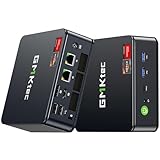
- Office Gaming Mini PC - UPGRADED GMKtec Nucbox M5 Ultra Series is equipped with the powerful AMD Ryzen 7 7730U processor, 8 Cores/16 Threads, Base 2.00GHz (Power Saving Quiet Mode) with Turbo Boost up to 4.50GHz (Performance Mode) in BIOS settings, Based on the ZEN 3+ architecture, this small but powerful mini pc delivers satisfying results in productivity, office work, and gaming. 35% Performance increase over AMD Ryzen 5 7430U/ Ryzen 7 5700U, 5600U, 5560U, 5500U.
- 32GB DDR4 RAM & 512GB PCIe SSD - Installed with DDR4 32GB RAM Dual Channel (2x16GB), the Nucbox M5 Plus mini pc support expansion to 64GB RAM. Featured with 512GB M.2 2280 PCIe 3.0 SSD, support dual slot expansion to 4TB SSD. (Upgrades not included)
- DUAL NIC LAN 2.5G RJ45 - Fast Network Speeds: Enjoy up to 2500Mbps data transmission speed without worrying about lagging. Ideal for working, gaming, and surfing the internet. Great for Untangle, Pfsense or as a server office PC.
- Mini Desktop Computer with 4K Triple Screen Display - Nucbox M5 Ultra integrates AMD Radeon Graphics 8 Cores 2000 MHz GPU to deliver powerful graphics processing power to easily handle the demands of complex design software, 4K@60Hz UHD video editing, and playback. It can connect to 3 display screens simultaneously.
- Fast Internet WiFi 6E + BT5.2 Connection - GMKtec Mini PC with WiFi-6E Wireless, have 2.5G/5G/6G triple band, more faster and lower latency. Bluetooth 5.2 allowing you more quickly to connect other wireless devices (headset, mouse, keyboard, etc.) Interface features 2*USB3.2 ports, 2*USB2.0 ports, 1*HDMI 2.0 port(4K@60Hz), 1*USB-C port(PD/DP/DATA), 1*DP Port, 1*Audio 3.5mm (HP&MIC), 1*DC Power Port.
4. Set encoder parameters for the actual stream
YouTube’s encoder guidance supports RTMP/RTMPS and lists H.264, H.265 (HEVC), and AV1 video, frame rates up to 60 fps, and constant-bitrate encoding. The appropriate bitrate depends on codec, resolution, and frame rate; do not select a figure independently of those settings.
| Example YouTube H.264 setting | Recommended bitrate |
|---|---|
| 720p at 60 fps | 8 Mbps |
| 1080p at 60 fps | 17 Mbps |
YouTube recommends a two-second keyframe interval and says not to exceed four seconds. Audio support and advanced settings depend on configuration. Match the encoder’s codec, resolution, frame rate, bitrate mode, and keyframe interval to the intended stream and YouTube’s current guidance. A VPS’s ability to encode the chosen workload depends on its resources, encoder, and workload; these settings alone do not establish that a particular instance can handle it.
Rank #3

- 【AMD Ryzen 3 5300U CPU: Outperforms N150 & 3500U】 BOSGAME E5 mini PC is powered by the TSMC 7nm FinFET architecture AMD Ryzen 3 5300U processor (4 Cores, 8 Threads, up to 3.8GHz boost, 6MB total cache). Compared to low-end Intel N150 or 3500U chips which only have 4 single threads and throttle under load, the 5300U delivers over 30% faster multi-core speed. Run 30+ browser tabs, large Excel sheets, and Zoom meetings simultaneously without system lag.
- 【8GB DDR4 RAM & 256GB NVMe SSD Storage】 Installed with high-speed 8GB DDR4 dual-channel memory and a fast 256GB M.2 2280 SSD, eliminating slow boot times and application loading delays. To accommodate growing data requirements, the upgradeable hardware design features dual SODIMM slots that allow you to expand memory up to 64GB RAM, ensuring smooth operation during heavy multitasking.
- 【High-Capacity Dual M.2 SSD Storage Expansion】 Never worry about running out of space for your business files. In addition to the pre-installed 256GB system drive, the motherboard houses an extra empty internal M.2 2280 NVMe PCIe 3.0 slot. This allows you to easily add a second solid-state drive for up to an additional 2TB of storage capacity (upgrades not included) without needing to remove or reinstall the original operating system.
- 【Radeon 6-Core Graphics & Triple 4K Displays】 Integrated with official AMD Radeon Graphics (6 Graphics Cores, 1500 MHz frequency) for casual gaming, photo editing, and crisp 4K media decoding. Featuring 1x HDMI 2.0 port, 1x DisplayPort, and 1x Full-Function Type-C port, the E5 outputs true 4K@60Hz resolution to three monitors at once. This multi-screen setup eliminates constant window-switching for traders, programmers, and office workers.
- 【Dual 2.5GbE LAN Ports for Advanced Networking】 Experience fast wired network transmission speeds up to 2500Mbps without lagging or buffering. The integration of dual 2.5 Gigabit Ethernet ports (powered by Realtek RTL8125 controller) makes this compact computer an exceptional hardware choice for tech enthusiasts. Easily configure it into software routers, hardware firewalls (pfSense, OpnSense), home NAS servers, or local homelabs.
Test before leaving it unattended
- Test with audio and movement representative of the intended broadcast, rather than a static or silent sample if the real stream includes sound or motion.
- Confirm YouTube receives the stream and inspect its stream-health status and messages before treating the setup as ready.
- Watch for dropped frames, resource pressure, or an encoder that cannot sustain the chosen settings. Lowering resolution or bitrate may help, but choose settings that still meet the content’s needs and YouTube’s guidance.
5. Design for failures, not just a successful start
A 24/7 stream depends on more than network security: the encoder process, VPS, provider network, and YouTube connection can each fail. Choose operational controls for the specific operating system and provider, and test them instead of assuming a generic configuration applies.
Validate process supervision and restart behavior
- Choose a service manager or container approach supported by your operating system and encoder. Configure and test what should happen if the encoder exits, the VPS reboots, or the network connection drops.
- Confirm the process does not repeatedly restart into a failure loop without notifying you. Define how logs are retained and rotated so troubleshooting information is available without allowing logs to consume the VPS storage.
- Test a controlled stop and restart, then verify both that the encoder runs again and that YouTube receives the stream. YouTube-side recovery and host-side process supervision are different failure paths.
Add monitoring and a recovery plan
- Set up a way to notice when the encoder process stops, the VPS becomes unreachable, or YouTube reports a stream-health problem. Choose alert channels you can actually monitor.
- Keep a backup of the encoder configuration and any scripts needed to rebuild the service. Protect backups containing stream keys as carefully as the live configuration.
- Know how to reach the provider’s console and recover from a failed boot, broken firewall rule, or lost SSH access. Provider console recovery and backup options vary; verify them for your chosen host.
- Schedule maintenance and test what happens to the stream during a reboot or update. A process configured to start at boot does not by itself prove that YouTube will accept the reconnection.
6. Troubleshoot common failures
| Symptom | Likely area to check | Practical next step |
|---|---|---|
| You cannot connect to the VPS over SSH | Provider firewall, guest firewall, source-address restriction, SSH configuration, or recovery access | Use the provider’s supported console or secure access path; review recent rule and configuration changes before reopening broad access. |
| YouTube does not receive the stream | Endpoint, stream key, encoder configuration, or network reachability | Recheck the URL and key in the stream’s current settings, confirm the URL uses RTMPS, and inspect encoder and YouTube messages. |
| The encoder reports an SSL error | RTMPS endpoint or port configuration | Verify the RTMPS URL and encoder syntax; YouTube suggests port 443 for certain SSL errors. |
| The stream starts but has poor health or dropped frames | Encoder workload, bitrate, network path, or selected stream settings | Review YouTube’s health messages and the VPS’s actual resource use; test a suitable lower workload or adjusted settings. |
| The stream stops and does not return | Encoder process supervision, reboot behavior, network interruption, or YouTube reconnection | Check service and encoder logs, confirm restart behavior with a controlled test, then verify the stream appears in YouTube again. |
| The VPS is unreachable after a security change | Firewall or SSH configuration change | Use the verified provider recovery route and roll back the last change; retain a tested access path before retrying hardening. |
7. Choose a VPS by workload and recovery needs
No single VPS plan can be recommended from the technical settings alone. Compare candidate providers using current details for the specific region and plan you intend to rent.
Rank #4

- 12th Intel Alder Lake N95 Processor – The GMKtec G3 S Mini PC is powered by the 12th Gen Intel N95 processor with 4 cores, 4 threads, 6MB cache and a burst frequency up to 3.4GHz. Compared with N100/N5105/N5100/N5095, the N95 delivers up to 36% overall performance improvement. Perfect for routine tasks, office work, and home entertainment, this compact mini desktop is more convenient than traditional bulky PCs.
- 8GB RAM & 256GB SSD Storage – Pre-installed with 8GB DDR4 memory and a fast 256GB M.2 2242 SSD, the G3 S mini desktop offers quicker startup, smoother multitasking, and faster file transfers. Enjoy seamless performance whether you’re working on multiple applications, browsing, or streaming content.
- Rich Interfaces & Connectivity – The G3 S mini computer comes equipped with USB 3.2 (up to 10Gbps), dual HDMI 2.0 (4K@60Hz), and a 3.5mm audio jack. With support for WiFi 5, Bluetooth 5.0, and Gigabit Ethernet (RJ45 1000MbE), it connects easily with monitors, projectors, printers, office equipment, and other peripherals, making it versatile for both home and business use.
- Dual 4K Display Support – Featuring upgraded Intel UHD Graphics (up to 1000MHz), the G3 S supports 4K video playback and AV1 decoding for a smooth viewing experience. With dual HDMI outputs, you can connect two 4K@60Hz displays simultaneously, enabling efficient multitasking for work and entertainment.
- GMKtec WARRANTY - GMKtec offers a 1-year limited GMKtec's warranty for each mini PC, starting from the date of the purchase. All defects due to design and workmanship are covered. With a professional after sales team always ready to attend to your needs, you can simply relax and enjoy your mini PC.
- Encoding capacity: Check CPU resources or hardware-encoding availability against your codec, resolution, frame rate, and workload.
- Network: Verify usable network capacity, transfer limits or terms, and the route from the VPS region to YouTube ingestion.
- Operations: Review uptime and support commitments, console recovery, backup options, and the provider’s firewall controls.
- Total cost: Include the recurring VPS price and any relevant transfer, backup, or support charges in the comparison.
Or let it run in the cloud
If your goal is to keep uploaded videos playing on YouTube rather than maintain your own VPS encoder, StreamNeo is a cloud option. Upload a recording or build a playlist, add your YouTube stream key once, and go live. It loops uploaded videos to YouTube; it does not broadcast from a camera or stream to other platforms.
- Nothing has to stay powered on at home; the stream runs from the cloud.
- Every slot streams the uploaded quality up to 4K 60fps at one price per slot, with no re-encode or quality tiers.
- It automatically recovers if YouTube drops the stream.
- The first day is free, with no card required; one free day is available per account.
Monthly: $9.99 per month. To try it, start your free day with StreamNeo.
Quick Recap
Product prices and availability are accurate as of the date/time indicated and are subject to change. Any price and availability information displayed on Amazon at the time of purchase will apply.



