To set up a 24/7 YouTube stream for a Bengali music channel, first confirm the channel can livestream and clear the rights for every recording and composition you plan to play. Then send a continuous program to YouTube through an encoder, choose settings your connection can sustain, preview and test the feed, and monitor it after launch. Music clearance is a launch prerequisite: a stream can be interrupted even when the channel has a license if the relevant rights owner has not allowlisted it through Content ID.
1. Check that the channel is eligible to go live
Before preparing the feed, verify the YouTube channel and confirm that live streaming is enabled. YouTube’s live-streaming requirements say a channel must be verified, have no live-streaming restrictions in the preceding 90 days, and be operated by someone at least 16 years old. Requirements can change, so check the current YouTube Help page when you set up the stream.
In YouTube Studio, open Create > Go live to reach the Live Control Room. If the channel has not streamed before, YouTube may require an activation period before live streaming becomes available; follow the status and prompts shown in Studio rather than assuming the channel can launch immediately.
2. Clear the music before you build the playlist
Being Bengali music, buying a track, finding it online, or seeing it described as “royalty-free” does not by itself establish that you can use it in a 24/7 YouTube livestream. You need the permissions that apply to the actual sound recording and the underlying composition, for the territories where viewers can watch and for the uses you intend, including live streaming and any archive or replay.
#1 Best Overall
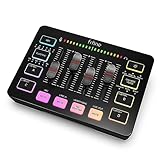
- [XLR Mic Input] One XLR microphone input interface is set on the gaming audio mixer, which is great to up your audio quality with your XLR setup. The XLR mixer is a stepping stone to upgrade your live streaming. Audio mixer offered built-in 48V phantom power which opens up more choices for mics. Directly use it with your condenser microphone but do not solve added peripherals. (NOT available for USB mic)
- [Individual Channel Control] Gaming audio mixer for one mic recording with smooth volume slider fader take your streaming recording to a whole new level with full pleasure. Four independent channels set on the DJ mixer give audio volume of the MICROPHONE, LINE IN, HEADPHONE, and LINE OUT channels individual control. Configurable on the PC audio mixer instead of just operating on your game or streaming software.
- [Mute and Monitor] The front mute and monitor buttons but not at the back, make it easier to get the audio interface use. Ability to mute audio, the audio mixer for streaming prevents background noise from damaging your live broadcast. Real-time feedback between speaking and hearing will not distract your attention, which encourage you to speak more confidently. The sturdy-built control button allow you to operate freely and easily during live streaming.
- [Sound Effects] The computer sound mixer supports four pre-recorded customized button that can be recorded and activated at the press of button to post production. 6 kinds of voice changing modes change your output style. 12 auto tune changes the tone of your voice. The podcast mixer being able to add different and fun effects is a huge bonus for your streaming or game voice.
- [Controllable Vibrant RGB] RGB button on the audio mixer DJ meets different live streaming themes. Lights on the video mixer is vibrant but not harsh on your eyes. Flowing or frozen RGB color rotation in a decent pace presents a greatly strong impression as a "light show" to your audience. Even a streaming equipment accessory will not be dull looking when video production.
YouTube’s livestream terms put responsibility for necessary rights on the provider, including music licensing rights from artists, record labels, publishers and other royalty participants. The exact rights holders and coverage depend on your catalog and agreements; a license for one use, territory or recording may not cover another.
Make a track-by-track clearance record
- List each recording in the proposed program and identify the recording and composition separately. Record versions, performers and any edits or remixes so the permissions can be matched to the exact audio you will stream.
- Trace the permission chain for each item: who controls the recording, who controls the composition, and whether other contributors or administrators must grant permission.
- Confirm in writing that the permission covers YouTube live streaming, the territories in which the stream will be available, and the archive or replay if you plan to keep one.
- Ask the relevant rights owner or administrator to confirm that the channel is allowlisted in Content ID, and keep the confirmation with your records.
YouTube scans live streams for third-party content. Its copyright guidance for live streams warns that a stream can receive a warning, be interrupted or terminated, or result in a strike. A license alone does not guarantee uninterrupted streaming if the rights owner has not allowlisted the channel through Content ID.
Rank #2

- Analog mixing and equalization for pure sound
- Direct mixing of PC/gaming sounds into the streaming output
- Ultra-low noise analog mixer for streaming, podcasting and recording
- Stereo USB audio interface to connect your computer or mobile device
Rights clearance and monetization eligibility are different questions. If you plan to monetize, review YouTube’s current channel monetization and reused-content rules as well; permission to play music is not, by itself, a promise that a channel or repetitive program will qualify.
3. Choose an encoder workflow for a continuous feed
For an ordinary channel setup, use the encoder workflow in YouTube’s Live Control Room. YouTube’s API guide describes a 24/7 live feed and distinguishes the broadcast (the viewer-facing live event) from the stream (the encoder input that carries the program). You do not need to create API resources just to run a standard music feed; API-level setup is for custom automation or more complex arrangements.
The Tool Desk
Outbyte Driver Updater FREEFix the driver behind crashes, sound loss and screen glitchesFind Drivers →Outbyte PC Repair FREEClear out junk files and repair common Windows errorsFree Scan →Rank #3
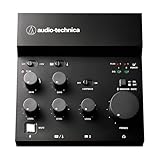
- Compact, feature-rich livestreaming USB audio mixer provides high-quality sound for desktop audio production
- Plug-and-play connectivity to computer or mobile device (no special drivers required)
- Loopback function makes it easy to mix mic and instrument inputs with background music, game sounds, or other audio input from a computer – and send the stereo mix back to the computer for streaming
- High-performance A/D converter with resolution up to 24-bit/192 kHz provides crystal-clear output for voice and instruments
- Equipped with a single mic input (XLR or ¼"), two LINE inputs for guitar and keyboard, and USB-C input for connecting to a computer
Prepare a continuous program in an encoder: for example, a playlist of cleared recordings with any transitions, visuals or interstitials your channel intends to include. Keep the playlist available to the encoder for the entire planned run. If your production needs multiple distinct events, YouTube’s API documentation describes arrangements in which a 24/7 broadcast can remain live while another broadcast is bound to the same stream, but that is a specialized workflow rather than a launch requirement.
Software or dedicated hardware?
| Option | When it fits | Trade-off |
|---|---|---|
| Software encoder | A practical choice when a computer can run the playlist and encode continuously. | The computer, encoder and network connection must remain available and stable for the feed to continue. |
| Dedicated hardware encoder | Consider it when the production needs a dedicated encoding appliance or higher production value. | It is optional, not a YouTube requirement; confirm compatibility with your chosen protocol, codecs and resolution before buying. |
YouTube supports software encoder workflows and recommends professional-grade hardware encoders for higher-production-value events. Compare options by supported protocol, codecs and output settings, and by whether they provide a recovery or failover feature you can configure. Do not buy hardware on the assumption that it is necessary for a 24/7 stream.
Rank #4

- Pro performance with great pre-amps - Achieve a brighter recording thanks to the high performing mic pre-amps of the Scarlett 3rd Gen. A switchable Air mode will add extra clarity to your acoustic instruments when recording with your Solo 3rd Gen
- Get the perfect guitar and vocal take with - With two high-headroom instrument inputs to plug in your guitar or bass so that they shine through. Capture your voice and instruments without any unwanted clipping or distortion thanks to our Gain Halos
- Studio quality recording for your music & podcasts - Achieve pro sounding recordings with Scarlett 3rd Gen’s high-performance converters enabling you to record and mix at up to 24-bit/192kHz. Your recordings will retain all of their sonic qualities
- Low-noise for crystal clear listening - 2 low-noise balanced outputs provide clean audio playback with 3rd Gen. Hear all the nuances of your tracks or music from Spotify, Apple & Amazon Music. Plug-in headphones for private listening in high-fidelity
- Everything in the box: Includes Pro Tools Intro+, Ableton Live Lite, Cubase LE, and Hitmaker Expansion: a suite of essential effects, powerful software instruments, and easy-to-use mastering tools
4. Set resolution, bitrate and audio for the connection you actually have
Use YouTube’s current encoder settings and bitrate guidance for the supported codecs and the bitrate recommendation matching your chosen resolution and frame rate. The correct setting depends on the output you want and the encoder’s capabilities; there is no single bitrate that is right for every channel. The YouTube guide lists RTMP/RTMPS, supported video codecs, AAC or MP3 audio, constant bitrate (CBR) encoding, and a recommended two-second keyframe interval that should not exceed four seconds.
- Resolution and frame rate: Pick a format the source visuals, encoder and sustained connection can all support. Higher resolution is not automatically better if the feed becomes unstable.
- Video bitrate: Use the current YouTube table for the selected resolution and frame rate, then verify the encoder is configured to remain within that target.
- Audio: Select a supported audio codec and configure a consistent level. Listen to the actual incoming feed for clipping, silence, channel imbalance or abrupt changes between tracks.
- Keyframes and rate control: Set CBR and the recommended two-second keyframe interval; do not exceed four seconds.
- Ingest protocol: YouTube recommends RTMPS. HLS and DASH are documented alternatives for encoders that support them, but require their own protocol-specific configuration and are not needed for a typical encoder setup. YouTube describes HLS as an option for high-resolution or HDR use and publishes separate format and playlist requirements.
Check YouTube’s streaming tips before committing to settings. YouTube recommends leaving 20% bandwidth headroom: the total stream bitrate should fit within the upload capacity available to the encoder. For a continuous service, base the choice on reliable sustained upload capacity, not a brief best-case speed test. If other devices or services share the connection, account for their traffic too.
Best Value

- 10 channel mixer with USB and SPX digital effects
- Featuring studio grade discrete class A D PRE amps with inverted Darlington circuit providing fat, natural sounding bass and smooth, soaring highs
- 3 band EQ and high pass filters give you maximum control and eliminate unwanted noise, resulting in a cleaner mix
- 1 knob compressors allow easy control resulting in livelier guitars, punchier bass lines, a tighter snare and a cleaner vocal sound
- MG Series mixers feature a rugged, impact resistant, powder coated metal chassis; Equivalent input noise 128 dBu, residual output noise 102 dBu
5. Connect the encoder to YouTube and start a test
- Open YouTube Studio > Create > Go live. In the Live Control Room, select the encoder workflow and create or select the stream setup for the planned program.
- Copy the stream key into the encoder. Treat the key like a password: enter it only in the intended encoder and do not publish it, include it in a screenshot or share it with people who should not control the stream. If it is exposed, replace it in YouTube Studio and update the encoder.
- Set the program and output. Load the cleared playlist or continuous program, choose the protocol and settings described above, and point the encoder at YouTube using the server and key shown in the Live Control Room.
- Start the encoder and wait for the incoming signal. Confirm that the Live Control Room recognizes the feed before you make the event public or announce it.
- Inspect the preview. Check picture, audio, synchronization, transitions and the actual content shown to viewers. Confirm that the title, description, visibility and planned start are correct for the event.
- Run a real test before the launch. Confirm that the event is reachable from the channel and watch pages, and test backup-encoder failover if your setup has it. YouTube’s live-streaming tips recommend previewing, checking accessibility and monitoring audio and video quality.
Do not use a private or unlisted test as a substitute for music clearance: the recording is still being sent to YouTube, and permissions must cover the use you are making of it.
6. Operate and monitor the stream around the clock
A 24/7 feed is an operating commitment, not just a successful start. Keep someone responsible for watching stream health and for responding to an alert, encoder failure, network outage, rights notice or unexpected change in audio. YouTube recommends continuously monitoring stream quality; decide in advance who will act and what recovery steps they are authorized to take.
- Check the Live Control Room for incoming signal and stream-health warnings, and listen to the feed rather than relying only on a green status indicator.
- Set an alerting and escalation procedure appropriate to your staffing and equipment. The alert method and response time are operational choices, not a YouTube guarantee.
- Document a recovery sequence: inspect the encoder and network, verify the selected stream and key, restart or fail over if appropriate, then confirm the preview and public watch page have recovered.
- Keep the rights record and allowlisting confirmations accessible to the person responding to a copyright interruption.
7. Troubleshoot common launch and continuity problems
| Symptom | Likely place to check | Practical fix |
|---|---|---|
| YouTube does not detect an incoming stream | Encoder destination, stream key, network access or encoder output settings. | Compare the server and key with the values currently shown in Live Control Room, verify the encoder is actively sending, and confirm its protocol and output settings match YouTube’s guidance. |
| Stream health is poor or the picture buffers | Upload capacity, bitrate, shared network use or encoder stability. | Check sustained upload performance, restore the recommended 20% headroom, and reduce output settings using YouTube’s current bitrate table if the connection cannot sustain the selected format. |
| Viewers hear silence, distortion or uneven volume | Audio source routing, selected codec, encoder levels or transitions in the playlist. | Listen to the incoming preview, check that the intended source is routed to the encoder, verify supported audio settings and inspect track-to-track level changes before relaunching. |
| The stream is interrupted after a copyright match | Rights coverage, the specific recording or composition, territory scope, or Content ID allowlisting. | Follow the notice, identify the matched item and pause or replace it if necessary. Resolve permissions with the relevant rights owner and obtain allowlisting confirmation; do not assume a license by itself prevents another interruption. |
| The feed stops after an encoder or power failure | Computer or hardware availability, network outage, or failover configuration. | Use the recovery procedure you prepared, test backup failover when available, and confirm the incoming preview and public event after service resumes. |
Or let it run in the cloud
If you do not want a computer or home connection to remain on, StreamNeo is a cloud service for keeping a YouTube channel live from uploaded videos. Upload a recording or build a playlist, add your YouTube stream key once, and go live. It loops the uploaded program from the cloud; it does not stream from a camera or send to platforms other than YouTube.
- Nothing has to stay running at home: the stream continues from the cloud with your computer off.
- Each slot streams what you uploaded, up to 4K 60fps, at one flat price per slot rather than quality tiers.
- Automatic recovery is included if YouTube drops the stream.
- The first day is free, with no card required; one free day is available per account.
- The monthly option is $9.99 per month. UPI and cards are supported in India; card checkout is available worldwide.
StreamNeo is for uploaded recordings and playlists, so confirm your music rights and Content ID allowlisting just as you would for an encoder-based feed. Start the free day on StreamNeo.
PC Slower Than It Used to Be?
A free scan shows the junk files, broken settings and background clutter dragging Windows down - then fixes them in one click.Free scan · Windows 10 & 11Crashes, No Sound, or Screen Glitches?
Random freezes, missing sound and display glitches usually trace back to one bad driver. Find and replace yours safely.Free scan · under a minuteQuick Recap
Product prices and availability are accurate as of the date/time indicated and are subject to change. Any price and availability information displayed on Amazon at the time of purchase will apply.



