Do these 3 things before closing this tab:
1Scan for outdated or missing drivers - takes under a minute2Clear out junk files and repair common Windows errors3Fix the driver behind crashes, sound loss and screen glitchesFor a continuous, ordered rotation of recorded Hindi podcast episodes, add the files to an OBS VLC Video source, turn off Shuffle Playlist, and choose whether Loop Playlist should restart the list when it ends. Schedule the YouTube broadcast separately in YouTube Studio. That creates the public event; it does not set episode start times on a clock.
Choose the right kind of rotation
An OBS VLC playlist plays files in sequence as one finishes and the next begins. That works for episodes that should run back-to-back. It does not, by itself, schedule an episode to start at a particular time of day. YouTube’s scheduled stream feature schedules the broadcast event, not the order or timing of files in OBS. OBS documents the VLC playlist controls; YouTube documents event scheduling separately.
If each episode must start at a specific advertised time, you need a separately verified automation or playback-scheduling setup. Community discussions mention scene-switcher automation, but they do not establish a current plugin version, configuration, or reliability. Check the current plugin documentation and test the complete sequence privately before relying on it for a public schedule. The OBS forum discussion about set-time playback illustrates the distinction, not a validated recipe.
Prepare your episodes and OBS scene
- Organize the approved files. Put the episode audio or video files in a stable folder, keep a backup, and name files with sortable episode numbers such as 001, 002, and 003. Confirm the intended order before loading them. OBS lists support for common formats including MP4, MOV, MKV, MP3, AAC, OGG, and WAV. See OBS Media Sources.
- Install VLC if needed. OBS requires VLC for the VLC Video source. If you use 64-bit OBS, OBS says to install 64-bit VLC. Without VLC, the source may not be available in the Sources menu.
- Create a scene for the rotation. In OBS, add a scene for the broadcast and arrange any artwork, captions, camera, or other overlays you want viewers to see. OBS scenes and sources define the visual and media elements sent to the stream. Read the OBS Sources Guide.
- Add the playlist source. In the scene’s Sources panel, select + and choose VLC Video. Add the episode files in the order you want them to play. A VLC Video source supports multiple files; a standard Media Source is intended for a local media item rather than a multi-file playlist. OBS Media Sources.
Set playback behavior
- Keep the order fixed: leave Shuffle Playlist off. Check the displayed list order after adding files.
- Decide what happens at the end: enable Loop Playlist if the rotation should begin again with the first episode after the final one. Leave it off if the playlist should not restart.
- Choose hidden-source behavior: decide whether the VLC source should stop, pause, or continue when it is hidden by a scene change. Verify the source’s visibility behavior in your setup rather than assuming it will continue in the background.
- Check audio: select the intended audio track in the VLC source settings, watch the OBS audio meters, and listen to the output. A meter can show signal, but only a human listening check can confirm that Hindi dialogue is clear and not masked by music or other audio.
These controls are described in OBS’s Media Sources documentation. Before scheduling a public event, play through the list in a private test and confirm transitions, order, audio, overlays, and end-of-list behavior.
Recommended Free Tools
#1 Best Overall

- [Natural Audio Clarity] Operated with frequency response of 50Hz-16KHz, the podcasting XLR mic delivers balanced audio range, likely to resonate with your audience. Directional cardioid dynamic microphone corded will not exaggerate your voice, while rejects unwanted off-axis noise for vocal originality and intelligibility during your PS5 gaming streaming video recording. (Tips: Keep the top of end-addressing XLR dynamic microphone AM8 facing audio source, and suggested recording range is 2 to 6 in.)
- [XLR Connection Upgrade-Ability] To use XLR connection, connect the podcast microphone to an audio interface (or mixer) using a separate XLR cable (NOT Included) . Well-connected and smooth operation improves audio flexibility to make you explore various types of music recording singing. The streaming mic isolates the pristine and accurate sound from ambient noise with greater no interference and fidelity. (RGB and function key on mic are INACTIVE when using XLR connection.)
- [USB Connection with Handy Mute] Skip the hassle of setting something up and plug the cable to play the dynamic USB microphone directly, which suits for beginner creators or daily podcast. You can quickly control the gamer mic with tap-to-mute that is independent of computer/Macbook programs to keep privacy when live streaming. LED mute reminder helps you get rid of forgetting to cancel the mute. (RGB and function key are only available for USB connection, but NOT for XLR connection)
- [Soothing Controllable RGB] RGB ring on the desktop gaming microphone for PC, with 3 modes and more than 10 light colors collection, matches your PC gears accessories for gaming synergy even in dim room. You can control the RGB key button of the dynamic microphone USB directly for game color scheme gaming or live streaming. Configured memory function, the streaming microphone RGB no need to repeated selections after turnning off and brings itself alive when power on. (Only available for USB connection)
- [More Function Keys] Computer microphone with headphones jack upgrades your rhythm game experience and gets feedback whether the real-time voice your audience hear as expected. Get the desired level via monitoring volume control when gaming recording. Smooth mic gain knob on the PC microphone gaming has some resistance to the point, easily for audio attenuation or boost presence to less post-production audio. (Only available for USB connection)
Schedule the YouTube Live event
- Open YouTube Studio and select Create → Go live → Manage → Schedule stream.
- Reuse a previous stream’s settings or create a new stream, then set the event details and scheduled time in YouTube Studio.
- Check that the channel is eligible to live stream. YouTube’s guidance says the channel must be verified and must not have live-streaming restrictions in the prior 90 days. Confirm the current status for the channel you will use. YouTube live streaming tips.
- In OBS, select YouTube if offered, or configure the YouTube server URL and stream key shown in Live Control Room. Treat the stream key as a credential: YouTube describes it as the stream’s “password and address,” so do not expose it in a screen recording, screenshot, or public instructions. Manage live stream settings.
- Start the encoder from OBS and wait for the Live Control Room preview. Confirm that the intended scene appears and the episode audio is audible. When ready to begin the scheduled public broadcast, click Go live in YouTube’s controls.
- Monitor the watch page and the OBS audio and video during the event. To end cleanly, end the event through YouTube Live Control Room before stopping the encoder, following YouTube’s operational advice.
YouTube advises setting up the encoder at least two hours before a live stream and starting it at least 15 minutes before the scheduled event so you can preview the feed. These are YouTube’s operational recommendations, not guarantees of a successful broadcast. YouTube live streaming tips.
Rights and publication checks for a Hindi podcast
Before streaming, confirm that you have the necessary rights for every component in every episode: recorded voices, music, clips, and other included material. YouTube’s livestream terms place responsibility for necessary rights, including music licensing rights, on the content provider. A recording being available to you does not, by itself, establish permission to broadcast it. Read YouTube’s livestream terms and conditions.
Rank #2

- [Convenient Setup] Plug and play recording USB microphone for PC, with 5.9-Foot USB cable included for computer PC laptop, is connected directly to USB-A port for recording music, computer singing or podcast. The office condenser microphone for computer is easy to use and install. (NOT compatible with Xbox and Phones)
- [Durable Metal Design] Solid sturdy metal construction design, the computer microphone for Zoom meetings with stable tripod stand is convenient when you are doing voice overs or livestreams on YouTube. Durable material extends the service life of the voice-over microphone.
- [Mic Volume Knob] Gaming condenser USB mic compatible for PS4 with additional volume knob itself has a louder or quieter adjustment and is more sensitive. Your voice would be heard well enough through the zoom microphone USB when gaming, skyping or voice recording. Also, you can adjust your volume to zero and protect your privacy.
- [Widely Use] USB-powered design, the condenser microphone for recording no need the 48v Phantom power supply, works well with Cortana, Discord, voice chat and voice recognition. The podcast microphone for Mac, with USB-B to USB-A/C cable, is compatible with desktop, laptop or PS4/PS5, which meets most of your daily recording needs.
- [Clear Output Voice] Cardioid condenser microphone for PC captures your voice properly, producing clear smooth and crisp sound. Great computer recording mic for gamers/streamers/youtubers focus on the main source and reduces background noise. The streaming microphone does the job well for broadcast ,OBS and teamspeak.
- Listen to the full rotation, including the first and last transitions.
- Confirm the episode sequence and whether the playlist should loop.
- Check Hindi dialogue intelligibility, selected audio track, artwork, captions, and any scene changes.
- Confirm the scheduled event’s date, time, visibility, and watch page in YouTube Studio.
- Keep the stream key private and test the preview before the public start.
Troubleshoot common problems
- VLC Video is missing from Sources: install VLC; for 64-bit OBS, use 64-bit VLC. Restart OBS if needed, then check the Sources menu again.
- Episodes play in an unexpected order: turn off Shuffle Playlist, inspect the VLC list, and reorder files explicitly. Sortable episode-number filenames help avoid ambiguity.
- The list stops after the last episode: enable Loop Playlist if the rotation is intended to restart. If it should stop, that behavior is expected.
- The source stops or goes silent after a scene change: review the VLC source’s behavior while hidden and test the intended stop, pause, or continue setting.
- YouTube shows no preview: confirm OBS is sending data, verify the selected YouTube server URL and stream key, and check that the encoder is connected to the intended scheduled event. Keep the key private when checking it.
- The scheduled page exists but the stream is not public: starting OBS sends encoder data; the scheduled broadcast may still require you to click Go live in Live Control Room. Check the current YouTube controls rather than assuming encoder start publishes the event.
- Audio meters move but speech is unclear: listen to the preview and check the selected audio track and source levels. OBS meters do not judge dialogue intelligibility.
Or let it run in the cloud
If the goal is to keep uploaded episodes playing as a YouTube Live stream without leaving a home computer running, StreamNeo is the cloud option: upload your recording or build a playlist, add your YouTube stream key once, and go live. It plays uploaded videos to YouTube, not a live camera feed. Nothing has to stay on at home; each slot streams the upload as made, up to 4K 60fps, at one flat price per slot. It automatically recovers if YouTube drops the stream. The first day is free with no card, one free day per account. Monthly billing is $9.99 per month.
Start the free day on StreamNeo.
For a DIY stream, OBS gives you direct control over the local scene and playlist, but the computer and connection running the encoder must remain available for the broadcast. StreamNeo keeps uploaded-video playback in the cloud instead. Its free tools include an upload-time calculator, a cloud vs PC cost calculator, and a copyright safety checklist.
What’s actually slowing this PC down?
Pick the symptom - the matching free tool is one click away.
Quick Recap
Best Value
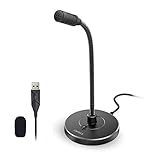
- 【Crystal Clear Audio Quality】Our Omnidirectional pattern condenser microphone accurately captures your voice, making it perfect for dictation, online classrooms, and more.
- 【Active Noise-Cancelling】Come in CMTECK CCS2.0 SMART CHIP with Omnidirectional Polar Pattern, which can effectively block the background noise. The pop filter prevents plosives from overloading the microphone, ensuring only your voice is heard.7
- 【Convenient Mute Button with LED Indicator】You can quickly mute/un-mute the microphone with the Mute Button and the built-in LED light lets you know the working status(Greenlight: Connected; Red light: Mute mode).
- 【Easy to use】 No drivers needed, just plug and record without external power supply, directly connect the microphone to a USB compatible device, well compatible with Windows(7, 8 and 10), Mac OS and PS4 (NOT compatible with Raspberry Pi/Linux/Android)
- 【Mini size with Adjustable Gooseneck】Adopted flexible and adjustable gooseneck metal pipe, easily adjust position 360 degrees to suit user comfort. The compact and stable base maximizes your desktop space.
Rank #4
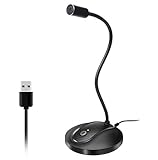
- 360 Degree Position Adjustable Gooseneck Design --Plug and play USB microphone Pick up the sound from 360-degree with high sensitivity, in the best possible location for sound to your PC gaming, dragon voice dictation, and talk to Cortana
- Mute Button & LED Indicator --One-click to mute/unmute your microphone for pc, Build-in LED indicator tells you the working status at any time
- Intelligent Noise-Canceling Tech --Premium omnidirectional condenser microphone with noise-canceling technology can pick up your clear voice and reduce background noise and echo
- USB Plug&Play(1.8/6ft USB Cable) -- No driver required. Just need to plug & play for the microphone to start recording, well compatible with Windows(7, 8, 10 and 11) and macOS. (NOT compatible with Xbox/Raspberry Pi/Android)
- Solid Construction--Adopting premium metal pipe and heavy-duty ABS stand to make sure that you will be satisfied with our computer mic quality
Rank #3

- Custom three-capsule array: This professional USB mic produces clear, powerful, broadcast-quality sound for YouTube videos, Twitch game streaming, podcasting, Zoom meetings, music recording and more
- Blue VO!CE software: Elevate your streamings and recordings with clear broadcast vocal sound and entertain your audience with enhanced effects, advanced modulation and HD audio samples
- Four pickup patterns: Flexible cardioid, omni, bidirectional, and stereo pickup patterns allow you to record in ways that would normally require multiple mics, for vocals, instruments and podcasts
- Onboard audio controls: Headphone volume, pattern selection, instant mute, and mic gain put you in charge of every level of the audio recording and streaming process
- Positionable design: Pivot the mic in relation to the sound source to optimize your sound quality thanks to the adjustable desktop stand and track your voice in real time with no-latency monitoring
Product prices and availability are accurate as of the date/time indicated and are subject to change. Any price and availability information displayed on Amazon at the time of purchase will apply.