Yes, a Raspberry Pi can run encoder software that sends a YouTube live stream, and looping prerecorded video is technically plausible. But the official examples and specifications available do not establish that a particular Pi setup will run unattended 24/7. Continuous operation depends on compatible media, stable power and internet, recovery arrangements, and monitoring. YouTube’s encoder settings provide the streaming targets; they are not a guarantee of Raspberry Pi performance.
What a Pi can—and cannot—be expected to do
A Pi can act as the computer running an encoder that sends video to YouTube Live. Raspberry Pi’s official site documented a Pi Zero project using FFmpeg and Docker in 2017, while YouTube explains how an encoder connects using the live server URL and stream key. Those examples establish that a Pi-based encoder workflow is possible, not that a current model has been certified for nonstop prerecorded playback.
Raspberry Pi 5 is a current hardware example: it has a 2.4 GHz quad-core processor, hardware decoding for 4Kp60 HEVC, Gigabit Ethernet, microSD support, and PCIe storage options. Raspberry Pi recommends a quality 5V/5A USB-C power supply and says active cooling helps the board perform best. Hardware decoding is not a promise that the Pi can transcode every video format in real time. For a low-maintenance setup, use media compatible with the intended stream profile and avoid unnecessary re-encoding where the software workflow allows it. Raspberry Pi 5 specifications
The distinction matters: playing a prerecorded file in a loop and capturing a live camera are different jobs. This setup sends prerecorded video through an encoder; it does not make the Pi a camera-based live production system.
What’s actually slowing this PC down?
Pick the symptom - the matching free tool is one click away.
#1 Best Overall

- Includes Raspberry Pi 4 4GB Model B with 1.5GHz 64-bit quad-core CPU (4GB RAM)
- Includes Pre-Loaded 32GB EVO+ Micro SD Card (Class 10), USB MicroSD Card Reader
- CanaKit Premium High-Gloss Raspberry Pi 4 Case with Integrated Fan Mount, CanaKit Low Noise Bearing System Fan
- CanaKit 3.5A USB-C Raspberry Pi 4 Power Supply (US Plug) with Noise Filter, Set of Heat Sinks, Display Cable - 6 foot (Supports up to 4K60p)
- CanaKit USB-C PiSwitch (On/Off Power Switch for Raspberry Pi 4)
Configure the Pi and YouTube stream
- Enable YouTube Live. YouTube says first-time activation can take up to 24 hours, so enable it before the planned start. YouTube: Get started with live streaming
- Install an encoder workflow on the Pi. FFmpeg was used in Raspberry Pi’s historical Pi Zero example. Choose software and media formats the Pi can handle for the intended output; do not assume decoding support means every source can be re-encoded smoothly.
- Create the YouTube broadcast and connect the encoder. Copy YouTube’s live server URL and stream key into the encoder’s stream destination settings. The key connects the encoder to your channel’s broadcast, so treat it like a password: do not publish it, include it in screenshots, or share it. If it is exposed, replace it in YouTube’s live settings. YouTube encoder setup
- Set the output to match the source and the connection. Choose resolution, frame rate, codec, bitrate, keyframe interval, and audio format deliberately. YouTube recommends RTMPS, supports H.264, H.265/HEVC, and AV1 video, and AAC or MP3 audio. It recommends constant bitrate (CBR) and a two-second keyframe interval, which should not exceed four seconds. YouTube: Choose live encoder settings, bitrates, and resolutions
- Test before leaving it unattended. Use representative footage, including the motion and audio expected in the real stream. Check YouTube’s stream health and make sure the Pi, encoder, and network sustain the selected output. YouTube advises testing representative audio and motion and monitoring stream health; this is more useful than assuming a setting is safe because the Pi can decode a related format.
- Plan recovery and session restarts. Arrange how the encoder will restart after a software failure, and consider what happens after power or internet loss. Monitor the stream after launch. No cited source guarantees uninterrupted operation for a Pi setup. YouTube says streams under 12 hours are automatically archived; plan broadcast sessions with that threshold in mind rather than assuming one longer session will be archived intact.
Choose an ingest profile that fits your connection
YouTube’s published H.264 bitrate recommendations, accessed in 2026, are platform guidance—not measurements of what a Raspberry Pi can encode or transmit. Choose a profile the source, Pi workload, and upload connection can sustain. YouTube recommends testing upload speed and notes that it transcodes incoming streams for different playback formats, so the Pi does not need to generate every viewer resolution itself.
| H.264 output | YouTube recommended bitrate |
|---|---|
| 720p at 30 fps | 3 Mbps |
| 720p at 60 fps | 8 Mbps |
| 1080p at 30 fps | 10 Mbps |
| 1080p at 60 fps | 17 Mbps |
These are YouTube’s listed H.264 recommendations, not mandatory minimums. Leave headroom on the upload connection for normal network variation and other household or studio traffic; a speed test result alone does not prove an always-on connection will remain stable. YouTube’s guidance is to use quality that works reliably on the available connection. YouTube encoder recommendations
Rank #2
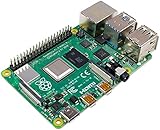
- Broadcom BCM2711, quad-core Cortex-A72 (ARM v8) 64-bit SoC @ 1. 5GHz
- 2. 4 GHz and 5. 0 GHz IEEE 802. 11b/g/n/ac wireless LAN, Bluetooth 5. 0, BLE
- 2 × USB 3. 0 ports, 2 x USB 2. 0 Ports
- 2 × micro HDMI ports supproting up to 4Kp60 video resolution
- Micro SD card slot for loading operating system and data storage
Keep reliability, rights, and monetization separate
Continuous operation needs its own plan
A 24/7 stream requires more than a working encoder command: power, cooling, storage, network access, and software all need to keep working, and failures need detection and recovery. Raspberry Pi’s hardware guidance recommends a quality 5V/5A supply for Pi 5 and says active cooling helps it perform best. These provisions reduce avoidable stress but do not guarantee uptime. The available official sources do not report an uninterrupted-run benchmark for a current Pi or certify a complete 24/7 prerecorded-video configuration.
A working stream is not automatically monetizable
YouTube’s monetization policies say repetitive or mass-produced material may be ineligible as “inauthentic content.” Its reused-content policy applies at the channel level: copied material with minimal changes may be ineligible even when the creator has permission. Copyright enforcement is a separate issue. Use media you have rights to use, and ensure the channel’s output adds original or authentic value; neither permission alone nor a Pi-based loop guarantees monetization. YouTube channel monetization policies
The Tool Desk
Outbyte PC Repair FREEClear out junk files and repair common Windows errorsFree Scan →Outbyte Driver Updater FREEScan for outdated or missing drivers - takes under a minuteDriver Scan →Rank #3
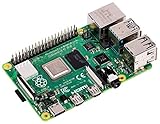
- Broadcom BCM2711, Quad core Cortex-A72 (ARM v8) 64-bit SoC @ 1.5GHz
- 1GB, 2GB, 4GB or 8GB LPDDR4-3200 SDRAM (depending on model)
- 2.4 GHz and 5.0 GHz IEEE 802.11ac wireless, Bluetooth 5.0, BLE Gigabit Ethernet
- 2 USB 3.0 ports; 2 USB 2.0 ports.
- Raspberry Pi standard 40 pin GPIO header (fully backwards compatible with previous boards)
DIY Pi versus a cloud service
With a Pi, you own and maintain the local hardware and depend on the power and internet connection where it runs. You also need to manage compatible media, encoder settings, monitoring, and recovery. A cloud service shifts the always-on machine and its local-power dependency away from your home, though you still need to configure the YouTube stream and follow YouTube’s rules. YouTube’s encoder guide lists Gyre as a cloud-based option for 24/7 prerecorded YouTube streams; that listing establishes relevance, not an endorsement.
Or let it run in the cloud
StreamNeo is a YouTube-only cloud service for keeping a channel live from uploaded videos: upload a recording or build a playlist, add your YouTube stream key once, and go live. Nothing has to stay on at home. It streams your upload as made, up to 4K 60fps, at one price per slot; it can automatically recover if YouTube drops the stream. The first day is free with no card. Monthly: $9.99 per month. See StreamNeo or start the free first day.
Quick Recap
Best Value

- Includes Raspberry Pi 4 4GB Model B with 1.5GHz 64-bit quad-core CPU (4GB RAM)
- CanaKit 3.5A USB-C Power Supply with Noise Filter (UL Listed) specially designed for the Raspberry Pi 4 (5-foot cable)
- CanaKit USB-C PiSwitch (On/Off Power Switch)
- Set of 3 Aluminum Heat Sinks for the Raspberry Pi 4
Rank #4

- Vilros Complete Starter Kit for Pi 4 Includes Raspberry Pi 4 Model B Board and all the accessories you need to get started.
- 9-PART KIT WILL HAVE YOU READY TO GET UP AND RUNNING: Kit Includes 1. Raspberry Pi 4 Model B Board 2. Case With Easy to connect Built-in fan 3. 64GB Micro SD card Preloaded with RP OS 4. Vilros Pi 4 Compatible Power Supply with Inline on/off switch (power supply color may vary white/black) 5. Micro HDMI to Standard HDMI cable (5ft) 6. Micro SD to USB adapter to reflash card if desired 7. Neoprene Storage Bag to store all parts when not in use 8. Set of 4 Heatsinks 9. Vilros QuickStart Guide instruction booklet for Pi 4
- PASSIVE & ACTIVE COOLING: The included case is well-vented and the kit also includes a set of heatsinks with thermal stickers for easy application and a pre-installed fan to keep the board cool in any use.
- CONVENIENT ACCESSORIES: The power supply features an inline on/off switch neoprene bag that holds and protects all the parts when not in use and the QuickStart guide is updated and written for Raspberry Pi 4.
- IMPORTANT: Kit does NOT include Keyboard, Mouse or Monitor
Product prices and availability are accurate as of the date/time indicated and are subject to change. Any price and availability information displayed on Amazon at the time of purchase will apply.



