Do these 3 things before closing this tab:
1Repair Windows errors before they cause bigger problems2Scan for outdated or missing drivers - takes under a minute3Clear out junk files and repair common Windows errorsAmazon CloudFront delivers live video to viewers; it does not encode or package a live feed. First use an encoder and, when needed, a packager or origin to create the manifests and media segments. Then configure a CloudFront distribution to route requests to that origin, apply the right cache and query-string behavior, and give viewers a player URL on the distribution.
Understand what CloudFront does in a live-stream workflow
A live video workflow has separate jobs. An encoder turns the incoming feed into video renditions and packages them as media segments with manifests that describe the segments and playback order. An origin or packager makes those outputs available. CloudFront sits downstream as the content delivery network (CDN): it receives viewer requests and delivers the prepared manifests and segments.
As the Amazon CloudFront Developer Guide puts it: “You must use an encoder to package video content before CloudFront can distribute the content.” CloudFront alone is therefore not a complete live-streaming system.
Typical AWS workflow
- Ingest the live source feed.
- Use AWS Elemental MediaLive to encode it in real time and create the output renditions.
- Use AWS Elemental MediaPackage to package the outputs when you need multiple delivery formats or packaging features. If MediaLive already produces formats suitable for the target devices, AWS also documents MediaStore as a scalable origin option.
- Configure CloudFront with the chosen origin and route requests for the stream’s manifests and media segments.
- Configure a compatible player to request the stream using the CloudFront URL.
The right design depends on the output formats, devices, and playback features you need. MediaPackage is useful when the workflow needs packaging into different formats, DRM, or manifest functions; MediaStore is an alternative when the outputs already match the required device formats.
Recommended Free Tools
#1 Best Overall

- 【1080P 60FPS Video Capture Card】 This HDMI game capture card is based on USB3.0 high speed transmission port, input resolution up to 4K@30HZ, output resolution up to 2K@30Hz or 1920×1080@60Hz. Type c and USB interface can meet most of the devices in daily life. Easily meet the online capture, real-time recording, online meetings, live gaming and other functions, so you have a better visual enjoyment. Note: For capture use only; requires capture software to function and is not intended for direct screen casting to a monitor or TV
- 【Ultra Low Latency Screen Sharing】 HDMI capture card is made of good quality aluminum alloy with strong heat dissipation, allowing you to enjoy ultra low latency while live gaming or video recording or live streaming, avoiding blue screens and lag. This HDMI to USBC capture card supports easy recording of good quality audio or HD video and transferring it to your computer or streaming platform, allowing you to record 60 fps HD video directly on your hard drive and real-time preview
- 【Plug and Play, Easy to Carry】 This HDMI 1080P video capture card does not require any additional drivers or external power supply, just plug and play for fast capture. The capture card is small and lightweight, so you can put it in your bag for emergencies, making it very portable for outdoor live streaming. It's also a great way to share content in game recording, video conference, video recorder and online teaching
- 【Wide Compatibility USB Capture Card】 Easily streams to Facebook, Youtube or Twitch. With the connection, this HDMI to USB C/3.0 video capture devices can be working on several Operating Systems and various software: Windows 7/ 8/ 10, Mac OS or above, Linux, Android, Laptop, Xbox One, PS3/PS4/PS5, Camera, DVDs, Set Top Box, Webcame, DSLR, Switch/Switch 2, TV BOX, HDTV, Potplayer/VLC, ZOOM, OBS Studio etc.
- 【Package Content & Note】 1x HD Audio Capture Card , 1x USB 3.0 to USB C Adapter (A-side 3.0, B-side 2.0), 1x user manual. Please note that you need to restart the OBS Studio software after the audio setup is complete, otherwise it will result in no sound output. When using an adapter, if the device is recognized as USB 2.0, try using the other side with the USB-C port. Simply flip the capture card and reconnect it to be recognized as USB 3.0
Prepare the origin and decide which formats to serve
Before creating the distribution, establish the origin that CloudFront will serve. For the MediaPackage workflow, the live-stream setup assumes that the channel and endpoint already exist. A MediaStore workflow instead uses the relevant container as the origin. The distribution’s origin must point to the endpoint or container that actually holds the prepared live outputs.
The format determines which requests CloudFront must route. Common streaming formats include Apple HLS, MPEG DASH, Microsoft Smooth Streaming, and CMAF. The manifest and segment extensions differ, so do not reuse one format’s cache-behavior patterns for another.
| Format or output | Manifest request | Media segment request | Configuration implication |
|---|---|---|---|
| HLS | .m3u8 |
.ts |
Route manifest and segment requests with patterns appropriate to the endpoint. |
| CMAF | .m3u8 |
.mp4 |
Do not assume that HLS manifest routing also covers the segment path. |
| DASH | .mpd |
.mp4 |
Route the DASH manifest and media requests using the endpoint’s paths. |
| Smooth Streaming | Single manifest behavior | Not specified as a separate behavior in the cited AWS guidance | Follow the current AWS instructions for the endpoint’s exact request pattern. |
These extensions identify the broad format-specific distinction, not a complete set of CloudFront path patterns. Use the current AWS setup instructions for the precise endpoint paths and patterns for your selected origin and format.
Create the CloudFront distribution and route stream requests
- Choose the origin. In the CloudFront distribution configuration, set the origin to the MediaPackage endpoint or MediaStore container that serves the prepared outputs. Use the endpoint path required by that origin.
- Add cache behaviors for the output. Configure behaviors to route manifest and segment requests to the origin. For MediaPackage, AWS typically uses a behavior for manifests and another for segments. Match the patterns to the selected format and endpoint; Smooth Streaming uses a single manifest behavior in the documented pattern.
- Set cache behavior for a live feed. AWS’s documented live MediaPackage policy uses a minimum TTL of five seconds or less to help avoid stale content. This is a live-stream freshness setting, not a blanket recommendation for every CloudFront workload.
- Forward only the query strings your workflow uses. The documented MediaPackage setup includes the
mmodification-time query string. Addstartandendfor time-shifted viewing,aws.manifestfilterfor manifest filtering, or_HLS_msnand_HLS_partfor LL-HLS blocking playlist requests only when those features are enabled. - Protect the origin. AWS recommends header-based CDN authorization between MediaPackage endpoints and CloudFront. Its reference solution uses a CDN Identifier custom HTTP header and stores the identifier in AWS Secrets Manager. Check the current AWS setup instructions for the exact configuration and handling of the secret.
- Use the CloudFront URL in the player. Point the compatible player at the stream file through the standard CloudFront URL format, rather than exposing the origin endpoint as the viewer-facing address.
Check playback from the viewer’s side
Test the complete path with the same output format and player that viewers will use. Confirm that the player can retrieve the manifest through CloudFront and that its referenced segments also load. A manifest that loads while its segment requests fail usually points to a routing, path, or origin-access mismatch; a stale live playlist can indicate that cache freshness or required query-string forwarding is wrong.
Rank #2

- 【1080P HD High Quality】Capture resolution up to 1080p for video source and it is ideal for all HDMI devices such as PS4, PS3, Xbox One, Xbox 360, Wii U, DVDs, DSLR, Camera, Security Camera and set top box. Note: Video input supports 4K30/60Hz and 1080p120/144Hz. Does not support 4K120Hz/144Hz. Output supports up to 2K30Hz.
- 【Plug and Play】No driver or external power supply required, true PnP. Once plugged in, the device is identified automatically as a webcam. Detect input and adjust output automatically. Won't occupy CPU, optional audio capture. No freeze with correct setting.
- 【Compatible with Multiple Systems】suitable for Windows and Mac OS. High speed USB 3.0 technology and superior low latency technology makes it easier for you to transmit live streaming to Twitch, Youtube, Facebook, Twitter, OBS, Potplayer and VLC.
- 【HDMI LOOP-OUT】Based on the high-speed USB 3.0 technology, it can capture one single channel HD HDMI video signal. There is no delay when you are playing game live.
- 【Support Mic-in for Commentary】Rybozen capture card has microphone input and you can use it to add external commentary when playing a game. Please note: it only accepts 3.5mm TRS standard microphone headset.
- Verify that the distribution’s origin points to the correct endpoint or container and includes the necessary origin path.
- Check that manifest and segment request paths match the selected format and the cache behaviors.
- Confirm the query strings required for the enabled MediaPackage features are being handled as intended.
- Check the origin authorization configuration if requests through CloudFront cannot reach MediaPackage.
- Test time-shift or LL-HLS behavior only when those features are configured; forwarding optional parameters that the workflow does not use is not a substitute for configuring the feature.
Choose a resilience design that fits the service
CloudFront delivery can be paired with upstream redundancy. AWS’s Live Streaming on AWS reference solution describes parallel MediaLive feeds, packaging to HLS, DASH, and CMAF through MediaPackage, and CloudFront delivery using a CDN Identifier header. This is a broader redundant architecture than a single encoder and origin, and should be evaluated against the event’s recovery requirements and operating complexity.
Media quality-aware resiliency
AWS’s media quality-aware resiliency (MQAR) feature can select between MediaPackage v2 origins using a Media Quality Confidence Score generated by MediaLive. Its documented flow makes a primary GET request and a concurrent secondary HEAD request, tracks the origin scores, and uses the higher-scoring origin for later requests.
The documented feature currently supports MediaPackage v2 origins. For a cross-region deployment, AWS specifies a secondary channel in another Region with matching settings and an origin group configured for media quality scoring. It is not a generic failover setting for arbitrary origins; confirm that the origin type and deployment meet the current AWS requirements.
Estimate delivery cost using your event assumptions
CloudFront can account for a large share of an event’s modeled cost. The figures below are AWS sample estimates for US East (N. Virginia), not general quotes or stable benchmarks. AWS’s accessed guide does not state a publication year, and its prices are subject to change. The examples assume viewers consume the highest-bitrate rendition; the approximately 10,000-viewer estimate also assumes a 99% CDN-to-MediaPackage cache-hit ratio. AWS notes that QVBR and variable video complexity can lower the estimate.
The Tool Desk
Outbyte Driver Updater FREEFix the driver behind crashes, sound loss and screen glitchesFind Drivers →Outbyte PC Repair FREEClear out junk files and repair common Windows errorsFree Scan →Rank #3
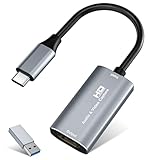
- 【4K HDMI Input, 2K@30Hz Recording】Powered by a true USB 3.0 high-speed interface, the capture card supports up to 4K@30Hz HDMI input and records at 2K@30Hz or 1080P@60Hz. Perfect for gamers, streamers, and professionals who need crisp, smooth video for live streaming, gameplay recording, or online meetings.
- 【Ultra Low Latency Screen Sharing】Built with a premium aluminum alloy shell and advanced chipset for stable heat dissipation, ensuring ultra-low latency transmission. Capture high-quality video and dual-channel audio in real time—no lag, no frame drop—ideal for Twitch, YouTube, or OBS streaming.
- 【Easy Plug and Play, Compact & Portable】No driver or external power required—just plug and play via USB 3.0 or Type-C connection to your Windows or macOS computer. Lightweight and compact design makes it easy to carry for outdoor streaming, live shows, or mobile recording setups.
- 【Wide Compatibility & Multi-Device Support】Compatible with Windows 7 8 10 11, macOS, Linux,Android and supports most popular software such as OBS, Zoom, VLC, Twitch Studio, and more. Works seamlessly with PS4, PS5, Xbox, Switch, DSLR cameras, TV boxes, and other HDMI-output devices for streaming to YouTube, Twitch, etc.
- 【What You Get】Includes: HDMI Capture Card, USB 3.0 to USB-C Adapter, User Manual. Tips: Make sure your tablet’s OTG function is enabled before connecting. Test your HDMI device with a monitor first to confirm video and audio output, then connect to the Video Capture Card for recording.
| AWS sample event | MediaLive | MediaPackage | CloudFront | Total |
|---|---|---|---|---|
| One-hour event, 1,000 viewers; sample estimate, US East (N. Virginia), highest-bitrate viewer consumption | $1.99/hour | $0.51/hour | $67.24/hour | $69.74/hour |
| One-hour event, approximately 10,000 viewers; sample estimate, US East (N. Virginia), highest-bitrate consumption and 99% CDN-to-MediaPackage cache-hit ratio | $3.75/hour | $9.01/hour | $1,492.56/hour | $1,505.60/hour |
Build an estimate for the actual event from its audience, bitrate ladder, cache-hit behavior, Region, and selected service configuration. Check current AWS pricing for the Region and usage you expect rather than extrapolating from these examples.
Independent reader supportYour contribution helps us test, update, and keep practical guides available for everyone.Keep the production and playback rights in view
CloudFront configuration does not grant rights to stream the underlying video or music. Before sending a feed through this architecture, confirm that you have the rights and permissions needed for the content and destination platform, and check the platform’s current live-stream, copyright, and reused-content requirements. A technically healthy CDN cannot resolve a rights or platform-policy issue.
Or let it run in the cloud
CloudFront is part of an AWS delivery architecture for a prepared live feed. If your goal instead is to keep a YouTube channel live continuously from uploaded videos, StreamNeo is a separate, simpler workflow: upload a recording or build a playlist, add your YouTube stream key once, and go live. It plays uploaded videos, not a camera feed, and streams to YouTube only.
- Nothing has to stay on at home; the stream runs in the cloud.
- Any quality up to 4K 60fps at one flat price per slot, with uploaded files streamed as made and no re-encode or quality tiers.
- Automatic recovery if YouTube drops the stream.
- The first day is free with no card, one free day per account.
The monthly option is $9.99 per month. See StreamNeo for details, or start the free day.
What’s actually slowing this PC down?
Pick the symptom - the matching free tool is one click away.
Rank #4

- High-Quality Video Capture, 4K HDMI Capture Card Ready: Capture smooth and vibrant video with this 4K HDMI capture card, engineered for gamers and content creators who demand crisp 1080P 60FPS video quality. Whether you're streaming to Twitch or recording gameplay for YouTube, your footage will look professional and detailed
- Plug-and-Play USB Capture Card, No Drivers Needed: Designed as a USB capture card for streaming, this device works instantly out of the box, just plug into your PC or laptop and start capturing. Fully compatible with popular software like OBS Studio, Streamlabs, and XSplit, making setup quick and stress-free for beginners and pros alike
- Universal Compatibility PS5, Xbox, Switch & More: Stream or record gameplay from virtually any HDMI-enabled device including Nintendo Switch, PS5, Xbox Series X, DSLR cameras, and PCs. The video capture card for gaming supports seamless passthrough so you can play without lag while your audience watches every frame in real time
- Low-Latency Performance for Smooth Streaming: This capture card for streaming minimizes delay between gameplay and broadcast, so you get reliable, low-latency capture that works well for competitive gaming, live broadcasts, and podcast sessions. Suitable for those building their channel with high-quality, engaging content
- Compact & Portable Design for Content Creators: Lightweight and portable, this USB 3.0 capture card works well for creators who travel or switch gaming setups often. Throw it in your bag and stream or record wherever you are, at home, events, LAN parties, streaming or studio sessions
Frequently Asked Questions
Does CloudFront create the HLS or DASH files for a live stream?
No. An upstream encoder and, depending on the workflow, a packager or origin must produce the manifests and segments first.
Can the same CloudFront distribution serve more than one streaming format?
It can be configured for the formats your origin supplies, but each format needs request routing and player support that match its manifests, segments, and endpoint paths.
Is CloudFront a complete live-streaming setup by itself?
No. It is the delivery layer; a live source, encoding, and prepared origin outputs are also required.
Quick Recap
Product prices and availability are accurate as of the date/time indicated and are subject to change. Any price and availability information displayed on Amazon at the time of purchase will apply.