Quick wins for a faster PC:
Fix the driver behind crashes, sound loss and screen glitchesFind Drivers →Repair Windows errors before they cause bigger problemsFix Now →Netflix was created in 1997 by Marc Randolph and Reed Hastings as an internet-based business for renting DVDs by mail. The service opened to the public on April 14, 1998, offering DVD rentals and sales—not streaming. Its defining subscription model, built around a customer queue, prepaid returns and no late fees, developed later.
Who founded Netflix?
Netflix was founded in Scotts Valley, California, by Marc Randolph and Reed Hastings, who had worked together at Pure Software. Netflix, Inc. was incorporated on August 29, 1997; its SEC filing says it began operations on April 14, 1998. Those are distinct milestones: incorporation established the company, while April 14 marked the public opening of its online DVD store. Netflix’s SEC filing records the dates.
![Roma (The Criterion Collection) [DVD]](https://m.media-amazon.com/images/I/316+gsgOhGL._SL160_.jpg)

Randolph was the company’s first chief executive. Netflix’s launch announcement identified him as president and CEO. Hastings was a co-founder and major early investor who later became chief executive. Describing Netflix as Hastings’s solo creation leaves out Randolph’s founding role and his work shaping the early business. The company’s 1998 announcement names Randolph in his launch-period role.
Did a $40 late fee create Netflix?
Reed Hastings later popularized a story that a $40 late fee for the film Apollo 13 helped inspire Netflix. Marc Randolph has challenged the simplified version: he describes the company as emerging from a broader search for an internet business, not one decisive late-fee incident. A Yale School of Management case discusses Hastings’s account, while a TechCrunch interview with Randolph gives his perspective. A Concordia University research paper examines the late-fee story as an origin narrative.
#1 Best Overall
The anecdote captures a real selling point of the later service—no late fees—but it should not be treated as independently established proof of how Netflix began. The founders were working through a larger practical question: what kind of product could an online store deliver conveniently by mail?
Why did Netflix choose DVDs?
DVDs were a new home-video format in the United States in 1997. Compared with bulky VHS cassettes, discs were small and light enough to make postal delivery a more plausible foundation for a rental business. The format also had an emerging base of DVD players. Netflix combined that opportunity with the internet’s ability to display a catalog broader than the stock of a single neighborhood video store.
The company’s April 1998 launch announcement described an internet store for DVD rentals and sales. Netflix did not invent DVDs or home video; its early proposition was to connect an online catalog with a physical format suited to shipping.
Rank #2

- Let the games begin! Own the genre-defining Saw horror series in all its grisly glory. Five-disc set includes: Saw (2004), Saw II (2005), Saw III (2006), Saw IV (2007), Saw V (2008), Saw VI (2009), Saw: The Final Chapter (2010) and Saw 3D: The Final Chapter (2010).
- Genre: Horror
What did Netflix offer when it opened?
Netflix began operations on April 14, 1998. Its launch announcement presented the service as an online DVD shop with both rentals and purchases, including a way for a rental payment to be credited toward buying the title. The announcement described movie information and listings, not the modern streaming interface. The launch model charged for individual rentals; the familiar subscription service came later. Netflix’s contemporary announcement and its 2002 SEC registration statement distinguish the early transaction-based business from its later subscription model.
What’s actually slowing this PC down?
Pick the symptom - the matching free tool is one click away.
The basic rental journey was straightforward:
- A customer chose a DVD from Netflix’s website.
- Netflix mailed the disc to the customer.
- The customer returned it in prepaid packaging.
- Netflix processed the return and sent the next available title when the service model called for it.
This depended on more than a website: customers needed a catalog, inventory, reliable postal delivery and a return process simple enough to repeat.
How did Netflix’s subscription model change the experience?
Netflix moved beyond charging for each rental and made a monthly subscription central to its business. By the time of its 2002 SEC registration statement, the company described a service with no due dates, late fees or shipping charges. Subscribers could maintain a queue of titles; after a disc was returned and processed, Netflix sent the next available selection. The 2002 filing documents those features.
Rank #3
The shift changed the customer relationship. Instead of weighing the cost and deadline of each individual rental, a subscriber could keep a ranked list and receive titles in sequence. Ratings and recommendations helped customers navigate a much larger catalog. Netflix later described tailoring parts of its site to rental and rating histories in its 2009 SEC filing. Recommendations supported discovery and repeat use; they were one element of a larger model, not the sole reason it worked.
Why logistics mattered as much as the website
Mail order gave Netflix breadth and convenience, but it could not provide the instant pickup available at a local video store. To make waiting worthwhile, the company had to deliver reliably and get the next disc moving quickly. Its operation linked postal routing, prepaid return envelopes, inventory placement, disc processing and each customer’s queue.
Free tools Windows power users keep installed
One-click scans. No signup required.
The Yale School of Management case describes Netflix’s attention to postal processes, warehouse locations, processing procedures and envelope design. These details were part of the product: a great website could not compensate for slow or unreliable fulfillment. Centralized inventory could provide access to a wider selection than a local shop, but only if the mail-and-processing system made that selection usable.
Rank #4

- Aurora Teagarden: 12 film collections
- Brand: Hallmark
How did Netflix become a streaming company?
Streaming was a later transformation, not the founding idea. Netflix expanded its DVD-by-mail service to include internet streaming in 2007, according to its 2010 SEC filing. The company’s evolution can be understood as a sequence: online DVD sales and rentals, subscription rentals, queue and recommendation features, scaled mail fulfillment, and then streaming, followed by a greater emphasis on licensed and original programming.
That chronology matters. Netflix was not a streaming startup in 1997; it began with discs, postal delivery and an online storefront. Streaming was a second major shift in how the company delivered entertainment.
Independent reader supportYour contribution helps us test, update, and keep practical guides available for everyone.How did Netflix challenge video stores?
Netflix did not simply put a video store on the web. It changed where customers browsed, how they received movies and how they paid. The online catalog and centralized stock could offer more breadth than a nearby store; home delivery removed the trip; and subscriptions, queues and the absence of late fees made repeated rentals feel less like a series of separate transactions.
Crashes, No Sound, or Screen Glitches?
Random freezes, missing sound and display glitches usually trace back to one bad driver. Find and replace yours safely.Free scan · under a minutePC Slower Than It Used to Be?
A free scan shows the junk files, broken settings and background clutter dragging Windows down - then fixes them in one click.Free scan · Windows 10 & 11Best Value
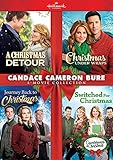
- Brand: Punto
- Candace Cameron Bure: 4 Movies Collection (Wm)
- Brand: Hallmark
There was a clear trade-off: customers gave up immediate access in exchange for selection, home delivery and a less deadline-driven rental experience. Netflix did not replace local stores overnight. Its model became viable through a combination of customer convenience and the operational ability to fulfill mail orders at scale, as the Yale case explains.
What Netflix actually brought together
Netflix’s creation is best understood as a combination rather than a single invention. It did not invent the DVD, postal delivery, online shopping, subscriptions or movie recommendations. It assembled those pieces into an entertainment service: an online catalog connected to a physical distribution system, then refined with recurring billing, queues and discovery tools. That combination solved a different problem from the local rental store—and gave Netflix a foundation it could later transform into streaming.
Quick Recap
Product prices and availability are accurate as of the date/time indicated and are subject to change. Any price and availability information displayed on Amazon at the time of purchase will apply.