Some links on this page are affiliate links: if you buy through them we may earn a commission, at no extra cost to you.
Netflix’s November 15, 2024, broadcast of Jake Paul vs. Mike Tyson was both a record-setting audience draw and a conspicuous streaming failure for some viewers. People reported frozen pictures, loading screens, pixelation, audio interruptions and crashes—sometimes before the main event. Netflix acknowledged technical challenges, but never publicly identified one confirmed cause. The best-supported conclusion is not that the service crashed for everyone, or that it simply ran out of bandwidth: at extraordinary live-event scale, the experience was not dependable for all viewers.
A huge fight, and an uneven stream
The fight took place at AT&T Stadium in Arlington, Texas, on Friday, November 15, 2024. Netflix carried the main card globally, with the broadcast scheduled for 8 p.m. ET / 5 p.m. PT; the preliminary card was also available through Netflix and Tudum. The stadium held 72,300 people. At home, however, some viewers encountered a different kind of spectacle: a stream that stalled or fell apart.
Complaints surfaced during the undercard and grew as audiences tuned in for the Katie Taylor–Amanda Serrano co-main event and the Paul–Tyson main event. Reported symptoms included endless loading, frozen video, sudden drops in picture quality, audio interruptions, playback errors and difficulty reconnecting after a crash. For viewers trying to follow a live fight, even a short interruption could mean missing part of a round.
Recommended Free Tools
The Associated Press and trade coverage documented complaints, while social posts and forum threads showed individual viewers’ experiences. These sources establish that the problems were real and prominent, but they do not establish what percentage of the audience was affected. The outage was not universal, but it was widespread enough to become part of the event itself.
#1 Best Overall

- HD streaming made simple: With America’s number 1 TV streaming platform,* exploring popular apps—plus tons of free movies, shows, and live TV—is as easy as it is fun. *Based on hours streamed—Hypothesis Group
- Compact without compromises: The sleek design of Roku Streaming Stick won’t block neighboring HDMI ports, and it even powers from your TV alone, plugging into the back and staying out of sight. No wall outlet, no extra cords, no clutter.
- No more juggling remotes: Power up your TV, adjust the volume, and control your Roku device with one remote. Use your voice to quickly search, play entertainment, and more.
- Shows on the go: Take your TV to-go when traveling—without needing to log into someone else’s device.
- TV, simplified: With setup that only takes minutes, a simple-to-navigate Home Screen, and an uncluttered remote control that does all you need—Roku makes it easier to watch the TV you love.
Fortune reported more than 100,000 Downdetector reports during the livestream. That number is a signal of people reporting trouble—not a verified count of failed streams or viewers who could not watch. Some subscribers reported uninterrupted viewing, underscoring that performance varied. Location, internet provider, home network, device and the delivery path could all matter, but the public evidence does not identify which factors explain any particular viewer’s problem.
That distinction matters. The reports do not justify saying that Netflix went down for everyone, that millions definitely missed the fight, or that home Wi-Fi alone was to blame. Nor do they prove that Netflix ran out of bandwidth. A viewer sees a buffering symptom; that symptom by itself does not reveal where in the delivery chain the problem began.
Why a live fight is harder to stream than an episode
Netflix’s on-demand catalogue and a live sporting event place different demands on a streaming system. A film or episode can be distributed to delivery caches ahead of time. Viewers start at different moments, and playback can build a buffer before they reach a given scene. That buffer gives the player some room to ride out brief variations in delivery.
A major live event creates a synchronized audience: many people request the same new video segments at nearly the same time. The whole programme cannot be stored in advance, and viewers expect the action to arrive close to real time. Less buffer can mean less protection against a delay; more buffer can make the picture steadier but leave viewers further behind. A delay while live video is encoded, a segment is produced, or a cache is filled can therefore be more visible than a comparable delay in on-demand playback.
Rank #2

- Ultra-speedy streaming: Roku Ultra is 30% faster than any other Roku player, delivering a lightning-fast interface and apps that launch in a snap.
- Cinematic streaming: This TV streaming device brings the movie theater to your living room with spectacular 4K, HDR10+, and Dolby Vision picture alongside immersive Dolby Atmos audio.
- The ultimate Roku remote: The rechargeable Roku Voice Remote Pro offers backlit buttons, hands-free voice controls, and a lost remote finder.
- No more fumbling in the dark: See what you’re pressing with backlit buttons.
- Say goodbye to batteries: Keep your remote powered for months on a single charge.
There is no single “Netflix server” whose capacity explains every possible failure. Delivery involves a chain that can include live production and encoding, origin systems, content-delivery network (CDN) caches, routing and connections between networks, the subscriber’s ISP and home connection, and the app and device decoding the stream. Adaptive-bitrate playback can lower video quality when delivery slows, helping to keep a stream going; if the disruption is severe, the player may still stall or fail to recover promptly. These are general features of streaming systems, not a diagnosis of what happened on Netflix that night. Research on adaptive-bitrate streaming describes how quality selection and buffering interact.
Regional congestion, cache or origin bottlenecks, routing problems, segment-generation delays, app errors and local network conditions are all possible places for a live stream to falter. Repeated refreshing during a disruption can also send new requests into a system that is already struggling. But without Netflix’s technical data or a public postmortem, naming any one of these as the cause of the Tyson–Paul problems would be speculation.
What Netflix acknowledged—and what it did not
Netflix acknowledged technical challenges associated with the event’s unprecedented scale. In an account of remarks to employees, TheWrap reported that chief technology officer Elizabeth Stone said the launch team had prioritized stream stability for the majority of viewers, while recognizing that some members experienced poor quality.
That response confirms that Netflix knew some subscribers had a bad experience. It does not identify a failed server, a particular CDN, an ISP, a software defect or a single engineering mistake. Netflix did not publish a detailed public explanation attributing the buffering to one technical cause. “Netflix acknowledged problems” is supported; “the CDN failed” or “Netflix ran out of bandwidth” is not.
Rank #3

- 4K streaming made simple:With America’s number 1 TV streaming platform,* exploring popular apps—plus tons of free movies, shows, and live TV—is as easy as it is fun. *Based on hours streamed—Hypothesis Group
- 4K picture quality: With Roku Streaming Stick Plus, watch your favorites with brilliant 4K picture and vivid HDR color.
- Compact without compromises: Our sleek design won’t block neighboring HDMI ports, and it even powers from your TV alone, plugging into the back and staying out of sight. No wall outlet, no extra cords, no clutter.
- No more juggling remotes: Power up your TV, adjust the volume, and control your Roku device with one remote. Use your voice to quickly search, play entertainment, and more.
- Shows on the go: Take your TV to-go when traveling—without needing to log into someone else’s device.
It is also possible for a service to have ample total delivery capacity and still struggle in a particular region or at a particular handoff between networks. Demand may not be distributed evenly, and the same stream can travel through different providers and routes to different homes. “Not enough bandwidth” may sound like an explanation, but without evidence about where capacity was constrained, it is only a vague theory.
The audience figures measure different things
Netflix’s numbers show why the night cannot be described as simply a success or simply a failure:
- 60 million households tuned in live, according to Netflix’s initial report. A household is not the same as an individual viewer.
- 65 million concurrent streams was the reported global peak—a measure of simultaneous streams at the busiest point, not the total audience across the event.
- More than 108 million average live global viewers was a later Netflix-reported average-minute-audience estimate from opening to closing bell. It is not a claim that 108 million people watched at once.
- 38 million concurrent streams was Netflix’s reported U.S. peak, a regional figure rather than a second global total.
Netflix also reported that the event reached No. 1 in 78 countries and appeared in the Top 10 in all 91 countries tracked for the relevant week. Joe Hand Promotions said more than one million people watched at over 6,000 U.S. bars and restaurants. These figures describe reach and audience, not the quality of every stream.
Quick wins for a faster PC:
Scan for outdated or missing drivers - takes under a minuteDriver Scan →Clear out junk files and repair common Windows errorsFree Scan →Fix the driver behind crashes, sound loss and screen glitchesFind Drivers →A record peak can coexist with a poor experience for a subset of viewers. In fact, the enormous, concentrated demand helps explain why the event mattered as a test: Netflix demonstrated that it could attract a vast audience, but the complaints showed that audience scale alone was not proof of consistently reliable delivery.
Rank #4
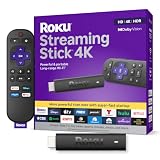
- Stunning 4K and Dolby Vision streaming made simple: With America’s number 1 TV streaming platform,* exploring popular apps—plus tons of free movies, shows, and live TV—is as easy as it is fun. *Based on hours streamed—Hypothesis Group
- Breathtaking picture quality: Stunningly sharp 4K picture brings out rich detail in your entertainment with four times the resolution of HD. Watch as colors pop off your screen and enjoy lifelike clarity with Dolby Vision and HDR10+.
- Seamless streaming for any room: With Roku Streaming Stick 4K, watch your favorite entertainment on any TV in the house, even in rooms farther from your router thanks to the long-range Wi-Fi receiver.
- Shows on the go: Take your TV to-go when traveling—without needing to log into someone else’s device.
- Compact without compromises: Our sleek design won’t block neighboring HDMI ports, so you can switch from streaming to gaming with ease. Plus, it’s designed to stay hidden behind your TV, keeping wires neatly out of sight
Why the incident mattered to Netflix’s live ambitions
This was not Netflix’s first live programme. It was, however, one of its most demanding and consequential live sports events to that point: a globally promoted fight with a huge audience arriving around the same time. Netflix was increasingly pursuing live programming, so the broadcast was a test of more than its ability to put a show on a schedule. It was a test of whether subscribers could count on the service when the moment could not be replayed in real time.
That distinction has business consequences. A buffering episode during a library title is frustrating, but viewers can pause, return later or choose something else. During a fight, a missed moment cannot be recovered as it happens. Viewers may be watching together, reacting in real time, or paying for a venue event that depends on everyone seeing the same action. The technical issue therefore becomes part of how audiences judge a platform’s credibility as a sports broadcaster.
The event did not lack reach; Netflix’s audience figures make that plain. Its weakness was consistency of experience. For the viewers who could not watch smoothly, the scale that made the fight a commercial triumph did not make the stream feel like a reliable broadcast.
Do these 3 things before closing this tab:
1Scan for outdated or missing drivers - takes under a minute2Repair Windows errors before they cause bigger problems3Fix the driver behind crashes, sound loss and screen glitchesDid Netflix do better afterward?
Netflix’s Christmas Day 2024 NFL games provide useful context. The company reported nearly 65 million unduplicated U.S. viewers across the two games, with average audiences of 24.3 million and 24.1 million. That suggests Netflix went on to deliver another pair of major live events at scale by its reported audience measures.
Best Value
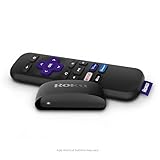
- Streaming made easy: Roku Express lets you stream free, live and premium TV over the Internet—right to your TV. It’s perfect for new users, secondary TVs and easy gifting—but powerful enough for seasoned pros
- Quick and easy setup: Just plug it into your TV with the included High Speed HDMI Cable and connect to the internet to get started
- Tons of power, tons of fun: Compact and power-packed, you’ll stream your favorites with ease; from movies and series on Apple TV, Prime Video, Netflix, The Roku Channel, HBO, Showtime and Google Play to cable alternatives like Hulu with Live TV and PlayStation Vue, enjoy the most talked about TV across free and paid channels
- Low cost, no extra fees: For under $30, Roku Express streaming device includes a High Speed HDMI Cable—and there’s no monthly equipment fee; with access to free TV on hundreds of channels, there’s plenty to stream without spending extra
- Simple remote: Incredibly easy to use, this remote features shortcut buttons to popular streaming channels
Those numbers do not establish that every viewer had a flawless stream, or that a specific engineering change fixed the Tyson–Paul problems. Netflix has not publicly tied the later NFL results to a complete solution for every possible failure mode. The fair reading is that live delivery continued to develop: later reach is evidence of capacity to serve another huge event, not proof that the earlier incident had one simple cause or that live streaming could no longer fail.
The verdict: a record audience, an unreliable experience for some
The Tyson–Paul broadcast was simultaneously an audience triumph and a service-quality embarrassment. Netflix attracted a historic crowd, while a meaningful but unquantified group of viewers reported interruptions at the moments they most wanted to watch. The company acknowledged technical challenges but did not disclose a definitive root cause, so claims that a specific server, CDN, ISP or bandwidth shortage caused the failures go beyond the public evidence.
The lasting lesson is narrower and more useful than “Netflix crashed”: the platform’s on-demand success did not guarantee a consistently dependable live experience at unprecedented concurrency. The fight proved Netflix could draw a global audience. For viewers stuck at a loading screen, it also showed why live sports demands reliability at the exact moment when reliability matters most.
PC Slower Than It Used to Be?
A free scan shows the junk files, broken settings and background clutter dragging Windows down - then fixes them in one click.Free scan · Windows 10 & 11Crashes, No Sound, or Screen Glitches?
Random freezes, missing sound and display glitches usually trace back to one bad driver. Find and replace yours safely.Free scan · under a minuteQuick Recap
Sources
- Netflix Media Center: event details
- Netflix Tudum: preliminary-card stream
- Associated Press: streaming complaints and the event
- AV Magazine: reported technical issues
- TheWrap: Netflix’s reported internal response
- Fortune: audience reports and Downdetector
- Netflix: initial audience figures
- Netflix: later audience and concurrency figures
- Netflix: Christmas Day NFL audience figures
Product prices and availability are accurate as of the date/time indicated and are subject to change. Any price and availability information displayed on Amazon at the time of purchase will apply.

