Some links on this page are affiliate links: if you buy through them we may earn a commission, at no extra cost to you.
OpenAI paused Sora video generations depicting Martin Luther King Jr. on October 16, 2025, after the Estate of Martin Luther King, Jr., Inc. requested the change. OpenAI and the estate cited “disrespectful depictions” by some users and said safeguards for historical figures were being strengthened. The move was a restriction on synthetic video in Sora—not a reported shutdown of Sora or a ban on discussing King.
What OpenAI paused—and when
OpenAI’s action concerned video generations depicting King’s likeness in Sora, the company’s video-generation service. The announcement was reported on October 16, with wider coverage appearing October 17, 2025. The estate’s request and the company’s response were described in a joint statement, which said OpenAI was strengthening safeguards for historical figures. TechCrunch reported the statement and the pause; TheWrap covered the Sora 2 restriction.


The wording matters: “paused generations” is more precise than saying OpenAI banned King. The available reporting does not establish that the restriction applied to every OpenAI product, to text about King, or to conventional use of archival photographs. Nor does it establish whether the pause is permanent or exactly how Sora enforces it.
What the reported videos showed
Content warning: reports described racist and demeaning depictions. Third-party accounts said one AI-generated video showed King making monkey noises in connection with his “I Have a Dream” speech; another reportedly depicted him wrestling Malcolm X. Other coverage described profane or otherwise degrading portrayals. These are reported examples, not material independently authenticated here. AIAAIC summarized the monkey-noise video report, while TheWrap covered other examples and the takedown response.
#1 Best Overall
OpenAI’s reported statement confirmed that some users had created “disrespectful depictions”; it did not publicly verify each example described in media coverage. Keeping that distinction clear avoids treating circulating synthetic clips as genuine recordings or attributing every reported video to OpenAI itself.
Who asked for the restriction, and what is a Sora cameo?
The request came from the Estate of Martin Luther King, Jr., Inc., commonly described in coverage as King’s estate. The joint statement was associated with King, Inc., OpenAI, Dr. Bernice A. King, John Hope Bryant, and the AI Ethics Council. The Times of India report also identifies the estate’s request.
In the statement as reported, OpenAI said authorized representatives or estate owners could ask that a person’s likeness not be used in Sora “cameos.” Here, a cameo means participation through a likeness in a generated Sora video, not a brief appearance in a conventional film. The reporting does not define the full process, explain whether it applies to every kind of likeness input, or establish the legal ownership of every aspect of King’s name, image, voice, or speeches.
Do these 3 things before closing this tab:
1Clear out junk files and repair common Windows errors2Fix the driver behind crashes, sound loss and screen glitches3Repair Windows errors before they cause bigger problemsWhy the decision raises a difficult policy question
OpenAI’s reported position recognizes competing interests: people have strong free-speech reasons to depict historical figures, while public figures and their families should have meaningful control over how their likenesses are used. That is a company’s stated policy position, not a court ruling that estates always control depictions of deceased public figures.
Rank #3
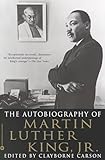
- Using Stanford University's voluminous collection of archival material, including previously unpublished writings, interviews, recordings, and correspondence, King scholar Clayborne Carson has constructed a remarkable first-person account of Dr. King's extraordinary life.
- Historical use: A realistic recreation could support a documentary, classroom lesson, or work of art. A blanket restriction can make those uses harder, even when a creator intends no deception or abuse.
- Abuse and distortion: The reported racist and humiliating examples show how synthetic media can reproduce harmful stereotypes and make invented scenes appear authentic.
- Consent after death: Families and estates may seek to prevent exploitative depictions, but standards for deceased public figures are not necessarily the same as rules for living people or private individuals.
- Enforcement and fairness: An estate-request system may give prominent families a route to seek protection, while less prominent families may have fewer resources to make their concerns heard.
These questions are not resolved simply by blocking one likeness in one product. A depiction might be legally permissible in one jurisdiction yet still be misleading or exploitative; conversely, educational or critical work can use a historical figure for reasons that a simple automated check may not recognize.
What the Sora pause does not settle
A restriction inside Sora cannot by itself stop videos made elsewhere or remove copies already shared on other services. It also does not establish that all such content was removed, that other generators use the same rules, or that the estate’s request created a general legal precedent. The Associated Press has covered Sora’s wider deepfake controversy and subsequent developments: AP’s account of the broader dispute.
Rank #4
The boundary between permitted and blocked material is also unclear from the available reporting. It does not specify how the policy handles a labeled documentary recreation, parody, alternate history, voice-only imitation, an uploaded archival image, or positive portrayals that still use King’s likeness. Nor does it describe the technical mechanism—such as whether Sora checks a name, visual resemblance, reference image, or some combination. A policy can be difficult to apply consistently when intent and context vary, and generated video can invent words, gestures, and events while looking like archival footage.
Free tools Windows power users keep installed
One-click scans. No signup required.
What to watch for next
The practical significance will depend on details OpenAI has not established in the reported announcement: whether the pause becomes permanent, how requests from representatives are reviewed, and whether the company explains the scope of its historical-figure safeguards. Clear labeling and provenance tools could help viewers distinguish generated scenes from archival material, but the reported pause alone does not show what such tools will be available or how they would work.
Best Value

- Special Anniversary Edition Martin Luther King Jr. 1929-1968
The central tension remains: synthetic video can make history vivid, but it can also put words or actions into a real person’s likeness in ways that mislead or demean. A platform restriction may reduce one route to harm while leaving questions of consent, historical expression, and protection beyond the platform unresolved.
Quick Recap
Product prices and availability are accurate as of the date/time indicated and are subject to change. Any price and availability information displayed on Amazon at the time of purchase will apply.

