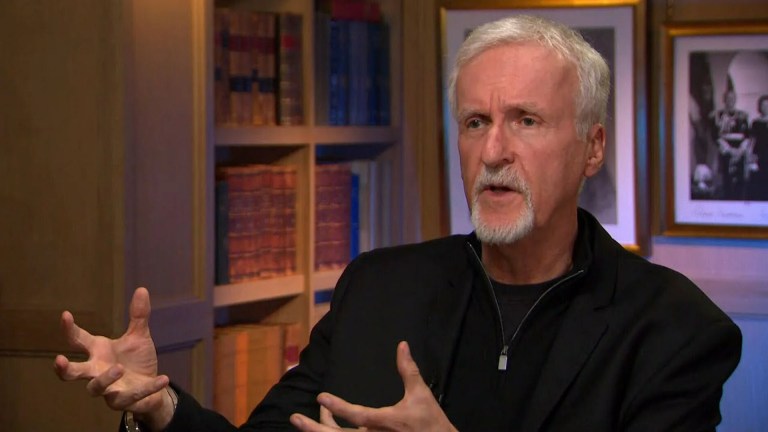
Guillermo del Toro said “I’d rather die” rather than use generative AI, expressing a personal creative stance during Terry Gross’s NPR Fresh Air interview published October 23, 2025. Del Toro was discussing his 2025 film Frankenstein, not declaring every form of artificial intelligence inherently unacceptable.
The remark makes more sense alongside del Toro’s ideas about human craftsmanship and the responsibility of creators. His discussion of generative AI returned to the same question at the heart of Mary Shelley’s story: what obligations follow when someone brings something powerful into the world?




Key takeaways
- Guillermo del Toro said “I’d rather die” when describing his personal refusal to use generative AI, during a Fresh Air interview published on October 23, 2025.
- Del Toro’s remark concerned generative AI and his own creative practice, not every form of artificial intelligence or a formal industry-wide policy.
- He connected the issue to “natural stupidity”: the danger of creating powerful things without considering their consequences.
- Del Toro’s 2025 film Frankenstein provides the central context because Mary Shelley’s story examines creation, responsibility, abandonment, and technological ambition.
- Del Toro’s preference for real sets, props, costumes, prosthetic makeup, and other human-made production elements does not prove that his film used no conventional digital visual effects.
Why did Guillermo del Toro say “I’d rather die” about AI?
Guillermo del Toro said “I’d rather die” while explaining that he was not interested in using generative AI and hoped to remain uninterested in it. The filmmaker made the deliberately emphatic comment to Terry Gross on NPR’s Fresh Air, in an interview published October 23, 2025, while promoting his adaptation of Frankenstein. Read the full Fresh Air interview transcript.
Gross asked del Toro about generative artificial intelligence. Del Toro described receiving an email asking for his position on AI and said his response was simply, “I’d rather die.” In context, the line was a personal statement about whether he wanted to use generative AI in his creative work. It was not a technical analysis of every AI system, a legal argument about copyright, or a declaration that all artificial intelligence is inherently evil.
Outdated Drivers Are Slowing You Down
One free scan finds every outdated or missing driver and matches the right update for your exact hardware.Free scan · exact hardware matchPC Slower Than It Used to Be?
A free scan shows the junk files, broken settings and background clutter dragging Windows down - then fixes them in one click.Free scan · Windows 10 & 11#1 Best Overall
The wording was intentionally absolute, but the claim behind it is narrower than the headline can sound. Del Toro was saying that he did not want generative AI to become part of his own creative process. The available interview does not establish that he has never encountered, used, or permitted any conventional digital tool or visual effect in filmmaking.
What did del Toro mean by “natural stupidity”?
Del Toro’s criticism focused as much on human judgment as on the technology itself. He contrasted generative AI with what he called “natural stupidity,” arguing that many serious problems arise when people make or deploy powerful things without thinking through the consequences.
That distinction matters. Del Toro was not presenting a simple argument that technology is bad because it is artificial. His concern was that ambition, novelty, and technical power can outrun responsibility. A tool can be impressive while the people using it remain careless about its effects on workers, audiences, culture, or the wider world.
His answer therefore works on two levels. On the surface, it is a refusal to use generative AI. At a deeper level, it is a warning about human beings who create first and consider responsibility later.
How does Frankenstein explain del Toro’s AI skepticism?
Frankenstein gives del Toro’s answer its clearest thematic setting: Victor Frankenstein creates life but fails to accept responsibility for what follows. Del Toro connected Victor’s hubris with contemporary technology entrepreneurs who create without adequately considering the consequences, according to the Fresh Air interview.
The comparison should not be reduced to “AI is the monster.” Shelley’s novel is more interested in the relationship between creator and creation, and in the damage caused by abandonment. Del Toro’s interpretation applies that ethical structure to modern innovation: the central question is not merely whether someone can make something, but what obligations begin once that thing exists.
Netflix’s official production coverage describes del Toro’s film as a story shaped by the relationship between creator and creation, parenthood, responsibility, and the consequences of abandonment. Those themes make the AI discussion especially relevant without turning the film into a literal allegory about generative software. Read Netflix’s interview with del Toro about bringing Frankenstein to life.
Rank #2
| Question | What the evidence supports | What it does not establish |
|---|---|---|
| What did del Toro reject? | His personal use of generative AI in creative work. | A universal rejection of every AI system or digital tool. |
| What ethical issue did he emphasize? | Creating or deploying powerful things without considering consequences. | A detailed legal, scientific, or policy framework for AI regulation. |
| Why mention Frankenstein? | The film and novel explore creation, responsibility, ambition, and abandonment. | That del Toro directly equated generative AI with Frankenstein’s Creature. |
| What does his production philosophy show? | A preference for human-led craft and tangible production elements. | That every frame of the film was made without digital technology. |
Why does del Toro prefer human-made craft?
Del Toro has said that visual effects should be used when set construction, prop building, or wardrobe creation cannot accomplish what a production needs. He also argued that audiences can recognize when a set is real or when a prop has been made by human hands. That preference is documented in Netflix’s official production interview.
The distinction is not simply between old technology and new technology. Del Toro’s preference is for visible intention and material presence: an object designed, built, worn, lit, photographed, and performed by people. A physical set gives actors something to respond to. A handmade creature design creates a chain of decisions that can be inspected in the finished image. The value, in this view, lies partly in the human process behind the result.
Netflix’s account of the production describes large sets, elaborate props, complex wardrobe, prosthetic makeup, production design, editing, and other specialized crafts. The feature identifies Tamara Deverell as production designer and Mike Hill as the creature-design and prosthetic-makeup specialist. Read Netflix’s production feature on the craft of Frankenstein.
Readers interested in that process may want to look for Guillermo del Toro Frankenstein screenplay book, the published volume Frankenstein: The Complete Screenplay, which includes the screenplay alongside concept art, film stills, and behind-the-scenes photography. The companion Art and Making of Frankenstein focuses more directly on concept art, storyboards, props, costumes, production ephemera, and interviews.
Does “I’d rather die” mean del Toro has never used digital effects?
No. The quote does not establish that Guillermo del Toro has never used digital effects, computer software, or other digital production tools. The evidence supports a rejection of generative AI as a creative substitute and a preference for human-led craftsmanship; it does not support describing Frankenstein as an entirely analog production.
Modern filmmaking can combine practical construction, prosthetic makeup, miniature or full-scale physical work, editing systems, conventional visual effects, compositing, color correction, and other digital processes. Del Toro’s position is best understood as a creative and ethical preference within that mixed production environment, not as proof that every image was produced physically.
This is also why the quote should not be presented as evidence that del Toro speaks for all filmmakers. It expresses one director’s philosophy about authorship, craft, and responsibility. Other filmmakers may use generative tools selectively, reject them for labor or copyright reasons, or distinguish between development, previsualization, and final-image production.
Rank #3
What is the connection between Mary Shelley’s novel and del Toro’s film?
Mary Shelley’s Frankenstein; or, The Modern Prometheus, first published in 1818, is the literary source for del Toro’s adaptation. The public-domain text is available through Project Gutenberg’s edition of Frankenstein.
Del Toro has described Shelley’s novel as a formative work that he encountered as a child and wanted to adapt for decades. The connection to generative AI is therefore thematic rather than superficial. Shelley’s story asks what happens when a creator pursues knowledge and achievement without accepting the emotional and moral duties attached to creation.
Free tools Windows power users keep installed
One-click scans. No signup required.
Readers who want the source behind the creator-and-creation argument can seek out Mary Shelley’s Frankenstein, including the Netflix tie-in edition with an introduction by del Toro. The original novel remains the essential starting point for understanding why the film’s ideas about ambition and abandonment extend beyond a monster story.
Independent reader supportYour contribution helps us test, update, and keep practical guides available for everyone.What is Guillermo del Toro’s Frankenstein about?
Guillermo del Toro wrote and directed the 2025 film Frankenstein, an adaptation of Mary Shelley’s story about a brilliant scientist and the creature produced by his experiment. Oscar Isaac plays Victor Frankenstein, Jacob Elordi plays the Creature, and Mia Goth plays Elizabeth, according to Netflix’s official release information.
The film opened in select theaters on October 17, 2025, and became available on Netflix on November 7, 2025. Readers asking where to watch Guillermo del Toro’s Frankenstein should verify current availability in their country because streaming catalogs and release rights can vary by region.
| Film detail | Information |
|---|---|
| Writer and director | Guillermo del Toro |
| Literary source | Mary Shelley’s Frankenstein; or, The Modern Prometheus |
| Victor Frankenstein | Oscar Isaac |
| The Creature | Jacob Elordi |
| Elizabeth | Mia Goth |
| Select-theater release | October 17, 2025 |
| Netflix availability | November 7, 2025 |
What does del Toro’s quote actually prove?
Del Toro’s statement proves that he expressed a strong personal opposition to using generative AI and that he framed the issue through questions of responsibility and human judgment. His comments also align with his stated preference for tangible, human-made elements in film production.
Do these 3 things before closing this tab:
1Scan for outdated or missing drivers - takes under a minute2Repair Windows errors before they cause bigger problems3Fix the driver behind crashes, sound loss and screen glitchesThe statement does not prove that generative AI is inherently evil, that del Toro has never used any digital effect, that Frankenstein contains no digital technology, or that all filmmakers share his view. The most accurate reading is narrower and more revealing: del Toro sees creative work as inseparable from the human choices, labor, and responsibility that produce it.
That is why the remark resonates with Frankenstein. The warning is not simply against making new things. It is against pursuing the power to make them while refusing to care for the consequences.
Frequently Asked Questions
Why did Guillermo del Toro say “I’d rather die” about AI?
Guillermo del Toro said “I’d rather die” when explaining his personal refusal to use generative AI. He made the comment to Terry Gross during an NPR Fresh Air interview published October 23, 2025, while discussing his film Frankenstein.
Does Guillermo del Toro reject all artificial intelligence and digital effects?
No. The available evidence concerns del Toro’s personal rejection of generative AI in his creative work, not every artificial-intelligence system, digital tool, or visual effect used in filmmaking.
What’s actually slowing this PC down?
Pick the symptom - the matching free tool is one click away.
How is del Toro’s AI opinion connected to Frankenstein?
The connection is thematic: Frankenstein examines what happens when a creator makes something powerful without accepting responsibility for its consequences. Del Toro related that idea to modern technological ambition.
Where can viewers watch Guillermo del Toro’s Frankenstein?
Guillermo del Toro’s Frankenstein opened in select theaters on October 17, 2025, and became available on Netflix on November 7, 2025, according to Netflix’s official release information. Availability may vary by country and may change over time.
The Bottom Line
Guillermo del Toro’s “I’d rather die” comment was a forceful personal rejection of using generative AI, made during a 2025 Fresh Air interview about Frankenstein. The remark is best understood through the film’s themes of creation, responsibility, abandonment, and the human craftsmanship that del Toro wants to preserve—not as a claim that every digital filmmaking tool is unacceptable.
Quick Recap
Product prices and availability are accurate as of the date/time indicated and are subject to change. Any price and availability information displayed on Amazon at the time of purchase will apply.
Recommended Free Tools