Do these 3 things before closing this tab:
1Fix the driver behind crashes, sound loss and screen glitches2Clear out junk files and repair common Windows errors3Scan for outdated or missing drivers - takes under a minute“Kelly Ripa Wishes She Knew What to Do About Dog’s Deteriorating Health” refers to her 17-year-old Shih Tzu, Chewie, whose reported decline led to difficult quality-of-life conversations in January 2025. Chewie died on February 4 after worsening appetite, severe dehydration, and neurological problems; the family said a veterinarian provided in-home humane euthanasia.
Ripa and Consuelos discussed Chewie’s condition on Live with Kelly and Mark weeks before her death. Their comments described the emotional uncertainty of caring for a very old dog, while the public reporting did not identify a specific disease or provide enough medical information to diagnose Chewie.




Key takeaways
- Kelly Ripa and Mark Consuelos discussed the declining health of their 17-year-old Shih Tzu, Chewie, on Live with Kelly and Mark in January 2025.
- Chewie’s reported changes included slowing down, reduced activity, accidents, slipping, disorientation, reduced eating, dehydration, and neurological problems; no public report established a specific diagnosis.
- Chewie died on February 4, 2025, after the family said she stopped eating, had been eating less for weeks, and was extremely dehydrated.
- The family said a veterinarian performed in-home humane euthanasia, but Ripa’s televised uncertainty reflected the emotional difficulty of making an individualized quality-of-life decision.
- AAHA guidance says senior-pet discussions should consider comfort, pain, eating and drinking, elimination, mobility, behavior, and engagement with people and surroundings.
What happened to Kelly Ripa’s dog, Chewie?
Kelly Ripa and Mark Consuelos spoke publicly about their 17-year-old Shih Tzu Chewie’s deteriorating condition in January 2025. Ripa said Chewie was slowing down and “stopping doing almost everything,” while also describing a serious accident, slipping, and changes in the dog’s behavior. A January 14, 2025 report on Ripa’s televised comments said she was struggling with what to do next.
On January 17, Ripa became tearful while discussing whether Chewie’s quality of life had declined far enough to make saying goodbye the right decision. Ripa said, “I love this dog so much,” and added, “I feel like my time with her, as long as it was, was still too short.” Entertainment Weekly’s report, carried by Yahoo Entertainment, described the discussion.
Recommended Free Tools
Chewie later died at age 17. On the February 5 episode, Consuelos said Chewie had stopped eating for a couple of days, had been eating less for weeks, was extremely dehydrated, and had neurological problems. The couple said a veterinarian performed in-home humane euthanasia on February 4. E! News reported the family’s account of Chewie’s death.
Why was Kelly Ripa unsure what to do?
Ripa’s uncertainty centered on the difficulty of judging an elderly dog’s quality of life, not on a publicly confirmed disease. During the January discussion, she described looking at Chewie and saying, “Tell me what to do. Tell me! Tell me!” Ripa also said that people told her she would know when the time came, but that she did not feel certain. The January 14 report records Ripa’s statement.
A single accident, a slow day, or one unusually good day cannot by itself establish whether euthanasia is appropriate. Chewie reportedly had an “extraordinary” night on January 29, when she acted more like herself, including self-cleaning and cuddling, even though the family had also observed lethargy, distance, and disorientation. People’s report of that January 29 update illustrates why families and veterinarians often need to look at patterns over time rather than one isolated moment.
What signs of decline did the family report?
The public accounts described a progression of concerning changes, but the reports did not identify a particular illness. The following table separates what the family publicly described from what readers should not infer.
What’s actually slowing this PC down?
Pick the symptom - the matching free tool is one click away.
| Reported change | What the report says | What cannot be concluded from the report |
|---|---|---|
| Activity and function | Chewie was slowing down and “stopping doing almost everything.” | The reports do not establish the cause or whether every change was permanent. |
| Accidents and mobility | Ripa described a major accident, followed by Chewie slipping and rolling in it. | One accident does not prove a specific neurological, orthopedic, or cognitive condition. |
| Behavior and orientation | Coverage mentioned lethargy, distance, and disorientation. | The public comments do not diagnose dementia or another disease. |
| Eating and hydration | Consuelos said Chewie had eaten less for weeks, stopped eating for a couple of days, and was extremely dehydrated. | The reports do not establish why Chewie was eating less or dehydrated. |
| Neurological problems | The couple referred to neurological problems during the discussion after Chewie’s death. | No named neurological diagnosis was publicly confirmed. |
How do veterinarians assess an elderly dog’s quality of life?
Veterinarians generally assess an individual senior dog’s comfort, function, and overall well-being rather than applying a universal score or rule. The American Animal Hospital Association’s senior-pet quality-of-life guidance emphasizes that quality of life is subjective and differs from one animal to another.
A useful veterinary conversation can address several connected areas:
| Area to discuss | Questions for the veterinary team | Why it matters |
|---|---|---|
| Comfort and pain | Does the dog appear comfortable at rest and when moving? Can pain or distress be treated? | Comfort is central to whether a dog’s current care plan is working. |
| Eating and drinking | How much is the dog eating and drinking, and can nausea, appetite, or dehydration be addressed? | Sustained changes can affect strength, comfort, and daily function. |
| Mobility and safety | Can the dog stand, walk, reach food and water, and move around the home without repeated falls? | Loss of safe movement can reduce independence and increase distress. |
| Elimination and hygiene | Can the dog urinate and defecate comfortably? Can the dog be kept clean after accidents? | Accidents may create discomfort, skin problems, or anxiety if hygiene becomes difficult. |
| Behavior and engagement | Does the dog still respond to caregivers, enjoy familiar activities, or show interest in the surroundings? | Engagement helps the family and veterinarian understand the dog’s day-to-day experience. |
| Good and difficult days | Are comfortable days becoming less frequent, and is the overall pattern changing? | Tracking a pattern can provide more useful information than relying on one unusually good or bad day. |
These questions are general guidance, not a retrospective assessment of Chewie. A licensed veterinarian who can examine the dog and review its medical history is the appropriate person to interpret an individual pet’s signs.
Can an older dog be made more comfortable at home?
General senior-dog care can sometimes improve safety and comfort while a family works with a veterinarian. AAHA guidance discusses comfortable bedding, easier access to food and water, nonskid surfaces, hygiene and sanitation, and physical-assistance devices as possible home-support considerations. AAHA’s end-of-life-care guidance explains these measures in the broader context of veterinary support.
- Place comfortable bedding where the dog already spends time and where caregivers can monitor the dog easily.
- Make food and water easier to reach, while asking a veterinarian about reduced appetite, dehydration, or swallowing problems.
- Use nonskid surfaces in areas where the dog walks, turns, or stands; slippery flooring can make mobility more difficult.
- Keep the dog clean and dry after accidents, and ask the veterinary team how to protect the skin.
- Ask whether a mobility aid or physical-assistance device is safe and appropriate before using one.
- Record eating, drinking, sleeping, falls, accidents, pain behaviors, and moments of engagement so the veterinarian can see the pattern.
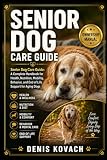
Readers looking for a practical reference may find a senior dog care guide useful for organizing questions about aging, mobility, home safety, and comfort. A general guide is not a substitute for veterinary diagnosis or treatment, and no product or book was identified as something Chewie used.
When is it time to discuss hospice, palliative care, or euthanasia?
The right time to discuss end-of-life options is before a crisis if an elderly dog’s comfort, function, eating, drinking, mobility, or engagement is changing. AAHA identifies hospice care, palliative care, quality-of-life support, and humane euthanasia as options to consider with a veterinary team; those options are not interchangeable, and the appropriate path depends on the individual dog.
AAHA’s end-of-life and euthanasia guidance supports a conversation about the dog’s comfort and welfare rather than a decision based on age alone. A veterinarian can explain whether treatable problems, pain control, supportive care, hospice, or euthanasia should be considered.
| Care pathway | What it means | What to ask |
|---|---|---|
| Medical treatment or supportive care | Evaluation and treatment aimed at addressing illness, symptoms, pain, hydration, appetite, or mobility. | What problems may be treatable, and what improvement would be realistic? |
| Home hospice or palliative support | Comfort-focused care intended to support the dog at home when cure is not the only or primary goal. | How will pain, nausea, hydration, hygiene, breathing, and emergencies be managed? |
| In-home euthanasia | A veterinarian performs humane euthanasia in the dog’s familiar environment when the family and veterinary team decide suffering or loss of quality of life warrants it. | Who provides the service locally, what should the family expect, and what aftercare choices are available? |
| Clinic-based euthanasia | A veterinarian performs humane euthanasia at a veterinary clinic. | Can the clinic provide a quiet setting, and can the family discuss timing and aftercare in advance? |
In Chewie’s case, Ripa and Consuelos said the family ultimately chose in-home humane euthanasia. Their decision should not be treated as a recommendation for every elderly dog, because the public accounts do not provide enough medical information to assess Chewie’s condition independently.
Quick wins for a faster PC:
Scan for outdated or missing drivers - takes under a minuteDriver Scan →Clear out junk files and repair common Windows errorsFree Scan →What happened to Chewie’s family after her death?
Consuelos described saying goodbye to Chewie as “one of the toughest things we’ve had to do as a married couple.” He also said, “It’s grief. It really is grief.” E! News reported the couple’s remarks after Chewie’s death.
Chewie had entered the family’s life through an adoption segment on Live and had grown up alongside Ripa and Consuelos’s children. Coverage also mentioned the family’s other dog, Lena, who was reported to be 4 years old in January 2025. Chewie’s long life did not make the loss uncomplicated: Ripa said she loved Chewie deeply and still felt that her time with the dog was too short.
For families facing a similar decision, grief can begin before a pet dies and can continue afterward. A veterinarian can discuss medical and comfort options, while a qualified pet-loss counselor or grief-support service may help caregivers and children process the loss. Neither emotional support nor a senior-dog guide can replace an urgent veterinary examination when a dog is severely dehydrated, stops eating, has trouble breathing, collapses, or appears to be in pain.
Frequently Asked Questions
What happened to Kelly Ripa’s dog?
Kelly Ripa’s dog Chewie was a 17-year-old Shih Tzu. Ripa and Mark Consuelos said Chewie died on February 4, 2025, after eating less for weeks, stopping eating for a couple of days, becoming extremely dehydrated, and experiencing neurological problems.
What did Kelly Ripa say about Chewie’s health?
Kelly Ripa said Chewie was slowing down and “stopping doing almost everything.” She also described an accident, slipping, and changes in Chewie’s behavior, but public reports did not establish a specific diagnosis.
How do you know when an old dog’s quality of life is declining?
A veterinarian should help assess an elderly dog’s quality of life by considering comfort and pain, eating and drinking, elimination, mobility, hygiene, behavior, and engagement with caregivers and surroundings. One accident or one bad day is not enough to determine that euthanasia is appropriate.
Can you make an older dog more comfortable at home?
Senior-dog comfort may sometimes be improved with comfortable bedding, easier access to food and water, nonskid flooring, careful hygiene, and veterinarian-approved assistance devices. These measures support comfort but do not replace an examination or treatment plan.
The Bottom Line
Kelly Ripa’s comments were about the painful uncertainty of caring for an elderly dog, not a publicly confirmed diagnosis. Chewie died at 17 after the family reported worsening eating, dehydration, and neurological problems, and the family said a veterinarian performed in-home humane euthanasia. For any senior dog, quality-of-life decisions should be made with a licensed veterinarian by considering comfort, function, mobility, eating and drinking, hygiene, and engagement over time.
Quick Recap
Product prices and availability are accurate as of the date/time indicated and are subject to change. Any price and availability information displayed on Amazon at the time of purchase will apply.