What’s actually slowing this PC down?
Pick the symptom - the matching free tool is one click away.
Absolute Batman: Every DC Villain currently confirmed through the scheduled issue #21 includes Black Mask and the Party Animals, Joker/Jack Grimm, Bane, Killer Croc/Waylon Jones, Poison Ivy, Scarecrow, the Court of Owls and Talons, Joker-raised Robins, and reworked Catwoman, Riddler, Penguin, and Two-Face. The list covers materially featured antagonists through June 17, 2026.
“Every DC Villain” is an editorial scope label, not a claim that every villain from the wider DC Universe appears in this alternate Batman series. The guide separates completed major arcs from cameo-level figures, future setup, and antagonists whose long-term roles remain unresolved.

Spoilers ahead: the article discusses Jack Grimm’s identity, Ark M transformations, Poison Ivy’s later storyline, and the Joker-raised Robins.
Key takeaways
- Absolute Batman: Every DC Villain is an editorially scoped list of materially featured villains and antagonist groups through the scheduled release of issue #21, not a list of every villain in the wider DC Universe.
- Black Mask and the Party Animals lead the opening The Zoo storyline, turning Gotham’s social resentment into spectacle and organized violence.
- Joker is Jack Grimm, a wealthy, institutionally powerful figure connected to the Ark project rather than a simple criminal clown.
- Bane dominates the Abomination material, while Killer Croc is Bruce Wayne’s childhood friend Waylon Jones, transformed into a reptilian threat by Ark M.
- Poison Ivy expands the series into ecological body horror, and Scarecrow becomes a major psychological threat beginning with issue #19.
- The Joker-raised Robins, the Court of Owls and Talons, and reworked figures such as Catwoman, Riddler, Penguin, and Two-Face show that Absolute Batman keeps changing the boundary between friend, enemy, and ally.
What does “Absolute Batman: Every DC Villain” include?
Absolute Batman: Every DC Villain includes Black Mask and the Party Animals, Joker, Bane, Killer Croc, Poison Ivy, Scarecrow, the Court of Owls and Talons, the Joker-raised Robins, and materially featured reworked versions of Catwoman, Riddler, Penguin, and Two-Face. The guide covers confirmed material through Absolute Batman #21, whose listed on-sale date is June 17, 2026.
#1 Best Overall
The phrase “every DC villain” needs a boundary here. Absolute Batman is an ongoing alternate interpretation of Batman’s world, so this list covers named antagonists and antagonist groups materially featured or clearly established in the series through issue #21. Future appearances after issue #21 are not confirmed by the supplied publisher material, and cameo-level appearances are labeled separately from completed villain arcs.
The series is written by Scott Snyder, drawn by Nick Dragotta, and colored by Frank Martin. Snyder described the larger design in a 2024 DC interview as one connected story: The story is all one story, because it’s the thesis statement of the initiative.
That approach helps explain why the villains often represent relationships, institutions, ideologies, or social fears rather than functioning only as opponents in a fight.
Scott Snyder’s DC interview about the fears of a modern Batman provides the creator’s broader context for the series. Spoilers for major character identities, Ark M transformations, and the later Robins follow.
Who are the main villains in Absolute Batman?
The main villains are best understood by their relationship to Bruce and by the kind of power they represent. Black Mask uses social manipulation, Joker uses wealth and institutions, Bane uses military force and bodily enhancement, Croc embodies personal tragedy, Ivy turns ecological growth into horror, and Scarecrow attacks perception and fear.
Free tools Windows power users keep installed
One-click scans. No signup required.
| Villain or group | Role in Absolute Batman | Power or threat type | Connection to Bruce | Current publication status |
|---|---|---|---|---|
| Black Mask / Roman Sionis | Leader of the Party Animals and principal antagonist of The Zoo | Nihilism, social anger, masks, organized spectacle | Ideological and social opponent | Opening major antagonist; issues #1-6 |
| The Party Animals | Black Mask’s antagonist group | Distinctive masks, collective violence, public spectacle | Gotham-wide social threat to Bruce’s methods | Opening arc group; issues #1-6 |
| Joker / Jack Grimm | Central recurring antagonist tied to the Ark project | Wealth, institutional reach, deliberate evil, mythic power | Bruce’s institutional and philosophical opposite | Major continuing mystery and threat; deeper revelations include issue #15 |
| Bane | Major antagonist of Abomination | Venom-related enhancement, military force, body horror, near-kaiju scale | Physical and military opposite | Major arc villain; issues #7-14 |
| Killer Croc / Waylon Jones | Ark M-created reptilian threat with a personal history | Body transformation and monstrous physical power | Bruce’s childhood friend and sparring partner | Antagonist who can also function as a temporary ally; prominent in Abomination |
| Poison Ivy / Pamela Isley | Major later horror-story antagonist | Grotesque plant growth, duplicates, ecological and biohazard threat | Her current Absolute relationship to Bruce remains less central than her Ark M horror role | Major storyline beginning with issue #17 |
| Scarecrow / Dr. Jonathan Crane | Threat recruited by Joker in the later storyline | Fear, perception, psychological vulnerability | Emerging enemy rather than a fully explained origin | Major threat beginning with issue #19 |
| Court of Owls and Talons | Antagonistic hidden-power organization | Secret governance, social control, concealed Gotham power | Institutional and mythological enemy | Broader mythology; full long-term role remains unresolved |
| Joker-raised Robins | Antagonistic protégés created by the Joker | Training, coordinated pursuit, corrupted family legacy | They have no prior Batman relationship and are prepared to hunt him | Introduced in the issues #20-21 material |
| Catwoman / Selina Kyle | Reworked familiar Gotham figure | Social and criminal-world influence | Her relationship with Bruce is not simply the standard thief-and-Batman dynamic | Supporting or setup role; no completed primary villain arc established here |
| Riddler / Edward Nygma | Reworked familiar Gotham figure connected to Bruce’s formative world | Potential intellectual and adversarial pressure | Part of the altered childhood and friendship network | Cameo or setup-level material; no completed primary villain arc established here |
| Penguin / Oswald “Ozzie” Cobblepot | Reworked Gotham figure and possible future adversarial force | Social position and criminal-world influence | Another childhood connection | Supporting or setup role; future direction remains unconfirmed |
| Two-Face / Harvey Dent | Friend-to-enemy possibility | Personal and moral fracture | Friendship creates the possibility of a particularly intimate reversal | No full Absolute villain arc should be claimed from the supplied material |
This is not a strength ranking. A character such as Scarecrow may be less physically powerful than Bane but more dangerous in a story about fear, while Joker’s importance comes from the systems he controls rather than from a conventional fistfight.
Who is Black Mask and what are the Party Animals?
Absolute Black Mask is a charismatic nihilist who turns Gotham’s social anger into spectacle and organized violence. Roman Sionis leads the Party Animals, making the group the principal antagonist force of the opening The Zoo storyline rather than disposable background henchmen.
The redesign makes Black Mask’s ideology visible. His mask is an obsidian orb that reflects the people around him and, symbolically, the reader. The image suggests self-involvement and social mirroring: Black Mask does not merely impose violence on Gotham; he reflects and amplifies the anger already present in Gotham’s social structures.
The Party Animals provide Bruce’s first series-level test. Their distinctive masks and collective identity make violence theatrical and communal, forcing Bruce to confront an enemy whose power comes from mobilizing people rather than simply overpowering them. DC later described Black Mask as the opening arc’s final boss in its rogues-gallery editorial.
DC’s rogues-gallery overview is the relevant official source for the opening villain lineup and the series’ larger reinterpretation of familiar enemies.
Rank #2
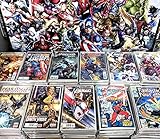
- Only Marvel Comics
- No copies Guaranteed
- Great Marvel superheroes titles per pack
- Very good close to delicate state and individually packed
- Perfect Gift or Starter Set for a new collection
Who is the Joker in Absolute Batman?
Absolute Batman’s Joker is Jack Grimm, a wealthy and institutionally powerful figure connected to the Ark prison project. Jack Grimm’s resources create a deliberate inversion of the usual Bruce Wayne–Joker power relationship: Bruce operates without inherited wealth in this universe, while Joker can shape institutions and use systems to harm ordinary people.
The Absolute Joker is not simply a billionaire version of the familiar clown. His role combines concentrated wealth, institutional reach, deliberate evil, and a joke that operates on a civilization-scale rather than through isolated criminal theatrics. His influence also extends into the Ark project and the creation of the later Robins.
Issue #15 makes Jack Grimm’s deeper form and history more explicit. DC editorial describes the Absolute Joker as a figure more draconic than human
, a phrase that captures the character’s mythic and primordial direction. The description does not reduce him to a conventional street criminal with a costume change.
Recommended Free Tools
DC’s editorial examination of Scott Snyder’s longest joke supports the Jack Grimm interpretation and the Joker’s institutional role.
Is Bane Bruce Wayne’s friend in Absolute Batman?
No. Bane is a major antagonist, not Bruce Wayne’s childhood friend. Bane dominates the Abomination storyline, which centers on Ark M, Venom-related enhancement, and the creation or misuse of monstrous bodies.
This version of Bane is presented as a near-kaiju-scale threat with strong body-horror elements. Bane protects Ark M’s secrets and functions as a physical and military mirror of Bruce. Where Black Mask escalates social resentment and Joker controls institutions, Bane represents war, weaponization, and the body transformed into an engine of force.
The official collected edition Absolute Batman Vol. 2: Abomination gathers issues #7-14. The collection is therefore the most concentrated way to read the Bane, Ark M, and Killer Croc material together.
What happened to Killer Croc in Absolute Batman?
Killer Croc is Waylon Jones, Bruce’s childhood friend and sparring partner, and Ark M transforms him into a giant reptilian figure. The transformation makes Croc a physical threat, but the childhood connection makes him one of the series’ most emotionally important antagonists.
Absolute Croc is not merely an unrelated monster who appears for a single fight. Bruce’s history with Waylon creates a recurring friend-to-enemy tension, and Croc can function as both an antagonist and a temporary ally. That instability is central to the series: the villain label does not permanently determine a character’s loyalty.
Bane and Croc therefore serve different purposes. Bane is Bruce’s physical and military opposite, while Croc is Bruce’s damaged friend and emotional counterweight. The supplied material does not establish a single final outcome for Croc beyond his transformation and his shifting role.
Rank #3

- HUGE COMIC BOOK LOT 25 MARVEL DC INDY SUPERMAN BATMAN X-MEN NO DUPLICATES
Is Poison Ivy in Absolute Batman?
Yes. Poison Ivy is Pamela Isley, and she receives a major horror storyline beginning with issue #17. The The Seventh Kingdom material in issues #17-18 connects Ivy to Ark M and presents grotesque plant growth, duplicates, and a biohazard-like threat.
Do these 3 things before closing this tab:
1Clear out junk files and repair common Windows errors2Fix the driver behind crashes, sound loss and screen glitches3Repair Windows errors before they cause bigger problemsAbsolute Ivy is more than a plant-powered femme fatale. Her storyline treats the environment as invasive, reproductive, hostile, and beyond institutional containment. Ivy broadens the series’ horror vocabulary from human violence and engineered bodies to ecological transformation.
DC describes Ivy as one of the many horrors within the bowels of the ARK M facility
. That wording identifies her current function without pretending that the supplied issue descriptions provide a complete final origin or motivation.
DC’s official issue #19 page carries the publisher’s description of Ivy’s Ark M role and the transition into the later horror arc.
Who is Scarecrow in Absolute Batman?
Scarecrow is Dr. Jonathan Crane, a later threat recruited by Joker beginning with issue #19. Absolute Scarecrow weaponizes perception, fear, and psychological vulnerability rather than relying primarily on enhanced muscle or ecological transformation.
PC Slower Than It Used to Be?
A free scan shows the junk files, broken settings and background clutter dragging Windows down - then fixes them in one click.Free scan · Windows 10 & 11Crashes, No Sound, or Screen Glitches?
Random freezes, missing sound and display glitches usually trace back to one bad driver. Find and replace yours safely.Free scan · under a minuteBy issue #21, DC describes Scarecrow’s “reign of terror” as a threat capable of upending everything. Scarecrow is therefore positioned as a major arc villain, not merely a brief cameo. The available official descriptions do not yet provide a complete Absolute origin or final motivation, so claims beyond Joker’s recruitment and the later fear campaign remain unverified.
Scarecrow’s role completes an important contrast among the later villains: Bane weaponizes the body, Ivy weaponizes biological growth, and Scarecrow weaponizes the mind’s response to danger.
DC’s issue #21 description is the source for the later Scarecrow threat and the accompanying relationship reversals.
What are the Court of Owls, Talons, and Joker-raised Robins?
The Court of Owls and Talons represent hidden governance, while the Joker-raised Robins represent a corrupted version of Batman’s family legacy. Both groups expand the series beyond individual rogues and into questions about who controls Gotham and how young people inherit a hero’s or villain’s ideology.
Quick wins for a faster PC:
Clear out junk files and repair common Windows errorsFree Scan →Scan for outdated or missing drivers - takes under a minuteDriver Scan →Repair Windows errors before they cause bigger problemsFix Now →Rank #4

- Diverse 10-Comic Pack: Includes an exciting mix of Marvel, DC, and independent publishers, offering a variety of superhero and genre adventures with no duplicates in the set.
- Guaranteed Value: Each comic in the bundle is as old as 20-30 Years old up to current books, ensuring a collection worth well over the purchase price.
- Perfect for Collectors: An excellent starter pack or addition to any comic book enthusiast’s collection, with titles from both major and indie publishers.
- Surprise Selection: Unbox an assortment of unique stories from superheroes to indie gems, providing hours of reading entertainment with every pack.
- Great Gift Idea: A fantastic gift for comic lovers of all ages, perfect for birthdays, holidays, or special occasions for fans of diverse comic book worlds.
The Court and Talons belong to the broader hidden-power mythology. Available material supports treating them as an antagonistic organization or power structure, but the supplied evidence does not justify claiming a complete long-term arc or a definitive hierarchy for them.
The Robins are clearer in their inversion. Issues #20 and #21 introduce young fighters raised by Joker rather than trained by Batman. These Robins have no prior relationship with Batman and are prepared to hunt him, so they should be called antagonistic protégés rather than ordinary sidekicks or automatically classified as conventional villains.
The official issue #21 description summarizes the series’ relationship reversals as Friends become enemies. Enemies become friends.
The Joker-raised Robins are the most direct expression of that idea: Joker has created a counter-family, and Batman must confront protégés shaped by his greatest enemy.
DC’s issue #20 page introduces the relevant Joker-raised Robin setup, while the issue #21 page describes the escalation.
What happens to Catwoman, Riddler, Penguin, and Two-Face?
Catwoman, Riddler, Penguin, and Two-Face are reworked familiar figures, but the supplied material does not establish all four as completed primary villains. Their importance currently lies in how the series changes Bruce’s formative relationships and leaves open the possibility of future adversarial turns.
- Catwoman / Selina Kyle: Selina is a familiar Gotham figure whose Absolute relationship with Bruce cannot be reduced to the standard thief-and-Batman dynamic.
- Riddler / Edward Nygma: Edward belongs to the group of familiar Gotham figures connected to Bruce’s formative years, but the supplied material does not establish a complete primary villain arc.
- Penguin / Oswald “Ozzie” Cobblepot: Ozzie is another childhood connection and a possible future adversarial force rather than a fully documented central villain at this point.
- Two-Face / Harvey Dent: Harvey represents a friend-to-enemy possibility, but the supplied material does not support claiming a complete Absolute Two-Face storyline.
These characters belong in an “every materially featured antagonist or setup figure” guide, but they should not be presented as equivalent to Black Mask, Bane, Ivy, or Scarecrow. A cameo, friendship, or future tease is not the same as a completed villain arc.
How is Absolute Batman different from regular Batman?
Absolute Batman changes the social position, relationship to Bruce, source of power, and narrative function of familiar villains instead of merely changing their costumes. The most useful comparison is thematic rather than a simple strongest-to-weakest ranking.
| Comparison | Familiar Batman pattern | Absolute Batman reinterpretation | Why the change matters |
|---|---|---|---|
| Joker | Theatrical criminality, chaos, comedy, and personal obsession | Jack Grimm’s wealth, institutions, deliberate evil, and mythic scale | Concentrated power becomes more frightening than isolated anarchy |
| Bane | A physical strategist and Venom-enhanced foe | A near-kaiju-scale Ark M threat shaped by body horror and war | Bruce faces weaponized escalation at the level of the body |
| Killer Croc | Usually framed primarily as a monstrous enemy | Waylon Jones is Bruce’s childhood friend and sparring partner | The monster is also a personal loss and possible ally |
| Poison Ivy | An ecological antagonist often expressed through plant control | An Ark M horror involving invasive growth, duplicates, and biohazard imagery | The environment becomes an uncontrollable biological threat |
| Scarecrow | A fear-toxin villain focused on terror and hallucination | A major later threat built around psychological vulnerability and a reign of terror | Fear can destabilize a city and its relationships, not just frighten one victim |
| Robin | A young partner trained within Batman’s legacy | A group of Robins raised and weaponized by Joker | Batman’s family model is inverted into an enemy counter-family |
| Rogues’ alignment | Villains and allies usually occupy relatively stable roles | Friends can become enemies and enemies can become allies | Bruce cannot rely on familiar labels to predict loyalty |
That is why the roster feels connected even when the villains have very different powers. Black Mask represents nihilistic social spectacle; Joker represents concentrated institutional power; Bane represents war; Croc represents damaged friendship; Ivy represents ecological revenge or transformation; Scarecrow represents psychological terror; and the Robins represent the corruption of mentorship.
The Tool Desk
Outbyte Driver Updater FREEScan for outdated or missing drivers - takes under a minuteDriver Scan →Outbyte PC Repair FREERepair Windows errors before they cause bigger problemsFix Now →What issue does each Absolute Batman villain first appear in?
The supplied publisher material does not verify a complete issue-by-issue first-appearance index for every character. The safest available chronology identifies each villain’s confirmed opening arc, major reveal, or first clearly described later storyline rather than labeling every range as an exact debut.
Best Value

- Jump-start a collection or add to an existing library
- Publication dates of the chosen titles range from the 1980s to the present
- Each package contains 25 marvel comic books and 25 DC comic books
- Includes Exclusive Limited Edition Searchlight Comics Sticker
| Storyline or issue | Villains and antagonists confirmed in the material | What can safely be said |
|---|---|---|
| The Zoo, issues #1-6 | Black Mask and the Party Animals | They establish the opening major conflict; Black Mask is the arc’s principal antagonist. |
| Abomination, issues #7-14 | Bane and Killer Croc, with Ark M and the developing Joker mystery | This is the major Bane/Croc and Ark M storyline, not a verified first-appearance citation for every individual character. |
| Issue #15 and surrounding Joker revelations | Joker / Jack Grimm | Jack Grimm’s deeper identity, form, and history become more explicit. |
| The Seventh Kingdom, issues #17-18 | Poison Ivy | Ivy receives a substantial later storyline connected to Ark M. |
| Beginning with issue #19 | Scarecrow / Dr. Jonathan Crane | Joker decides to enlist Crane, beginning a new threat arc. |
| Issues #20-21 | Joker-raised Robins; Scarecrow’s continuing threat | The Robins hunt Batman, while the series foregrounds its friend-enemy reversals. |
| Broader mythology and supporting material | Court of Owls, Talons, Catwoman, Riddler, Penguin, and Two-Face | The supplied dossier does not provide verified exact first-appearance issues or complete primary villain arcs for these figures. |
Issue #16 is not assigned a named storyline in the supplied chronology. Readers seeking an exact debut list should verify each individual issue against the comic itself or a publisher page rather than treating the arc ranges above as a definitive first-appearance table.
Which Absolute Batman collection should you buy?
Start with Absolute Batman Vol. 1: The Zoo for the intended beginning, or choose Absolute Batman Vol. 2: Abomination if Bane, Killer Croc, Ark M, and the developing Joker mythology are your priority.
| Reading or buying goal | Best option | What it covers |
|---|---|---|
| Read the series from the beginning | Absolute Batman Vol. 1: The Zoo | The opening Black Mask and Party Animals storyline |
| Read the Ark M and Bane material in one volume | Absolute Batman Vol. 2: Abomination | Issues #7-14, including Bane, Killer Croc, Ark M, and the developing Joker mystery |
| Follow the latest Ivy, Scarecrow, and Robin developments | Individual issues beyond the second collection | Poison Ivy’s issues #17-18 material, Scarecrow beginning with #19, and Joker-raised Robins in #20-21 |
| Read digitally | DC UNIVERSE INFINITE | DC identifies the service as a way to catch up on the series; plan and regional availability should be checked before purchase |
Absolute Batman Vol. 2: Abomination collects issues #7-14. According to DC’s 2025 solicitation metadata, the collection is 240 pages, and Random House’s listing for Absolute Batman Vol. 2: Abomination describes the volume as Bruce’s investigation of Ark M and his encounter with Bane.
Readers following the newest material may prefer Absolute Batman single issues and variant covers, especially when tracking the #19-21 Scarecrow and Joker-raised Robin developments. According to DC (2026), issue #19 is a 24-page Teen Plus comic priced at $4.99, and DC lists the same 24-page, $4.99, Teen Plus format for issue #20. The official issue #21 page lists June 17, 2026 as its on-sale date, so issue availability depends on the release date and retailer.
DC also points readers toward DC UNIVERSE INFINITE for digital catch-up. Digital catalogues, subscription terms, and regional availability can change, so readers should confirm current access before relying on the service for a complete reading order.
DC’s issue #19 listing, DC’s issue #20 listing, and DC’s issue #21 listing provide the relevant current publication details.
Why do the villains matter to the whole series?
The villains matter because each one externalizes a different fear about power, identity, or social collapse. Black Mask turns resentment into a movement; Joker turns wealth and institutions into a weapon; Bane turns war and enhancement into an abomination; Croc turns childhood friendship into tragedy; Ivy turns ecological growth into horror; Scarecrow turns fear into a destabilizing force; and the Joker-raised Robins turn mentorship into an instrument of persecution.
PC Slower Than It Used to Be?
A free scan shows the junk files, broken settings and background clutter dragging Windows down - then fixes them in one click.Free scan · Windows 10 & 11Outdated Drivers Are Slowing You Down
One free scan finds every outdated or missing driver and matches the right update for your exact hardware.Free scan · exact hardware matchThe result is a rogues’ gallery organized around inversions. The question is not only which villain can defeat Batman. The deeper question is what kind of force each villain represents—and whether Bruce can still recognize a friend, enemy, ally, or successor when the familiar roles have been deliberately rearranged.
The Bottom Line
Absolute Batman’s confirmed villains through issue #21 are a system of social, institutional, physical, ecological, psychological, and familial inversions. Black Mask, Joker, Bane, Killer Croc, Poison Ivy, Scarecrow, the Court, and the Joker-raised Robins are the central antagonists, while Catwoman, Riddler, Penguin, and Two-Face remain important reworked figures whose full villain roles are not yet established in the supplied material.
Quick Recap
Product prices and availability are accurate as of the date/time indicated and are subject to change. Any price and availability information displayed on Amazon at the time of purchase will apply.