Spotify’s Lossless mode is a real technical upgrade, but it is not a universal “better sound” switch. Eligible Premium listeners can stream selected music at up to 24-bit/44.1 kHz FLAC instead of the previous Very High setting of approximately 320 kbit/s. Whether that change is audible depends on the recording, volume matching, app settings, connection, and the entire playback chain.
I cannot honestly present a first-person listening test without a documented test setup. The more useful answer is a reproducible one: here is what Spotify Lossless changes, how to enable it, how to compare it fairly, and when buying extra equipment is—and is not—justified.
What Spotify Lossless actually changes
Lossless audio preserves the data in the original audio file rather than discarding some information to reduce its size. Spotify’s current US audio-quality documentation lists Lossless at up to 24-bit/44.1 kHz FLAC for eligible Premium listeners. That is CD-rate sampling with the possibility of 24-bit depth; it is not 24-bit/192 kHz “hi-res” streaming.
For comparison, Spotify lists the Very High setting at approximately 320 kbit/s. Very High is already a high-quality lossy format, so the difference between it and Lossless is not comparable to the jump from severely compressed audio to a high-quality stream. Some listeners may hear a change in demanding passages; others may not reliably distinguish the two.
What’s actually slowing this PC down?
Pick the symptom - the matching free tool is one click away.
#1 Best Overall
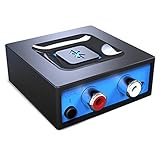
- Listen music wireless: Connect with computer speakers, home stereo systems or other speaker systems via the 3.5 mm or RCA cable, then pair with the Bluetooth audio devices such as smartphones or tablet for streaming music.
- Easy setup and automatic reconnect: There is a big bluetooth symbol button in bluetooth receiver middle. Pair your bluetooth device to this adapter with a single button press. Click once means Bluetooth Connect/Disconnect. Hold the botton 3 second mean ON/OFF. It can reconnect automatically with the previously paired device.
- Wireless range: Indoors(without obstacles) connect rang up 30-40 ft (10-12 m).
- Works with most device: Bluetooth enabled device including smartphones, tablets, computers, laptops upon and any powered PC speakers, home stereo systems and A/V receivers.
- NOTE: This adapter doesn't have built-in battery, power by AC to DC power adapter or USB cable. This product is a bluetooth receiver ONLY, not a bluetooth transmitter. Only to give Bluetooth capabilities to an existing stereo / powered speaker / PA. If you have any problems, please contact us at any time by Amazon Order, and we will speed up the process to resolve the issue.
Spotify also warns that the result depends on the original recording, compatible hardware, connection type, and network conditions. Lossless cannot restore information that was absent from the source master, and it does not turn every track into a studio-quality recording. A more accurate claim is:
Spotify Premium can deliver lossless music, up to 24-bit/44.1 kHz FLAC, when the account, track, app, network, and playback device all support it.
Spotify’s audio-quality documentation is the best place to check the availability and labels shown for your account and market.
Lossless does not mean louder
Lossless affects the way audio data is encoded, not the intended loudness of playback. Spotify continues to apply loudness normalization across playback formats when that feature is enabled. A louder sample can sound more detailed or exciting in a quick comparison, even when the underlying difference is not meaningful.
For that reason, do not judge Lossless by switching back and forth while one setting is louder. Keep loudness normalization in the same state for both samples, and match the volume as closely as you can. Spotify explains the relationship between lossless playback and loudness in its lossless-audio guidance.
Who can use Spotify Lossless?
Availability is qualified rather than universal. Spotify’s current documentation identifies these requirements and limitations:
Rank #2

- SEAMLESS WIRELESS MUSIC STREAMING: Whether you want to upgrade your home stereo as a Bluetooth receiver for home stereo, breathe new life into an old system using it as a Bluetooth adapter for old receiver, or add Bluetooth to your stereo receiver, this device is the key to a modern, wire-free listening setup.
- MULTIFUNCTIONAL CONNECTIVITY: This Bluetooth adaptor for old stereo is a connectivity powerhouse. With support for RCA and 3.5mm jacks, it's compatible with 99% of speakers. From classic AV receivers to your car or home stereo, a Bluetooth audio receiver fits right in. Plus, its TF card music playback support gives you extra ways to enjoy your tunes.
- FAST NFC QUICK CONNECT: Our Bluetooth to RCA adapter features a built-in NFC chip. Just bring your NFC-enabled smartphone or tablet close, and you're instantly connected. No more tedious manual pairing. It's the quickest way to start streaming your favorite music.
- PREMIUM CRYSTAL CLEAR SOUND: Experience audio like never before. Our aux to Bluetooth adapter ensures crystal-clear sound. The 3D music playback mode creates a rich, surround-sound experience. Whether it's soft ballads or high-octane tracks, you get distortion-free sound, even at full volume.
- EFFORTLESS AUTOMATIC PAIRING: Once you've set it up, the Bluetooth RCA receiver pairs automatically every time you power it on. No more struggling with wires or complex connections. Just turn it on and let the music play.
- An eligible Premium account: Lossless is not described as a feature for every Spotify account or every market.
- A supported app: Spotify’s help material identifies mobile app version 9.0.58 or later and desktop app version 1.2.67 or later for the documented feature.
- A supported track: Spotify does not guarantee that every song is available in Lossless. The source recording and catalog availability matter.
- A compatible playback path: Mobile, tablet, and desktop apps are identified as supported environments. Some Spotify Connect devices may also support Lossless, but Connect compatibility does not automatically mean Lossless compatibility.
- Enough network capacity: Spotify recommends a stable connection of approximately 1.5–2 Mbps for the best Lossless experience.
Lossless is not available for music videos, podcasts, or audiobooks. It also may not be preserved through every Bluetooth, AUX, operating-system, or third-party-device path. That does not mean Bluetooth “always destroys” lossless audio; it means the connection method and device implementation must be checked rather than assumed.
How to turn on Lossless
On an iPhone, Android phone, or tablet
- Open Spotify and tap your profile picture.
- Choose Settings and privacy.
- Open Media quality.
- Choose Lossless for the relevant option: Wi-Fi streaming, cellular streaming, or downloads.
If you download music for offline listening, select Lossless for downloads separately. It will consume more storage than a lossy setting. Cellular Lossless can also use substantially more data, so Wi-Fi is the safer default for most listeners.
The Tool Desk
Outbyte PC Repair FREERepair Windows errors before they cause bigger problemsFix Now →Outbyte Driver Updater FREEScan for outdated or missing drivers - takes under a minuteDriver Scan →On Windows or macOS
- Open Spotify and select your profile picture.
- Open Settings and privacy.
- Find Media quality.
- Set the quality to Lossless.
If the option is missing, update Spotify first, confirm that the account is eligible, and check whether the feature is available in your market. App labels and availability can change, so the account’s current settings screen takes priority over an older screenshot or guide.
With Spotify Connect
Spotify Connect lets one device control playback on another device, such as a network speaker or streamer. Spotify documents Lossless settings for compatible Connect devices, but not every Connect product supports the lossless stream. You may need to change the quality setting from the mobile app while connected to the target device.
Check both Spotify’s Spotify Connect help page and the hardware manufacturer’s current specifications or firmware notes. A device can support Spotify Connect while still using a different quality level.
How to perform a fair Very High-versus-Lossless comparison
The question is not whether FLAC contains more source data. It does. The practical question is whether that difference survives your particular recording, equipment, connection, and hearing conditions.
Recommended Free Tools
Rank #3

- Bluetooth Audio Adapter: Makes your speakers Bluetooth for streaming music from your smartphone or tablet
- Multipoint Bluetooth connectivity: Simultaneously pair your smartphone and tablet and stream music from either one
- Easy pairing and automatic re-pairing: Pair your device to the adapter once with a single button press and you're done
- Long-range wireless: Stream music from up to 20 meters (66 feet) away from your speakers
- Works with most speakers: Plugs into any powered PC speakers, home stereo systems and A/V receivers using RCA or 3.5 mm jacks
Use this controlled procedure
- Select the same album or tracks. Choose several recordings rather than relying on one familiar song. Dense arrangements, acoustic recordings, cymbal decay, reverberant spaces, and exposed vocals can reveal different limitations.
- Confirm Lossless availability. Do not assume that a track or album has a lossless version simply because the account has the setting enabled.
- Keep the chain identical. Use the same phone or computer, headphones or speakers, DAC, cable, listening position, and room. Change only the Spotify quality setting.
- Keep processing consistent. Equalization, crossfade, Automix, and loudness normalization should either be off for both samples or enabled identically. Record the settings so the comparison is repeatable.
- Match volume. Adjust the levels before switching formats. Even a small loudness mismatch can bias a quick A/B judgment.
- Listen for specific details. Pay attention to high-frequency texture, cymbal decay, room ambience, bass definition, vocal separation, and congestion during dense passages. Do not simply ask whether one version sounds “better.”
- Repeat the comparison. Try different tracks and sessions. If the difference disappears when you do not know which version is playing, report that uncertainty instead of forcing a conclusion.
A convincing personal review should identify the exact tracks, headphones or speakers, DAC, operating system, Spotify settings, connection, and volume-matching method. Impressions such as “the reverb seemed slightly more open” are valid as personal observations; they are not proof that every listener will hear the same result.
The playback chain matters more than the badge
Lossless is only the first link in the chain:
Spotify source → app quality setting → network or download → operating-system audio path → connection → DAC → amplifier → headphones or speakers → room and listener.
A failure or limitation at any point can determine what reaches your ears. A wired connection is often the clearest choice for a controlled comparison because it avoids uncertainty about a wireless codec and device support. But “wired” alone does not guarantee a perfect lossless signal. The source device, adapter, DAC, operating-system mixer, cable, and headphones still matter.
For readers building a straightforward test setup, wired headphones for lossless listening are the most direct starting point. They do not need to be expensive audiophile models, and they are not a guarantee that Lossless will sound different. Choose a comfortable, compatible pair with a sound you already understand, so the test is about the format rather than a new headphone signature.
Windows Exclusive Mode and an external DAC
Spotify’s Windows desktop app includes Exclusive Mode. Spotify says this gives the app control of the selected audio device and is intended for external audio equipment such as a DAC or audio interface. It is the clearest officially documented route for a Windows listener who wants to evaluate an external digital-to-analogue converter.
To look for it, open Spotify’s Settings and privacy, go to Media quality, and inspect the audio-output or device options for Exclusive Mode. The exact control may depend on the current desktop app and Windows device configuration.
Exclusive Mode is not available for Bluetooth headphones or speakers, built-in computer speakers, or virtual audio devices. It may also interact with other applications because Spotify takes control of the selected output. If you need system sounds, calls, games, or accessibility software to share the device, ordinary shared-mode playback may be more practical.
Rank #4

- 【Enjoy Wireless Streaming Music】This car Bluetooth adapter can be connected to non-Bluetooth car audio systems, home stereos, speakers, wired headphones via the 3.5mm AUX adapter; And equipped with a Bluetooth 5.0 chip for stable connection / fast transmission / wide signal range. Just pair it with your phone and start listening to your favorite music!
- 【Intelligent Noise Reduction Tech】Our Bluetooth audio receiver adopts the latest CVC8.0 Noise Cancellation and Digital Signal Processor (DSP) technologies, which can eliminate echo and block out intrusive background noise (such as wind, traffic, or crowds), providing you with crystal-clear calling sounds.
- 【Up to 16 Hours of Battery Life】The working time of this aux Bluetooth adapter is up to 16 hours when making calls or playing music. And it takes only 2.5 hours to fully charge the device by using a Type-C fast charging cable (Included in the package). In addition, this Bluetooth music adapter can be used while charging, which is very convenient.
- 【Hands-free Calling & Navigation】A built-in microphone and one “MFB” button to answer / redial / hang up / reject calls, help you make hands-free calls. And the Bluetooth audio adapter supports broadcasting voice notification from existed navigation App. You don’t have to look down the phone on the move. Make sure you drive safely!
- 【Dual Connection】The portable Bluetooth stereo adapter can be paired with 2 devices at the same time. You can enjoy your music and never worry about missing any calls. Once paired, the car receiver will automatically reconnect to your last paired Bluetooth devices, as long as they are within the wireless range.
A USB DAC/headphone amp can be useful when your computer’s headphone output is noisy, underpowered, inconvenient, or incompatible with your headphones. It is optional, not a minimum requirement for Lossless, and Spotify’s documentation does not establish that a more expensive DAC produces a guaranteed audible improvement.
Quick wins for a faster PC:
Fix the driver behind crashes, sound loss and screen glitchesFind Drivers →Repair Windows errors before they cause bigger problemsFix Now →Scan for outdated or missing drivers - takes under a minuteDriver Scan →Phones, adapters, and speakers
Many current phones and tablets lack a 3.5 mm headphone socket. A USB-C headphone adapter can provide a wired output, but compatibility and output quality vary. Some adapters contain a DAC; others may behave differently across operating systems or require more power than a particular device can provide. Treat the adapter as part of the audio chain, not as a passive guarantee of lossless playback.
Listeners who prefer speakers can use a compatible Spotify Connect speaker or network streamer. This can be a convenient and potentially high-quality route, but verify the specific model’s current Lossless support. “Works with Spotify Connect” and “supports Spotify Lossless” are separate claims.
Independent reader supportYour contribution helps us test, update, and keep practical guides available for everyone.What can make Lossless sound no different?
The source recording
Lossless preserves the file Spotify is delivering; it does not improve the mastering, arrangement, microphone recording, or dynamic range. If a track’s source is already limited, heavily processed, or mastered in a way that masks subtle detail, moving from Very High to Lossless may produce little audible change.
Volume mismatch and normalization
This is one of the easiest ways to produce a misleading result. Keep normalization settings identical and match playback level. If you disable normalization for testing, disable it consistently rather than treating the louder version as the more detailed one.
Do these 3 things before closing this tab:
1Fix the driver behind crashes, sound loss and screen glitches2Clear out junk files and repair common Windows errors3Scan for outdated or missing drivers - takes under a minuteBluetooth and other connection paths
Wireless playback is convenient, but the phone, Bluetooth codec, headphones, receiver, and firmware all influence the result. Spotify identifies Bluetooth, Spotify Connect, and AUX as connection methods that may have different compatibility. Check the complete product documentation before claiming that a particular path preserves the Spotify Lossless stream.
Network instability
Spotify may automatically adjust quality to reduce buffering unless you change the relevant quality settings. A weak or congested connection can lead to interruptions or quality changes. Spotify recommends approximately 1.5–2 Mbps for the best Lossless experience, but a stable connection matters more than treating that figure as a guaranteed universal threshold.
App, device, and firmware support
An outdated app or a Connect device that has not received the necessary firmware support can prevent the expected stream from reaching the output. Update Spotify and the hardware, then recheck the quality setting and the track’s availability.
Best Value

- 【Upgrade Your Old Stereo with Wireless Music Streaming】Bring Bluetooth to your existing home stereo, amplifier, or powered speakers. Stream music wirelessly from your phone, tablet, or laptop and enjoy modern convenience without replacing your favorite audio equipment. Note: B06+ is a Bluetooth Receiver Only, Not a Transmitter.
- 【aptX HD & aptX Adaptive & 3D Surround】As a Bluetooth adapter for stereo receiver, it features Bluetooth 5.3 chip to ensure high-fidelity Bluetooth audio signal for music streaming to powered speakers and home stereo systems that don't have built-in wireless capability. It also supports aptX HD and aptX Adaptive. And the 3D audio can be switched on or off by pressing the "3D" button on the Bluetooth audio receiver. The green LED will be on when switched to 3D audio.
- 【Easy Setup, Easy to Use】Easy plug, pair and play. This updated 1Mii B06 Plus Bluetooth receiver for home stereo comes with a USB power adapter. Plug into computer speakers, home stereo systems or other speaker systems via the 3.5 mm or RCA cable, then pair with Bluetooth audio devices such as smartphones or tablets. After that, you can enjoy wireless music streaming.
- 【98FT Long Range】With Class 1 Bluetooth technology, the 1Mii Bluetooth audio receiver can achieve a range of up to 98ft (30m) line-of-sight in open air and up to 50-70ft (15-20m) indoors(without obstacles).
- 【Power on and Reconnect Automatically】When plugged into a power outlet, the 1Mii Bluetooth receiver can power on automatically and reconnect with the previously paired device.
Should you buy equipment for Spotify Lossless?
| Situation | Practical recommendation |
|---|---|
| You already own comfortable wired headphones and a modern phone or computer | Enable Lossless and compare it before buying anything. You may already have a suitable setup. |
| Your computer output is noisy or cannot comfortably drive your headphones | Consider a compatible USB DAC/headphone amplifier for those specific problems, not as a guaranteed Lossless upgrade. |
| Your phone has no headphone socket | Use a compatible USB-C audio adapter or a wireless device after checking its connection limitations. |
| You listen mainly through speakers | Check the specific Spotify Connect speaker or streamer for current Lossless support before purchasing. |
| You are considering expensive audiophile equipment solely to hear Lossless | Do a controlled comparison first. Spotify establishes compatibility requirements, not a minimum price or brand tier. |
The strongest case for extra hardware is practical: better fit, less noise, sufficient power, a more convenient output, or a speaker system that suits the room. The weakest case is the promise that any costly component will automatically make Spotify Lossless obvious.
Verdict: is Spotify Lossless worth using?
Yes, if you are an eligible Premium subscriber and your setup supports it—but do not expect a dramatic transformation in every song. Lossless is a meaningful technical improvement over approximately 320-kbit/s Very High streaming because it preserves more of the source data. Yet the audible payoff can be subtle, and Spotify itself says listeners may not hear an obvious difference.
The feature is easiest to recommend to existing Premium subscribers who already have good wired headphones, a capable DAC or audio interface, or a compatible networked speaker. Enable it, verify the track and device, and compare it under level-matched conditions. A dedicated hardware purchase should come later, and only for a clearly identified limitation in your current setup—not because the word “Lossless” appears in the settings menu.
Frequently Asked Questions
Does Spotify Lossless mean 24-bit/192 kHz hi-res audio?
No. Spotify’s current support documentation lists Lossless at up to 24-bit/44.1 kHz FLAC. It should not be described as 24-bit/192 kHz streaming.
Can every Spotify Premium subscriber use Lossless?
Not necessarily. Eligibility can depend on the market, account, app version, track availability, playback device, and connection. Spotify’s current documentation identifies Lossless for eligible Premium listeners rather than universally for every account and device.
Will Spotify Lossless sound louder?
No. Lossless changes the audio encoding, not loudness. Loudness normalization can apply across playback formats, so keep that setting consistent during comparisons.
Is Bluetooth compatible with Spotify Lossless?
It depends on the complete device and connection implementation. Spotify warns that connection type can affect whether Lossless quality is preserved. Do not assume that every Bluetooth path supports the full stream, but do not generalize that Bluetooth always eliminates it either.
Do I need an expensive DAC or special headphones?
No. Spotify documents compatibility requirements but does not establish a minimum price or brand tier. Existing comfortable wired headphones may be enough to test the feature. A DAC is most defensible when it solves a concrete problem such as noise, insufficient power, or an inconvenient computer output.
The Bottom Line
Bottom line: Spotify Lossless is a genuine move from lossy high-quality streaming to lossless playback, up to 24-bit/44.1 kHz FLAC. It is worth enabling if your Premium account and equipment support it, but the audible difference is setup- and listener-dependent. Compare it fairly before spending money on new hardware.
Free tools Windows power users keep installed
One-click scans. No signup required.
Quick Recap
Product prices and availability are accurate as of the date/time indicated and are subject to change. Any price and availability information displayed on Amazon at the time of purchase will apply.