Randy Travis sang “Where That Came From,” the Randy Travis AI song released on May 3, 2024. AI-assisted technology recreated aspects of Travis’s vocal sound after his 2013 stroke, but the recording was not presented as an autonomous AI performance: Travis, his family, producer Kyle Lehning, musicians, vocalists, and engineers shaped the authorized release.
That distinction answers both questions behind the headline: Randy Travis is the credited artist, and the song is AI-assisted rather than an entirely computer-generated performance.
Key takeaways
- Randy Travis is the credited singer on “Where That Came From,” released by Warner Music Nashville on May 3, 2024.
- The recording used AI-assisted vocal recreation after Travis’s 2013 stroke and resulting aphasia limited his speech and singing.
- “Where That Came From” was an artist-approved, human-supervised production involving Travis, Mary Travis, producer Kyle Lehning, musicians, vocalists, and engineers.
- The specific AI software, training data, vendor, and exact balance between generated and transformed vocal material have not been publicly established by the authoritative sources reviewed.
- The exact single is verified as a digital release; this research does not verify a CD or vinyl edition specifically titled “Where That Came From.”
Randy Travis AI Song: Who Sang ‘Where That Came From’?
Randy Travis sang “Where That Came From,” the Randy Travis AI song released on May 3, 2024. AI-assisted technology recreated aspects of Travis’s vocal sound after his 2013 stroke, but the recording was not presented as an autonomous AI performance: Travis, his family, producer Kyle Lehning, musicians, vocalists, and engineers shaped the authorized release.
Warner Music Group described the track as Travis’s first new music in more than a decade. Warner’s official announcement says the project was intended to help restore Travis’s singing voice while keeping people at the center of the production.
#1 Best Overall

- 【Vintage Record Player】Bluetooth Input & AUX Audio input & RCA line-out & Headphone jack. 2 Built in stereo speakers,with Bluetooth wireless technology,elegantly listen to the music from your smart phone.Use Aux cable input to directly play the music. Or enjoy your time with headphone. For better or louder sound, connect external speaker via RCA cable.
- 【Belt Drive Vinyl Turntable】Easy to use, simple setup and operation. Great ideal for vinyl lovers. Three-speed Turntable (33, 45, 78 RPM) plays all of your 7" 10" 12" vinyl records.TIPS:When placing a 12-inch vinyl record on the turntable, gently tilt it toward the tonearm to ensure proper playback.
- 【Record Player Bluetooth】 Built-in Bluetooth receiver & 2 stereo speakers,,you can listen to your favorite music from your Bluetooth compatible device like smartphone with ease. Just Bluetooth in connect and play!
- 【Portable Record Player with Built in Speaker】It creates a warm atmosphere when family gatherings. When you are alone, it can help you relax. Even if you don't use it, it can be one of the home's premium decorations. As a gift, it also allows the recipient to feel your heart.
- 【Retro Vinyl Record Player】There is a removable cover on the top to protect vinyl and turntable plat. You can shut the cover shields and keep the dust out. And the beautiful textured exterior are a perfect fit for any environment.
What is the Randy Travis song called?
The song is called “Where That Came From”, not “What That Came From.” Warner Music Nashville released the single on May 3, 2024. Apple Music’s official release listing identifies it as a one-song Randy Travis single under Warner Music Nashville LLC, with a runtime of approximately three minutes.
The song was written by Scotty Emerick and John Scott Sherrill. Longtime producer Kyle Lehning chose the song as the starting point after remembering that James Dupré had previously recorded it without releasing it. The final release credits Randy Travis as vocalist.
Did Randy Travis really sing the song?
Randy Travis is the credited vocalist, but “really sang” needs a careful explanation. The recording did not come from a conventional, fully new Travis vocal performance in the way a pre-stroke studio session would have. AI-assisted technology was used to recreate aspects of his vocal identity, while Travis and the production team made creative decisions about the vocal material.
Warner Music Group says Travis and Lehning worked on the vocal material for months and applied human judgment millisecond by millisecond. The Associated Press account of the production likewise describes a collaborative studio process rather than a song generated without Travis’s participation.
Do these 3 things before closing this tab:
1Repair Windows errors before they cause bigger problems2Scan for outdated or missing drivers - takes under a minute3Clear out junk files and repair common Windows errorsThe most accurate short description is therefore: “Where That Came From” is a Randy Travis recording made with AI-assisted vocal recreation and extensive human supervision. Calling it simply an “AI-generated song” leaves out the artist’s approval, the family’s involvement, the musicians, the producers, and the engineers. Calling it an entirely ordinary new vocal recording also leaves out the AI process.
Rank #2

- VINTAGE LOOKING&GREAT IDEA OPTIONS - As a music player combined age and modern sense, A vintage and fashion style record player is a great idea for your loving family and friends at all festivals. No matter to awake a good time in memory, start an elementary musical education, or just prepare a birthday surprise
- THREE SPEED THREE SIZES OPTIONS - Balanced tonearm with lifting arm control, support adjusting 3 listening speeds(33-1/3, 45 and 78 RPM) and playing 3 sizes(7'', 10'' and 12'') of records, let you enjoy your entire record collection
- WIRELESS INPUT PAIRING - Not only can play vinyl records to experience the retro-style music and atmosphere, but you can also play all your favorite music at any time via a Wireless connection, playing music from mobile phones or other audio devices
- BELT-DRIVEN ANTI-VIBRATION SYSTEM - The turntable base is equipped with a spring and belt-driven design to provide shock absorption and improve sound quality. An easily removable dust cover protects your vinyl records from damage
- BUILT-IN SPEAKER AND VERSATILE - Dynamic full range stereo speaker provide sound for daily leisure listening. Don't worry if you don't have extra speakers. Or your can connect to external powered speakers via RCA output to get better sound. AUX and BT playback is also a way to play music. All-in-one turntable - Easy to set up and use, suitable for beginners
How did Randy Travis make a new song after his stroke?
Randy Travis’s 2013 stroke left him with aphasia and severely limited speech. Warner Music Nashville co-chair and co-president Cris Lacy proposed using AI to help give Travis his voice back. Travis, Mary Travis, and Lehning supported the idea, and the team developed the recording through repeated human review and adjustment.
Mary Travis told Congress that the process took approximately 11 months. She described Randy and Lehning repeatedly adjusting the recording to make sure it sounded like Randy Travis. Mary Travis also said, “It was very emotional thing for Randy to hear his voice again,” in testimony before the House Judiciary Committee on June 26, 2024. The hearing transcript records her testimony.
The public accounts establish the collaboration, but they do not identify the particular AI software or model. They also do not establish the training dataset, vendor, detailed signal-processing chain, or precise proportion of the final vocal that was generated rather than transformed. Those technical details should not be inferred from the fact that the release used AI.
Crashes, No Sound, or Screen Glitches?
Random freezes, missing sound and display glitches usually trace back to one bad driver. Find and replace yours safely.Free scan · under a minutePC Slower Than It Used to Be?
A free scan shows the junk files, broken settings and background clutter dragging Windows down - then fixes them in one click.Free scan · Windows 10 & 11Who was involved in the recording?
The final release credits Randy Travis as vocalist, Jerry Douglas as producer, Kyle Lehning as mixing engineer and vocal producer, Casey Wood as recording and editing engineer, and Andrew Mendelson as mastering engineer. Scotty Emerick and John Scott Sherrill are credited as the songwriters. Warner’s account also describes the involvement of musicians and vocalists in the studio process.
Was “Where That Came From” made with Randy Travis’s permission?
Yes. The available official accounts describe “Where That Came From” as an authorized project involving Randy Travis and his representatives. Mary Travis’s written congressional statement says the song was made with full artist consent and involvement, with Randy, the label, producer, musicians, and vocalists participating in the recording.
Rank #3

- Experience the high-fidelity audio of vinyl
- Fully automatic belt-drive turntable operation with two speeds: 33-1/3, 45 RPM
- Anti-resonance, die-cast aluminum platter
- Redesigned tonearm base and headshell for improved tracking and reduced resonance
- Integral Dual Magnet phono cartridge with replaceable diamond stylus (ATN3600LC)
Mary Travis wrote, “AI allowed his voice to be used to create a song appropriately named, ‘Where That Came From.’” Warner Music Group similarly stated: “AI may have been a tool that helped us along, but it was a group of dedicated and passionate humans, including Randy himself, that brought this beautiful song to life.”
That consent is central to the story. Lacy described the project’s purpose as “AI for good would be giving Randy Travis his voice back.” The phrase expresses Warner’s view of this particular project; it does not establish a universal legal or ethical rule for every use of voice-cloning technology.
The Tool Desk
Outbyte Driver Updater FREEFix the driver behind crashes, sound loss and screen glitchesFind Drivers →Outbyte PC Repair FREEClear out junk files and repair common Windows errorsFree Scan →What is the difference between this project and an autonomous AI song?
“Where That Came From” differs from an autonomous AI song because the documented project involved artist approval, a known Randy Travis release, human production decisions, and a team working with Travis and his family. The sources do not describe a system independently deciding to imitate Travis and release a song without authorization.
| Question | “Where That Came From” | Autonomous unauthorized voice imitation |
|---|---|---|
| Was the voice use authorized? | Yes, the Travis family and official accounts describe full artist consent and involvement. | No authorization is established in the scenario. |
| Where did the vocal identity come from? | AI-assisted recreation of aspects of Randy Travis’s vocal sound. | A model-generated or transformed imitation of an artist’s voice. |
| Who shaped the result? | Randy Travis, Mary Travis, Kyle Lehning, the label, musicians, vocalists, and engineers. | The system and the people operating it, without documented participation by the imitated artist. |
| How should the result be described? | An artist-approved, human-led Randy Travis recording using AI as a production tool. | An unauthorized AI voice recreation unless permission is separately demonstrated. |
Mary Travis drew a sharp distinction between approved and unauthorized uses when discussing voice recreation before Congress: “It feels kind of like identity theft.” That statement represents the Travis family’s position about unauthorized imitation; it is not a general legal ruling covering every voice-cloning case.
What does “AI song” mean in this case?
In this case, “AI song” means that AI-assisted technology helped recreate or restore elements of Randy Travis’s vocal sound within a larger human-made production. The phrase does not mean that a computer independently wrote, performed, produced, and released the track without human direction.
Rank #4

- Exquisite Appearance, Built from wood and metal materials with a unique sense of layering, The streamlined corner design is truly atmospheric and stylish
- All in 1, This turntable spins at both 33 and 45 RPM speeds, the turntable’s speaker can play other devices’ music wirelessly or using the Aux-in port, and the built-in amplifier allows connection to your own externally powered speakers
- Magnet type Cartridge and Adjustable Counterweight, Essentials for any serious classic turntable, These work to balance each channel and produce rich and warm audio, releasing authentic sound so you can find freedom from noise and distortion
- Wireless Streaming, Pair and play music from all your favorite devices like iPhone and Android smartphones, tablets, PCs, usb mp3 players through the turntable’s speakers using Bluetooth connection
- Audio-Technica Stylus, The diamond-tipped Audio-Technica stylus cartridge is designed to produce rich sound and outstanding clarity, tracking your record’s grooves with precision for accurate, high-definition audio
The three most useful questions for evaluating an AI-assisted recording are consent, vocal provenance, and human creative control:
Quick wins for a faster PC:
Repair Windows errors before they cause bigger problemsFix Now →Scan for outdated or missing drivers - takes under a minuteDriver Scan →Clear out junk files and repair common Windows errorsFree Scan →- Consent and authorization: Did the artist or rights holder approve the use of the voice? For “Where That Came From,” the documented answer is yes.
- Vocal provenance: Is the vocal archival, newly performed, transformed from another singer, or generated from a model? The public record identifies AI-assisted recreation of Travis’s vocal sound but does not provide a complete technical breakdown.
- Human creative control: Did the artist, producer, musicians, engineers, and songwriters shape the recording? The documented answer is yes.
How long did the Randy Travis AI song take to make?
The production took approximately 11 months, according to Mary Travis’s congressional testimony on June 26, 2024. The written statement from Randy and Mary Travis describes the consent and participation surrounding the recording.
Warner Music Group described the release as arriving around Travis’s 65th birthday in 2024. The 11-month figure and the age reference come from separate 2024 accounts and should not be treated as a measure of the AI system’s processing time. The reported duration refers to the broader production and review process.
Independent reader supportYour contribution helps us test, update, and keep practical guides available for everyone.Where can you hear “Where That Came From”?
The official digital single is listed on Apple Music and Amazon Music. Amazon Music’s track listing identifies “Where That Came From” as a Randy Travis track dated May 3, 2024. Regional availability and streaming requirements can vary by service and location.
The exact single is verified here as a digital release. This research does not verify a CD or vinyl edition specifically titled “Where That Came From.” Readers who want more of Travis’s established catalog can consider a Randy Travis Greatest #1 Hits CD as an adjacent physical option; the product should not be described as containing the new AI-assisted single unless a specific retailer listing confirms that detail. Amazon’s Randy Travis artist catalog lists physical releases and indicates that availability and formats differ across the catalog.
Best Value
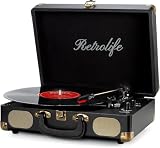
- 【Retrolife INDIVIDUAL SUITCASE RECORD PLAYER】A satisfying combo of modern and vintage elements. Black classic PU leather outlook with retro bronze metal screws and nets, you can take it everywhere with its solid handle. Be ready to create your own music memories
- 【FOUR AVAILABLE CONNECTION CHOICES】Music streaming digital audio via turntable built-in Bluetooth speakers. Hook up external speakers through RCA output or Aux-in line for non-Bluetooth devices like MP3. You can use your headphones to get private listening. Just seize the day with music
- 【THREE-SPEED & THREE-SIZES TURNTABLE】Support 3-Size of 7/10/12″records and 3-Speed of 33/45/78 RMP playing speeds. Belt-driven system matches technical Anti-Resonance design to achieve better sound quality to you
- 【NO EXTRA EQUIPMENT REQUIRED】Set up easily and get started in minutes. Ideal for beginners and vinyl enthusiasts to get your fun time. Suitable for your bedroom/living room/office thanks to the perfect size and premium sound quality
- 【USEFUL KNOBS INCLUDED】An Auto-stop switch that stops spinning once the record playing at the end of the record. Quick mode switch(Bluetooth/Aux-in/Phono) for your simple use. Great to use it when you need relaxation, party and gathering etc
Why does this recording matter?
“Where That Came From” is a documented example of artist-approved AI-assisted vocal work involving substantial human and family participation. The project shows why the label “AI song” is too broad to explain what listeners are hearing: the technology was one part of a production that also depended on Travis’s identity, approval, an existing composition, musicians, vocal professionals, engineering, and months of review.
The release also illustrates the unresolved boundary between helping an artist perform and imitating an artist without permission. The public sources support a clear conclusion about this recording’s authorization and human involvement, but they do not provide enough technical information to say exactly how the vocal was created at the signal or model level.
Frequently Asked Questions
Did Randy Travis really sing “Where That Came From”?
Randy Travis is the credited vocalist on “Where That Came From.” AI-assisted technology recreated aspects of his vocal sound after his 2013 stroke, and the release was made with the involvement and consent of Travis and his family.
When was Randy Travis’s “Where That Came From” released?
Yes. Warner Music Nashville released “Where That Came From” on May 3, 2024, and Apple Music lists the track as a Randy Travis single. The exact single is verified as a digital release in the available research.
What AI software was used for Randy Travis’s song?
The specific AI software, model, training dataset, vendor, and precise proportion of generated versus transformed vocal material have not been publicly established by the authoritative sources reviewed.
The Bottom Line
Bottom line: Randy Travis is the credited singer on “Where That Came From,” released May 3, 2024. The song used AI-assisted recreation of his vocal sound after his stroke, but the best-supported description is an artist-approved, human-supervised Randy Travis recording—not an autonomous AI performance made without him.
Quick Recap
Product prices and availability are accurate as of the date/time indicated and are subject to change. Any price and availability information displayed on Amazon at the time of purchase will apply.