Quick wins for a faster PC:
Scan for outdated or missing drivers - takes under a minuteDriver Scan →Repair Windows errors before they cause bigger problemsFix Now →All the Fallout Vaults we know are numbered shelters from the games and TV series, but no current source establishes a complete canon list of every number. Most were social experiments or control Vaults; the show’s Vaults 31, 32, and 33 add a cryogenic Vault-Tec management scheme that steers later generations.
Spoilers: This article covers major reveals from the games and all currently available episodes of the television series, including the Vaults 31–33 conspiracy and the Season 1 Vault-Tec reveal.



Bethesda describes the series as occupying the same universe as the Fallout role-playing games, with Lucy MacLean living in Vault 33. According to Bethesda’s official series announcement and Amazon MGM Studios’ production material, the story is set in Los Angeles in 2296, 219 years after the nuclear apocalypse.
According to Amazon’s official viewing update dated June 19, 2026, all eight episodes of Season 2 were streaming on Prime Video. Season 2 carries the story into the Mojave wasteland and New Vegas; a third season had been renewed in the checked official material, but no release date had been announced.
Key takeaways
- Vaults 31, 32, and 33 form a long-term Vault-Tec management system: Vault 31 stores cryogenically preserved junior executives, while selected executives are placed into the leadership of Vaults 32 and 33.
- Vault 11 was built around an annual-sacrifice rule, Vault 19 around Red-versus-Blue factional distrust, and Vault 22 around agricultural research that created a dangerous fungal threat.
- Vaults 8, 13, and 76 show that not every shelter was designed to destroy its population; these Vaults were intended to preserve people or support the reclamation of America.
- The Fallout games and television series contain many identified Vault numbers, but the available evidence does not establish a complete modern canon list in which every number from 1 through 122 has a documented history.
- The television series occupies the same universe as the role-playing games, while its Vaults 31–33 storyline makes centralized post-war succession more explicit than the games usually do.
Why are Vaults 31, 32, and 33 connected?
Vaults 31, 32, and 33 are connected because the television series presents them as one coordinated Vault-Tec project rather than three independent shelters. Vault 31 is a cryogenic reserve of pre-war Vault-Tec junior executives, known inside the story as Bud’s Buds. Selected executives are thawed and inserted into Vaults 32 and 33 as overseers or other leaders.
Vault 32 and Vault 33 therefore contain real population communities, but those communities are not as politically or historically independent as they believe. The executives from Vault 31 preserve Vault-Tec’s ideology, influence leadership decisions, and maintain a succession system across generations. The arrangement also links the populations through traditions, marriage exchanges, elections, and controlled information.
| Vault | What residents see | What the Vault-Tec system is doing |
|---|---|---|
| Vault 31 | A sealed, cryogenic facility rather than a normal society. | Stores pre-war junior executives who can later be thawed and placed into positions of authority. |
| Vault 32 | A population Vault connected to its neighboring communities. | Provides one of the controlled populations managed through the Vault 31 succession system; residents eventually uncover enough of the arrangement to rebel. |
| Vault 33 | A prosperous, cooperative community and Lucy MacLean’s home. | Uses apparently ordinary civic traditions, leadership changes, population exchanges, and information restrictions to keep Vault-Tec’s management class in control. |
The Vault 31 reference and the Vault 33 reference document the two most important locations in this reveal. Vault 33 looks healthier and more functional than many game Vaults, but surface-level living conditions are not the same as political autonomy. Vault 31 is materially different from both population Vaults because its inhabitants are a cryogenic management reserve, not a conventional post-war community.
What does the Vault 31 twist change about Fallout?
The Vault 31 twist changes the interpretation of Vault 33’s apparent utopia. Lucy’s home is not merely a community that happened to preserve pre-war customs. Its elections, marriage arrangements, leadership transitions, and information flow are mechanisms through which Vault-Tec’s surviving management class continues to guide the population.
The twist also gives the television story a clear intergenerational succession plan. The games often show Vault-Tec designing separate social, scientific, psychological, or biological experiments. The television series adds an explicit system for preserving the people who designed or managed those experiments and reinserting them into positions of authority after the war.
The result is a different kind of Vault horror. A Vault such as 11 openly tests obedience through a brutal rule, while Vault 33 hides control behind stability, abundance, and civic ritual. The series suggests that a community can be materially successful and still be manipulated at the level of leadership, history, reproduction, and collective memory.
Are the Fallout TV Vaults part of the same canon?
Bethesda officially describes the television series as taking place in the same universe as the Fallout role-playing games, while the series gives Lucy a home in Vault 33. The television story should still be separated from the games as its own continuity: shared world and lore do not mean that every game event is reproduced scene for scene.
According to Amazon MGM Studios’ 2024 production material, the series is set in Los Angeles in 2296, 219 years after the nuclear apocalypse, and premiered in more than 240 countries and territories. The same production material says Bethesda shared game 3D files and artwork with the television production team and reviewed changes intended to preserve the setting’s continuity and visual language.
"We didn’t want to adapt a specific game."
— Todd Howard, executive producer and Bethesda Game Studios figure, quoted by Amazon MGM Studios
That approach explains why the show can introduce new Vault history without simply retelling the plot of Fallout, Fallout 3, Fallout: New Vegas, Fallout 4, or Fallout 76.
Which Fallout games have Vaults?
The major numbered Vaults appear across the original West Coast games, Fallout: New Vegas, Fallout 3, Fallout 4, Fallout 76, and the television series. The following game-by-game index covers the identifiable numbered Vaults in the supplied canon and lore material, not every number that has ever appeared in an obscure reference.
| Game or series | Known numbered Vaults covered here | Dominant themes |
|---|---|---|
| Fallout and Fallout 2 | 8, 12, 13, 15, 17, 24, 29 | Control populations, isolation, ideology, radiation, and the origins of post-war factions. |
| Fallout: New Vegas | 3, 11, 19, 21, 22, 34 | Scapegoating, factional distrust, gambling, agriculture, outsiders, and weapons conflict. |
| Fallout 3 | 87, 92, 101, 106, 108, 112 | FEV research, subliminal messaging, permanent isolation, drugs, cloning, and virtual reality. |
| Fallout 4 | 75, 81, 88, 95, 111, 114, 118 | Children as research subjects, medicine, addiction, cryogenics, unfinished designs, class, and robotics. |
| Fallout 76 | 51, 63, 76, 79, 94, 96 | Artificial intelligence, reclamation, strategic storage, community cooperation, and genetic or environmental research. |
| Fallout television series | 4, 31, 32, 33 | Inherited scientific consequences, controlled populations, cryogenic succession, and managed leadership. |
A broader list of known Fallout Vaults is useful for cross-checking numbers, but the list itself includes entries with very different levels of evidence. Vaults with major playable stories should not be treated as equally documented alongside lightly referenced numbers.
What happened in the Fallout and Fallout 2 Vaults?
The early West Coast Vaults establish the franchise’s basic pattern: a shelter may appear to be a survival facility while secretly testing what happens to a population under a particular social condition.
| Vault | Purpose, condition, or experiment | What happened |
|---|---|---|
| Vault 8 | Control-style Vault intended to open after its isolation period. | Residents used a G.E.C.K. to establish Vault City, making Vault 8 one of the clearest examples of a Vault designed to produce a viable society. |
| Vault 12 | The door was deliberately designed not to seal correctly. | Radiation exposure transformed many residents into the ghouls of Necropolis. |
| Vault 13 | Long-term isolation beneath a community that expected to remain protected. | A water-chip failure sends the Vault Dweller into the wasteland, and the Vault’s unusually long closure becomes central to the original game. |
| Vault 15 | Residents with radically different ideologies were placed together. | The population later fragmented, helping produce important post-war factions and settlements. |
| Vault 17 | Referenced in the Fallout 2 era and associated with the Master’s operations. | Residents were captured for conversion into Super Mutants; the Vault is less fully documented than Vaults 8, 12, 13, and 15. |
| Vault 24 | Lightly documented or limited-reference Vault. | Its existence is known, but the available material does not support assigning it a firm, detailed experiment. |
| Vault 29 | Obscure entry associated with supplementary or limited material. | It should be treated as a known but weakly documented Vault rather than given the same evidentiary weight as the principal playable Vaults. |
Vault 8 is especially important because it complicates the assumption that every Vault was intended to fail. Vault 13 and Vault 15 also show that isolation and social engineering could be central to a Vault’s design even when the population was not subjected to a single spectacular biological experiment.
What happened in the Fallout: New Vegas Vaults?
Fallout: New Vegas uses the Mojave Vaults to show how rules become culture. The most famous cases are not interchangeable: Vault 11 tests sacrifice and obedience, Vault 19 manufactures mistrust, Vault 21 turns chance into law, Vault 22 risks ecological collapse, Vault 34 turns weapons access into political conflict, and Vault 3 demonstrates the danger of admitting outsiders.
Free tools Windows power users keep installed
One-click scans. No signup required.
| Vault | Experiment or defining condition | Result or narrative lesson |
|---|---|---|
| Vault 3 | A functioning Vault whose residents eventually admitted the Fiends. | The community was overwhelmed, showing that a comparatively successful Vault could be undone by one catastrophic decision about outsiders. |
| Vault 11 | Residents were told that one person had to be sacrificed each year or the entire Vault would be killed. | The rule tests obedience, scapegoating, and whether residents can achieve collective moral resistance. |
| Vault 19 | Residents were divided into Red and Blue groups and exposed to subliminal messages that encouraged distrust. | Engineered factional suspicion pushed the groups toward conflict. |
| Vault 21 | Disputes were settled through games of chance in a gambling-centered society. | Robert House later took control by winning a high-stakes game. |
| Vault 22 | Agricultural research involving plants and fungi. | Dangerous spores and overgrown fungal threats turned the scientific program into an ecological hazard. |
| Vault 34 | The Vault was overstocked with weapons. | Conflict over the armory contributed to revolt, radiation exposure, and the Vault’s ruin. |
The Mojave Vaults can be grouped by the pressure placed on residents: Vaults 11 and 19 manipulate social behavior; Vault 21 makes rules into games; Vault 22 creates scientific and ecological risk; Vault 34 turns resources into a source of internal conflict; and Vault 3 tests what happens when a closed population makes contact with dangerous outsiders.
What happened in the Fallout 3 Vaults?
Fallout 3 shifts the Vault experiments toward biology, perception, memory, and the meaning of a supposedly normal community.
| Vault | Experiment or defining condition | Result or narrative lesson |
|---|---|---|
| Vault 87 | FEV research site. | Residents were used in the process that created the Capital Wasteland’s Super Mutants. |
| Vault 92 | Populated with musicians and fitted with audio systems carrying subliminal messages. | The Vault tests whether hidden neurological influence can manipulate a carefully selected population. |
| Vault 101 | Presented as a permanently closed community governed by an Overseer system. | Isolation and authority shape nearly every part of life for the Lone Wanderer and the residents. |
| Vault 106 | Psychoactive drugs were released into the air. | Hallucinations and violent psychological breakdowns followed. |
| Vault 108 | Cloning experiment. | The recurring population known as Gary becomes the Vault’s defining legacy. |
| Vault 112 | Residents are kept in artificial virtual-reality simulations under Dr. Braun’s control. | The Vault explores control of perception and identity through an artificial world. |
Vault 101 is a useful contrast with Vault 112. Vault 101 controls residents through physical isolation and an Overseer, while Vault 112 controls residents by replacing the outside world with a simulation. Both demonstrate that information and perception can be as important as food, water, or radiation shielding.
What happened in the Fallout 4 Vaults?
Fallout 4 expands the familiar Vault-Tec formula into medical research, childhood testing, addiction relapse, cryogenic preservation, class separation, and unfinished corporate designs.
| Vault | Experiment or defining condition | Result or narrative lesson |
|---|---|---|
| Vault 75 | School-centered genetic and intelligence research involving children. | Records and remains reveal an attempt to treat young residents as a controlled research resource. |
| Vault 81 | Medical research involving disease and treatment. | The Overseer secretly protected the population from the most damaging phase of the study, creating a morally complicated exception. |
| Vault 88 | Unfinished Vault encountered through the Vault-Tec Workshop content. | Its main importance is as a construction and settlement-design space, not as a completed pre-war experiment. |
| Vault 95 | Advertised as an addiction-recovery facility with hidden drug caches. | Vault-Tec tested whether recovering residents would relapse when drugs were made available. |
| Vault 111 | Residents were told they were entering decontamination. | The actual program involved cryogenic preservation and observation, making it the Sole Survivor’s starting location. |
| Vault 114 | Unfinished luxury-oriented social concept. | Its incomplete state makes it evidence of Vault-Tec’s proposed designs rather than a fully completed experiment. |
| Vault 118 | Wealthy residents were separated from a much larger service population in Far Harbor. | The wealthy residents were preserved as robobrains, turning class division into a long-term social and technological experiment. |
Fallout 4’s Vaults repeatedly expose the gap between the public sales pitch and the private program. “Medical research,” “recovery,” “decontamination,” and “luxury” can all describe a Vault’s visible purpose while concealing a more invasive test.
What happened in the Fallout 76 Vaults?
Fallout 76 broadens the Vault concept beyond social experiments by including artificial intelligence, reclamation planning, strategic storage, and community-oriented survival.
| Vault | Experiment or defining condition | Result or narrative lesson |
|---|---|---|
| Vault 51 | Residents compete to determine who should become Overseer. | The ZAX intelligence manipulates and judges the population, and the leadership experiment deteriorates. |
| Vault 63 | A later Appalachian storyline with a distinct post-war mystery. | Its history was expanded through later content, so detailed claims should follow current game material rather than older pre-release summaries. |
| Vault 76 | Control Vault built for the planned reclamation of America. | Residents leave on Reclamation Day and form the player population of Fallout 76. |
| Vault 79 | Strategic facility connected to the U.S. gold reserve and the Wastelanders storyline. | Its principal function is strategic storage rather than a classic social experiment. |
| Vault 94 | Community-oriented Vault associated with agriculture, water, and peaceful cooperation. | The residents’ idealism left them vulnerable after the bombs fell. |
| Vault 96 | Research facility associated with genetic and environmental experimentation. | It represents the Appalachian branch of Vault-Tec’s scientific experimentation. |
Vault 76 is the clearest Fallout 76 example of a Vault designed to support a future population rather than simply observe its collapse. Vault 79 is another exception to the usual social-laboratory model because its central purpose is strategic storage.
What happened in the television-series Vaults?
The television-series Vaults are Vault 4, Vault 31, Vault 32, and Vault 33. Vault 31–33 receive the most sustained attention, while Vault 4 continues the franchise’s pattern of morally complicated experiments and inherited scientific consequences.
Outdated Drivers Are Slowing You Down
One free scan finds every outdated or missing driver and matches the right update for your exact hardware.Free scan · exact hardware matchPC Slower Than It Used to Be?
A free scan shows the junk files, broken settings and background clutter dragging Windows down - then fixes them in one click.Free scan · Windows 10 & 11| Vault | Role in the television story | What it adds to the wider Vault pattern |
|---|---|---|
| Vault 4 | A functioning community encountered by Lucy and Maximus. | Its history involves morally complicated experiments and scientific consequences inherited by later residents. |
| Vault 31 | Cryogenic storehouse for pre-war Vault-Tec junior executives, or Bud’s Buds. | Creates a reserve of managers who can be thawed and placed into leadership positions in other Vaults. |
| Vault 32 | Population Vault linked to Vaults 31 and 33. | Residents discover enough of the arrangement to rebel, making Vault 32 central to the investigation. |
| Vault 33 | Lucy MacLean’s apparently idyllic home. | Its elections, marriage exchanges, leadership changes, and information flow are shown as tools of managed succession. |
What is the difference between a control Vault and an experiment Vault?
A control Vault is intended to preserve a viable population or support a planned future, while an experiment Vault subjects residents to a deliberate variable such as scarcity, drugs, factional division, radiation, or psychological manipulation. The distinction is useful, but “control” does not automatically mean safe or free from hidden policies.
| Category | Examples | Defining purpose | Important qualification |
|---|---|---|---|
| Control-style or reclamation Vault | Vaults 8, 13, and 76 | Preserve a population, wait out the intended isolation period, or prepare residents to reclaim America. | Control Vaults can still impose extreme isolation or fail when infrastructure breaks. |
| Social experiment Vault | Vaults 11, 19, 21, 51, and 101 | Test obedience, factional conflict, gambling as law, leadership competition, or permanent social control. | The social rule becomes the residents’ lived reality, even when the original purpose is hidden. |
| Scientific or biological experiment Vault | Vaults 22, 75, 87, 92, 96, and 118 | Study plants, genetics, FEV, subliminal influence, environmental conditions, or preserved human subjects. | Scientific programs can create threats that survive the Vault itself. |
| Medical, addiction, or perception experiment Vault | Vaults 81, 95, 106, 111, and 112 | Test disease treatment, relapse, psychoactive exposure, cryogenic observation, or simulated reality. | Vault 81 is an important exception because its Overseer secretly protected residents from the most damaging phase. |
| Strategic or unfinished facility | Vaults 79, 88, and 114 | Store strategic resources or preserve proposed Vault-Tec designs without completing the intended community. | These locations should not automatically be described as completed social experiments. |
| Centralized succession system | Vaults 31, 32, and 33 | Preserve a management class and use that class to guide population Vaults over generations. | The television series makes the post-war leadership mechanism unusually explicit. |
The general Fallout Vault reference supports the broad distinction between control Vaults and experiment Vaults, but the categories are an analytical framework rather than a single official checklist. Vault 13, for example, is a control-style community whose water-chip failure still forces its protagonist into danger, while Vault 81 combines medical experimentation with secret protection from its Overseer.
Was Vault-Tec responsible for the bombs?
The careful answer is that the television series reveals a Vault-Tec plan to manage and control post-war society, but the supplied evidence does not justify stating without qualification that Vault-Tec was definitively the sole actor that launched every nuclear strike.
The Vault 31–33 system proves that Vault-Tec’s ambitions extended beyond selling shelters. The company planned for a managed post-war future in which a preferred class of executives could preserve its ideology and guide successor populations. That evidence is distinct from proof that Vault-Tec alone initiated the Great War.
Do these 3 things before closing this tab:
1Scan for outdated or missing drivers - takes under a minute2Repair Windows errors before they cause bigger problems3Fix the driver behind crashes, sound loss and screen glitches"Vault-Tec is the pre-war defense corporation that designed and sold the Vaults."
— Todd Howard, quoted by Amazon MGM Studios
The quote describes Vault-Tec’s public corporate identity, while the television reveal exposes the scale of its private social program. The strongest defensible conclusion is that Vault-Tec leadership prepared to exploit or shape the post-war world; the question of sole responsibility for the bombs should remain qualified unless a later official story establishes it directly.
What do the Fallout Vaults reveal about the series?
The Vaults are more than recurring locations. Each one turns a broad political or ethical question into a contained society with rules that residents cannot easily escape.
- A shelter can be a laboratory. Vault-Tec markets protection, but many Vaults contain hidden conditions that treat residents as experimental material.
- Rules create reality. Vault 11’s sacrifice rule, Vault 19’s factional division, and Vault 21’s gambling culture show how an artificial rule becomes a society’s law and identity.
- Control Vaults complicate the conspiracy. Vaults 8, 13, and 76 show that Vault-Tec did not use one identical failure plan for every shelter.
- Technology is often less important than governance. Cryogenics, FEV, virtual reality, drugs, and audio manipulation matter because an institution controls who experiences them and who receives the truth.
- The games emphasize distributed experimentation. Different Vaults test different populations under different pressures, often without a single visible command structure.
- The show emphasizes centralized succession. Vaults 31–33 connect social control across generations through a preserved management class.
- The Vaults drive the storytelling. Each location offers a self-contained moral question while expanding Fallout’s larger history of corporate power, nuclear fear, and post-war reconstruction.
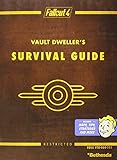
For readers who want a game-specific physical reference, the Fallout 4 Vault Dweller’s Survival Guide has a bibliographic record listing publication on November 10, 2015. The guide is specifically about Fallout 4, so it should be treated as a companion for that game rather than a complete index of every Fallout Vault.
The Tool Desk
Outbyte Driver Updater FREEFix the driver behind crashes, sound loss and screen glitchesFind Drivers →Outbyte PC Repair FREEClear out junk files and repair common Windows errorsFree Scan →Why can’t this be a definitive list from Vault 1 through Vault 122?
This is a complete working list of the identifiable numbered Vaults supplied by the major game and television material, not proof that every number from 1 through 122 has a fully documented modern canon history.
Best Value
Some entries have major playable stories, extensive records, or direct appearances. Vaults 12, 13, 15, 11, 19, 21, 22, 34, 87, 101, 111, and 31–33 have much stronger narrative support than lightly referenced entries such as Vaults 24, 29, or 77. Vault 77 is often included in older or supplementary discussions, but it is not part of the stronger numbered list established in the supplied material.
The frequently repeated number 122 is associated with older supplementary material and should not be presented as an uncontested current canon count. “All the Fallout Vaults we know” therefore means all the identifiable entries covered here, with their evidence levels clearly separated, rather than a claim that every possible number has a complete story.
Frequently Asked Questions
Are the Fallout TV show Vaults canon?
The Fallout television series is in the same universe as the Fallout games, according to Bethesda’s official franchise description. The series introduces its own locations and continuity details, including the Vaults 31–33 management conspiracy, rather than directly adapting one specific game.
Recommended Free Tools
Are there exactly 122 Fallout Vaults?
No current source in the supplied evidence establishes exactly 122 fully documented canon Vaults. The number 122 is associated with older supplementary material, while several known numbers have only limited references or secondary documentation.
Was Vault-Tec responsible for the bombs?
The show establishes that Vault-Tec planned to preserve and manage a preferred post-war leadership class through Vaults 31–33, but the available evidence does not support saying without qualification that Vault-Tec was the sole actor responsible for launching every nuclear strike.
What is the difference between a control Vault and an experiment Vault?
A control Vault is intended to preserve a viable population or support future reclamation, while an experiment Vault subjects residents to a deliberate social, scientific, biological, or psychological variable. The distinction is not absolute: Vault 81 combines medical research with an Overseer’s secret protection, and control-style Vaults can still suffer severe failures.
The Bottom Line
Bottom line: Fallout’s Vaults are controlled societies disguised as shelters. The games show a wide range of experiments and a smaller group of control or reclamation Vaults; the television series adds Vaults 31–33, where cryogenically preserved Vault-Tec executives manage successor populations. The list is broad but not a definitive count of every numbered Vault, and the show’s post-war control plan should not be simplified into an unqualified claim that Vault-Tec alone launched the bombs.
What’s actually slowing this PC down?
Pick the symptom - the matching free tool is one click away.
Quick Recap
Product prices and availability are accurate as of the date/time indicated and are subject to change. Any price and availability information displayed on Amazon at the time of purchase will apply.