Victoria is historical drama, not a photographic claim that its performers are identical to the people they portray. Here is the cast, role, real historical figure, and the evidence-based accuracy note for each major character.
Victoria turns the early life and reign of Queen Victoria into a richly staged historical drama. Jenna Coleman plays the young queen, Tom Hughes plays Prince Albert, and Rufus Sewell plays Lord Melbourne—but the series also features real politicians, royal relatives, household advisers, and a number of invented or heavily dramatized characters.


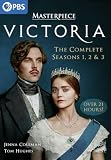
![Masterpiece: Victoria - The Complete Third Season [DVD]](https://m.media-amazon.com/images/I/512gZcutk7L._SL160_.jpg)
![Masterpiece: Victoria - The Complete Seasons 1 & 2 [DVD]](https://m.media-amazon.com/images/I/51nIaye1ZAL._SL160_.jpg)
Use the guide below as a cast-and-history reference: actor → on-screen role → historical person → what the series gets right and what it reshapes. For a visual comparison, place an actor’s publicity still or episode image beside a dated portrait or photograph from the Royal Collection. The images should be labeled separately: a modern production still and a nineteenth-century portrait are not comparable photographic records.
At a glance: the principal Victoria cast and real figures
| Actor | Role in Victoria | Historical figure | Historical anchor |
|---|---|---|---|
| Jenna Coleman | Queen Victoria | Alexandrina Victoria | Queen of the United Kingdom of Great Britain and Ireland, 1837–1901 |
| Tom Hughes | Prince Albert | Albert of Saxe-Coburg and Gotha | Victoria’s husband, adviser, and later Prince Consort |
| Rufus Sewell | Lord Melbourne | William Lamb, 2nd Viscount Melbourne | Victoria’s first prime minister and early political mentor |
| Peter Bowles | The Duke of Wellington | Arthur Wellesley, 1st Duke of Wellington | Soldier, former prime minister, and elder statesman |
| Nigel Lindsay | Sir Robert Peel | Sir Robert Peel | Conservative statesman and prime minister |
| Catherine Flemming | The Duchess of Kent | Princess Victoria, Duchess of Kent | Victoria’s mother and a major presence in her early household |
| Daniela Holtz | Baroness Lehzen | Louise Lehzen | Victoria’s governess and trusted companion |
| David Oakes | Prince Ernest | Ernest of Saxe-Coburg and Gotha | Albert’s elder brother and a link to European dynastic politics |
Jenna Coleman as Queen Victoria
Actor: Jenna Coleman
On-screen role: Queen Victoria
Real person: Alexandrina Victoria, queen of the United Kingdom of Great Britain and Ireland.
Outdated Drivers Are Slowing You Down
One free scan finds every outdated or missing driver and matches the right update for your exact hardware.Free scan · exact hardware matchPC Slower Than It Used to Be?
A free scan shows the junk files, broken settings and background clutter dragging Windows down - then fixes them in one click.Free scan · Windows 10 & 11#1 Best Overall
Victoria was born on May 24, 1819. She became queen on June 20, 1837, when her uncle William IV died. At 18, she inherited the throne of a constitutional monarchy whose government, Parliament, court, and public rituals she had to learn to navigate. She was crowned at Westminster Abbey on June 28, 1838.
The historical Victoria reigned until 1901. Her long reign became associated with industrial expansion, imperial power, public ceremony, photography, and rapid technological change. She was also a committed diarist and artist. The Royal Collection holds more than 4,000 drawings, watercolours, etchings, and lithographs made by Victoria, providing an unusually extensive record of her private interests.
Coleman’s performance concentrates on the young monarch’s emotional intensity, stubbornness, vulnerability, and gradual political confidence. That is a dramatic interpretation, not a complete biography, but it has a firm historical foundation: Victoria’s inner life is unusually visible because she recorded so much of it herself. The show’s focus on a young woman balancing private feeling with public authority is therefore more than a modern invention.
Tom Hughes as Prince Albert
Actor: Tom Hughes
On-screen role: Prince Albert
Real person: Albert Francis Charles Augustus Emmanuel of Saxe-Coburg and Gotha, later Prince Consort.
Do these 3 things before closing this tab:
1Clear out junk files and repair common Windows errors2Scan for outdated or missing drivers - takes under a minute3Repair Windows errors before they cause bigger problemsAlbert was born on August 26, 1819, in Saxe-Coburg-Gotha. He and Victoria were first cousins and married at St James’s Palace on February 10, 1840. Their marriage produced nine children, making the couple the ancestors of several European royal families.
In the series, Albert arrives as Victoria’s romantic partner but must also find a position inside a constitutional system in which the queen—not her husband—holds the crown. That uncertainty is central to the drama. Albert has to establish influence without appearing to rule in Victoria’s place.
The historical Albert eventually became much more than a consort in the ceremonial sense. He acted as an important adviser and unofficial private secretary, supported the arts and sciences, and was associated with major national projects, most famously the Great Exhibition of 1851. Victoria gave him the title Prince Consort in 1857.
Albert died at Windsor Castle on December 14, 1861, aged 42, after typhoid fever. The series’ romantic and political portrait is selective, but its depiction of Albert as an intellectually ambitious partner seeking a meaningful public role reflects his documented influence.
Quick wins for a faster PC:
Scan for outdated or missing drivers - takes under a minuteDriver Scan →Repair Windows errors before they cause bigger problemsFix Now →Fix the driver behind crashes, sound loss and screen glitchesFind Drivers →Readers who want production photographs, interviews, character profiles, and costume and prop material can look for the official Victoria companion book, Victoria & Albert: A Royal Love Affair. It is a behind-the-scenes companion to Season 2, not a substitute for archival history.
Rufus Sewell as Lord Melbourne
Actor: Rufus Sewell
On-screen role: Lord Melbourne
Real person: William Lamb, 2nd Viscount Melbourne.
Rank #2
Melbourne was Victoria’s first prime minister and one of the most important political figures during the opening years of her reign. He became a tutor in government and politics for the inexperienced queen, explaining the conventions and practical pressures of ministerial rule.
Parliamentary records place Melbourne’s second ministry from April 18, 1835, to August 30, 1841. In the series, he is both a political guide and an emotionally important presence in Victoria’s life. That closeness is historically grounded in the sense that Victoria relied heavily on him and was deeply attached to him.
Free tools Windows power users keep installed
One-click scans. No signup required.
The nature of their relationship is less certain. PBS’s own discussion of the drama describes a mixture of friendship, mentorship, and intense attachment rather than proving a conventional love affair. The responsible conclusion is that Victoria and Melbourne shared an unusually close bond and that he influenced her early political development. Claims that they were sexual partners should not be presented as established history.
The show’s intimate conversations and emotional ambiguity are therefore best understood as interpretation. They communicate the queen’s dependence on an older, experienced adviser, while leaving the relationship deliberately more dramatic—and more emotionally legible—than the surviving evidence can fully prove.
Peter Bowles as the Duke of Wellington
Actor: Peter Bowles
On-screen role: The Duke of Wellington
Real person: Arthur Wellesley, 1st Duke of Wellington.
Wellington was a celebrated soldier, former prime minister, and elder statesman. He belonged to an older political generation than Victoria and represents a more traditional source of authority than Melbourne’s personal style of instruction.
His importance in the early story is constitutional as much as personal. A young sovereign could prefer particular advisers, but a government still needed ministers capable of commanding confidence in Parliament. The political world surrounding Victoria’s accession and changes of ministry required her to understand that distinction.
Victoria dramatizes palace conversations and political choices, but Wellington’s presence in the political transition surrounding the accession is historically grounded. His role works best as a reminder that Victoria entered an existing system of military, aristocratic, and parliamentary power rather than ruling without institutional limits.
Nigel Lindsay as Sir Robert Peel
Actor: Nigel Lindsay
On-screen role: Sir Robert Peel
Real person: Sir Robert Peel, Conservative statesman and prime minister.
Peel follows Melbourne as the central minister in one of the series’ most important political conflicts. Parliamentary records list Peel as prime minister from December 10, 1834, to April 8, 1835, and again from August 30, 1841, to June 29, 1846. The second ministry is the period most relevant to the early narrative.
The Tool Desk
Outbyte Driver Updater FREEFix the driver behind crashes, sound loss and screen glitchesFind Drivers →Outbyte PC Repair FREEClear out junk files and repair common Windows errorsFree Scan →The drama uses Peel to show Victoria’s distrust of a politician who wants changes to her household. Beneath the personal confrontation is a real constitutional problem: a prime minister forming a government needed a workable relationship with the monarch’s court, while the monarch naturally regarded her household as a private sphere.
The dialogue, timing, and emotional temperature are shaped for television. The underlying tension—between a young queen’s personal preferences and a prime minister’s need to construct an effective ministry—belongs to the historical setting.
Catherine Flemming as the Duchess of Kent
Actor: Catherine Flemming
On-screen role: The Duchess of Kent
Real person: Princess Victoria, Duchess of Kent, Victoria’s mother.
The Duchess of Kent remained a major presence in the young queen’s household and political environment. The early episodes present her relationship with Victoria as a struggle over independence, access, influence, and the structure of the court.
Sir John Conroy’s influence is part of that historical household context, although the show sharpens complicated family and court politics into scenes of direct manipulation and confrontation. The Duchess was a real and influential family figure; not every motive, conversation, or scheme attributed to her on screen should be treated as documentary fact.
The coronation provides an important historical anchor. The Royal Family’s account records the Duchess of Kent’s position during the 1838 ceremony and notes that Lord Melbourne led Victoria into Westminster Abbey. The series turns those arrangements into personal drama, but the event itself is firmly documented.
Daniela Holtz as Baroness Lehzen
Actor: Daniela Holtz
On-screen role: Baroness Louise Lehzen
Real person: Victoria’s governess and trusted household companion.
Lehzen connects Victoria’s private upbringing with her public life as queen. She belonged to the inner circle formed around a monarch who had been educated at home and suddenly had to manage ministers, relatives, suitors, and court expectations.
Her position makes her one of the show’s most useful historical bridges. Lehzen was not a prime minister or a sovereign, but her long relationship with Victoria helps explain how the isolated young queen developed a trusted personal network.
At the same time, household scenes involving Lehzen should not automatically be read as archival reconstructions. PBS identifies her as part of Victoria’s early personal and political world, but individual subplots and private exchanges may be dramatized unless supported by a diary, letter, or separate archival biography.
David Oakes as Prince Ernest
Actor: David Oakes
On-screen role: Prince Ernest
Real person: Ernest of Saxe-Coburg and Gotha, Albert’s elder brother.
Ernest’s appearance expands the drama beyond the British court. He represents the Coburg family network and the way European royal marriages connected courts, territories, ambitions, and personal loyalties.
His presence is historically plausible and consistent with Albert’s family background. However, romantic, sexual, and social subplots involving Ernest should be treated as dramatization unless independently documented. A real royal identity does not make every scene involving that character historically verifiable.
Other real figures in the series
Lord Palmerston
Laurence Fox plays Lord Palmerston, a real British statesman who appears in the later story. PBS’s Season 3 material frames him around disagreements with Victoria over foreign policy. His inclusion reflects the series’ movement from the queen’s household and first ministers toward the wider diplomatic and imperial concerns of her reign.
The Duke of Cumberland and the royal family
The series also includes the Duke of Cumberland and members of Victoria and Albert’s extended family. These figures help establish the dynastic and constitutional pressures surrounding the succession, but their scenes remain part of a scripted drama. A historical name in the credits is not, on its own, evidence that a specific conversation occurred.
Fictional or substantially invented household characters
Not everyone in the palace is a documented historical official. Nancy Skerrett, Charles Francatelli, and Archibald Brodie are among the household characters used to give the audience access to servants, kitchens, personal relationships, and the working court. The PBS episode pages identify them as characters in the drama, but that does not establish that each is a historical royal employee or that the depicted events happened.
Recommended Free Tools
How accurate is Victoria?
The most useful way to judge the series is to separate secure milestones from historically grounded interpretation and outright dramatic invention.
| Level of confidence | Examples | How to read the scenes |
|---|---|---|
| Historically secure | Victoria’s accession in 1837; her 1838 coronation; her 1840 marriage to Albert; Melbourne’s role as first prime minister; Albert’s public and cultural influence; the Great Exhibition; Albert’s death in 1861 | These are reliable anchors for the timeline, even when the surrounding dialogue is invented. |
| Grounded but dramatized | Victoria’s dependence on Melbourne; conflicts involving the Duchess of Kent and Conroy; ministerial changes; court-household tensions; Victoria and Albert’s emotional adjustment to marriage | The broad situation is historical, but scenes, timing, motives, and private conversations may be compressed or heightened. |
| Use caution | A sexual relationship between Victoria and Melbourne; specific palace conversations; invented household subplots | Do not present these as proven facts without a primary source or specialist biography. |
One recurring issue is the temptation to treat a successful dramatic relationship as a confirmed historical romance. Victoria’s attachment to Melbourne is well supported; an affair is not established by the evidence cited for the series. Another is the tendency to assume that every servant or court character must be real. Historical dramas often combine real people with fictional composites so that viewers can follow the machinery of an enormous household.
Where to compare the actors with the real royals
The Royal Collection is the strongest visual reference point for Victoria and Albert. It includes formal and private portraits, Winterhalter’s 1843 portrait of Victoria, official state portraits of Victoria and Albert from 1859, and photographs of the couple, including a full-length image from 1854 and an early surviving photograph of Albert from 1842.
For a responsible side-by-side image grid:
- Use a clearly credited publicity still or episode image for the actor.
- Pair it with a historical portrait or photograph whose date is stated.
- Identify the historical person, artist or photographer where known, and collection.
- Do not describe the pairing as proof that the actor is a literal visual double.
- Remember that pose, costume, lighting, lens, retouching, and artistic convention differ radically between a modern production image and a nineteenth-century portrait.
The comparison is most informative when it shows how costume, posture, hair, facial expression, and production design evoke the historical record—not when it claims that the performers and royals look identical.
What’s actually slowing this PC down?
Pick the symptom - the matching free tool is one click away.
How to continue watching and reading
PBS MASTERPIECE’s official material identifies the series and its principal cast and has referenced DVD/Blu-ray editions. If you want a physical copy, check the current regional listing before buying because formats, availability, and playback compatibility can change; the complete Victoria DVD is the most direct way to revisit all three seasons after using this identification guide.
For behind-the-scenes material, the companion volume Victoria & Albert: A Royal Love Affair is the better fit than a general history book. It is presented as the official Season 2 companion and includes interviews, photographs, character profiles, and material on costumes and props. Treat it as a companion to the television production, not as independent proof of every event dramatized on screen.
Frequently Asked Questions
Who plays the main historical figures in Victoria?
Jenna Coleman plays Queen Victoria, Tom Hughes plays Prince Albert, and Rufus Sewell plays Lord Melbourne. The cast also includes Peter Bowles as the Duke of Wellington, Nigel Lindsay as Sir Robert Peel, Catherine Flemming as the Duchess of Kent, Daniela Holtz as Baroness Lehzen, and David Oakes as Prince Ernest.
Did Queen Victoria and Lord Melbourne have an affair?
Victoria’s close attachment to Melbourne and his role as her political mentor are historically grounded. However, the evidence does not establish that they had a consummated sexual relationship. The series deliberately presents their bond as emotionally ambiguous.
The Tool Desk
Outbyte Driver Updater FREEScan for outdated or missing drivers - takes under a minuteDriver Scan →Outbyte PC Repair FREERepair Windows errors before they cause bigger problemsFix Now →How historically accurate is the TV series Victoria?
The broad milestones are reliable: Victoria became queen in 1837, was crowned in 1838, married Albert in 1840, and Albert later became an influential adviser and public figure. Private conversations, household conflicts, romantic subplots, and some servants’ stories are dramatized.
Where can I find portraits of the real Queen Victoria and Prince Albert?
The Royal Collection provides formal portraits, private portraits, and photographs of Victoria and Albert, including images from 1842, 1843, 1854, and 1859. Dates and image credits should be displayed when using them beside modern actor stills.
The Bottom Line
The short version: Jenna Coleman, Tom Hughes, Rufus Sewell, Peter Bowles, Nigel Lindsay, Catherine Flemming, Daniela Holtz, and David Oakes portray real historical figures in Victoria, but the series mixes documented milestones with emotional interpretation and invented household drama. Victoria’s accession, marriage, political education, Albert’s public work, and Melbourne’s influence are secure historical anchors; the supposed romance between Victoria and Melbourne and many private palace scenes require caution.
Quick Recap
Product prices and availability are accurate as of the date/time indicated and are subject to change. Any price and availability information displayed on Amazon at the time of purchase will apply.
Quick wins for a faster PC:
Scan for outdated or missing drivers - takes under a minuteDriver Scan →Repair Windows errors before they cause bigger problemsFix Now →Fix the driver behind crashes, sound loss and screen glitchesFind Drivers →